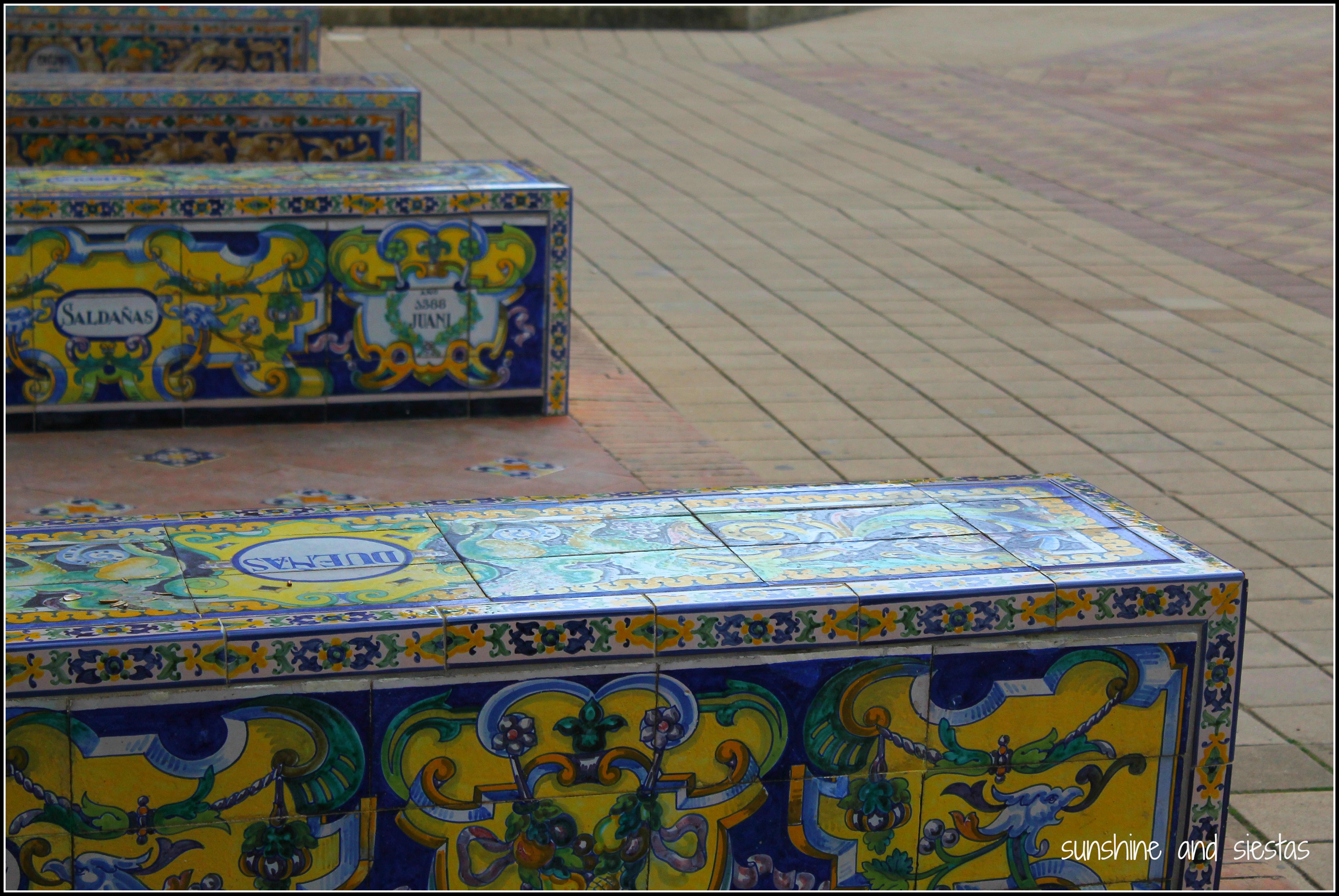
Seville Snapshots: The Ceramic Benches of the Plaza de España

I adore Plaza de España.

It was here in 2005 that I sat on one of the ceramic benches and journaled about studying abroad. Eight years later, I’ve made countless visits to the half-moon square with visitors (inlcuding Alex, my blog media naranja from Ifs, Ands & Butts), to photograph Andrea and Carlos’s wedding, and to the dreaded Extranjería for residency issues.

Originally built in 1929 for the Ibero-American Fair, the majestic building and its ceramic tile work crown the María Luisa Park. Roma gypsies peddle fans and tourists rent boats to float around the moat. The colonnades hide several government offices, but the main attraction are the hand-painted tiles that represent each province of Spain and its place in history.

In 2005, I sat at the Valladolid bench, fresh out of my study abroad experience. Moving back to Spain had barely crossed my mind at that point, and much less so, to Seville.

Have you even been to the Plaza de España? What’s your favorite monument in Seville?

Seville: Spain’s Most Bike-Friendly City

My ride is a bubblegum pink cruising bike with rusted handlebars, a rickety frame and the name Jorge. Since I live outside the city center (ugh, I know, don’t remind me), I’m constantly busing myself from one end of town to the other to meet friends, run errands and go to work.

When I was a kid, I couldn’t wait to come home from school and ride my bike around the block until my legs practically fell off. Now that I’m an adult, it’s my favorite way to get around, especially in a city with terrible transportation and few parking spots.

Seville is perfect for bikes – it’s flat, has miles of bike lanes and so, surprisingly, nearly one-tenth of sevillanos chose to commute on two wheels. For me, there’s nothing more freeing than pedaling along the Guadalquivir, feeling the burn in my thighs and arriving a little winded to work or to meet my guiritas.

Consider renting a Sevici bike, part of the city’s bikeshare program, for half of what a cab costs from the airport. Yes, the bikes are big and clunky, but it’s the easiest way to get from one place to another. For one week, you can use the bikes for 30 minutes (o sea, between bars or between practically any point in the city), and there are more than 250 rental points.

Is your city bike friendly? Does your bike have a sweet name like mine? For more videos, subscribe to my YouTube channel!

Seville: Perfect for a Fall City Break

Earlier this week, my friend Mar and I were enjoying a light breakfast (read: an entera with Iberian ham and tomatoes) in a small plaza right of Constitución. Our bare arms caught the morning chill as we chowed down, surrendering to the fact that Autumn has snuck up on us.

photo by kelly m. holland
 

Fall is one of my favorite times in Seville – expat celebrations, the return to school and snuggling on chilly mornings for just a few minutes more (dios I sound like an abuela). When friends talk about coming to visit, I tell them that Seville is perfect for a holiday city break during this season:

Cheaper Accommodation and Flights

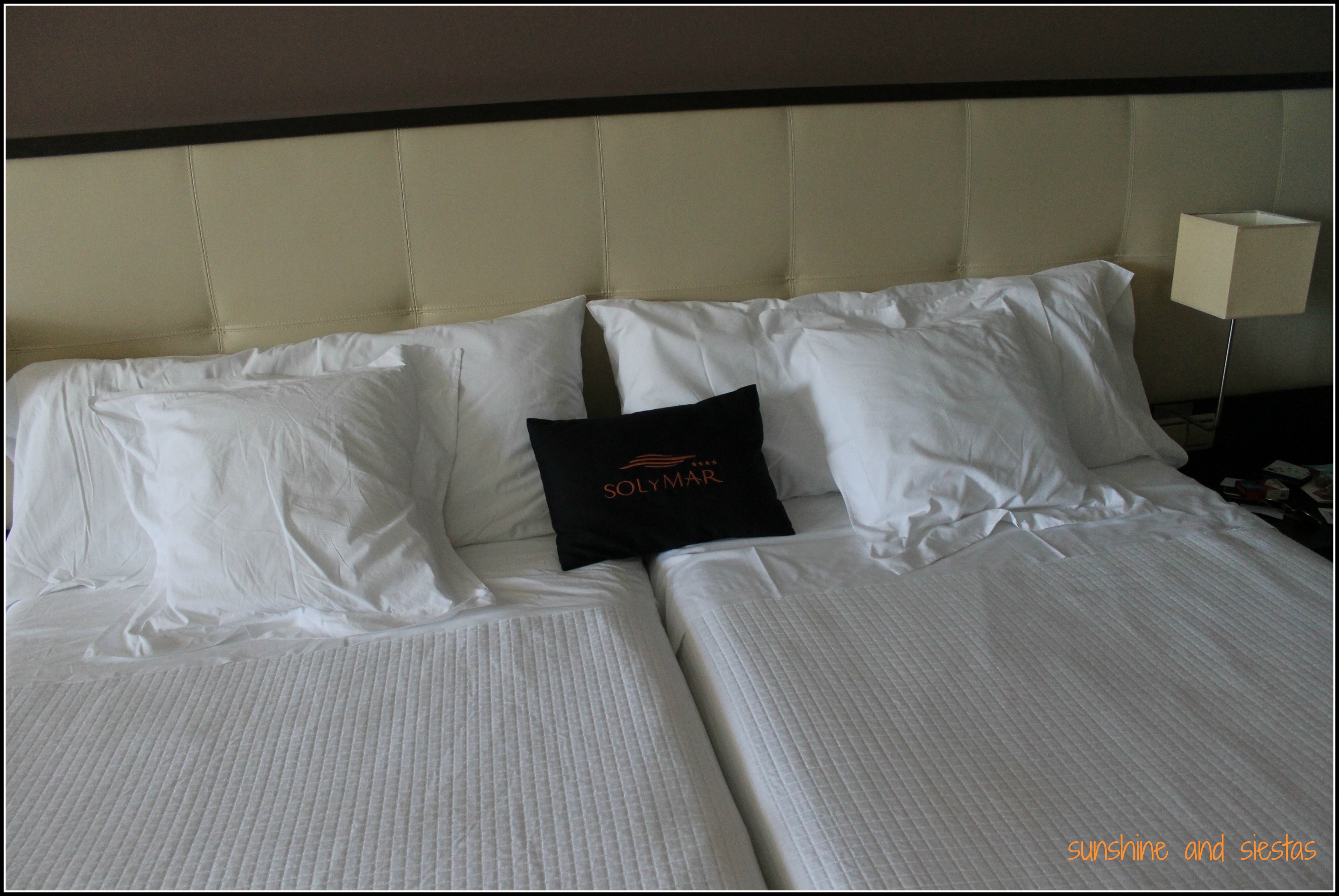
Look up any flight to Seville come October and want to hug your computer. I mean it. Not only is it cheaper to get to Southern Spain (or anywhere in Europe), but the hotels are a bargain, too. Using sites like Hotel Scan will net you savings of about 30-40% on average, making Seville a bargain for a long Fall weekend.

Do be aware that October 12th is Día de la Hispanidad (Spain’s take on Columbus Day when the Catholic Kings get most of the glory) and November 1st is Día de Todos los Santos Difuntos (don’t forget to eat your huesos de santos!), so hotels typically up their prices a weeeee bit.

A Multitude of Festivals

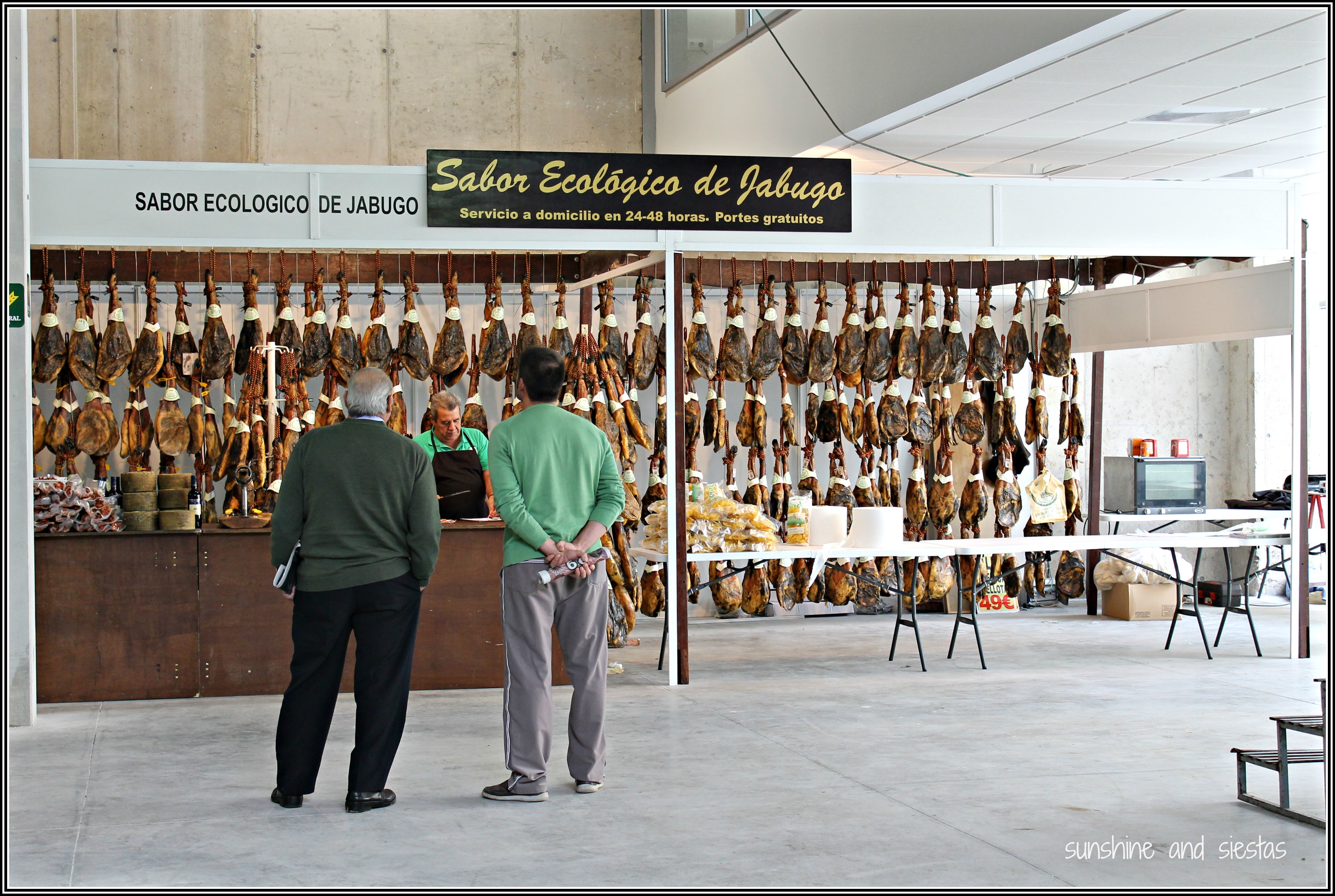
Seville and the surrounding cities hosts several different fairs during this time, including the Feria de Jamón in Aracena (Huelva), the Salon International del Caballo in tribute to the Andalusian horse breed and the biannual Flamenco celebration.

You can also take great hikes around the province, gather mushrooms and acorns in the Sierra Norte and Aracena and escape to the beaches without all of the crowds.

Less tourists, less lines

For whatever reason, there’s always loads of tourists in Seville when the weather is at its hottest. They flock the central part of town and fill the bars near the cathedral, but these tourists have also made the city one of the top destinations in Spain. This is great news for the local economy, but it also means you’ll wait in line at the bank and the Corte Inglés and even eating out can mean a wait for a table.

Opening hours are typically shortened in the afternoons, so take advantage of the early hours for sightseeing, and then use the afternoon to stroll off a huge lunch. Sandra of Seville Traveler made a perfect itinerary that’s catered towards the non-touristy months in the city.

Um, it’s not sweltering anymore, either.

Yeah, that’s the other thing – you can actually enjoy roaming the streets around Santa Cruz and Triana while still dining outdoors or having a drink at a terrace bar. temperatures are, on average, around 22 degrees in October by midday, cooling off in both the shade and at night so that you can actually sleep and not waste hours tossing and turning because it’s so freaking hot.

Fall is perfect in Seville, and even as I began to love and understand the rhythms of my new city, my friends warned me: if you love Seville in the Autumn, you’ll really fall for it in the Spring.

Have you ever visited Seville off-season? 

Exploring the Roman Ruins of Itálica Near Sevilla

Shame on me: my blog friend Trevor Huxham of A Texan In Spain pointed out that, in six years blogging about Seville, I’ve not ONCE written about Itálica, a former Roman settlement that you can practically see from the city. Trevor offered to write about this once-bustling city that saw Hadrian and Trajan grow up (while I go sulk in shame):

It’s a little-known fact that half an hour from the southern Spanish city of Sevilla you can find the ruins of an ancient Roman town. Now, I know you’re going to say, But Trevor, Sevilla started as the Roman city of Hispalis, why is this so special? Well, I’ll tell you. Modern Sevilla sits upon two thousand years of not just Roman history but also Moorish, Christian, and contemporary reworkings—so hardly any vestiges of the Roman city remain to be seen. The town of Itálica, however, was long deserted before major architectural upheavals beginning in the Middle Ages could erase its Roman character, so the ruins you see give you an idea what it was like ca. two millennia ago.

Itálica’s claim to fame is being the first Roman settlement in Spain. After a battle during the 2nd Punic War (which was fought between the ancient Mediterranean powers of Rome and Carthage), General Scipio’s troops became stationed at this outpost on the important Guadalquivir River. Centuries later, two of the city’s sons would become Roman emperors: Trajan and Hadrian. The brochure I picked up at the ruins explains that, despite being developed during those emperors’ reigns, the town fizzled out and was ultimately abandoned by the medieval era. The nearby pueblo of Santiponce was founded only in the 17th century.

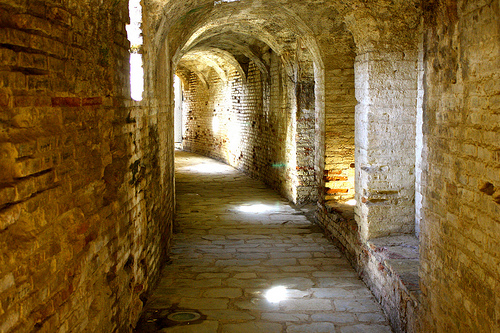
The large amphitheater is what primarily draws folks to the ruins. About half the size of Rome’s Flavian Amphitheater (aka the Colosseum), it would have hosted sporting events and gladiator fights for the local population. For modern-day spectators, it no longer has such a Colosseum-esque grandeur, having lost its stair-step grandstands long ago. But you can still amble through the gently-lit galleries that link what remains of the seating and envision toga-clad Romans hurrying through the tunnels to the nearest urinal or picking up a box of popcorn from the concessions. (Forgive the anachronisms…I couldn’t resist!)

Beyond the amphitheater you can hike across an original Roman road and appreciate the ancient municipal street grid. Itálica has little left apart from a few house walls here, some foundations there, but what remains is particularly powerful. Colorful, pixelated mosaics set a scene of reclining diners enjoying bread and wine…or they recall the pensive, candlelit face of a woman pacing the colonnaded porch, in between first and second sleeps. You can touch the still-sharp, right-angle bricks that form corners of a shop or a bedroom and wonder—who must have made those bricks, who must have set them in place? Sleepy from too much bread at lunch, peer inside a shadowy oven and imagine a tunic-clad baker removing warm loaves that would have fed the town.

It’s fun to fantasize about what life might have been like in a Roman town, but there’s only so much you can do with stone foundations. Most of the fascinating artifacts, statues, and inscriptions are housed in the Archaeology Museum of Sevilla, a museum that you can find in the Maria Luisa Park just to the south of Sevilla’s historic center. Inside, you can see impressive, sprawling mosaics, serene busts depicting the emperors Trajan and Hadrian, and even political documents written on bronze tablets. Don’t miss this museum when you visit Itálica!

How to get there

The ruins aren’t technically in Sevilla proper but in a suburb called Santiponce. I took the M-172 bus line from Sevilla’s big Plaza de Armas bus station to the end of the line, where I was dropped off in front of the entrance (Avenida de Extremadura, 2). Itálica is free for EU residents and 1,50€ for everyone else.

Trevor Huxham is a language assistant in between teaching placements in Úbeda (Andalucía) and Santiago de Compostela (Galicia). A native of Texas, he blogs at A Texan in Spain where you are welcome to say “howdy!” and stick around for a while.

Have you ever been to the Itálica ruins before? Do you prefer exploring remnants of the past or taking in contemporary culture more? Comment below!

A Por Ellos: What to Know Before Attending a Spanish Soccer Game

My first true sports love was the Green Bay Packers. Growing up along the border of Wisconsin-Illinois, my classmates were divided between Cheesehead lovers and the Monsters of Midway, making the Bears-Packers games something of legend. Nevermind the fact that I was born the year Ditka took Da Bears to Da Superbowl – Brett Favre and Vince Lombardi were my childhood heroes, along with Nadia Comaneci.

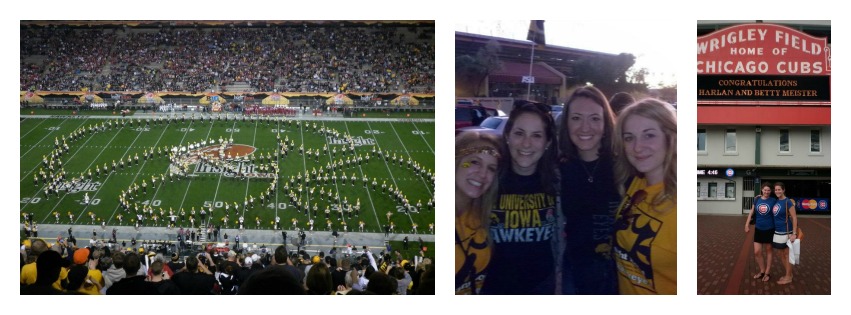
I soon took up a profound love for my university team, the Iowa Hawkeyes, as well as the Chicago Cubs, both perennial underdogs in their leagues. Then I up and moved to Spain, where no pigskins or baseballs are readily sold. I’d have to choose between tennis, synchronized swimming or fútbol to satisfy my sports cravings.

Thankfully, fútbol is sacred in Spain, and I was soon watching games every week with friends around the city. I learned the names of all the players on the Spanish national team and followed them earnestly (I even jumped into the Cantábrico when they won the World Cup in 2010, one of my fondest memories of my time in Spain). But I never answered the question so many students posed: ¿Sevilla ó Betis?

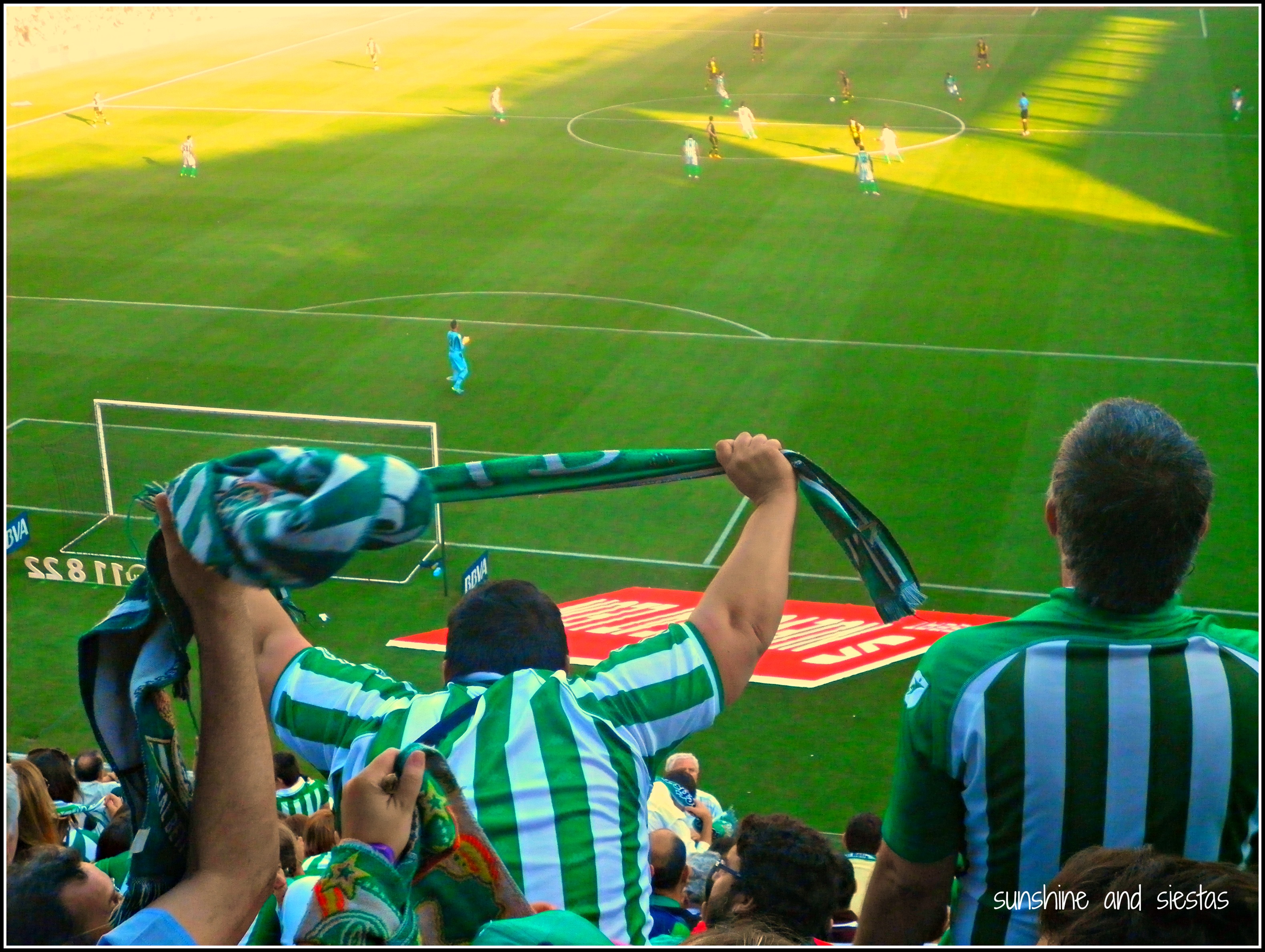
Thanks to some earnest friends and invitations to Estadio Benito Villamarin, I have become bética, which is Seville’s lesser-known team and home to one of Spain’s biggest fan bases (true story: there’s a Peña Bética club in NYC). Friends like JM, the Novio, Manuel, Pedro and even my former boss sold me on the idea of the underdog, the verdiblancos whose reputation took a beating in 2009 when they descended from the top Division Primera of La Liga into Segunda, where they spent two seasons. I attended the match late in the 2011 season los de la Palmera secured enough points to ascend back to Primera, and my heart swelled. That was all it took – living on the borde of a victory or a terrible defeat, the colorful ways the fans would insult the refs, the other team, even their own players and coach. If Barcelona Futbol Club is “Mes que un Club,” Betis is more than a feeling.

Note to self: it’s a fútbol team, no need to wax poetic. Besides, this post is about the matches and not my team.

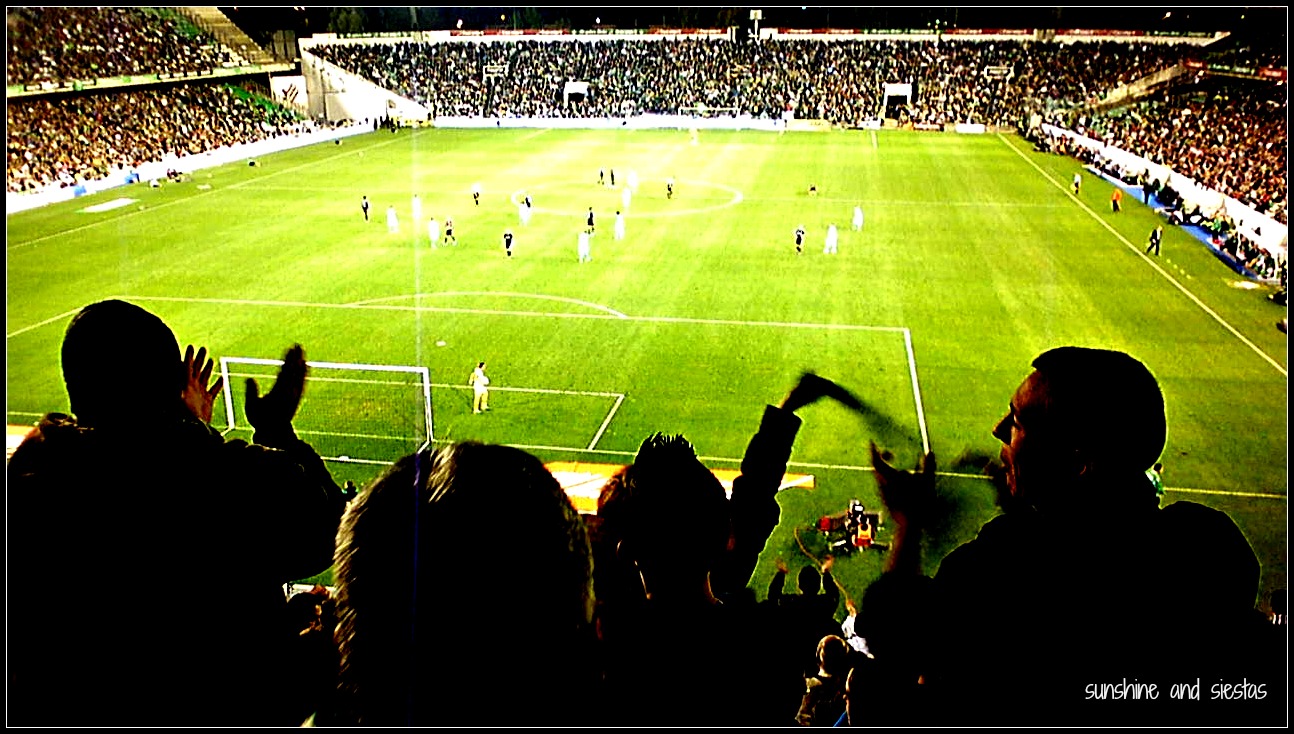
Towards the end of the 2012-13 season, I went to the Derbi Sevillano, a pre-Feria tradition where Seville’s two teams square off. Season records are broken in attendance, and police forces swell to accommodate the botellones before kickoff. Tickets are a hot commodity, but the Novio’s business trip meant Emilio and I would be squished together in Gol Norte, cheering on our afición.

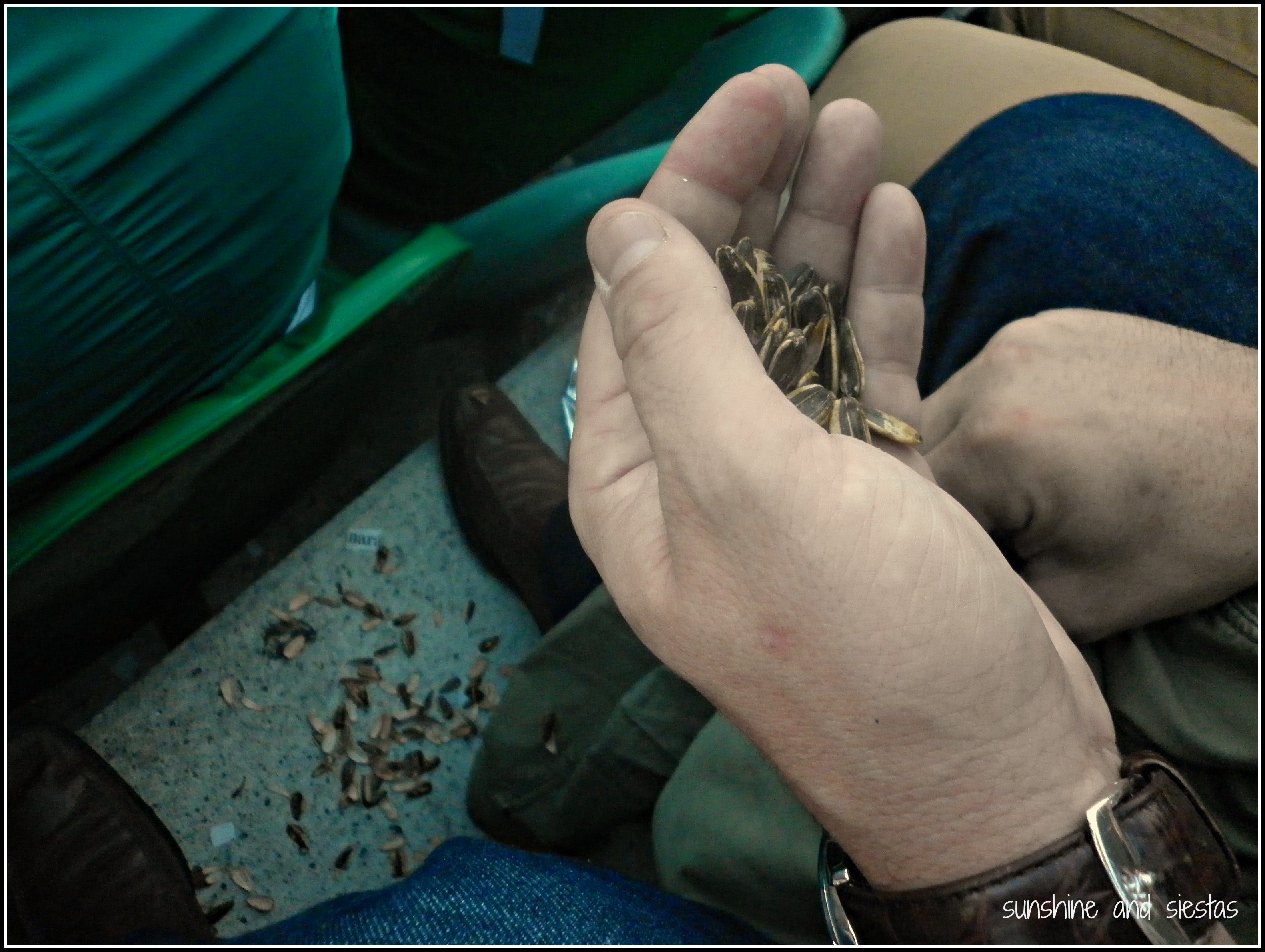
Attending a match with socios is a lot like attending a reunion – everyone knows one another, passing around packs of sunflower seeds and glasses of wine. Everything is debated and criticized, from calls to inability to stop goals. People go hoarse slinging insults at the other team (or even their own), hugging and giving slaps on the back when the team scores or has a good rebote. The two halves pass by quickly when you’re up, or excruciatingly slow when you’re down.

For my birthday last week, the Novio bought Emilio’s season passes off him, so we’re in for another season of debilitating defeats! The season started last week and will last until June, then it’s World Cup time again! Move over, Cubbies, attending a Spanish fútbol match is a whoooole new ballgame:

Understand the Organigrama of the Liga BBVA

The BBVA Spanish soccer league is composed of 20 teams in the top tier, called La Liga in Spanish and is one of the most-watched leagues in the World (duh, Spain has won the 2008 and 2012 Euro Cups and the 2010 World Cup). Each team plays a schedule of two rounds against the other teams, once home and once away, for 38 weeks, each called a jornada. Depending on match outcome, the teams earn up to three points, and they accumulate points throughout the season.

The team with the highest amount of points is crowned Campeón de Liga, and often clinches the playoff title, too, and the three lowest scoring teams are automatically moved down to Segunda División. Teams at the top of the second tier are welcomed back into the Primera División, and there is a playoff to determine the last spot. You’ll often see people at games who are also following other matched with their mobile phones or radios, jotting down points scored during the week and configuring where their team stands at the end of the jornada.

Not that you’re interested, but there’s also Segunda B and a Tercera División (an American friend of mine played for Albacete, who is in Primera B, thus making himself way cooler than anyone else I know).

But what about Fernando Torres and Jesús Navas, who play for the Selección Española national team? Many Spanish soccer stars opt to go to the Premiere League in the UK for their salaries and prestige. The same goes for Lionel Messi, who plays in La Liga for Barcelona, but also for the Argentinian National Team.

The bocata is sacred

After you’ve suffered through 45 minutes of tiki-taka, or the juggling between players that is characteristic of fútbol in Spain, the field suddenly empties and fans grab their bocata and can of pop. This, of course, after they’ve had an aperativo of pipas, or sunflower seeds.

Make sure you bring yourself a sandwich for halftime, and make sure it’s big enough to share. It may be a good idea to bring wet wipes for when you’re done, too (or maybe that’s just me).

Know your curse words

On my second day in Seville, my grandmother and I attended a Sevilla Fútbol Club match against Recreativo de Huelva. My grandmother is a demure woman, but fun-loving and open to new adventures. We climb up to the far reaches of the Sánchez Pizjuan stadium, and I settled in between a concrete wall and a man whose stomach stuck out as if to catch all of the pipas falling out of his mouth. Not knowing enough Spanish, my abuelita sat in the empty seat in front of me. I’m pretty sure she got pipas in her hair, too.

Whenever Sevilla lost posession of the ball, the man next to me would shout, JOOOOOOOOOder. joDER. JODER.

Naturally, my grandma thought it was a victory cry, even though the club was up 3-0. She began chanting it, too, and I couldn’t find the heart to tell her that it was a strong explicative because she looked so happy feeling integrated into a very Spanish part of life. Now that I’ve been to several more fútbol matches, I sling insults at players (often from my own team) and the refs with a well-crafted swear word or two. Try it, you’ll love it.

It’s expected to use strong adjectives

It has to be said: Andaluces are exceptionally good at exaggerating, and football is no exception. A well-deserved goal becomes a golazo, a blocked goal, a paradón. When discussing plays with your neighbor, be sure to add -azo, -ón, -ote to the end of nouns, and súper- and híper- to both nouns and adjectives.

And don’t be alarmed when you see grown men cry, either.

People throw things. Often.

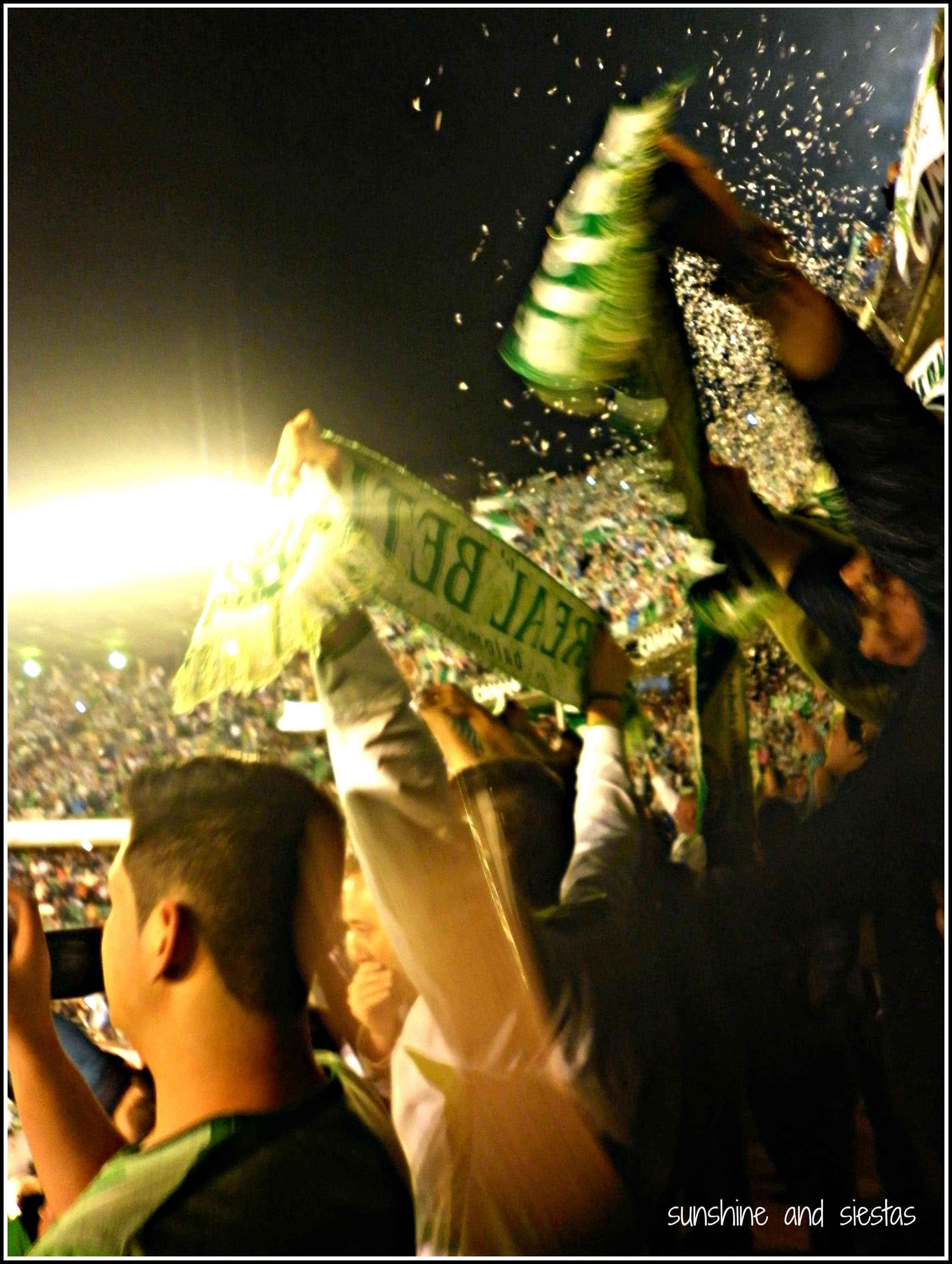
As the Himno del Betis rings throughout Estadio Benito Villamarín, los béticos tend to release millions of paper stars, toilet paper rolls and even paper airplanes fashioned out of the lineup towards the field. Since the Novio and I sit in the first amphitheater, we get everything from the second and third, plus splashes of wine from the guy who sits directly behind us. Rare is the day where I shake my head and only a few sunflower seed shells don’t fall out.

But don’t worry, it’s all in good fun, and it sure beats the time where some Florida Gator fans poured a beer on my head at the Outback Bowl.

Who’s your afición? Have you ever been to a Spanish soccer match?


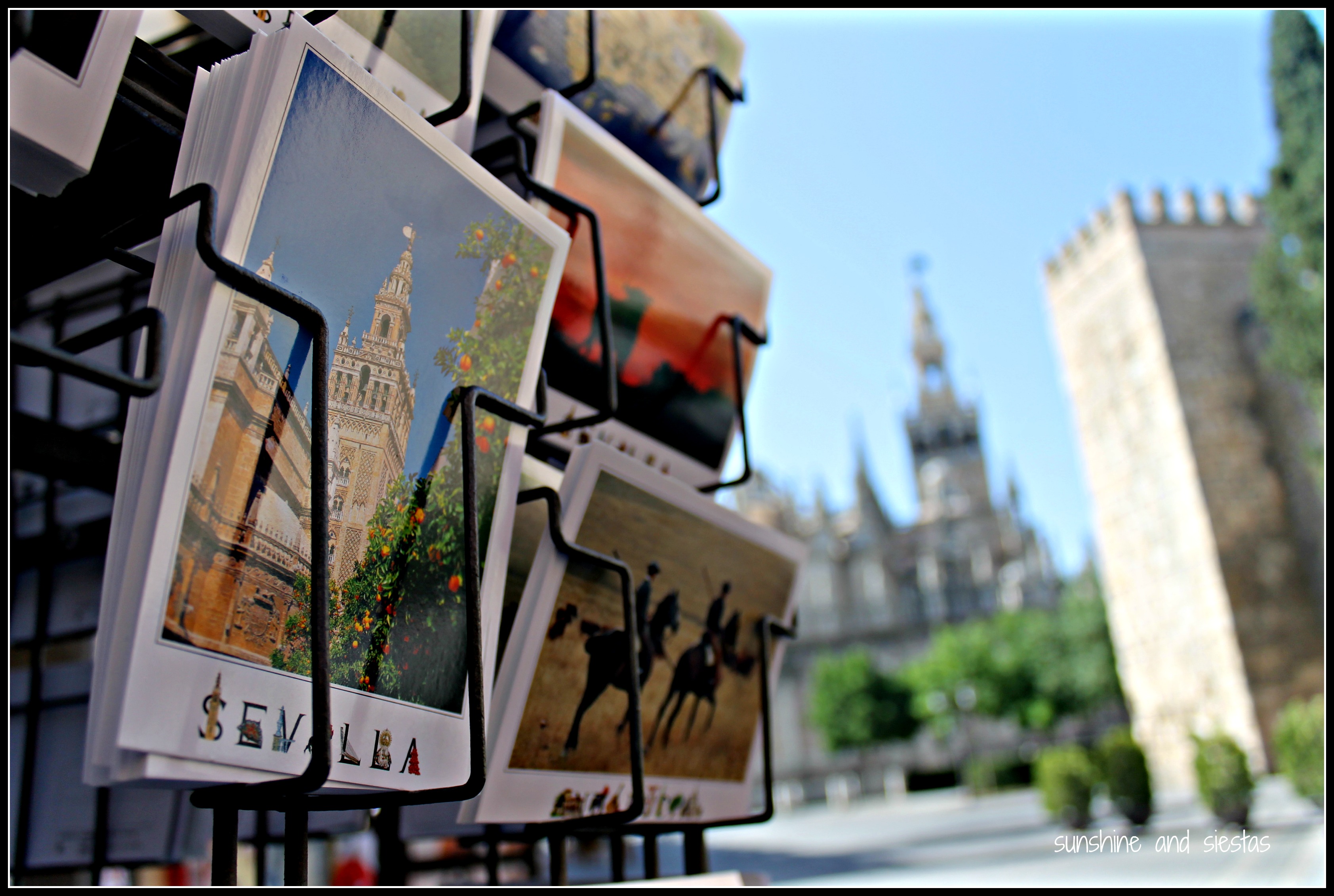
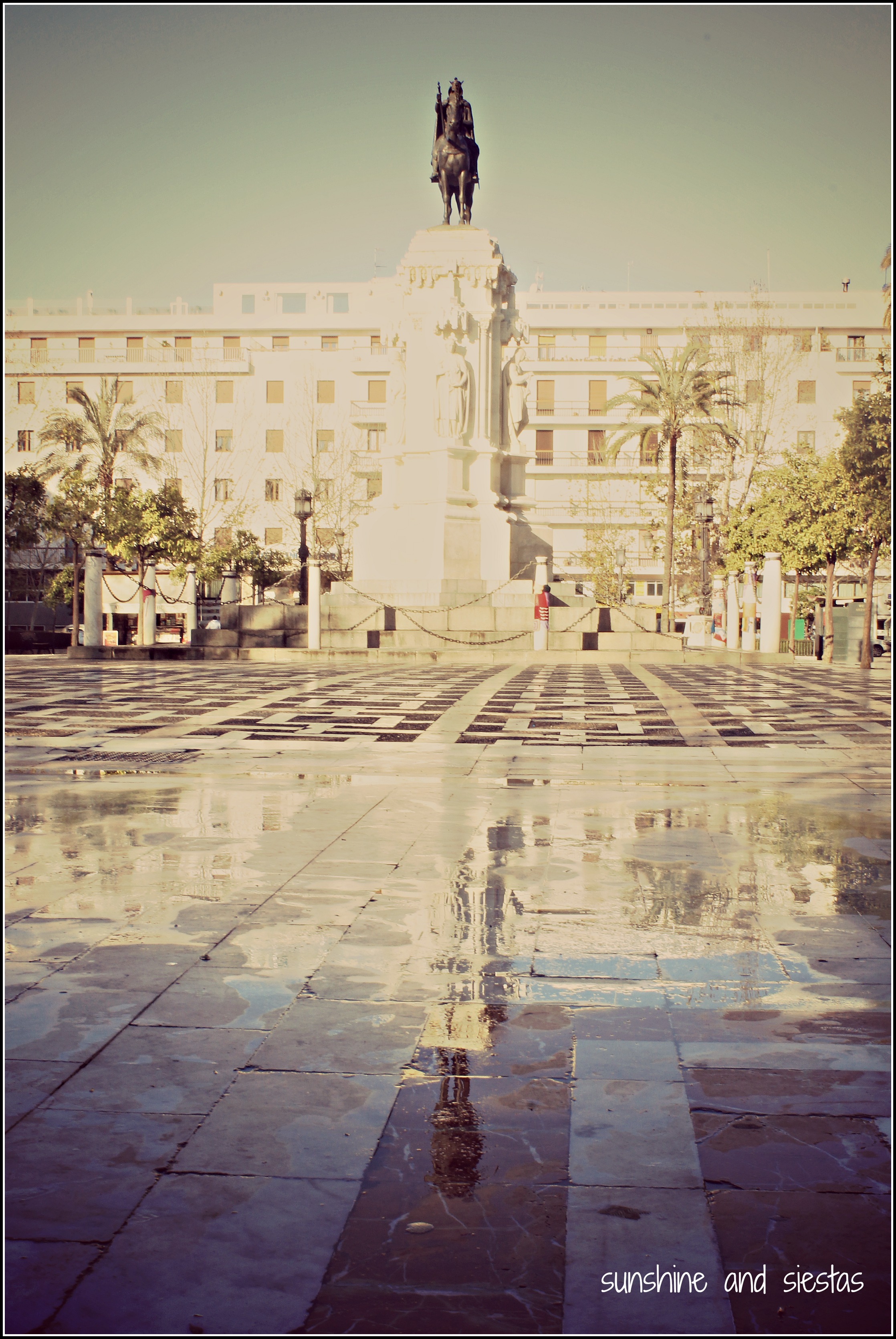
Seville Snapshots: Reflection of the San Fernando Statue of Plaza Nueva

I hastily jumped out of bed, cursing myself for forgetting to set my second alarm. I’d made early morning plans with Katie which included a hot coffee on a cold day and a bit of shopping for Feria dresses (her) and accessories (me). I pulled on dirty jeans, pulished a post and ran full speed out the door, hating to be late for our 9:30 a.m. breakfast date.

In the biting cold of an Andalusian winter morning, I raced towards the city center, dodging a bit of traffic on a long weekend where most where probably still in bed. I arrived and parked my bike right at 9:30 on the dot and had Plaza Nueva to myself. A pilgrim on his way to Santiago ambled slowly on, and I wished him Buen Camino, eager to start my own Camino in August.

I never quite understood why the streets in the city center get washed overnight, though I’d assume it’s from careless sevillanos who let their dogs crap all over the place without thinking to clean it up. Whatever the reason, the last bit of water that hadn’t been evaporated by the penetrating sun cast an eerie glimpse of Rey San Fernando on the marble ground of the Plaza.

Have photos of Seville or Spain to share? I gladly accept them and run them as part of my weekly photo feature! Send me an email to sunshineandsiestas @ gmail.com, or upload to my Facebook page.

Related Posts Plugin for WordPress, Blogger...