Three Ways to Beat Holiday Blues Abroad

Author’s Note: I was overwhelmed at the personal responses I got from my last post, from friends and other bloggers alike. I am by no means giving up on Spain or planning a move home, but I merely wanted to make people aware that leaving one’s home country and striking out elsewhere has its downfalls, too. Even moving to a different city in your state can bring on feelings of isolation and homesickness, so it’s only natural that doing it all in a different country does, too. I woke up with a better attitude after having spilled my guts, but your words of encouragement certainly helped. As they say, a mal tiempo, buena cara.

Ho, ho, ho, I’m a huge Scrooge. Despite my usually cheery personality (please excuse my last post), I am not listening for sleigh bells or roasting chestnuts over an open fire (though I do love snacking on them). In fact, I chose to come to Seville because there was no snow, no Santa Claus and no Black Friday.

But what to do when everyone thinks the days are merry and bright, and you’re hoping for lumps of coal in your stocking to match your mood? Beating the holiday blues, especially when abroad and missing your family (and maybe even a few corny Christmas specials), can be as easy as finding your American friends and clinging onto what American traditions you can. So, amigos, without further ado, your holiday sneer cheer.

Bake until your mini primer burns out!

Although I’ve loathed Christmas for as long as I can remember, I remember all of the afternoons spent baking with my mother and sister in our kitchen growing up. Sugar cookies, chocolate chip for my dad, anise-laced wafers, fudge fingers, Mexican wedding balls – Nancy laid down a schedule and we stuck to it, often hastily stuffing my father’s christmas cookies into a tin and not even bothering to wrap them on Christmas Eve before Mass.
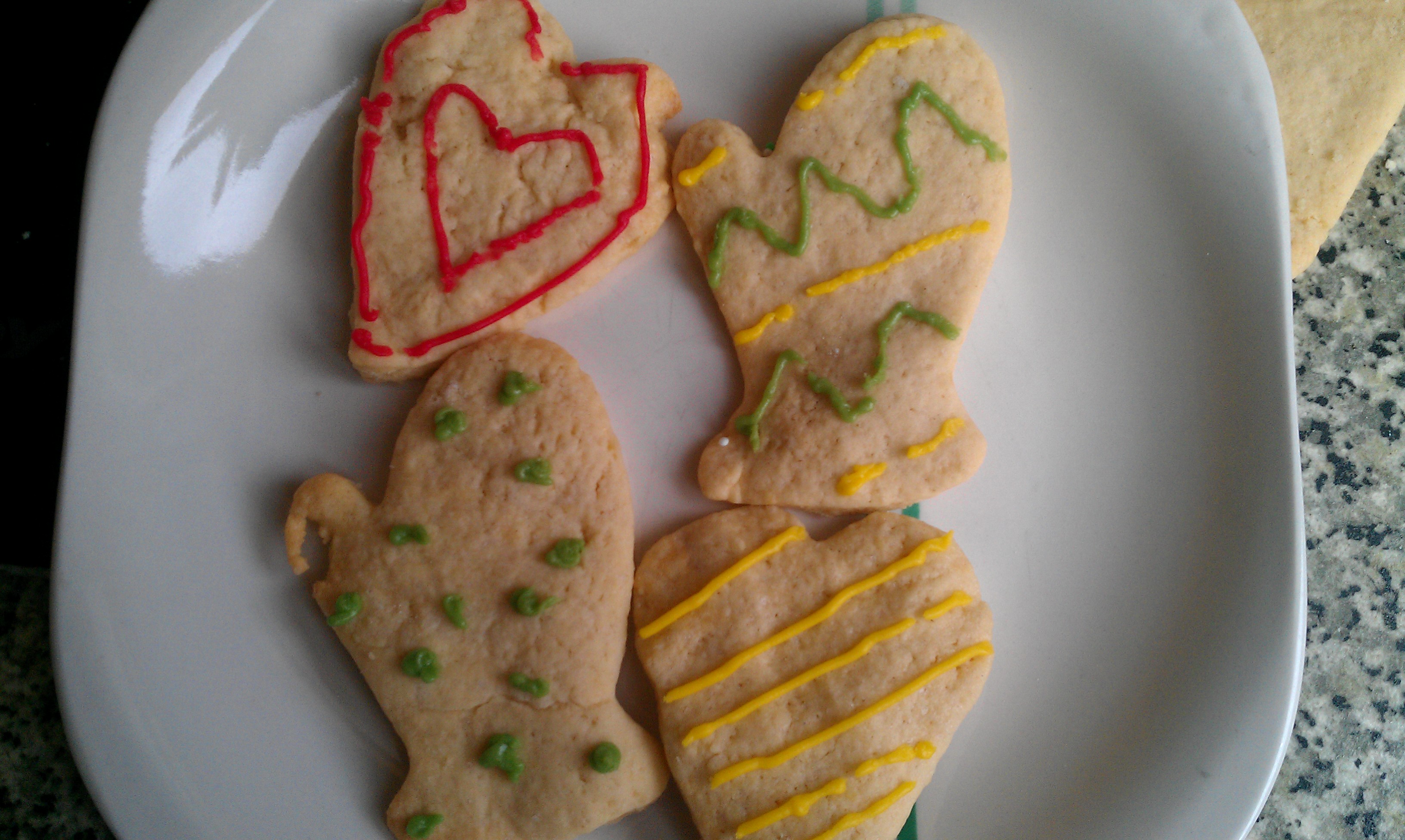
Using Lauren’s recipe for sugar cookies, I gleefully pulled out my new purchase from IKEA (a flour sifter), the vanilla Lisa brought me from home and the last lone egg Kike left me for baking purposes. I made a mess, as usual, and might have broken my mini primer (Santa Baby, hurry down my non-chimney tonight with a hand mixer, please!), but the elation of uncovering the hardened dough and using cookie cutters bought at a hardware store hidden in Bellavista brought me all kinds of elation. And since I’m home alone till Christmas, they’re all mine!

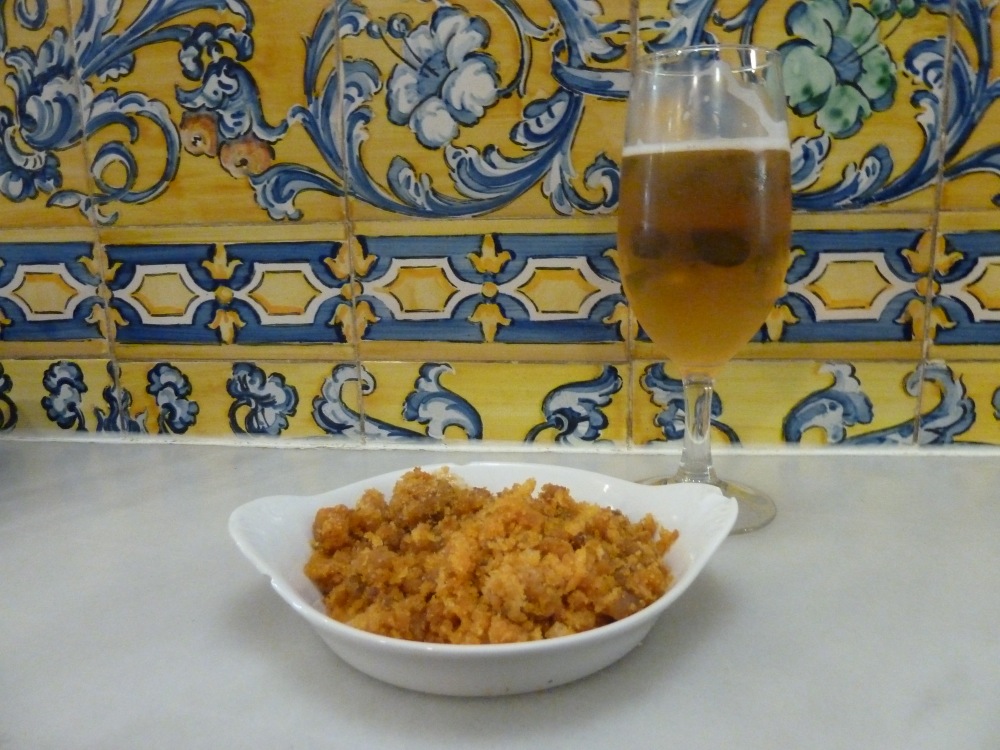
Thankfully, my group of guiritas and I will be having our second-annual cookie exchange this afternoon, so I can expect mulled wine, Love Actually and plenty more cookies to bring more holiday cheer.  If not, there are always pig-lard delicacies to enjoy!

Watch American Football and not feel bad about it

I get homesick a lot in the Fall with important holidays like Halloween and Thanksgiving making us scrambling to find turkeys and a Halloween costume not resembling anything dead. And, duh, it’s football season. I love me a good conference rivalry and the taste of Natty Lite on my lips before the sun’s even up, so being away from the Hawkeye State during September, October and November is torturous.

But, when my holiday esteem has sunk so low, it seems impossible to fix, I repeat my affirmation: There’s no place like Monday Night Football. There’s no place like Monday Night Football… Given Spain’s six- to nine-hour time difference, I can’t always watch the Packers (first Super Bowl win in my lifetime I had the stomach flu, the second time I had to go to bed to get up for school). But even watching the Saints with my NOLA pal this weekend, drinking a Budwesier was enough to make me enjoy the Christmas Lights when we left halfway into the second quarter of the Packers game.
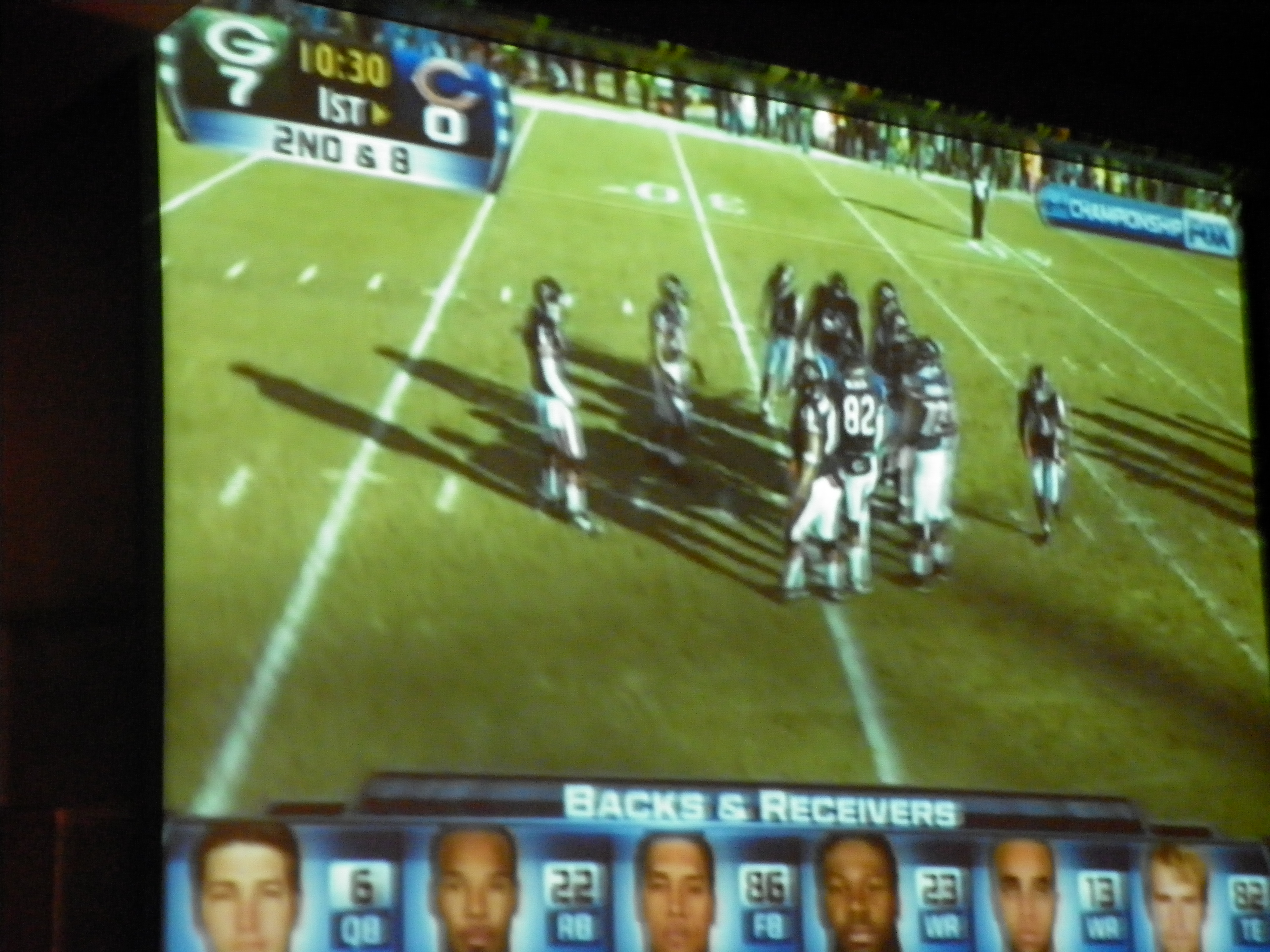
For American and British sports coverage in Spain, look no further than the Irish pubs: Tex Mex on C/ Placentines, O’Neill’s across from the San Bernardo train station and Merchant’s Malthouse on C/ Canalejas. Since they’re catered to study abroad students and tourists alike, many have game day specials or Anglo-friendly activities (Sunday brunch!? Sí!!)

See the Christmas Lights

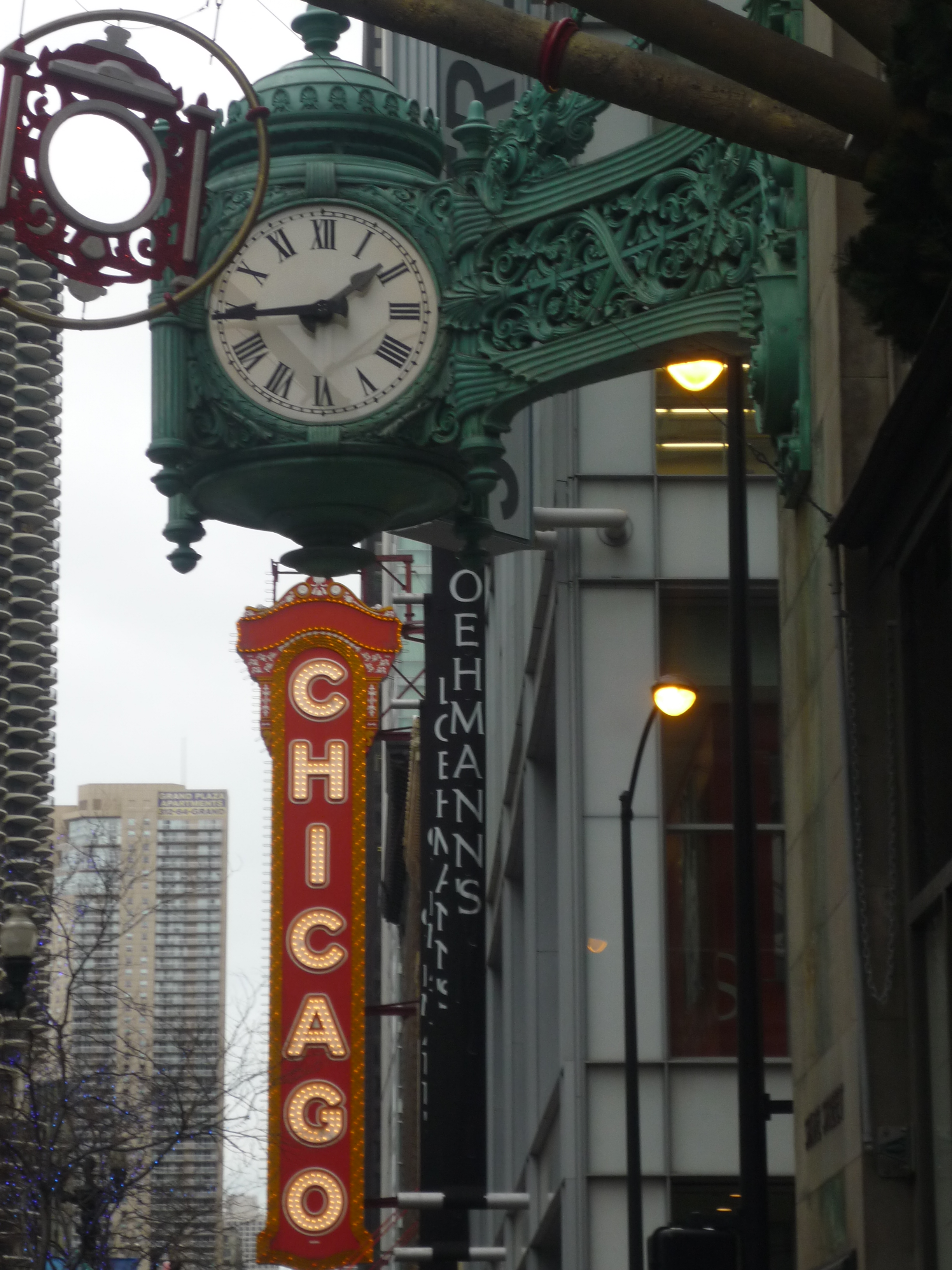
I grew up in Rockford, Illinois, a mid-sized city near the Wisconsin border. Margaret and I looked forward to driving through the annual Festival of Lights, noses pressed to the windows. It was nothing special, but it was loads better than the lady down the street whose lawn barfed out Christmas lights and plastic Santas. And, really, Rudolph’s nose is much more delightful when it’s lit up.
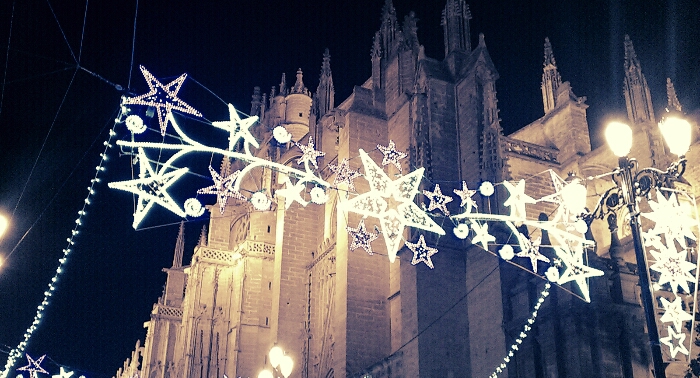
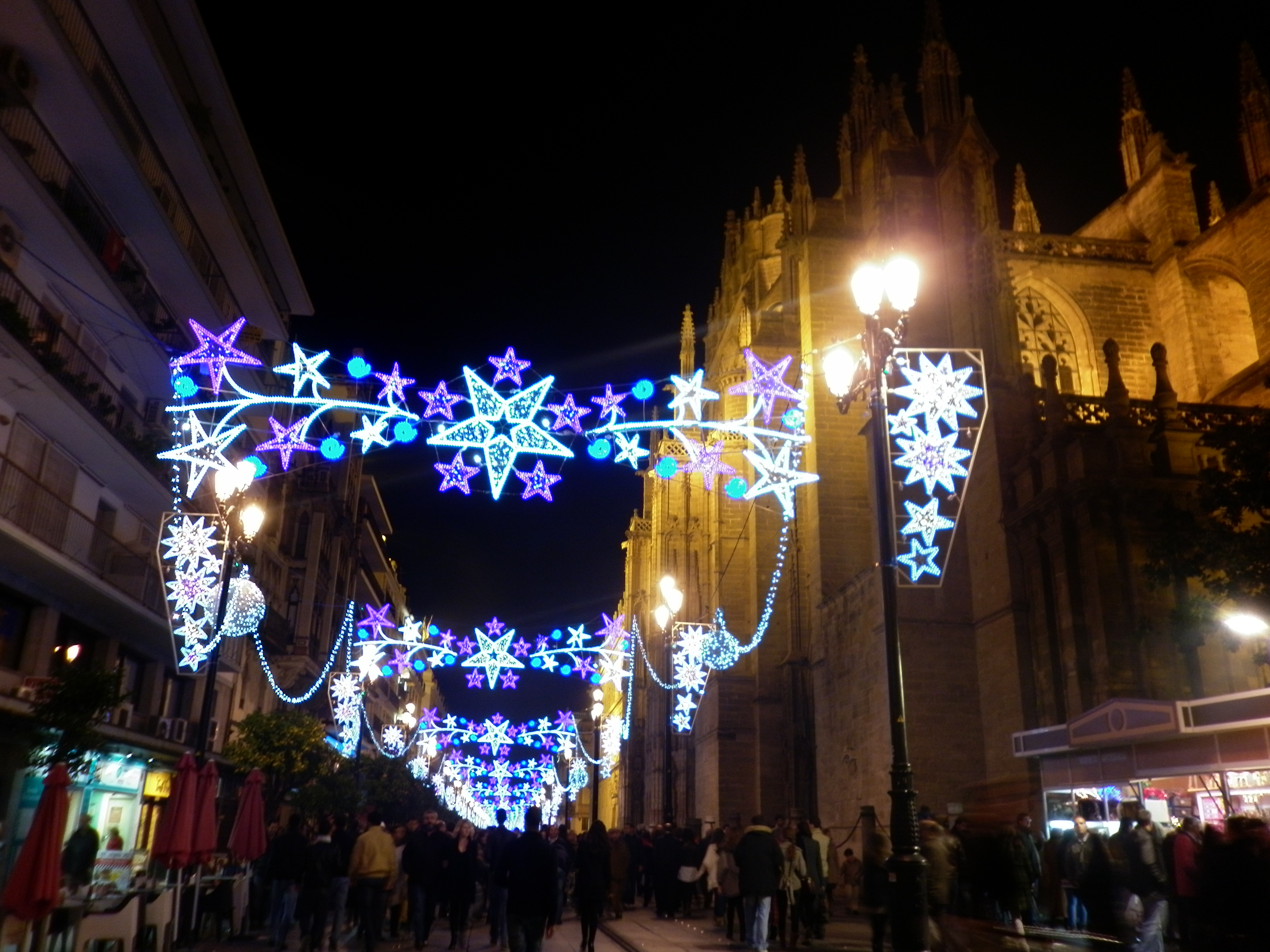
In Spain, the holiday season officially begins with the alumbrado of the Christmas lights on the Inmaculate Concpetion Day, December 8 (Yes, in case you’re wondering, I was off school. ¡Viva la Virgen María!) All along main shopping streets and city avenues, brightly-colored lights are strung, causing the city to cough up half a million euracos and people to stop mid-tracks in front of the oncoming light rail.

But, really, they’re lovely. Spots to hit in Seville include Avenida de la Constitución, Calle San Fernando, Calle San Eloy and Plaza Nueva. I have to settle with the pathetic display on the Alcampo supermarket nextdoor, but it’ll do, especially since the building next to mine blocks the light.
Now that our bellies are full of cookies and beer and our retinas burned from all those bulbs, who wants to scrooge it up with me?

Y nace en Santa Cruz.

Saturday, 9:53 am. Bike is parked next to Alfonso XIII, heavy with a layer of dust. No one is out, save the old men, hands clasped behind their backs in a slow, statuary salute.

Early Saturday mornings mean the city is entirely for me: no camera-toting tourists to dodge, no street performers belting out their tired anthems. The sting of smoke from the chestnut vendors blinds me from the soft, golden color of the sun, long before it drowsily roars with its midday strength.

La Esquina de Arfe becomes my fueling stop, just a brisk walk away from the nondescript churros stand. The woman twisting the long coils hands a doughy stick to a young boy, snatching it away at the last moment. Niño! she scolds, ¡Que te vas a quemar! I take my coffee templado and my toast a bit burnt with tomatoes.

Saturday mornings mean solitude – in the streets, in the Hospital de la Caridad, in my own head. I wander the streets of El Arenal watching vendors receive their fresh goods, feeling the sunlight on my face. After ducking into Plaza del Cabildo for a quick look at the antique shops, I burst out onto Avenida de la Constitución. In the City That Never Socializes Indoors,  the streets have filled with strollers and shoppers.

María Praderes Dolores once sang that Sevilla has a special color. I imagine that it’s the color of the sun that sets in Triana and is born in Santa Cruz, illuminating the Giralda spire on early Saturday mornings.

The Smartest Way to See Seville: Part II

It’s an enormous pleasure to welcome back my first guest blogger, Sandra Vallaure. As a Spaniard who’s lived in and traveled to an extensive list of countries, Sandra’s love for Seville started with a simple weekend getaway, and she’s called La Hispalense home for eight years now and is the author of the e-book Seville in Two Days. Read on for the second in a short series of tips for first-time travellers to Seville.

Day 2. Discover a flamboyant city

If you liked the experience, have breakfast at Horno San Buenaventura. This time you could go to the one located in the Plaza de la Alfalfa, 9. 

Your day must start at the Casa de Pilatos, the finest palace in Seville, which is just up the road from the square. The mixture of styles (Gothic, Mudéjar and Renaissance) result in a very special place., and the two gardens are peaceful despite the noisy streets surrounding the Casa.

It’s a highlight you shouldn’t miss but here’s a tip: don’t pay to visit the upper floor; the real treasures are at the ground floor.

Just in front of the Museo, a weekly art market can be found on Sundays. Photo by the author.

From there, walk through the center to the Palacio de Lebrija  – a must-see if you liked Casa de Pilatos, as you’ll be touring a beautiful residence nearly on your own – or the Museo de Bellas Artes. The fine arts museum is the second largest in Spain after the Prado in Madrid.

A 10-minute walk gets you to Eslava (c/ Eslava, 5) a hidden gem outside the well-traversed tapas bar areas. It’s next to the Plaza de San Lorenzo, my favorite square in Seville. Another option is the Bodega Dos de Mayo (Plaza de la Gavidia, 6), a traditional bar with excellent food and prices.

Plaza San Lorenzo, a lively square just off the tourist map. Photo by the author.

After lunch, double-back on your track until you reach the Iglesia de la Magdalena. The exterior is beautifully decorated, especially its dome and roofs. The interior is also very rich and it’s one of the main examples of the Sevillian baroque architecture. Unfortunately, it needs urgent restoration in some parts. 

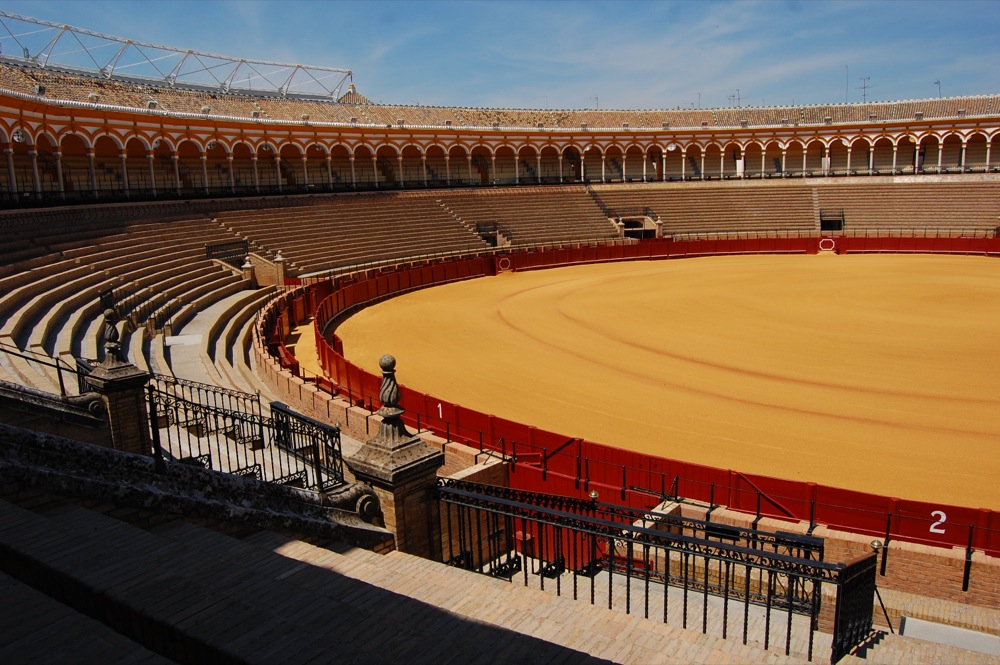
La Maestranza is Seville’s stunning bullring and the oldest in Spain. Though not the oldest or largest , its traditional architecture and Andalusian touches make it a unique place. If you want to know more about bullfighting, the guided tour provides a good summary. 

The gorgeous bullring at the foot of the Guadalquivir. Photo by the author.

Then, cross the Puente de Triana, the oldest bridge above the Guadalquivir. Walk along the Calle Betis and enjoy the views of the Guadalquivir and the Torre del Oro. 

I seriously recommend Las Golondrinas for dinner. You can either go to the classic one in Antillano Campos, 26 ,or the modern one in Pagés del Corro, 76. They are 2 minutes walking one from the other and the food is awesome.

Alternatively, you can try Paco España at c/ Alfarería, 18. It’s a very welcoming bar. 

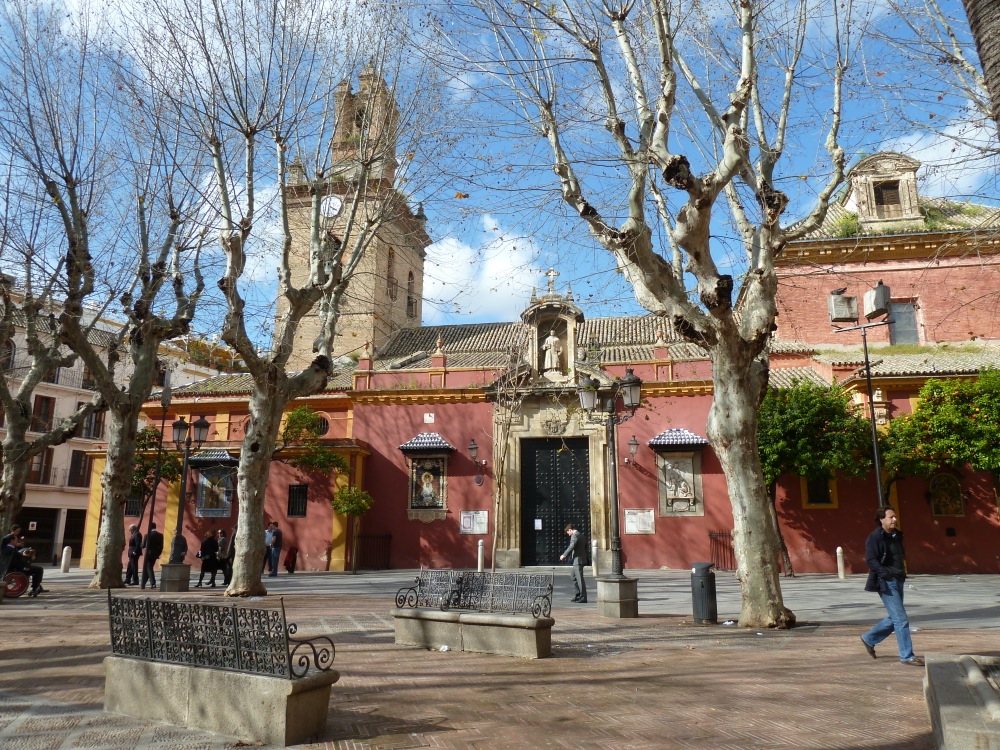
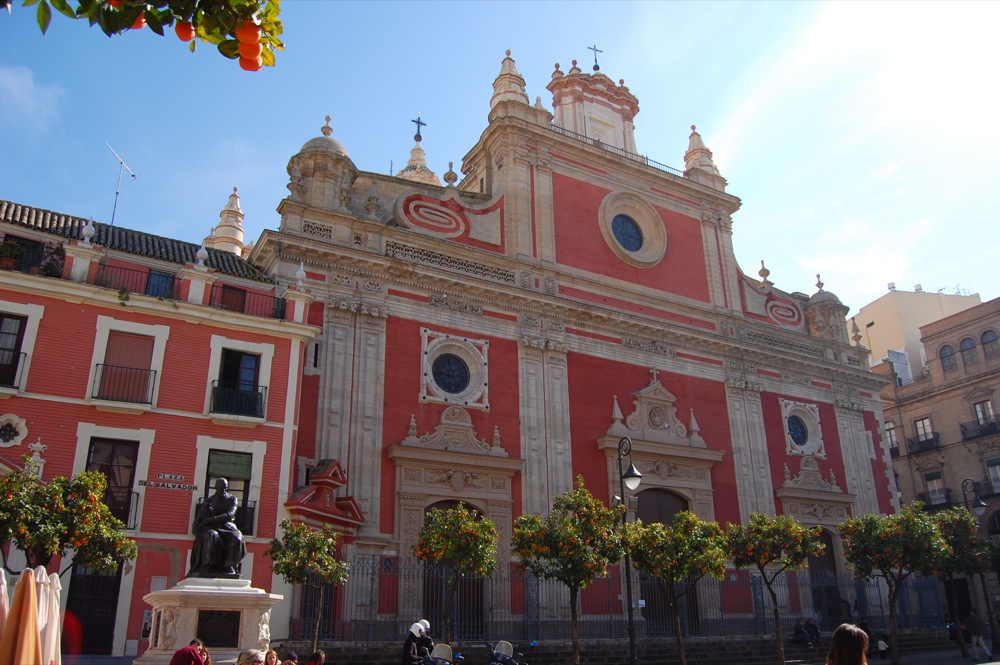
The salmon-pink facade of the Iglesia del Salvador is a popular meeting point for sevillanos. Photo by the author.

As you can see, Seville is one of the most vibrant cities in Spain. In my opinion, it’s also the most beautiful. Actually, if you ask around locals will tell you that “there’s no need to go anywhere else”. And they’re right!

ABOUT THE AUTHOR
Sandra lives in Seville and spends all her free time exploring the world. She is the editor of Seville Traveller, an online resource about the city. She has also published an e-book that will help you plan the trip of a lifetime. You can follow her on Twitter or keep posted through Facebook.

The Smartest Way to See Seville: Part 1

It’s an enormous pleasure to welcome my first guest blogger, Sandra Vallaure. As a Spaniard who’s lived in and traveled to an extensive list of countries, Sandra’s love for Seville started with a simple weekend getaway, and she’s called La Hispalense home for eight years now and is the author of the e-book Seville in Two Days. Read on for the first in a short series of tips for first-time travellers to Seville. All photos were taken by the author.

Seville is a place that you need to discover walking. Otherwise, you’ll miss the point. Seville is not only a bunch of magnificent buildings and palaces. It’s also its people and their passion.

You may ask yourself, how to explore the best of the city in two days? Piece of cake. The following walks will guide you across the city and
you won’t miss anything important. 
So, get a map from the Internet and let’s wander its dazzling streets.

Day 1. The Essentials

Why not have breakfast at Horno San Buenaventura (Avenida de la Constitución, 16)? Sevillians love to have breakfast outside. 

Once you’re done, buy a snack and take it with you. Meals tend to start
late in Spain and you won’t find any tapas bar open before 1.30pm.

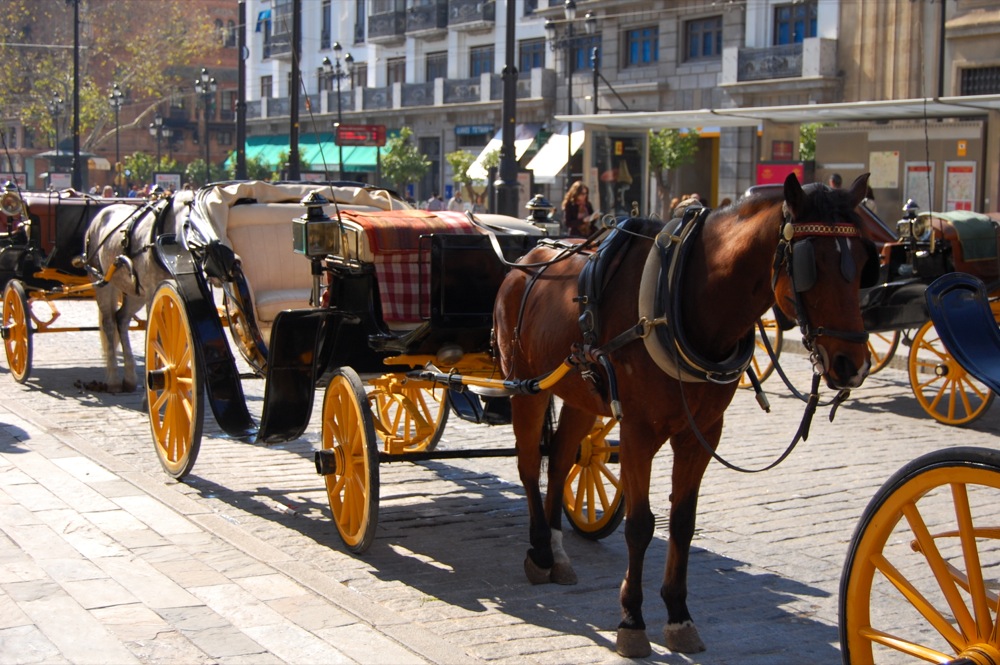
From there, walk to the Plaza Virgen de los Reyes where your walk begins. You will recognize it because it’s usually full of horse-drawn carriages. The central fountain is surrounded by three buildings: The largest one is the Cathedral, with the magnificent Giralda tower dominating the city. The red baroque façade belongs to the Archbishop’s Palace (Palacio Arzobispal). Finally, the white building is the Convento de la Encarnación.

Walk along the Cathedral to reach the Plaza del Triunfo. Look for the Lion’s Gate – the Alcázar’s entrance.

The Alcázar is one of the most impressive monuments of Seville and a favorite of mine. This royal palace was built in the 14th century, and as time went on, more buildings were added to the complex, resulting in a mix of Arabic styles and Christian influences.

Both the palace and its gardens are worth it, so take your time and enjoy this romantic place.

Once you exit the Alcázar, you enter the Patio de Banderas. Keep walking to reach the Plaza del Triunfo again. Next, head to the Cathedral. Did you know that Seville is home to the largest Gothic Cathedral in the world? Built on the site of an old 12th Century mosque after the Christian reconquest of 1248, it took more than century (1401 – 1506) to build it.

Once you are there, it’s easier to visit following a counterclockwise circuit so you don’t miss any of its chapels. Then, go to the main altar where the altarpiece is magnificent. Don’t forget the Royal Chapel and Columbus’ tomb.

The must-see is the Giralda, originally the mosque’s minaret that was transformed into a bell tower. I recommend you climb to the top. The views from there are spectacular and you’ll get to see the whole city. Moreover, there are ramps instead of steps so you won’t find it difficult at all.

Finally, go back down and exit to the Patio de los Naranjos. This patio is full of orange trees and was the place where Muslims used to wash themselves before entering the mosque to pray. This is where your visit to the Cathedral ends.

Walk along Calle Mateos Gago to have lunch at Las Columnas (C/Rodrigo Caro, 1). They offer very good, traditional tapas (small dishes) and montaditos (small filled buns). Alternately, you could try Bodeguita Antonio Romero (C/Antonio Diaz, 19).

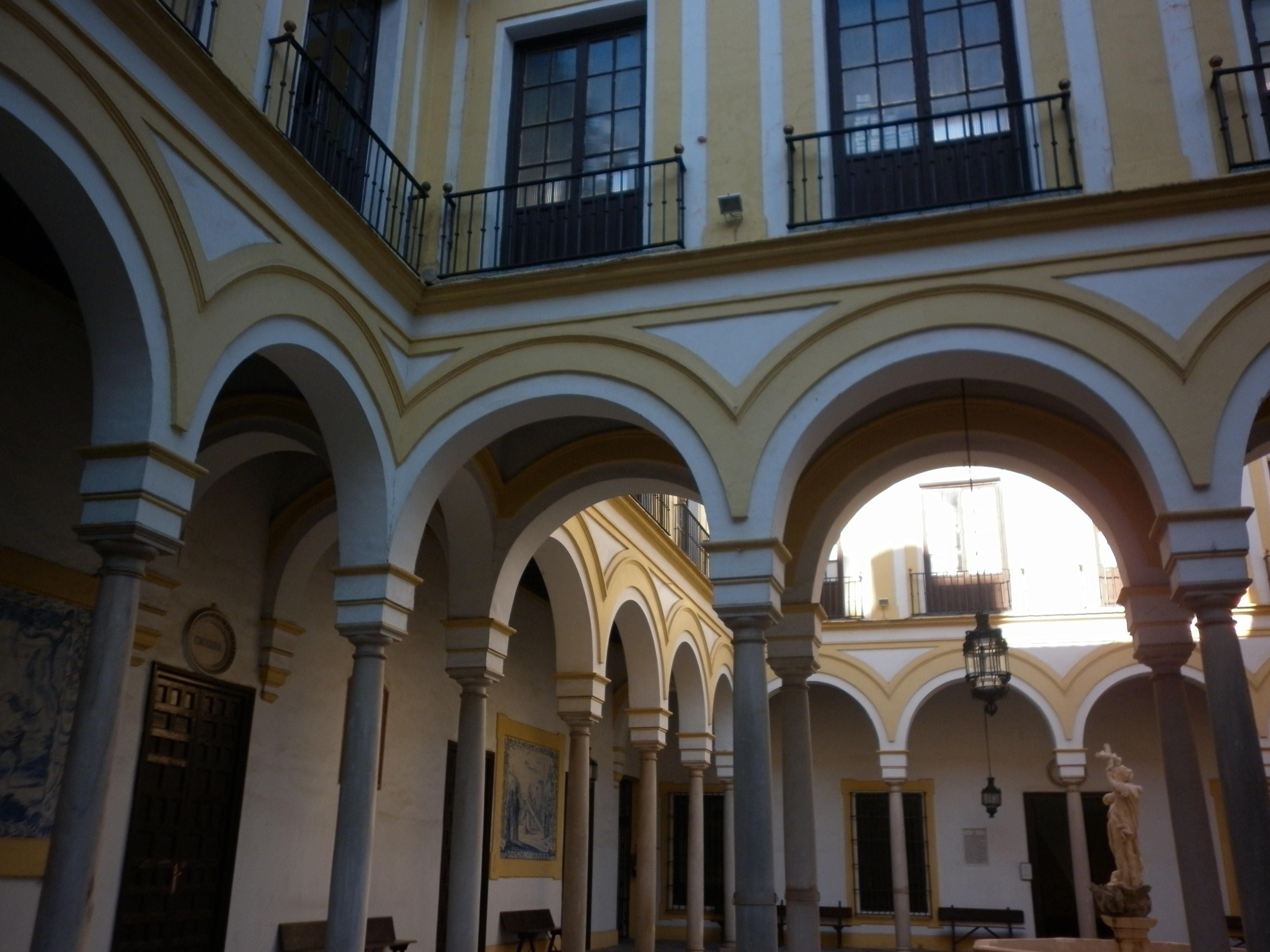
From either two places, the Hospital de la Caridad is a few minutes’ walk. This charity hospital was founded in 1674 and it still serves its initial purpose: taking care for the elderly and handicapped. But the real treasure is inside its walls. The church is one of the most impressive of the entire city, and it contains masterpieces from painter Murillo and sculptor Valdés Leal.

The visit won’t take you long so can now head to Puerta de Jeréz and walk along the Calle San Fernando, where the Real Fábrica de Tabacos is. Nowadays it’s Seville University´s main building and worth a quick visit.

If not, cross the Plaza de San Juan de Austria and head South to the Parque de María Luisa (don’t get confused with the Jardines de San Sebastián, which are next to it).

The Parque de María Luisa is the largest park of Seville. Inside you can find some of the most important buildings of the 1929’s Ibero-American Exposition. The impressive Plaza de España is one of them. as it was the Spanish pavilion.

The Plaza de España is one of the most remarkable constructions of the 20th century, and of the city in itself. Its size is spectacular, and it’s even been used as the backdrop for several films. Along the half-moon building, there are detailed tiles and ceramic handicraft, symbolizing Spain and its relationship with Latin and South American countries.

You can have dinner at LaBulla (c/ Dos de Mayo, 26), the best original cuisine you’ll ever taste. And if you aren’t too tired after that, go for a drink to the top roof terrace at Eme Hotel or Hotel Doña María and enjoy the gorgeous views of the Plaza del Triunfo, where your walk began.

Why not include the Barrio de Santa Cruz?

Despite guide books and city tours including Barrio Santa Cruz as a highlight, I am not a fan. Traditionally the old Jewish quarter, it was restored during the early 19th century.

It’s true that it may have some charm but the hordes of visitors crowding the narrow lanes and the touristic tapas bars offering bad quality and expensive meals spoil the neighborhood. If you want to experience a small Andalusian town, go to Carmona or Arcos de la Frontera, to name a few.

If you do go, wander around its narrow lanes and visit the Hospital de los Venerables.

ABOUT THE AUTHOR
Sandra lives in Seville and spends all her free time exploring the world. She is the editor of Seville Traveller, an online resource about the city. You can follow her on Twitter or keep posted through Facebook.

from the Chi to the SVQ

My life is dominated by Spanish culture: I have a Spanish partner and speak to him exclusively in Spanish, work in a Spanish school with Spanish children, and don’t know a soul in my surroundings who speaks my language and understands my customs. People joke that I’m heavily influenced by the sevillana way of life, and I once survived 20 months without stepping foot in America (or eating a Portillo’s hotdog).

Last night, I grabbed my bike and headed to the center last night to meet two of my fellow Chicago folk, Kelly and Siebs, for Mexican food. As I parked in Plaza San Francisco, listening to Coldplay’s “Beautiful World” and marveled at the light from the Giralda flooding the cobblestone. I snapped a picture on my phone, and upon putting it back in my bag, whirled around to see someone in a Packers jersey. I had to laugh to myself.

Kelly had just been shoe shopping, so we walked down Calle Sierpes towards the square where we’d meet Mickey. Plaza Salvador was half empty on the warm Autumn night, and as we chatted about her upcoming trip to Paris, I stopped dead in my tracks. A bespectacled study abroad student with an accent matching my mother’s was talking about the Cubs and Sox.

I may be far from Cheesehead territory and the Northside, but it takes very little to get me back to that same old place, Sweet Home Chicago.

What do you get homesick for while abroad? How do you deal with homesickness? Do you stick to expat enclaves in your city abroad?

Show me some CARA.

It’s time for another edition of “Those crazy Spaniards and their crazy language!” We’ve already learned the many usages of cojones (and that Spaniards hold them, the actual things, in high favor), so why not continue the anatomy lesson and its uses in modern castellano with the face.

O sea, what are the uses of the word cara, other than it’s the adjective for expensive if the noun it describes is feminine, like casa or falda.

The word cara, like cojones in my house a few weeks ago, is all over the place. In this day and age, Spaniards are using the global economic meltdown as their scapegoat for everything, and calling all of the politicians a group of caraduras. “Crap, we’re out of milk. That stupid crisis! ME CAGO EN LA LECHE Y EN LA MADRE QUE LE PARIO A [Presidente] ZAPATERO.” Or, “My son is bad at school because of the crisis.” No he’s not, that’s a lie, and what you have is mucha cara, señora. So there.

Let’s have a look at how Spaniards inject more of their hilarious phrases with the word for face, shall we?

Por la cara

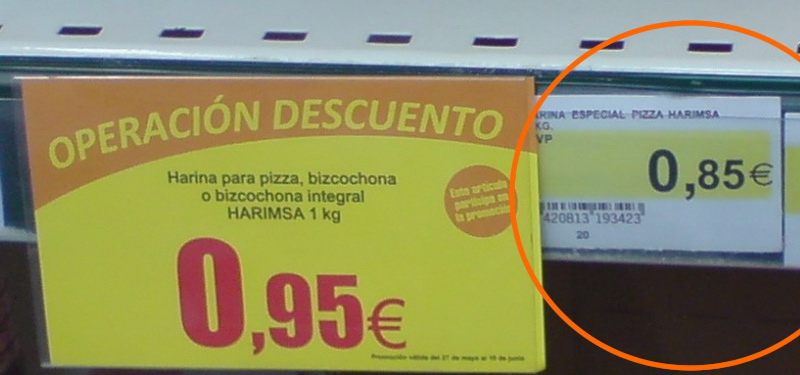
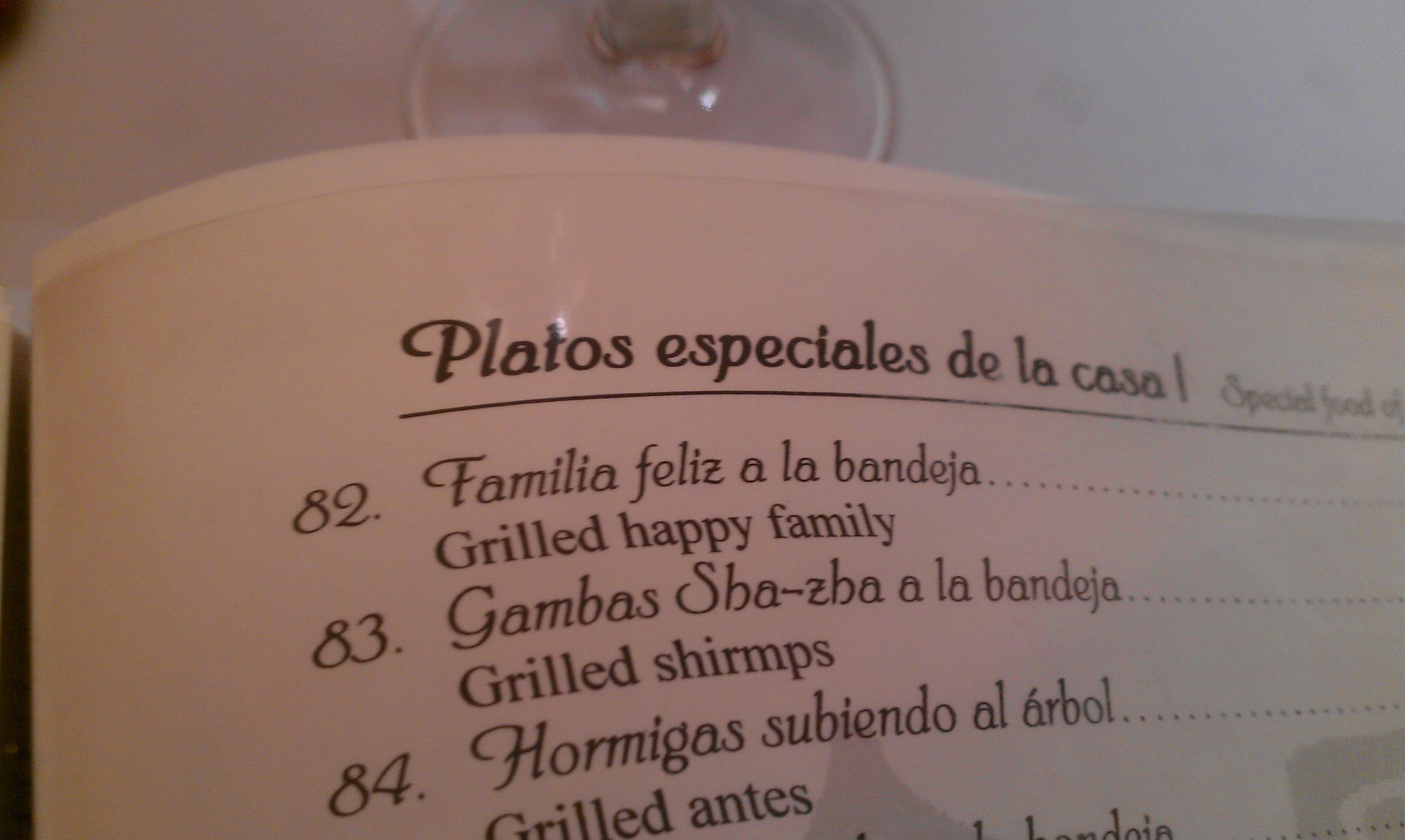
I always laugh at poorly done Spanish to English translations, such as this one:

But one I do love is to say, “by the face,” which means to do something and unexpectedly do it free. Take note: I went to Fulanito’s bar and got drunk por la cara. In other words, My bro hooked me up with as many whiskeys as I could drink, and I didn’t pay for a single one of them. Nowadays, it’s common to see the phrase in English used in advertisements geared towards young people.

Tener cara, Ser un/a caradura

Let’s say this one with a British accent: this means, for lack of better words, to be cheeky. Someone who can get away with having a little sass or, likewise, no shame. I have plenty of students who fit the bill, so it’s not uncommon for people to say that kids have caradura, or someone who makes excessive demands, too.

A similar expression, also using face!, would be to tener más cara que espalda – to have more cheek than back, literally. Or, tener morro works just fine, too.

Best just to say it as it is: to be a total desvergüenza like this guy.

Tener cara de sueño / malo / trasnochar…etc.

The most comment way I am greeted every morning is, “Seño, tienes cara de sueño!” which means I’m carrying a tired, mopey face. Tener cara de is merely a way for someone to comment on your current state of being (tired, party puss), or even something that is normally true (liar, good person). Like many uses of cojones, the adjective can be substituted for just about anything.

At the moment, I have a cara de tó – of sleepiness, of disgust (I made a bunch of small boats out of flan molds today, blah), de buena porque la soy, de todo!

Costar un ojo de la cara

Let’s play a game! What’s the phrase we use in Engrish that employs anatomical parts and means that something is worth a lot of money and you paid all that money for it? Why, yes, I was thinking of “it cost me an arm and a leg!” Spain’s version is translated as, costing an eye of the face, and it’s more fun because of it.

Going home at Christmas this year? Yep, I may as well be rocking an eyepatch these days. But as they say, a mal tiempo, buena cara.

Got any more to add? There are plenty more I haven’t included! Do me the favor of writing them in the comments – I’ve got more DELE and idioms studying to get done!

Related Posts Plugin for WordPress, Blogger...