Seville Snapshots: Merry Christmas from Sunshine and Siestas

Christmas used to mean bickering in my family. The chores, the frantic house cleaning and cooking, the rush of kisses from the in-laws after finally deciding who would be hosting. The constant car trips, the Christmas Mass standing up, the incessant carols blasting from every car radio – I could have done without it.

Then I moved to Spain.
I escape not only the bickering, but also the Christmas carols (I swear I know just the chorus of a handful of Spanish villancicos), the tree hunt looking for Nancy’s perfect Douglas Fir, the snow in Chicago. And somehow along the way, Christmas has become one of the best opportunities I have to see my family. Over the last six navidades that I’ve found myself in Spain, I’ve been fortunate enough to travel around Andalusia and Ireland, to Morocco, to The American Southwest. Gone are the holiday traditions we’ve had since forever, as my family and I create world travel as our Christmas treat to one another. I miss watching Morgan step gingerly into the snow when it’s higher than her head and treating Aunt Pat to lunch at the Walnut Room after seeing the windows at Field’s, but helping my family make travel as important to them as it is to me is what fuels the magic for me during the season.

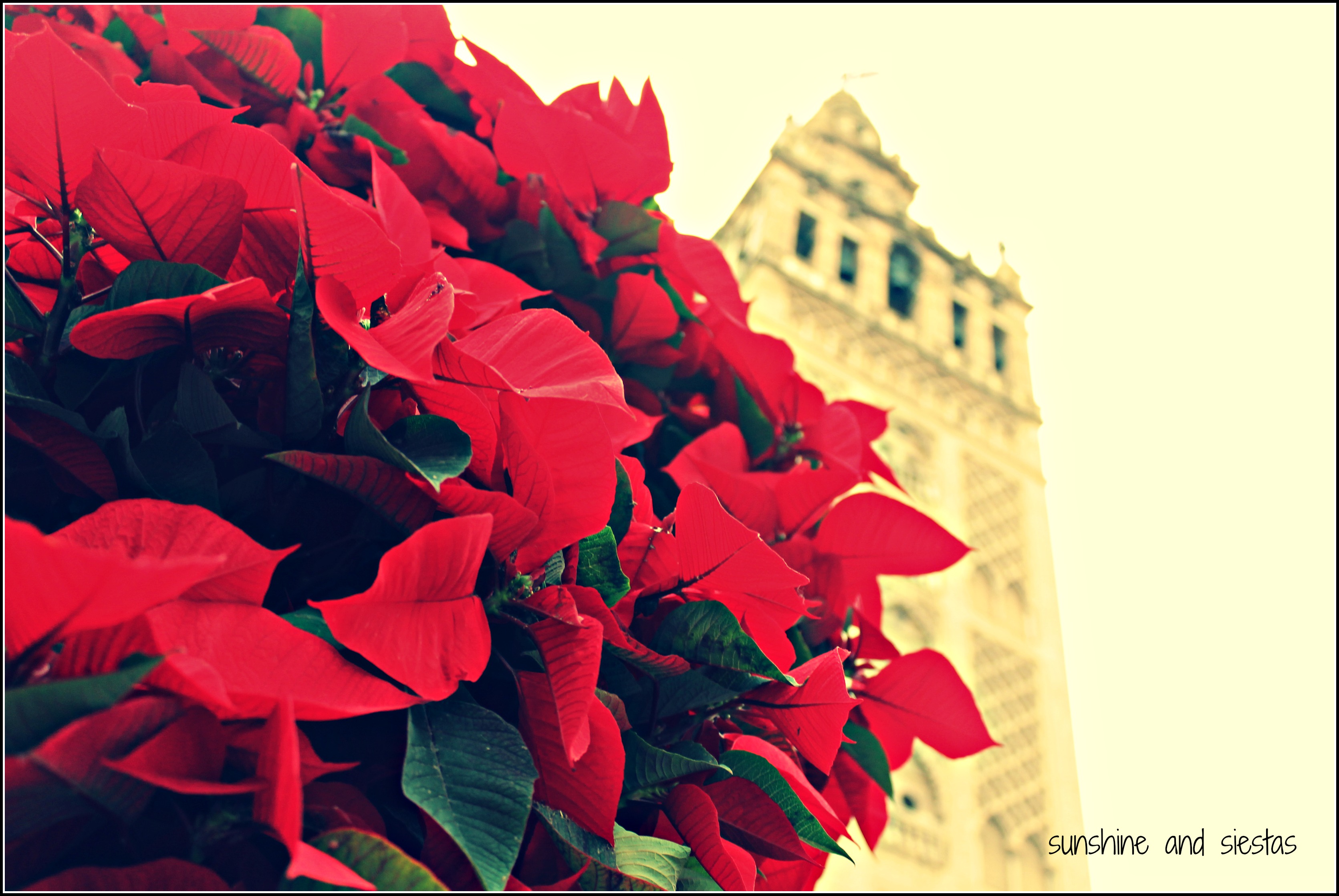
To you and yours, Merry Christmas from me. I am forever grateful for my readers who seem like family more and more each day. Estés donde estés, enjoy this wonderful season, and don’t worry so much about your waistline (dude, Spain has lard cookies as its holiday indulgence, so you can’t be any worse off than me!). Wishing you all the very, very best for 2013 from Spain!

Besos, Cat

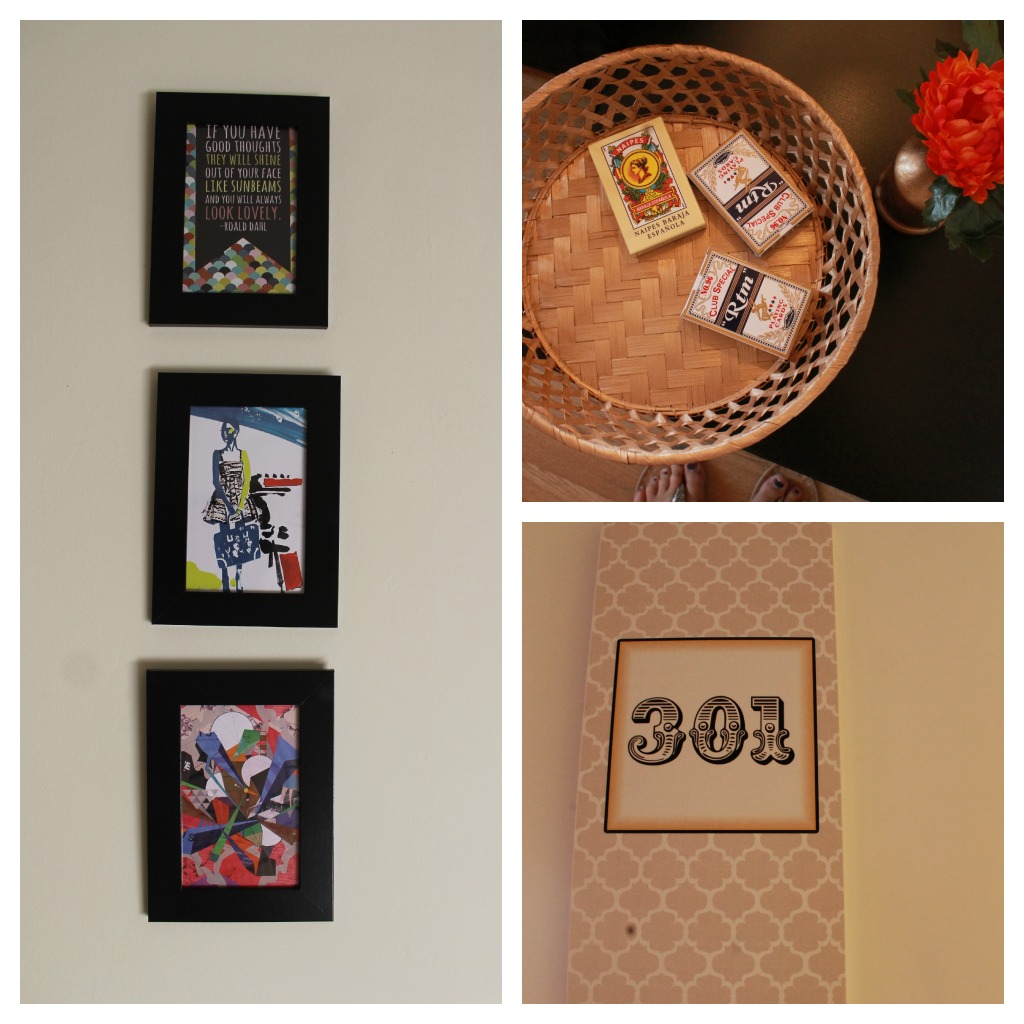
LUXE: Seville’s Luxury Hostel

When  I first moved to La Hispalense, I was in touch with Shawn, the woman behind Seville Tapas Tours, about an apartment. The balcony overlooked the bustling Mateos Gago Street and was within earshot of the Giralda’s massive church bells. I could image the smell of orange blossoms wafting into my bedroom window at night as the sounds below lulled me to sleep, but the apartment was not meant to be. Living right in the middle of the historic quarter would have been lovely, but perhaps a bit noisy.

When visiting, my friends who prefer to stay in the city center always look for a place near the Cathedral for its proximity to tapas bars and attractions. Tucked into a side street just steps off of the Plaza de la Virgen de los Reyes is Grand Luxe Hostel, a hostel concept offering premium accomodation in the middle of Spain’s most vibrant city.

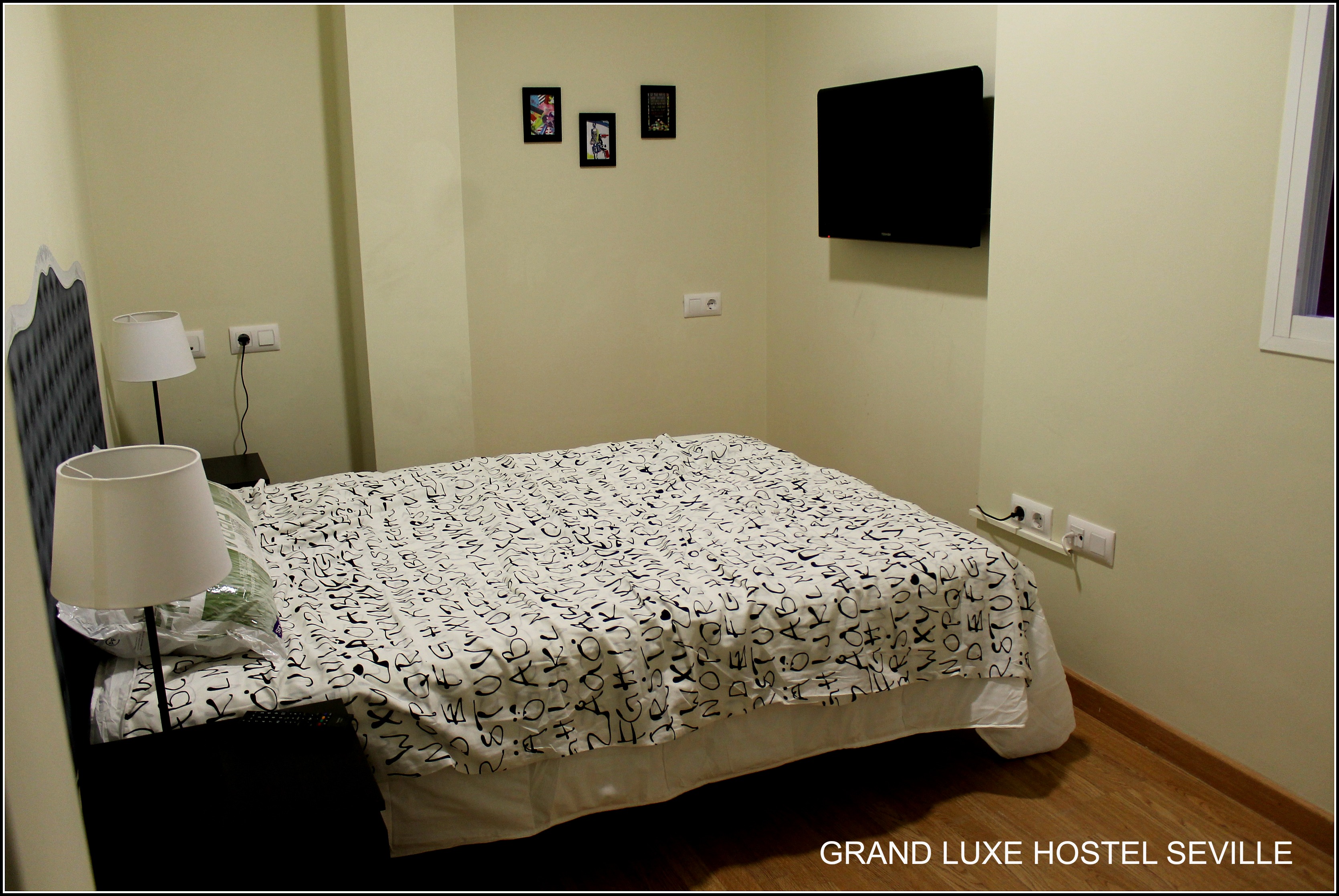
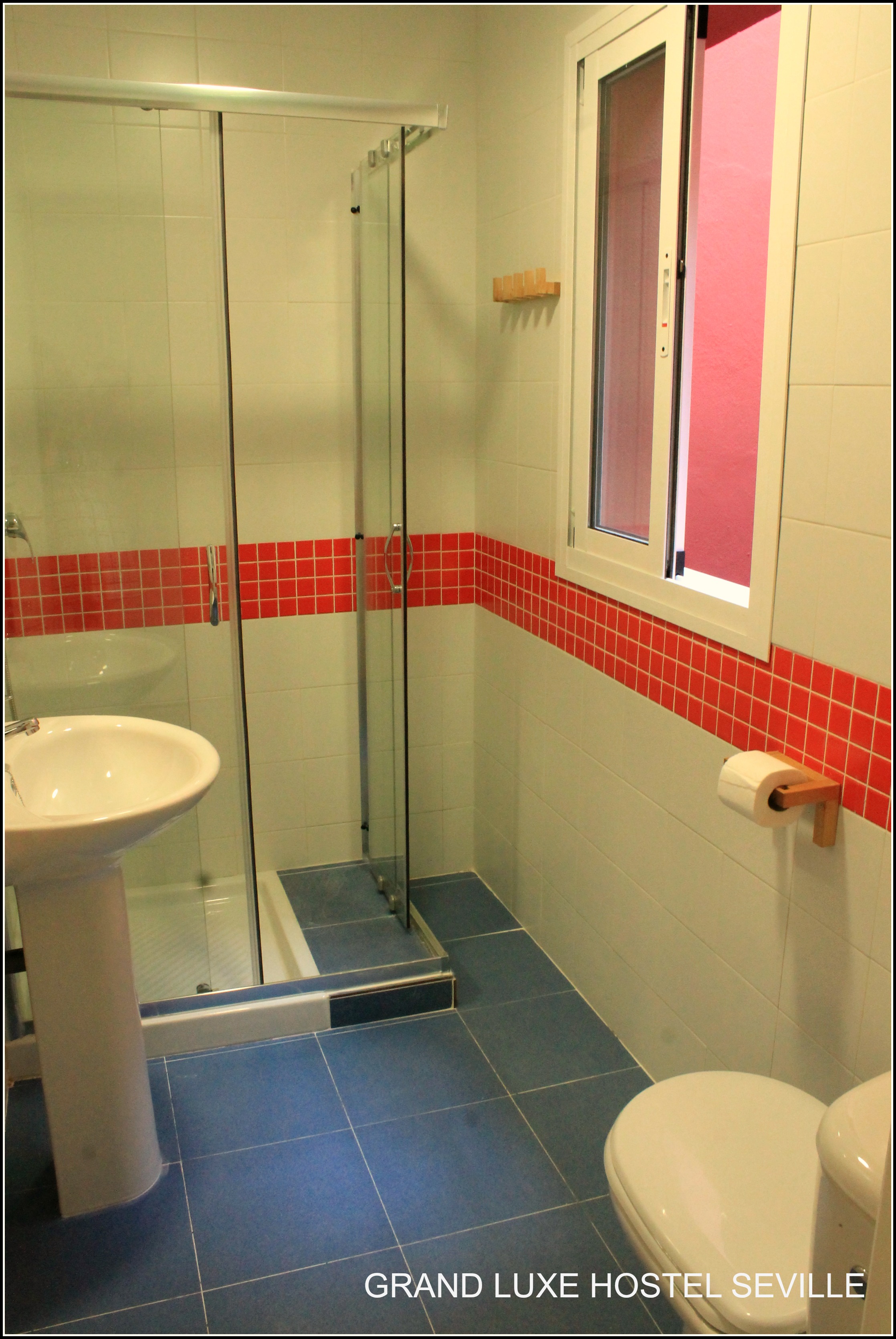
The cobblestoned alleyway leads you to the heavy wooden door of Grand Luxe Hostel. The building, restored in the late 19th Century, is modern and fully-quipped, featuring in-suite bathrooms and rooms especially for families. Grand Luze features 64 for beds in a mix of private double, mixed dorms, girls-only dorms and private twin, all at afforable prices right in the heart of Seville’s quaint Santa Cruz neighborhood.

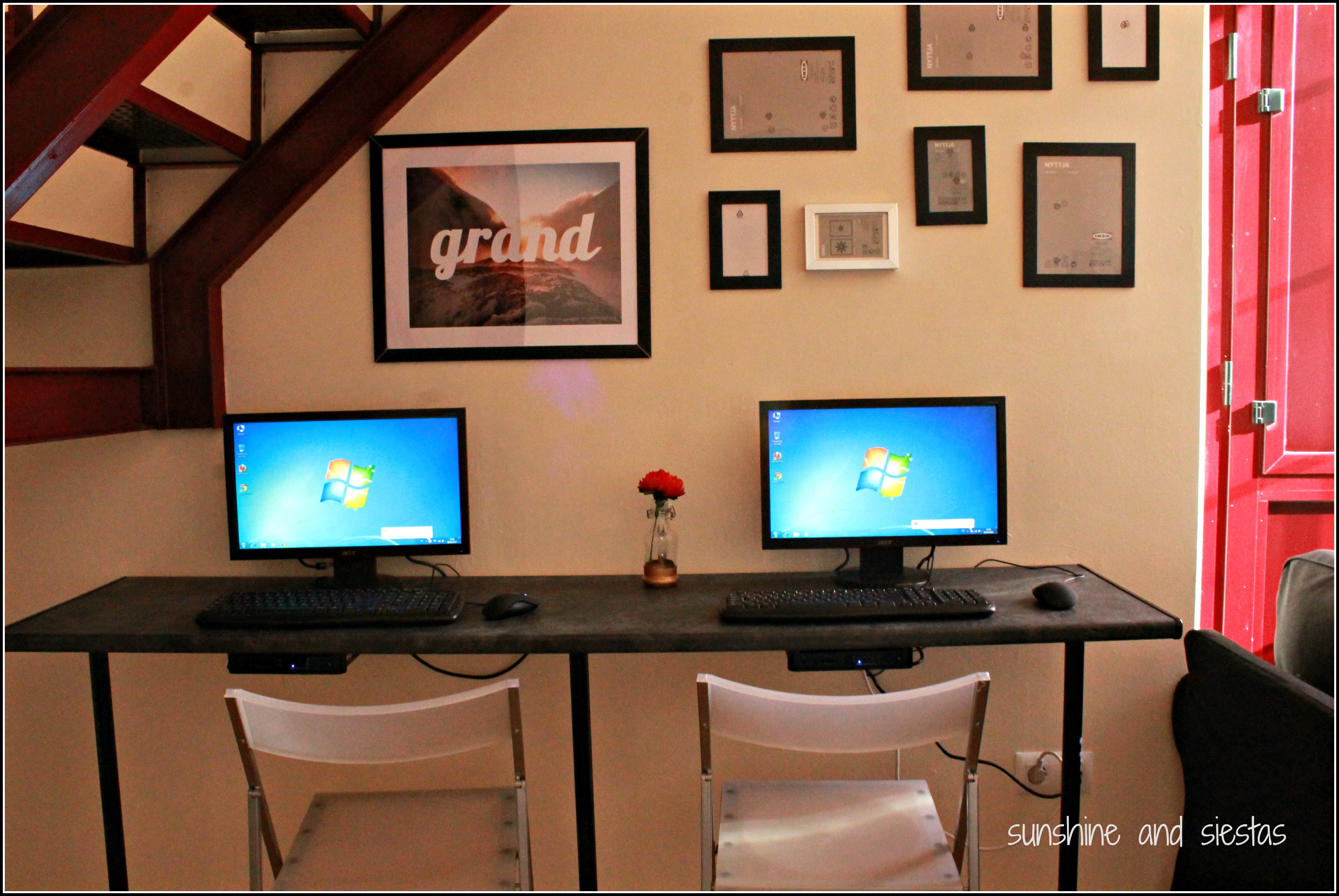
The building has several ammenities – such as an elevator, free wi-fi, a kitchen with complmentary breakfast, and even free gym access at nearby Cuesta Sport in the morning. What’s more, the open areas are comfy and condusive for mingling.

Owner Kate’s eye for design makes the space modern, bright and fun, while the building still retains its charm. In each room, guests enjoy free reading lamps, personal cubbies and private lockers.

The hostel’s best kept secret? The terrace views of the Cathedral and Giralda, which can be enjoyed with a complimentary glass of wine at dusk. The hostel is a prefect jumping off point for Seville’s famous nightlife – great tapas bars, flamenco peñas and cocktail bars are only a stone’s throw away from Grand Luxe, and it’s also within walking distance of the bus station for a quick getaway.

Owners José Luis and Kate

Rooms and bed are available from December 16th, 2012. You can find LUXE on Hostelworld, Hostelbookers or their personal website. They’ve also got a Facebook page, or you can look them up on twitter at @grandluxehostel.

I was not compensated in any way for this article. All views and opinions are my own.

Seville Snapshot: Christmas Lights at Town Hall

When it comes to Christmas, I’m typically a Scrooge. My ears bleed when I hear Christmas Carols or their Spanish counterpart, and the only redeeming part of the season are peppermint flavored ice cream, coffee and candy canes.

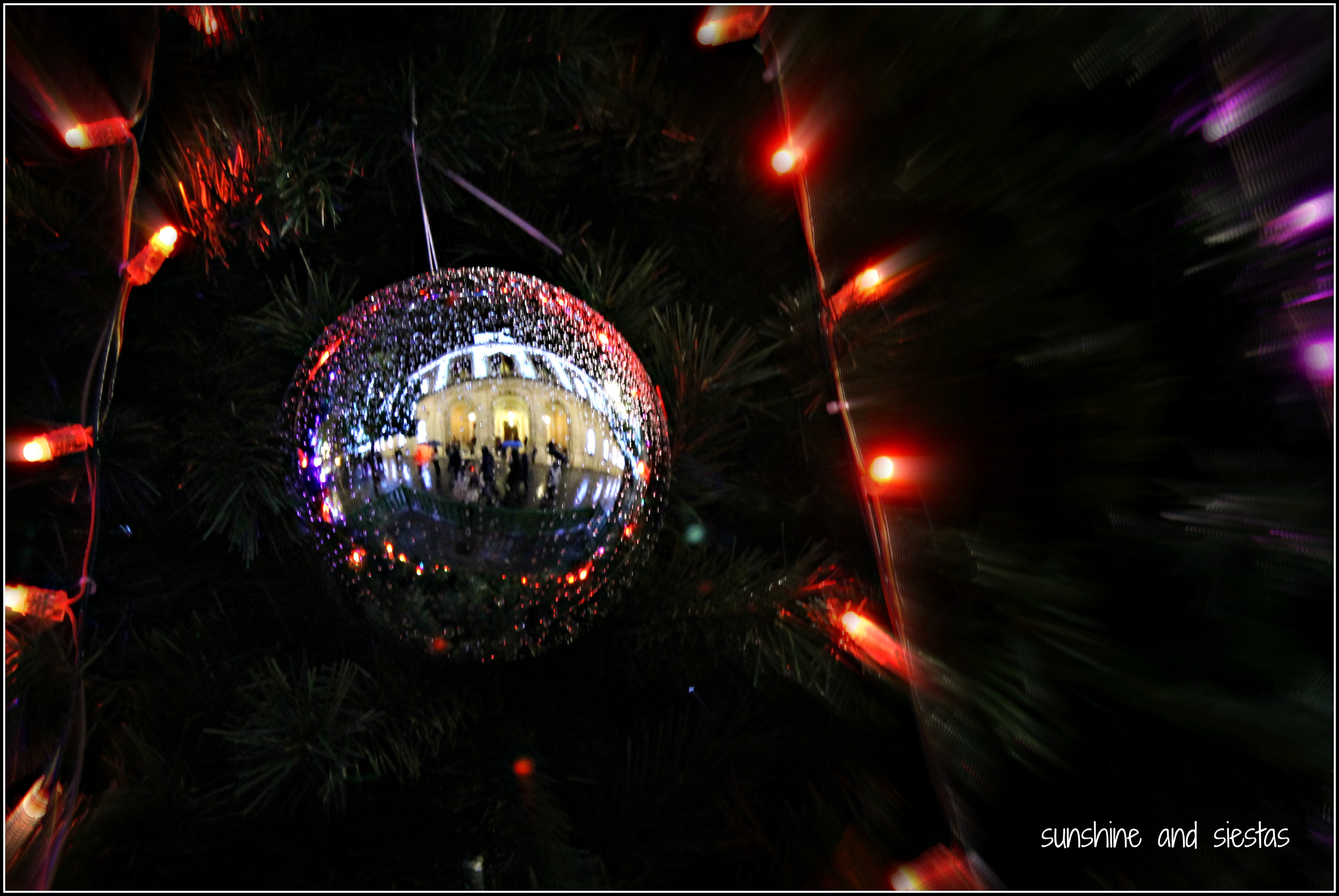
But Seville’s Christmas lights make the city look even better, I’ve always loved Christmas markets. Typically lit at dusk on the Día de la Constitución, December 6th, I was amazed to see them go on while waiting for some friends in Plaza Nueva on November 30th. Like watching the portada of the Feria light up in the Real, my childlike wonder of Christmas lights returned for a brief moment on a rainy evening, the rain splattering my face the way snowflakes used to in Chicago. I was suddenly thaknful that my parents had gotten cheap flights to Europe to be able to share the season with me. On the municipal Christmas tree, the reflection of the ayuntamiento, town hall, shone on a Christmas ball, dressed up for the season.

Got a photo of Seville or Southern Spain to share? I’d love to see it! Send me the photo, along with a short description of where you took it and links to any pages you’d like included, to sunshineandsiestas [at] gmail [dot] come. Look for a new photos every Monday, or join me at my Facebook page for more scoop on El Sur! What’s your favorite Spanish holiday tradition?

Seville Snapshots: NO8DO and Seville’s Most Popular Urban Legend

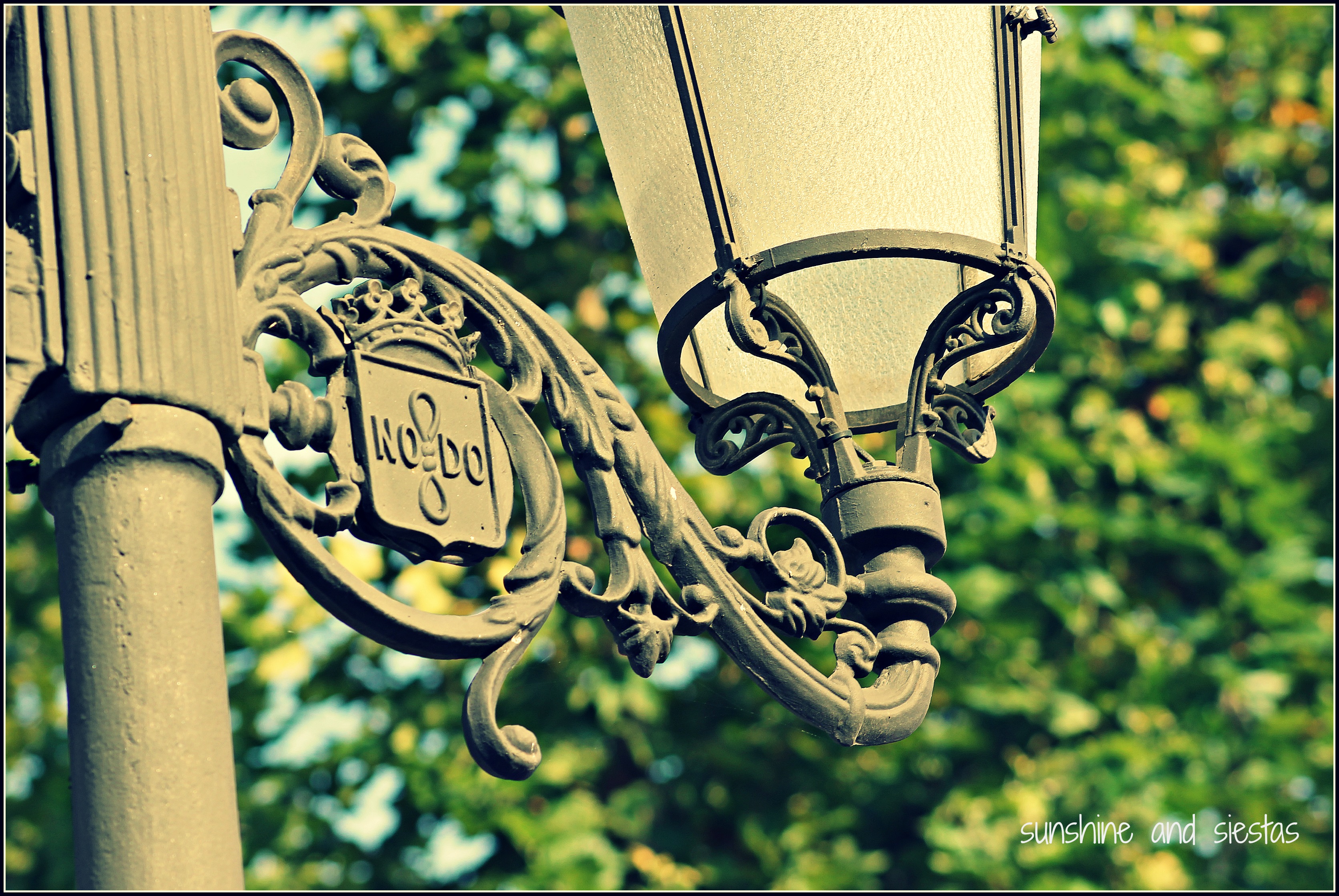
Nuzzled beneath the seated San Fernando, San Isidoro, and San Leandro on Seville’s city crest is the cryptic symbol: NO8DO. The city’s motto, No madeja do, commonly said as No me ha dejado, makes an appearance on everything from the city flag to the sides of city buses to the drain covers on busy roads.

The words NO and DO surround what resembles a figure 8. While I assumed it was an infinity sign and have heard it was supposed to represent hay, it’s actually a spool of yarn. The Spanish word for this is madeja, so together, the anagram is NO MADEJA DO, or in English: It [Seville] hasn’t left me.

The story behind the symbol (you can read it on  Inside the Travel Lab), isn’t as important as why it’s important to me.

When I received notice I’d be living in Seville in late June, 2007, I immediately consulted with my Alpha Delta Pi sorority sisters about the city that many had studied in. I got long mantilla-like sighs when they said, that city takes a piece of your heart. Much like leaving one’s heart in San Francisco, Seville quickly won mine with its charm, its mudejar architecture and the haunting saetas and cante hondos I’d fall asleep to each night while living in Triana.

Using Camarón’s long distance lens on baking afternoon, I realized that the five cryptic symbols are also embossed on the city’s light posts. The way the light from the wrought.iron lamps floods the streets next to the lit-up Cathedral, bathing the regal Avenida de la Constitución in a golden color, is magical. Seville will never, ever leave my consciousness or my heart.

Got anything special to share about the city you call home? I love urban legends, ghost stories and the like, so please share!

Tapas Thursdays: Ensaladilla Rusa

My first meal in Spain was less than memorable: Aurora muttered something as she schlepped a large bowl of something in front of us.

“Cat, quick! tell her I’m allergic to seafood! I think that’s tuna and I don’t know how to say it in Spanish!” Emily hissed from across the table.

My jet lagged brain, tired after eight hours and lugging a suitcase halfway across Valladolid, barely got out the word fish while still searching for seafood. My señora stopped right then and there, threw her arms up in exasperation and chided us for not being as open-minded as the Japanese girls who had lived with her before we had arrived.

I tried to simply was what it was called, hoping that would lead to a run-down of the ingredients. It did, alright, and it seemed that my host mother had folded in every. single. thing. she had in her kitchen into the cubed potato and mayonnaise mix.

We used a “break for air and exploring” as an excuse to pick up sandwiches from a bar around the corner as I explained to Emily exactly what we had eaten:

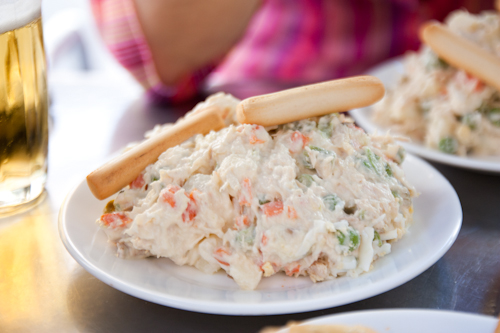
The Spanish version of a kitchen sink, ensaladilla rusa. Literally, Little Russian Salad.

source

What it is: A cold, cubed potato salad made with mayonnaise, peas, carrots, red peppers and often hardboiled eggs and canned tuna, accompanied with freshly chopped parsley. The dish often comes with picos.

Where it’s from: As far as I can tell, this popular tapa fría is served in just about every region of Spain, though it varies in its ingredients slightly, or even in its presentation – I’ve seen it atop bread in the Basque Country!

Where to find it in Seville: I’m not a big ensaladilla person because it combines the two foods that make me turn green: mayonnaise and canned tuna. Still, if the mayo isn’t too heavily dolloped into the recipe, I can stomach a bit. I recommend both La Alicantina in Plaza de Salvador (Pza. del Salvador, 2, on the northeast corner), who makes their mayo from scratch and was willing to give it to me on the side, just in case. Their tapa has also garnered quite a bit of fame in city polls. Also, La Cigala de Oro near Santa Justa train station had a fresh tapa that’s light on mayonnaise (Jose Laguillo, 23).

Goes great with: Ensaladilla is typically eaten as bar grub or the starter to a meal because it’s cold and scooped directly onto a plate when you order it. I myself need a few big gulps of Cruzcampo to really like it!

Love tapas? Want to see a specific one featured Thursday? Leave me a comment, or post a picture of you eating your favorite tapas to my Facebook page!

Seville Snapshot: The Feria de Belén

One of my favorite Christmas traditions in Spain is the nativity scene, called a belén. It also happens to be my favorite Spanish name for a girl, though I wouldn’t name my daughter after the Little Town of Bethlehem.

Again, at the risk of sounding un-American, I don’t like Christmas, either.

But the belenes, a household nativity scene, fascinate me. Tiny villages  are constructed out of figurines taking the form of primitive buildings, the Holy Family and even working mills, crops and animals. My own family has the same nativity scene under our tree that we’ve had every year – plastic Holy Family with two faceless sheep, an ox, a plastic angel that balances on a nail up top. I once told my mother I’d do the Spanish tradition of buying one new piece each year, much like I did with my American Girl Doll years back.

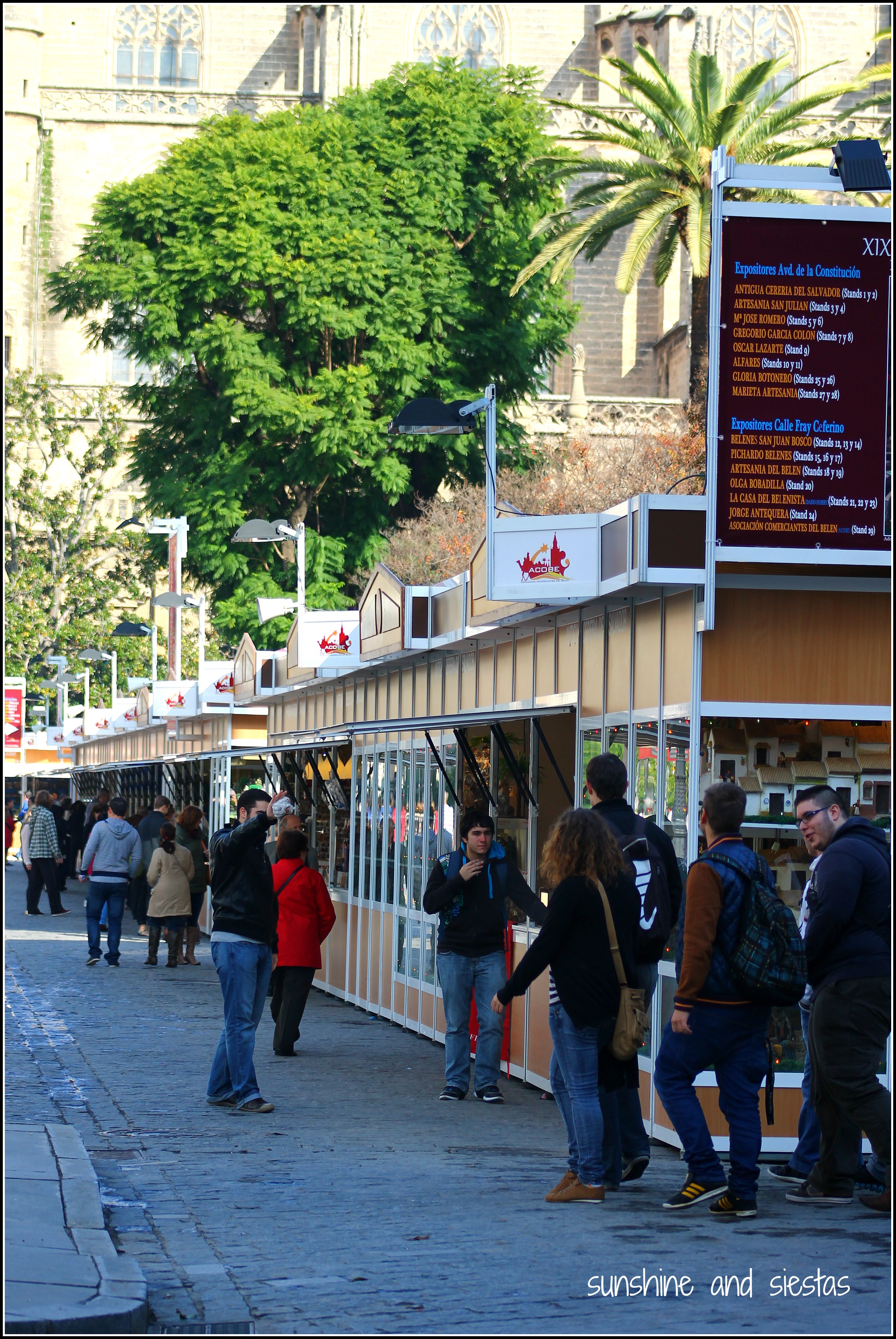
Seville holds an annual Feria del Belén, a month-long set-up of small, artisan stands that sell all of these tiny cattle, baskets and shepherds.

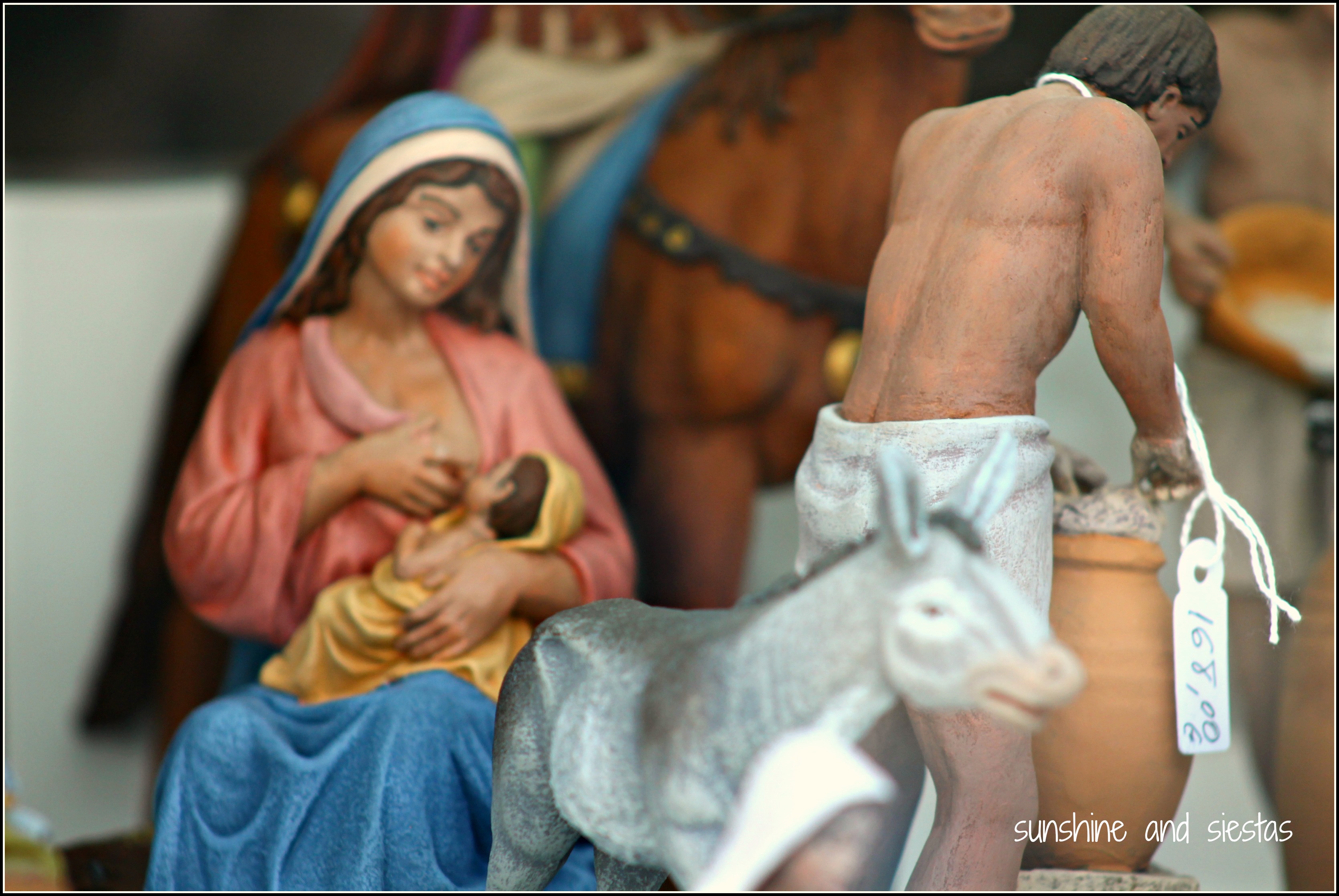
Over the years, I’ve marveled at the small effigies and menagerie of barnyard animals, but my long-distance lens caught something quite by accident just last week: the Virgen Mary nursing.

Related Posts Plugin for WordPress, Blogger...