Here’s a piece of advice: go to places where you know the chef.
Kike’s been prodding me to go to both Oveja Negra and his friend Jesús’s bar, La Bulla, for ages. For someone who staunchly refuses to go to the city center for the crowds and traffic, I was happy to oblige him. La Bulla is the center’s answer to La Pura Tasca, a gastrobar worthy of a mention. At La Pura Tasca, I was the neighbor down the street who was always given a morsel or two as I passed by.
Now it was Kike’s turn to wow me.
When we called to speak with one of the waiters, he told us to pass by around 10pm. In reading the reviews online, I was a little skeptical about a place with “overpriced tapas at half the size” and poor service. Scrolling for one semi-positive review took a few clicks of the mouse, but Kike had his mind made up.
Good thing he knows the chef.
After our traditional pre-dinner beer, we strolled past swanky tapas places that line C/ Arfe. La Bulla is on Dos de Mayo, wedged between the bullring and the Maestranza theatre, just steps away from the river. The neighborhood, El Arenal, has become preppylandia, thanks to its cocktail bars and upscale dining options, as well as age-old abacerías and ultramarinos, and this dining mentality that given La Bulla it’s much-talked about reputation.
A coworker had told me that the place had a NYC-like vibe due to the exposed pipes, mismatched picnic tables and mod chairs. I marveled at the red-doored ice chest, similar to one we have at home in America. There was a quiet buzz amongst the clientele.
¡Buenas, Cat! I had been admiring four antique mirrors on the wall when I discovered that not only was the chef a dear friend of Kike’s from childhood, but so was the waiter. David had run a successful chiringuito in their village of San Nicolás del Puerto and was now explaining apple compte reductions to eager eaters. Beaming, I sat purposely with my back to the chalkboard menu.
There was no question about it for me: I wanted whatever was good and came recommended by the staff. I sat in a comfortable red chair, a color theme echoed throughout the restaurant’s cavernous interior. metallic greys and silvers meshed seamlessly with fire engine red.
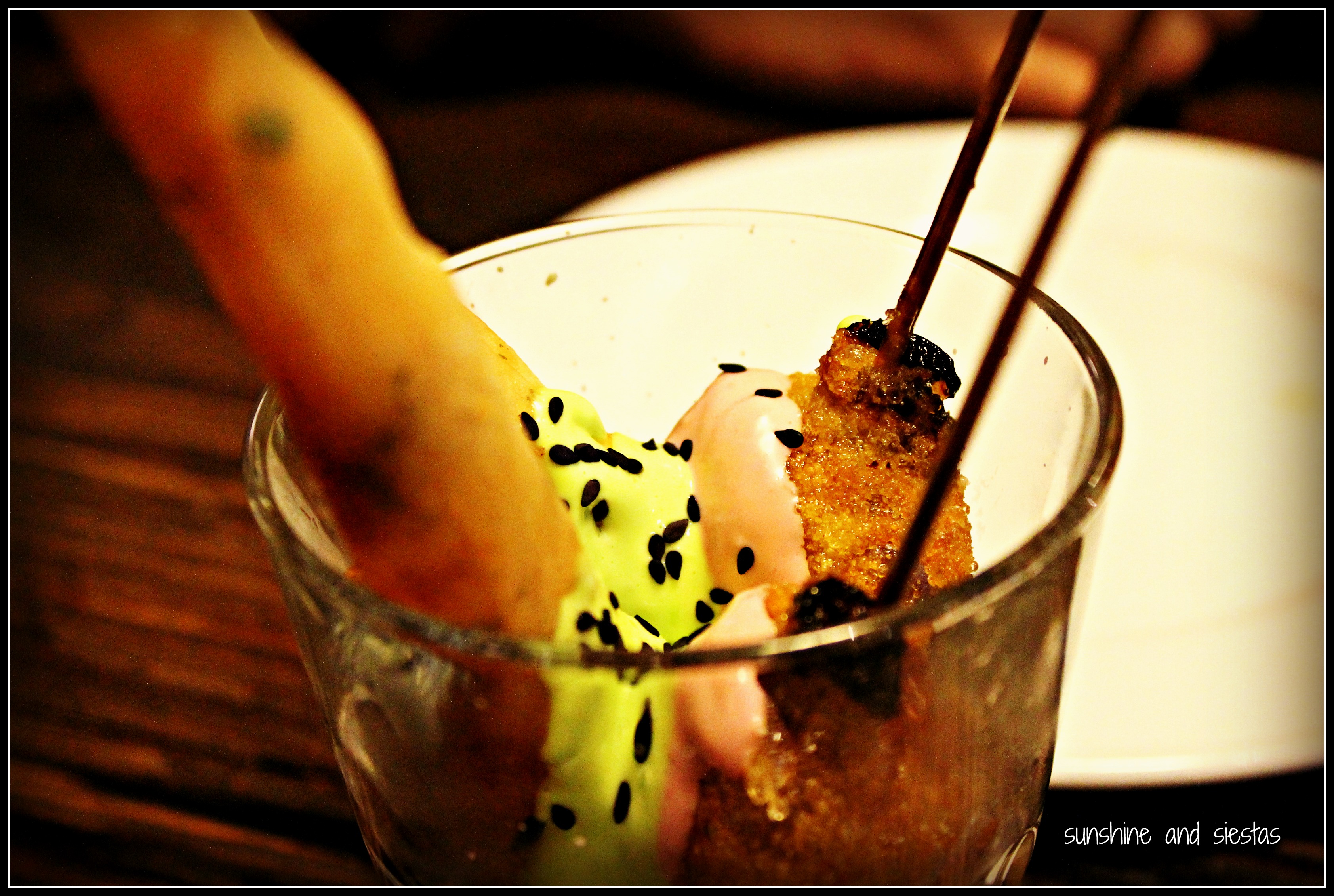
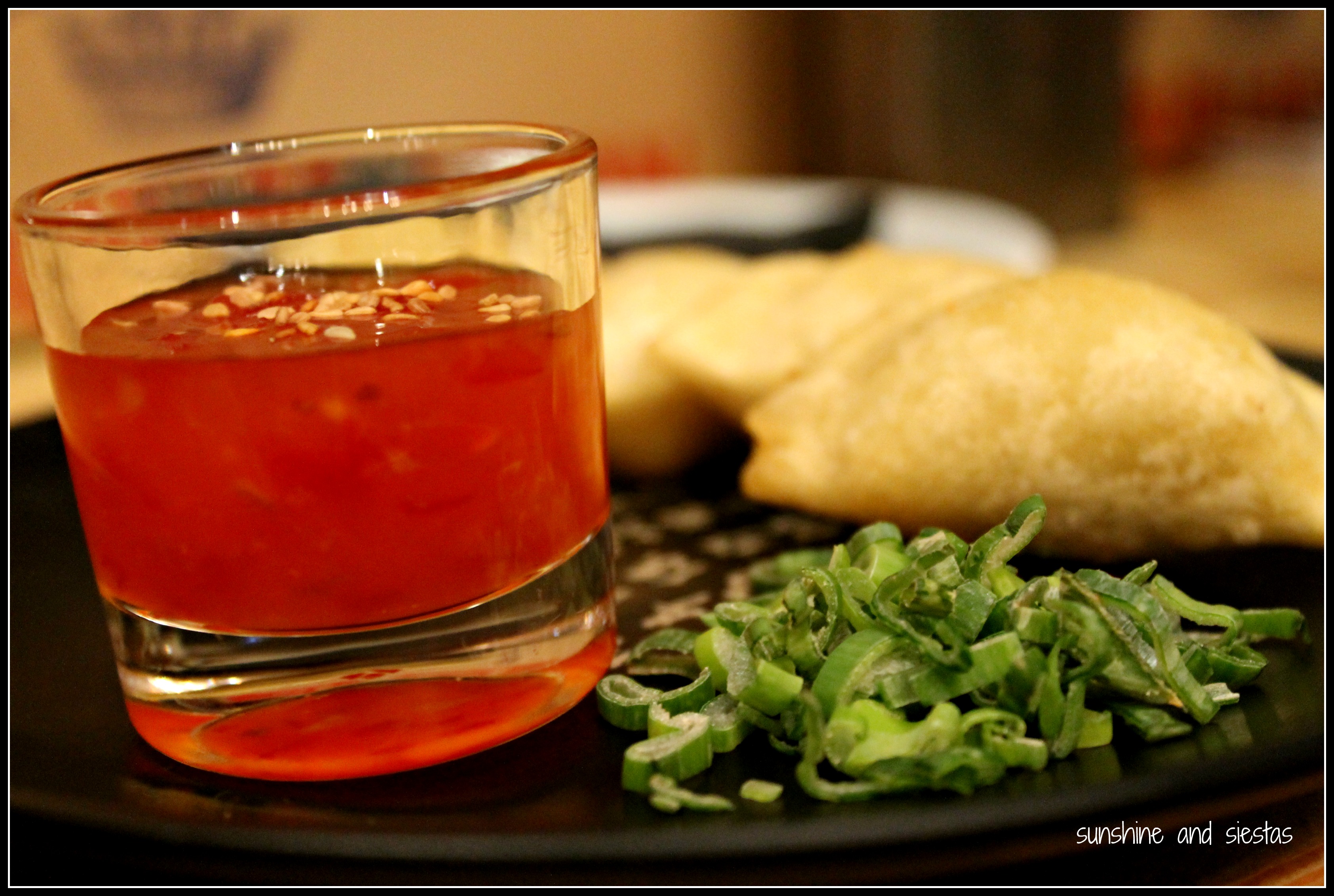
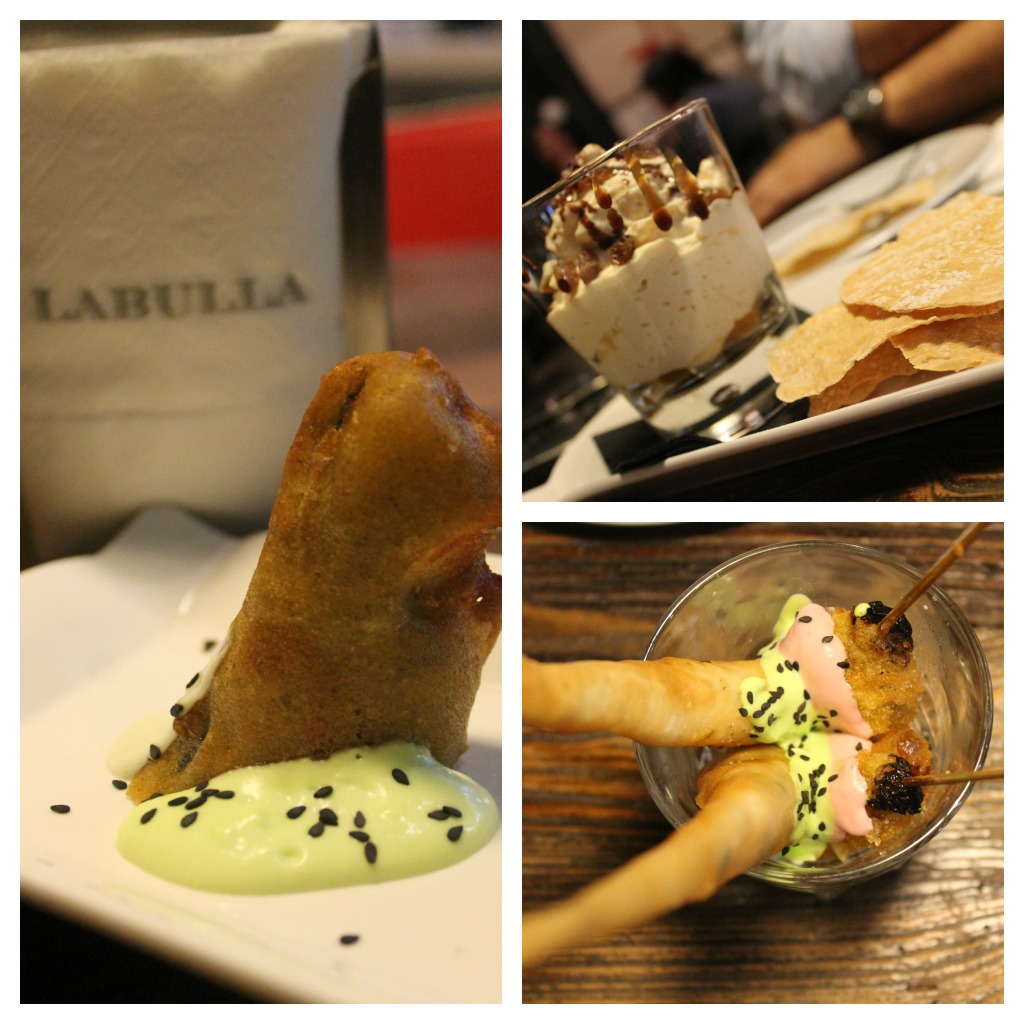
Our first dish came served in a soda fountain glass. “Prawn in tempura with an apple-orange foam, topped with sesame seeds…” David recited the same speech he’d just given at the next table with an amusing voice, even switching to English for me. By this time, I’d already swatted Kike’s hand away to take a photo of it and its partner in crime, a so-named golosina de La Bulla. At the end of a long pincho came a juicy medallion of chorizo fried in tempura with a touch of the salsas. I greedily fished the whole-grain bread (where do that get that stuff in this town, anyway?!) out to sop up the juice.
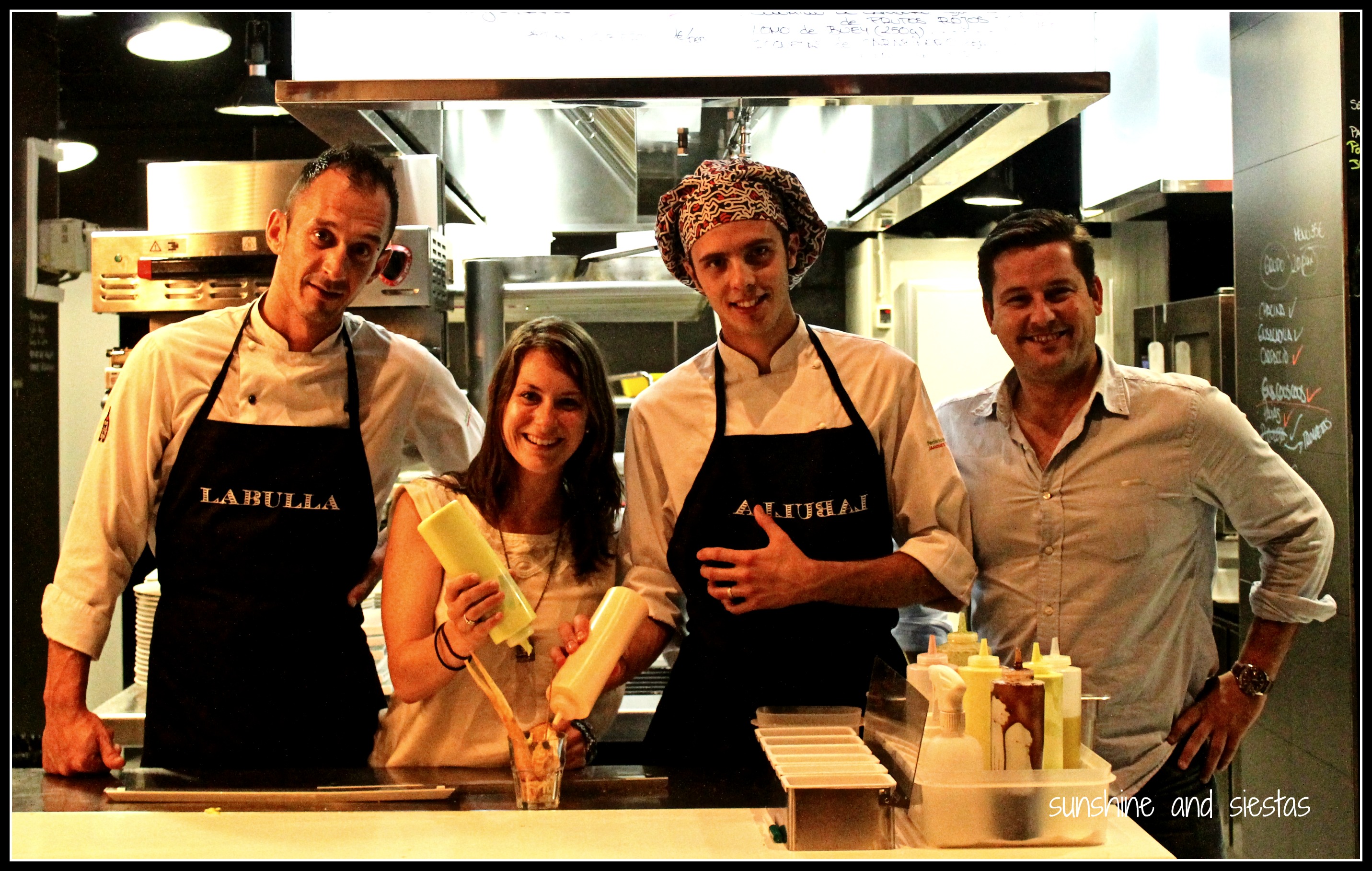
Flashing a thumbs up at Jesús, I said, My compliments to the chef! The tastes were traditionally Spanish with a twist, just as Jesús is Spanish with an American twist. His father, Diego, runs a campsite and rustic restaurant in San Nicolás. After studying and working at the renowned Taberna de Alabardero in Sevilla, Jesús went to Washington to learn techniques and work alongside some of America’s best chefs, and this is evident in his cooking.

Our chef sent a bruschetta our way next, paired with a fried fish, again in tempura with the creamy apple sauce. David announced that the bruschetta was carpaccio de salmón with steamed bits of octopus and a plum cherry. I tend to not like salmon, but the texture between the thin carpaccio and the coarse sea salta made the morsel tangy and sweet all at once. The merluza next to it was crispy but bland, comparatively, and helped me prepare for the next dish, which was one of the most inventive I’ve seen in Seville.
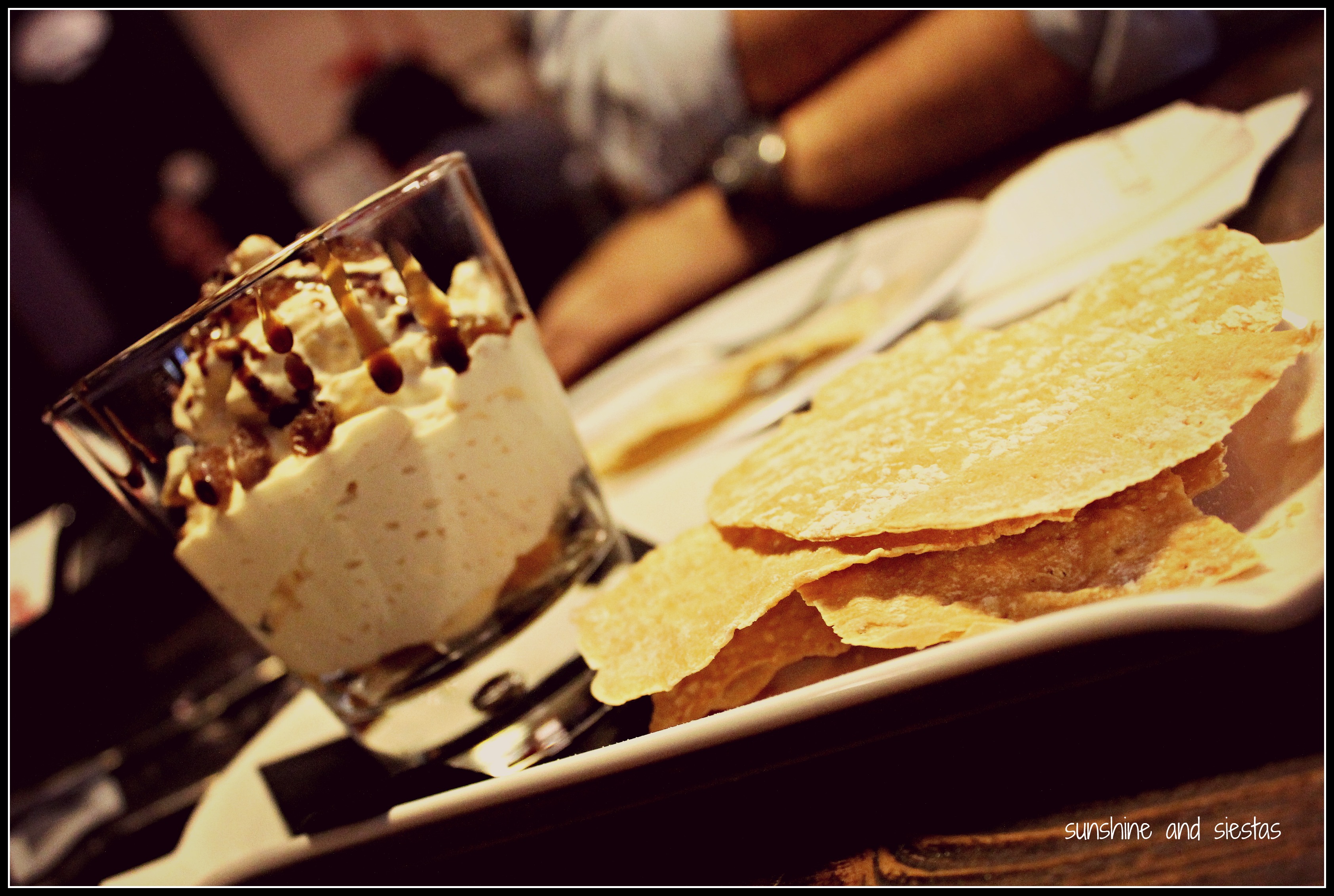
David served us another soda glass with what looked like cinnamon ice cream. ¨Foie gras in a foam cream with raisins and candied fruit,” he announced, setting the pack of regañá, a flat, crispy bread, in front of me. My eyes widened, never having eaten anything like it before. The blend of tangy and sweet was overpowering, balanced by the regañá. While foie is not something I eat on a regular basis, Kike and I fought like kids for the last morsels, scooping what we could onto the bread.
“This is like Seville’s version of El Bulli,” Kike said, mouth full. Spanish cuisine was put on the map by Fernan Adrià, whose creative genius turned earthy, simple Spanish cooking into an inventive palate. Just last year, his restaurant – considered one of the best in the world – closed so that Adrià could open a food studies school. I don’t care whose version of El Bulli it was – La Bulla was exceeding my expectations.
Jesús put his hands on the wide bar next to us. “Fish or meat?” Feeling already full, we agreed on the fish and got the surprise oft he night: David cooked us a creamy parmesan risotto while Jesús set out to prepare our fish. To my delight, it was one of my favorites – octopus, which rested on a bed of au gratin potatoes and was covered with a light saffron sauce. Good enough, in fact, that Kike even talked with his mouth full to give his complements.

Struggling with the last morsels of both dishes, Kike announced he needed a smoke. “Pssssst” I whispered to David, “bring me that desert tablet!” Like La Pura Tasca, the desert came in minis, looking like sliders, and were served on a wooden cutting board. Instead, he brought two dessert wines which were less calorific and even better on my full tummy.
I’ll just settle for next time – after all, I know the guy who runs the joint.
La Bulla Calle Dos de Mayo, 28 954 219 262