Sampling La Bulla

Here’s a piece of advice: go to places where you know the chef.

Kike’s been prodding me to go to both Oveja Negra and his friend Jesús’s bar, La Bulla, for ages. For someone who staunchly refuses to go to the city center for the crowds and traffic, I was happy to oblige him. La Bulla is the center’s answer to La Pura Tasca, a gastrobar worthy of a mention. At La Pura Tasca, I was the neighbor down the street who was always given a morsel or two as I passed by.

Now it was Kike’s turn to wow me.
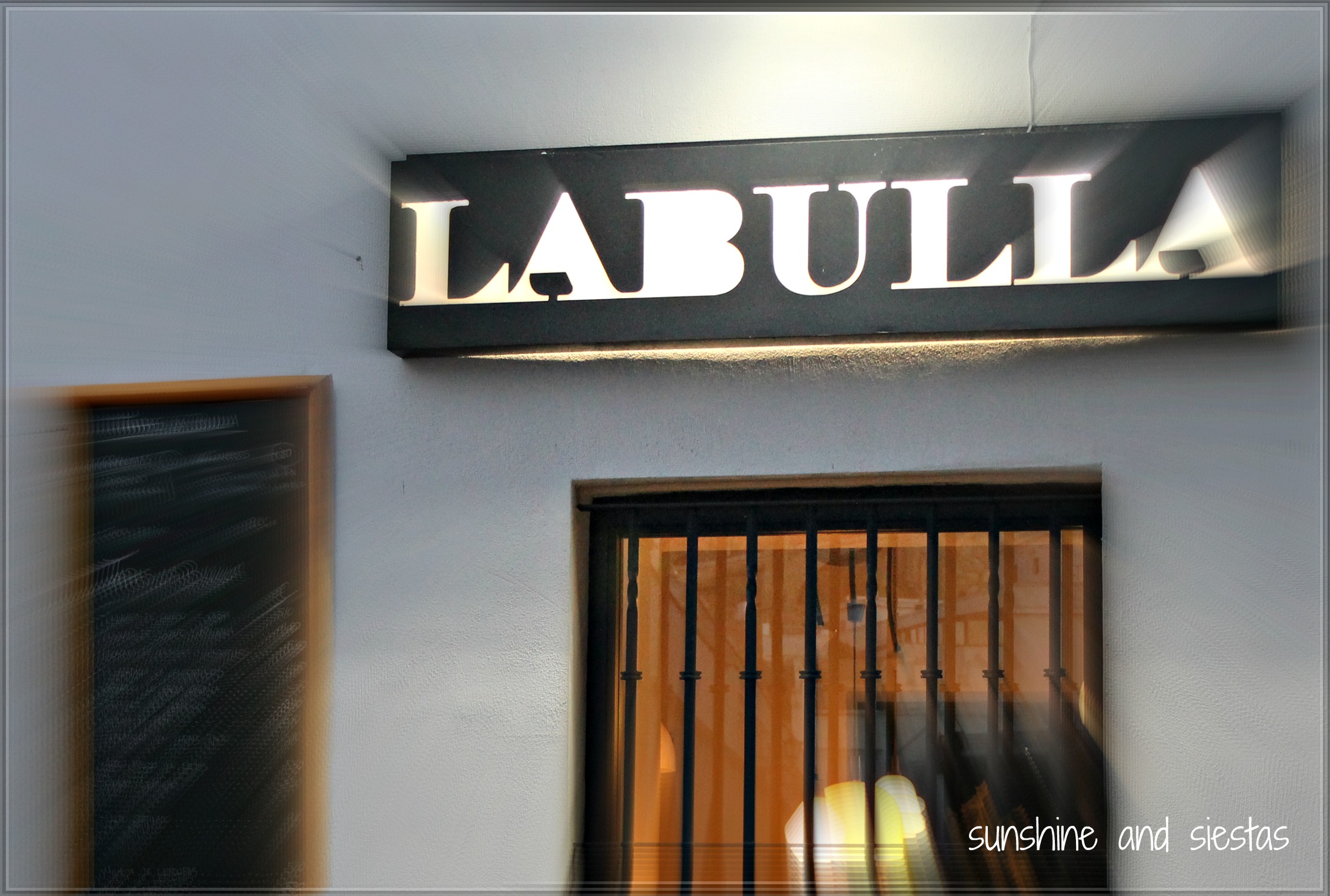
When we called to speak with  one of the waiters, he told us to pass by around 10pm. In reading the reviews online, I was a little skeptical about a place with “overpriced tapas at half the size” and poor service. Scrolling for one semi-positive review took a few clicks of the mouse, but Kike had his mind made up.

Good thing he knows the chef.

After our traditional pre-dinner beer, we strolled past swanky tapas places that line C/ Arfe. La Bulla is on Dos de Mayo, wedged between the bullring and the Maestranza theatre, just steps away from the river. The neighborhood, El Arenal, has become preppylandia, thanks to its cocktail bars and upscale dining options, as well as age-old abacerías and ultramarinos, and this dining mentality that given La Bulla it’s much-talked about reputation.
A coworker had told me that the place had a NYC-like vibe due to the exposed pipes, mismatched picnic tables and mod chairs. I marveled at the red-doored ice chest, similar to one we have at home in America. There was a quiet buzz amongst the clientele.

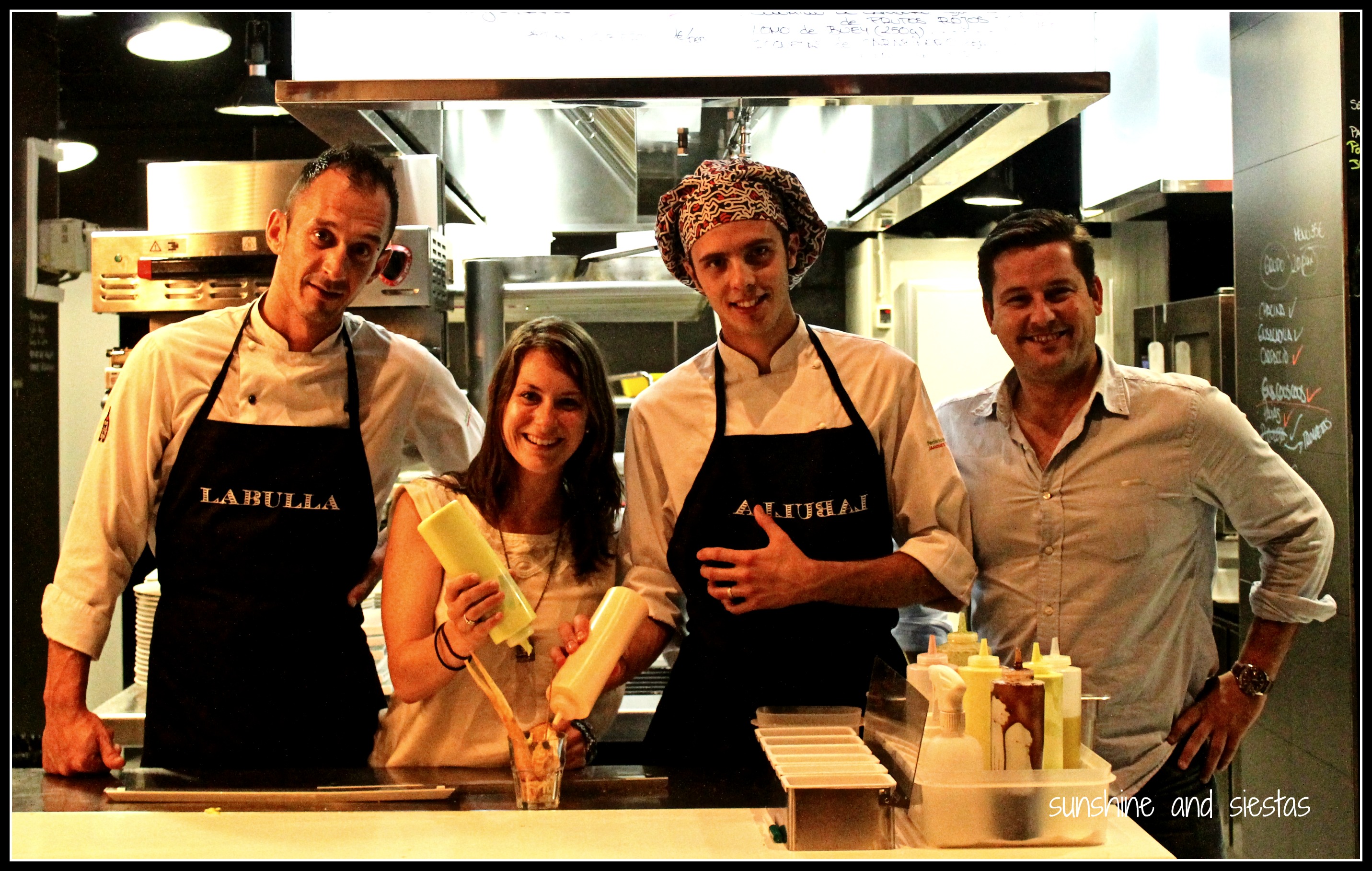
¡Buenas, Cat! I had been admiring four antique mirrors on the wall when I discovered that not only was the chef a dear friend of Kike’s from childhood, but so was the waiter. David had run a successful chiringuito in their village of San Nicolás del Puerto and was now explaining apple compte reductions to eager eaters. Beaming, I sat purposely with my back to the chalkboard menu.

There was no question about it for me: I wanted whatever was good and came recommended by the staff. I sat in a comfortable red chair, a color theme echoed throughout the restaurant’s cavernous interior. metallic greys and silvers meshed seamlessly with fire engine red.
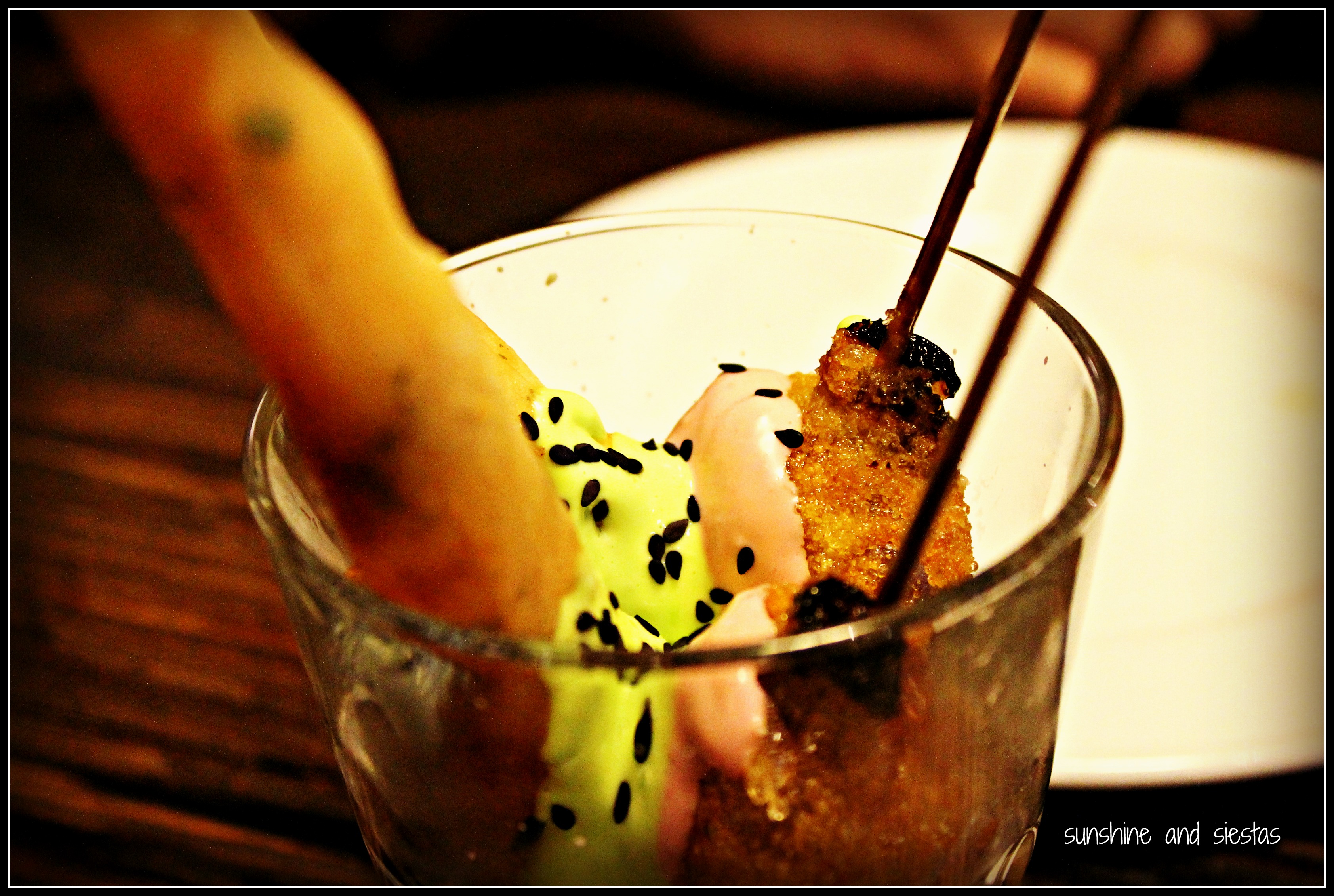
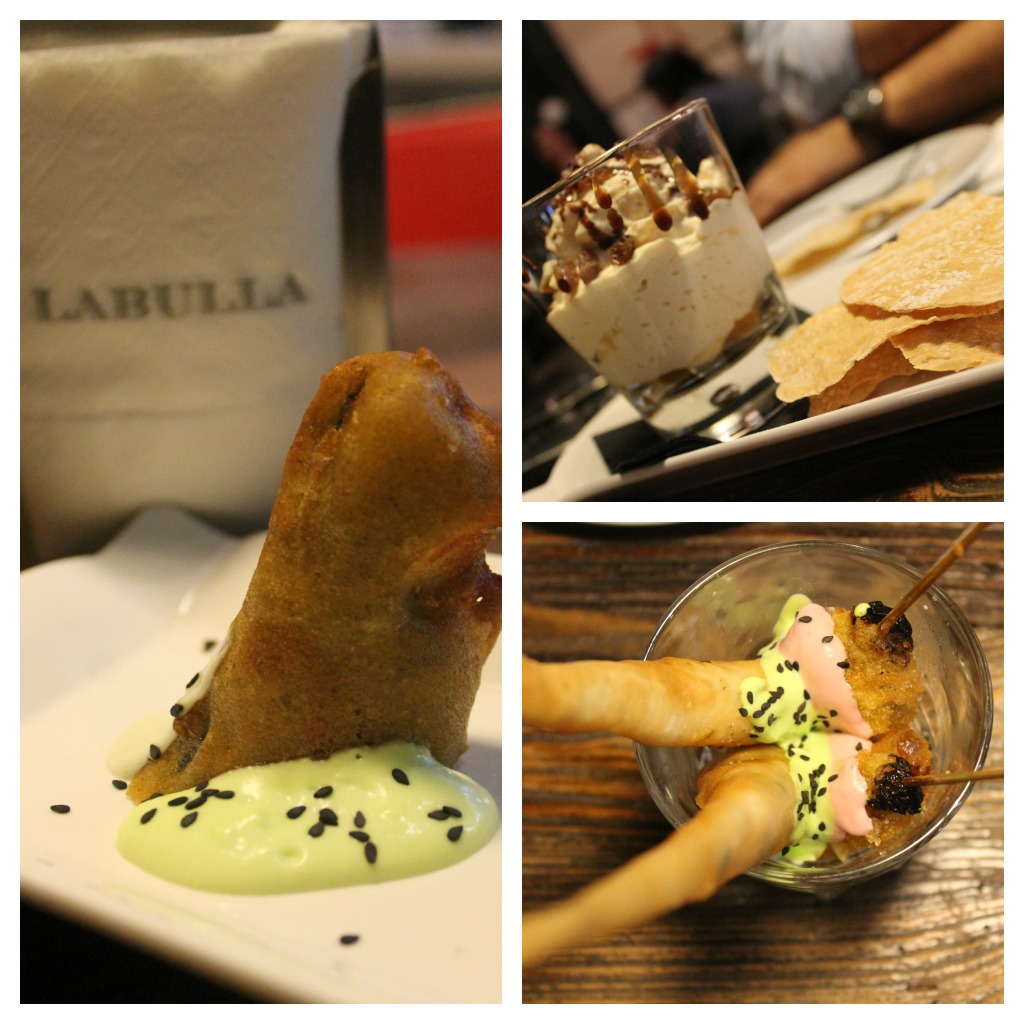
Our first dish came served in a soda fountain glass. “Prawn in tempura with an apple-orange foam, topped with sesame seeds…” David recited the same speech he’d just given at the next table with an amusing voice, even switching to English for me. By this time, I’d already swatted Kike’s hand away to take a photo of it and its partner in crime, a so-named golosina de La Bulla. At the end of a long pincho came a juicy medallion of chorizo fried in tempura with a touch of the salsas. I greedily fished the whole-grain bread (where do that get that stuff in this town, anyway?!) out to sop up the juice.

Flashing a thumbs up at Jesús, I said, My compliments to the chef! The tastes were traditionally Spanish with a twist, just as Jesús is Spanish with an American twist. His father, Diego, runs a campsite and rustic restaurant in San Nicolás. After studying and working at the renowned Taberna de Alabardero in Sevilla, Jesús went to Washington to learn techniques and work alongside some of America’s best chefs, and this is evident in his cooking.

Our chef sent a bruschetta our way next, paired with a fried fish, again in tempura with the creamy apple sauce. David announced that the bruschetta was carpaccio de salmón with steamed bits of octopus and a plum cherry. I tend to not like salmon, but the texture between the thin carpaccio and the coarse sea salta made the morsel tangy and sweet all at once. The merluza next to it was crispy but bland, comparatively, and helped me prepare for the next dish, which was one of the most inventive I’ve seen in Seville.

David served us another soda glass with what looked like cinnamon ice cream. ¨Foie gras in a foam cream with raisins and candied fruit,” he announced, setting the pack of regañá, a flat, crispy bread, in front of me. My eyes widened, never having eaten anything like it before. The blend of tangy and sweet was overpowering, balanced by the regañá. While foie is not something I eat on a regular basis, Kike and I fought like kids for the last morsels, scooping what we could onto the bread.
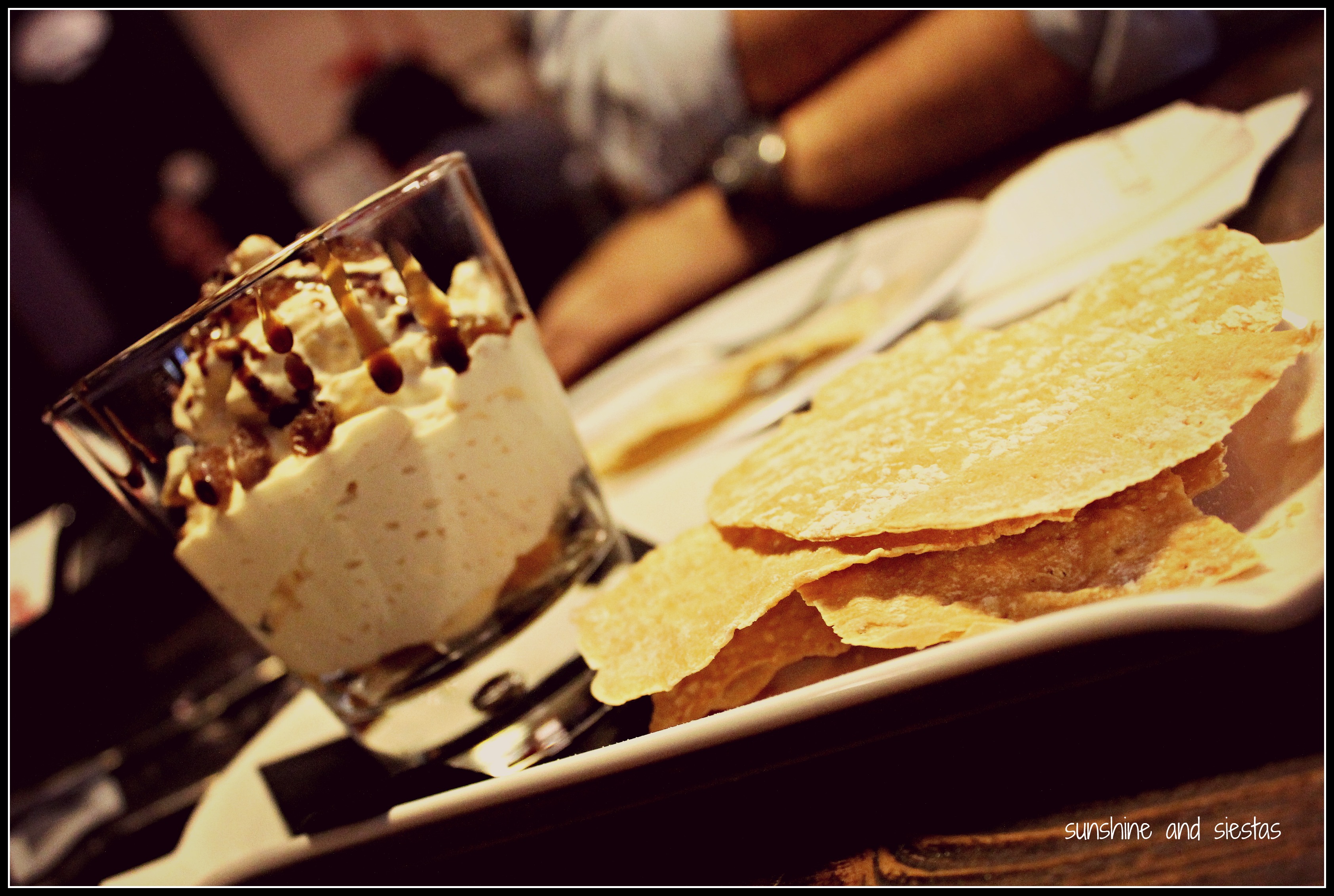
“This is like Seville’s version of El Bulli,” Kike said, mouth full. Spanish cuisine was put on the map by Fernan Adrià, whose creative genius turned earthy, simple Spanish cooking into an inventive palate. Just last year, his restaurant – considered one of the best in the world – closed so that Adrià could open a food studies school. I don’t care whose version of El Bulli it was – La Bulla was exceeding my expectations.

Jesús put his hands on the wide bar next to us. “Fish or meat?” Feeling already full, we agreed on the fish and got the surprise oft he night: David cooked us a creamy parmesan risotto while Jesús set out to prepare our fish. To my delight, it was one of my favorites – octopus, which rested on a bed of au gratin potatoes and was covered with a light saffron sauce. Good enough, in fact, that Kike even talked with his mouth full to give his complements.

Struggling with the last morsels of both dishes, Kike announced he needed a smoke. “Pssssst” I whispered to David, “bring me that desert tablet!” Like La Pura Tasca, the desert came in minis, looking like sliders, and were served on a wooden cutting board. Instead, he brought two dessert wines which were less calorific and even better on my full tummy.
I’ll just settle for next time – after all, I know the guy who runs the joint.

La Bulla     Calle Dos de Mayo, 28     954 219 262

Saying Goodbye

You might say my mind has been made up since last August. For the first time in my six flights from America to Spain, I cried boarding.

Normally, I’m equipped with a travel magazine, a bottle of water and a nervous stomach at going back to a place that I love so much, but this trip was different. Spain no longer held the same excitement and romanticism for me as it did during my first few years there, and I wasn’t looking forward to going back.

It was clear what the problem was: My work situation.

I thought about how many mornings I’d trekked to the foreigner’s office or to the unemployment office or to job interviews during the hot summer months. I remember I told my friend Izzy that I was about to throw in the towel and just go back to America, defeated. Then Refu called back, asking me for an interview. Seven hours, a 13-paged written interview and two classroom try outs later, I was officially given the job at SM’s.

And two school years later, I’m bowing out. Official reason? I don’t want to be a teacher forever. I want to blog. To not have to turn down weekend trips because I have too much to do. To live my sevillano life, lest lose it forever.

Next year will be a transition year: master’s in Public Relations at the Universidad Autònoma de Barcelona, 26-hours-a-week teaching gig at a language academy (working in the pm again…weird!) and toying around with this blog. I’ll still be teaching, though I’ve made up my mind that it’s not the career I want forever. At least, not in Spain.

The thing is, my situation – long hours, poor pay, no chance at moving up  – will be the same forever unless I do a master’s in teaching. My school threatened to have to complete a five-year teaching program (as a master’s for primary school teacher does not exist) or to lose our jobs. I did them one better and gave official notice about a month ago, citing that I wasn’t willing to pay for five or more years of schooling for something I can’t see myself doing forever.

Of course, there’s more to the story that isn’t fair to share. No one in my school has been overly abusing of anything else but my time and my self-worth. Sure, I’ll miss my co-workers and the staff at the bar across the street, who never need to ask me how I want my breakfast. I’ll miss the parents, full of compliments and funny stories about the 45 kids I’ve grown to adore after being their tutora for 10 months.

That’s the thing – I’ll miss my kids with locura. Absolute, unending locura.

If I make the count, I’ve taught at least 700 kids in some form – between my five years and three summers teaching. I’ve had kids that make my nerves snap, kids who are mini-mes (and tell me they want to teach English like me), kids who understand where I’m coming from, kids who give me hell. As a director of studies, I’ve put up with fist fights, calls home sobbing to parents, crazy moms who yell at me over the phone…vamos, all in a day’s work. Between the test-giving, the long nights preparing theatres and parties, the endless hours of programming and grading, I’ve found that this is and isn’t where I want to be.

I think about just how far me and the babies have come since September. Having been their English teacher in Five years’ preschool, I already had the confianza of knowing them – and having them know me. They were excited, and I had unhappy preschool parents asking to know why I’d been changed to primary. But I was elated. Finally, my own classroom, a manageable number of kids and a feeling of actually being on the team.

It wasn’t all rainbows and butterflies – there were kids who I needed to win over, motivation to keep up and a lot of work to be done. Since my coworker and I have 45 kids, that’s twice the work when it comes to grading and report cards, and an extra class of parents to see. But I enjoyed watching their Aha! moments, rewarding them for using their English blocks of speech (even if just a few words here and there) and how they smiled when we’d play a game (roll the ball in the bucket as a math game? I deserve some kind of award) or take a field trip or make a breakthrough. They, as well as I, have matured and come into their own in these ten months, and I’ll take a piece of them with me when I have to say goodbye next Friday.

The plan, before I gave notice, was for me to continue onto second grade with my minions. Multiplication tables, reflexive verbs and the solar system were all on the docket, and I had many anxious six-year-olds asking, ¿Serás nuestra seño en segundo? Since my move up to first grade was so unexpected, I didn’t have to lie and say I didn’t know who their teacher would be next year, because it’s all up to the boss anyway. But as I take down their adorable drawings, send home their corrected and completed workbooks, I find myself giving more hugs and kisses, pinching more cheeks and wishing that things could somehow be different.

Teaching and I have a love-hate relationship: I hate the work, but love the reward. I find pleasure in creating a challenging lesson and giving it, like standing up and acting goofy in front of a crowd and crave the daily satisfaction that a young learner’s progress garners. It’s all of the extras at my school that was slowing me down, and it all came to a head with the theatre last week. I cried in front of the kids for the first time all year.

My decision to leave is the right one for me.

Maybe some of my kids who finally started getting results will get blocked with a new teacher. Or maybe they’ll like him more. But I’m confident that the right foundation has been laid for them to be successful.

Now that exams, grades and everything else is done, it’s time to enjoy with the kids who taught me that school can be fun and hands-on, with the ones who read my emotions even better than I do, the ones who say ” I want the holidays to Chicago con Miss Cat!” Boogers and all, they’re still really special kids, and I will miss them dearly.

How La Roja Made Me Love Fútbol Again

My first experience with Spanish fútbol was a Fútbol Club Sevilla game in September 2007. My grandma and I melted like butter in the sun and got seats high in the grada, next to a man who spilled over his seat and shouted COÑO every time the rojiblancos lost possession of the ball.

Helen asked how I liked it, and I pined for Hawkeye Football.

For me, fútbol was little more than an excuse to get some friends together to drink beer and casually comment on a game. I had played as a kid for years, hanging up my shin guards to focus on school and gymnastics in 2000, years before Spain’s national team was even on my radar.

In the summer of 2008, however, I spent my months missing Spain and working at Banana Republic Factory Store. My boss, Erik, approached me one July morning with a proposition: Work my 90 minutes of break simultaneously and call with updates. What updates?

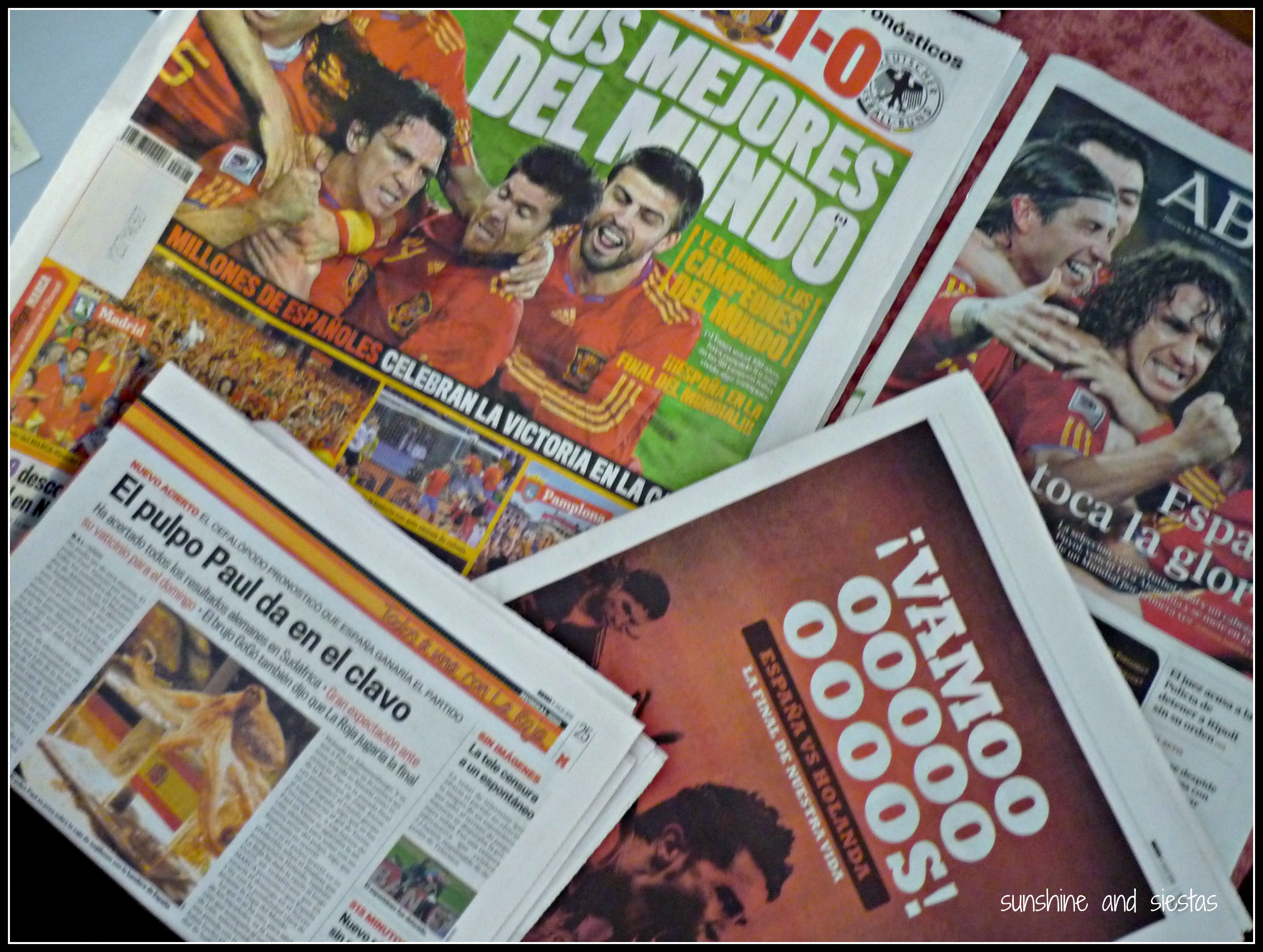
The Euro Cup tournament had begun, and my boss assumed I’d be interested in watching it.  I obliged, and found it was me who was then yelling COÑO and TIRA, COÑO and ME CAGO EN LA MÁ! as Spain battled Germany in the finals. After 90 grueling minutes, la Furia Roja came out on top, a taste of what to expect in South Africa two years later. I was impassioned.

Xabi. Iker. Piqué. All part of my vocabulary. I played Wave Your Flag for my students Friday on the opening day of  the 2012 Euro Cup and tears pricked my eyes as I remember watching countless games and scheduling my social calendar around them during the World Cup – US, Mexico, Germany and Spain made up the countries of nationalities of la familia, and we ate guacamole at Juan and Marco’s while cheering on Mexico, found a beach bar to watch Spain-Uruguay and convinced Kirsten to not wear any black, thus giving away her German heritage before they lost to Spain in the semis. I once even watched a game by myself, back against the wall, just to not risk missing the first ten minutes to return home after work.

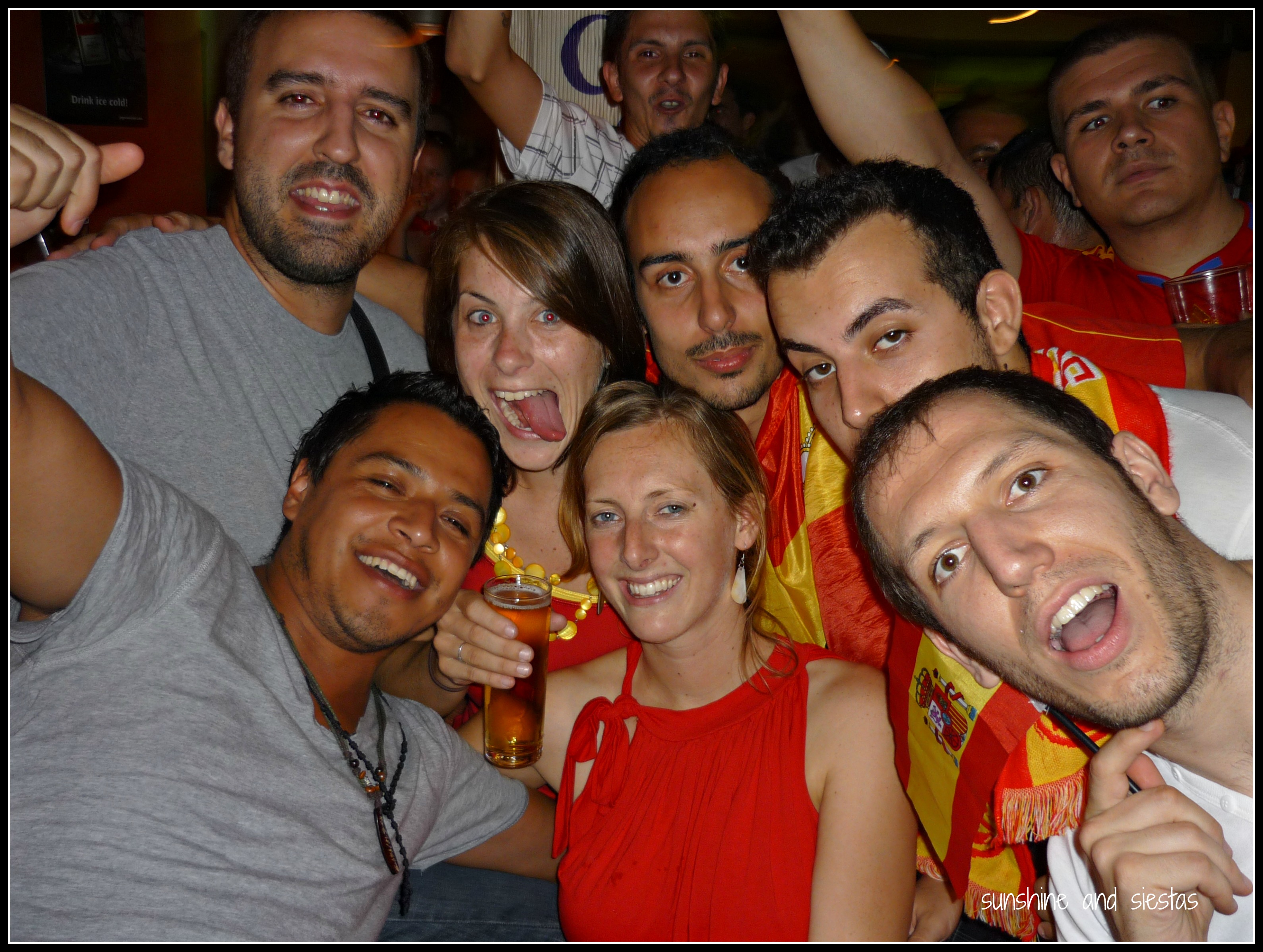
When I walk into Plaza María Pita in La Coruña, I remember the excitement leading up to the final. Carrying a plastic bag full of cold beers, we waited hours for the square to fill while Waka Waka was played on repeat. With the crowd ebbing and flowing with every corner, card and kick, we all found ourselves at different points of the plaza. At minute 82, I told Lauren I would rather pee my pants than miss the last few minutes of a tied game. As I squatted over a toilet where I didn’t even bother to turn on the light, an eruption occurred. I rushed out to see if someone had scored, pants still unbuttoned.

In the end, an extra 30 minutes was tacked onto the game. Nerves were tense as people around us hugged us in close. No one spoke. Tikitaki. Back and forth went the ball. Iniesta in from the right side. Strikes. Past the goalie’s hand. straight into the net. As Reina put it, “He wrote the script for our success.” Spain had brought faith to a country in the midst of its worst economic crisis, had united a nation in the name of balompié. I felt like I was a part of the greater picture, swept up in the craze and into numerous hugs and high fives from strangers (including the defeated Dutch).

Two years later, I’m with Inma cheering on La Roja as they play a friendly with China. The game isn’t especially interesting, but it was the last time they’d play before their debut in the Cup this evening with Italy. I cheer the chants loudly enough to lose my voice, straining my neck around someone in front of me with a goofy hat to see the corner kicks. Explain to Inma what fuera de juego means and why cards are given.

Finally, after five years, I have found a way to move past my need for tailgating and Gary Dolphin, and I feel that La Roja is my Spanish team to believe in.

Euro Cup FAQs:

The Who, What, Where: During the month of June, 16 qualifying teams from across Europe will go head to head to determine the continent’s best football club, with the final on July 1st. Poland and Ukraine are sharing the hosting duties this time around.

Spain’s Desafío: Be the first team in history to win back-to-back-to-back Eurocup (2008), World Cup (2010) and Eurocup (2012). Apart from being a team of depth, La Roja’s players don’t play with their egos to feed as they do in the national league. Spain is grouped with Italy, Ireland and Croatia and plays their first game tomorrow at 8:45 pm against the azzurra from our Mediterranean neighbor. Teams to watch are the usual heavy hitters: England, France, Holland and Germany, two of whom were teams Spain beat during their World Cup run.

Spain’s Schedule: Spain plays its fellow group members in the first round: Italy today at 8:45 pm, Ireland the 14th at the same time and Croatia on the 18th. The two tops teams of the division will duke it out in the quarterfinals on June 23rd. The winner will be decided on July 1st at 8:45 pm.

Who are you rooting for?

This slideshow requires JavaScript.

Seville Snapshots: Pasaje de Miguel Mañara

Remember learning idioms as a kid? Trying not to laugh when thinking about looking at a horse in the mouth, or having it come straight from another horse’s mouth? My kids have been trying their best to describe, with their limited English, what the meaning of “when the cat’s away, the mice will play,” and it doesn’t help that their teacher shares the same name.

Of all the idioms I use, both in English and Spanish, “A Picture is Worth 1000 words” is perhaps the truest. My mind makes mental snapshots on the daily, drinking in what I see around me. A horse-drawn carriage drinking water at a fountain. Ready, aim…click. Solemn Semana Santa processions, a black-cloaked nazareno looking at me with piercing, passionate eyes. Click. Seville is a city whose worldly delights can make immaculate photos, so part of my new project will be to show off this place through photos that bring to mind far more than 1000 words. I’ll try and limit it to 100, though.

The key to appreciating Seville is to look up. Looking up provides a glimpse of the martins circling over the buttresses of the cathedral, affords a whiff of jasmine or azahar, allows you to trip over the uneven concrete of a city whose history precedes it. Looking up means snapping a photo of the tiled underbelly of a balcony, catching glimpses of life for the thick-skinned sevillanos. Without this vista, the city is what it is – touristy, full of souvenir shops along Avenida de la Constitución. But just looking up, to the shuttered windows of the old quarter, the preserved minaret towers, now replaced with bells, and the blue sky that is ever-present in the Andalusian capital, makes the city as romantic as its mantra claims. No me ha dejado, not with views like these. Photo taken from Pasaje de Miguel Mañara.

If you’d like to participate with your photos from Spain and Seville, please send me an email at sunshineandsiestas @ gmail.com with your name, short description of the photo, and any bio or links directing you back to your own blog, Facebook page or twitter. Don’t forget to follow Sunshine and Siestas on its new Facebook page!

For the Love of the Dove: El Rocío

I’ve never been one for Bucket Lists, but often set travel goals for myself. When I was 20, I decided to do a 25 before 25, making a list of my top-five destinations when I moved to Spain two years later. Twenty-twelve meant no resolutions, just a few ideas for travel goals during 2012: one new country, one off-beat travel activity and one nationally recognized festival, in Spain or not.

It’s the end of May and I’ve just completed my goals. I think I shall hashtag this as #travellover. Last weekend, my sevillana half orange, La Dolan, and I went to visit Spain’s lushiest Virgin Mother, La Virgen del Rocío.

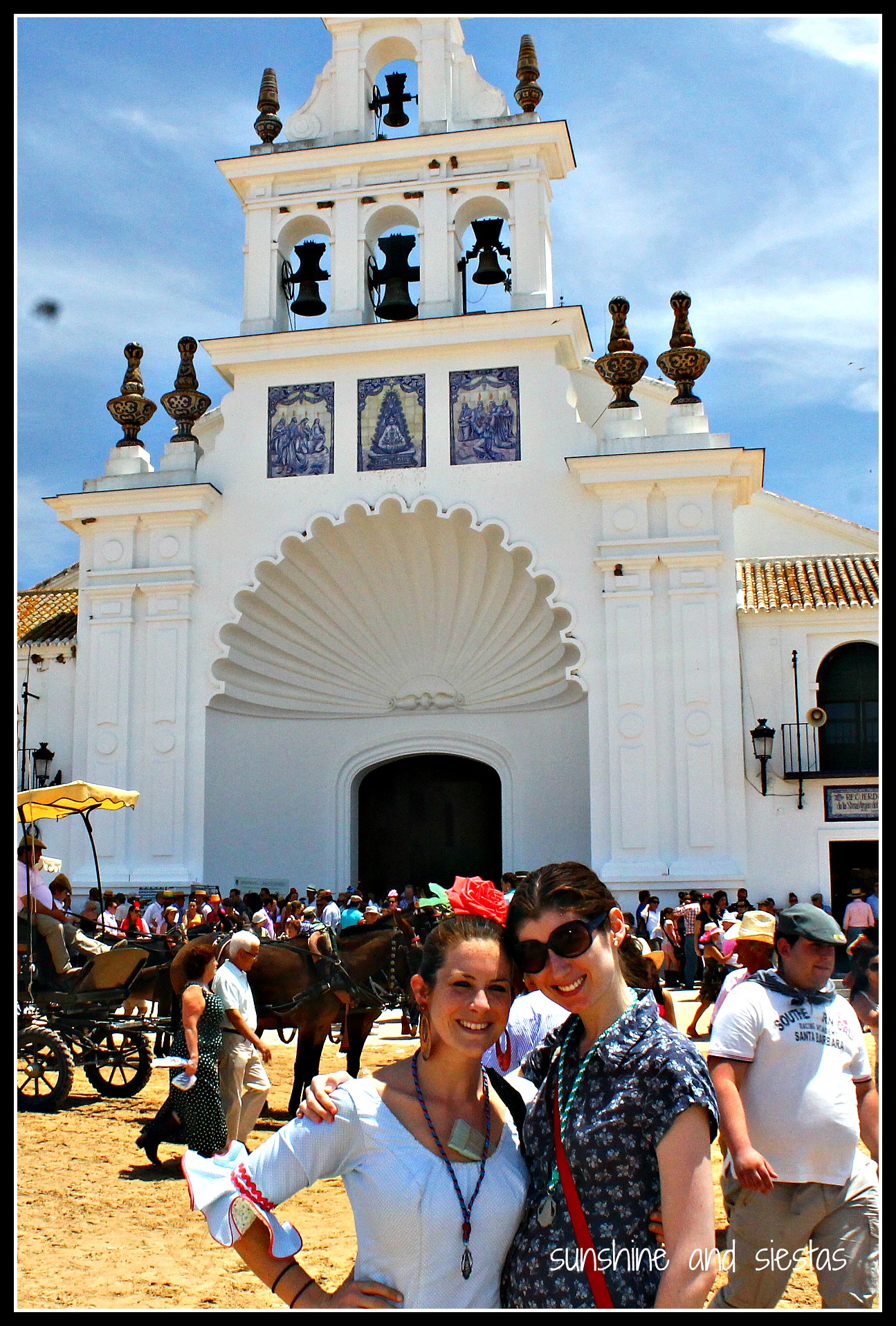
The festival of El Rocío is one-part religious pilgirimage, one-part full-blown fair and two parts party: those devoted to the Virgen, known as the Lady Of the Marshes or the White Dove (Nuestra Señora de Las Marismas, for the hermitage’s proximity to the protected swampland of Doñana National Park, or the Blanca Paloma), make a pilgrimage from their towns to the immaculate white church outside the village of Almonte. This can be done on foot, on horseback, or by riding in oxen-driven carrozas, a type of temporary covered wagon. Arriving on or before the Saturday of Pentecost, often sleeping and eating outdoors, the rocieros then gather in El Rocío for a series of masses, parades and the famed salta a la reja.

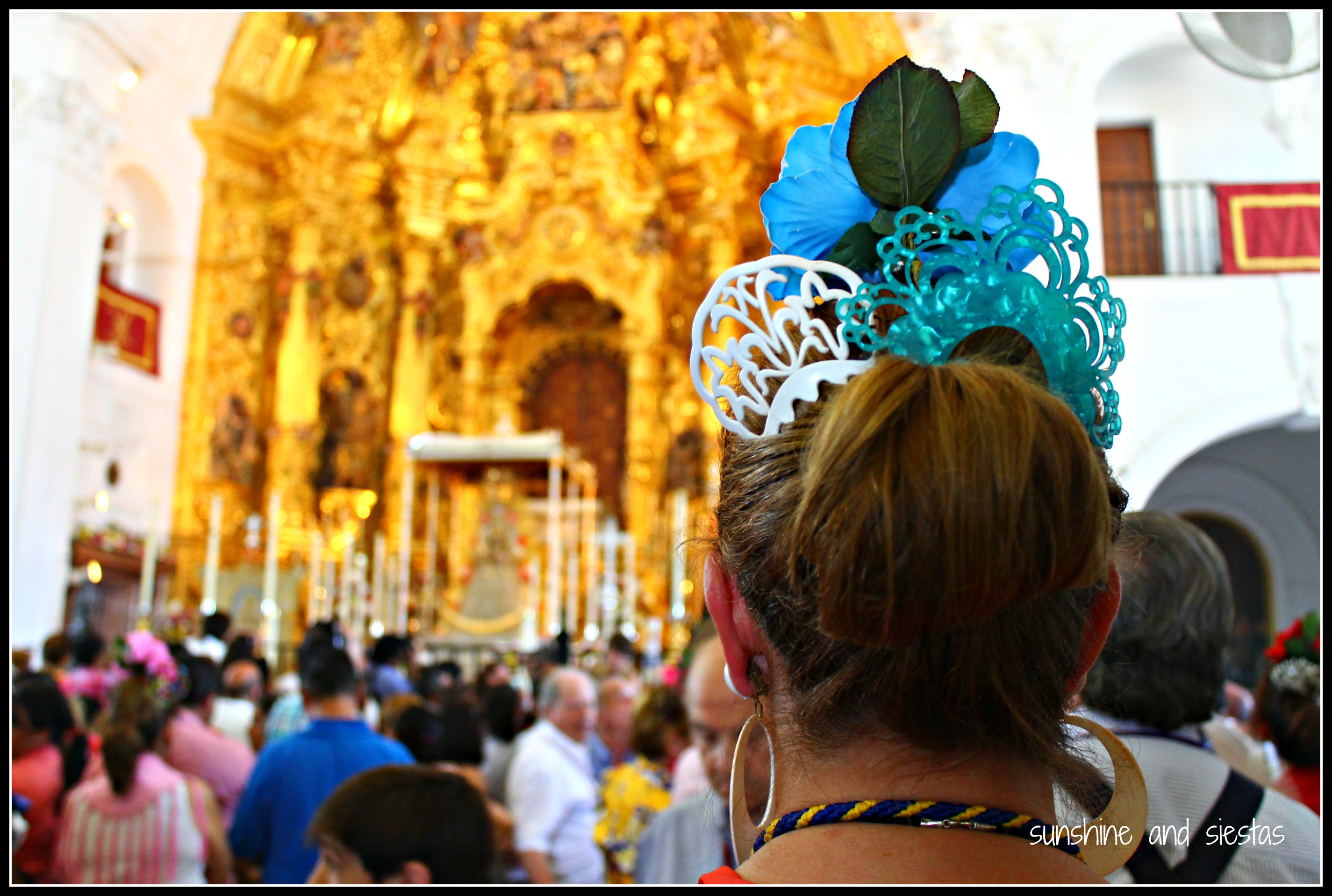
We arrived just before noon on Pentecost Sunday. I wore my celestial blue traje de gitana, coral flower on my head, while Cait opted for a breezy skirt. It was over 90º out, but the rocieros were in their typical costumes: the women in trajes de gitana or faldas rocieras, a skirt with ruffles suited for walking, and high leather boots. The male counterpart is a traje corto, with tight cropped pants made for horseback riding. I made a face at Cait, suddenly very hot with the sleeves of my dress and restricted in movement.

The whole village of El Rocío is like a town straight out of a Wild West film set – hitching posts set in front of modest houses, horses clopping gallantly around the sandy streets. It was difficult to walk with my espadrilles while dodging carriages, and sand soon filled my shoes.

As we neared the stark white church, a beacon against the bright blue Andalusian sky, we decided to visit the village’s most famous resident before going any further. As we neared, the tamboril drums and simple flutes that characterize the sevillanas rocieras grew to a furor, and the crowd standing under the scalloped entrance of the hermitage suddenly parted. The Pentecost mass had just ended, and a parade of the simpecaos, the banners carried by the different religious groups, had begun.

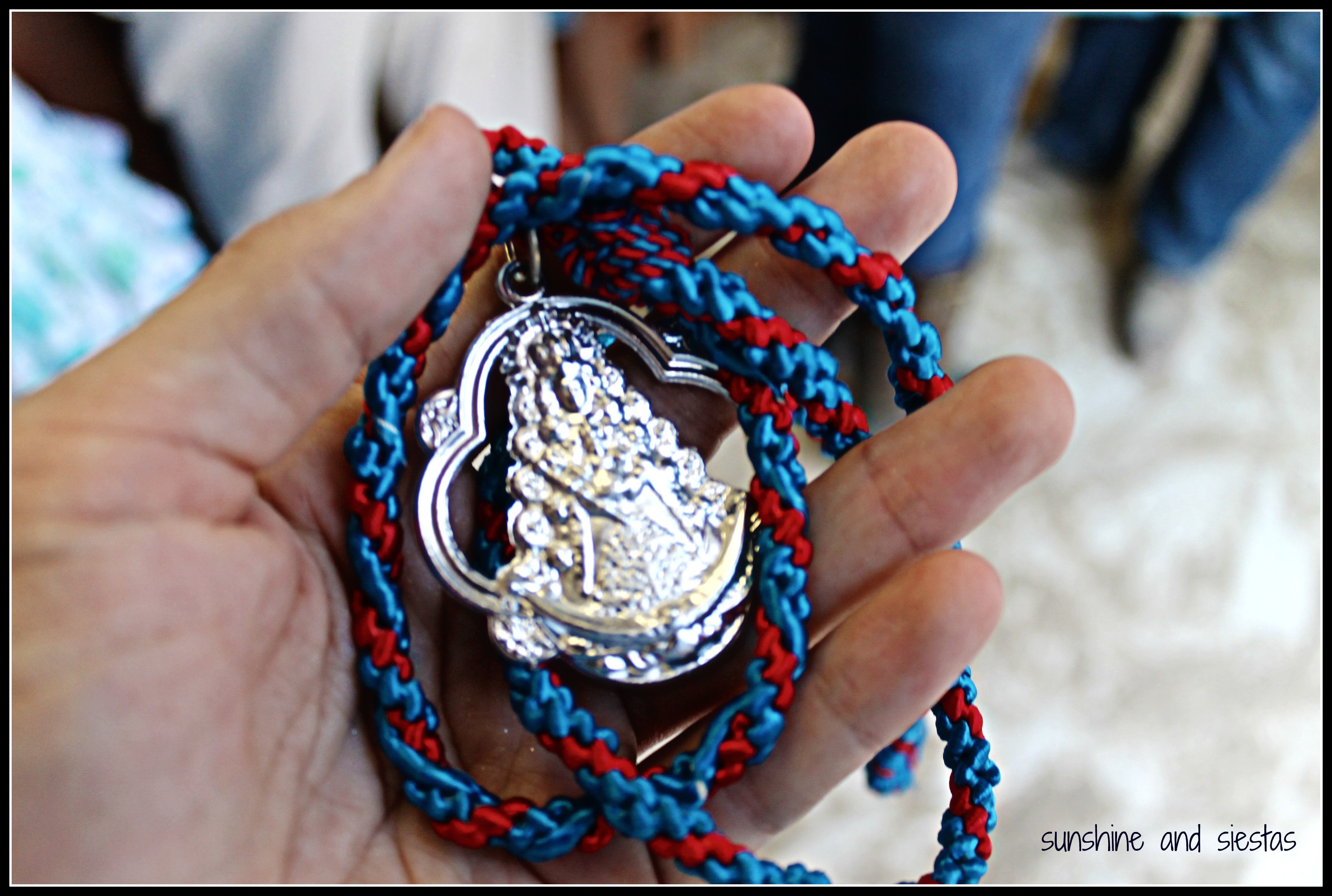
The knots of people ebbed and moved as the 110 hermandades, yes the same kind from Holy Week, from around Spain presented their faithful before the church and moved around the village’s dusty streets. From simple to elegant, each carry a symbol of the Virgen del Rocío. The pilgrimage dates back to the 17th Century, with the hermandad from Almonte, el Matriz, being the oldest. Following the banner come women in two straight lines on either side of the simpecao, carrying long silver staffs topped with images of their brotherhood’s virgen. Their necks were emblazoned with the same silhouette in the form of heavy pendants on the end of multi-colored rope cords.

The festival at the Aldea is characterized by religious devotion, of course, but there’s much more to it. As Cait and I reflected over our first action-packed hour, we listened to other bar-goers recount their tales. Once the hermandades arrive to El Rocío through the various routes from the East, West and South, they settle into houses that look like a giant corral or hotel around a central patio, with room for the carrozas and horses behind. Gines, Olivares, Villamanrique and Triana have enormous patios, and we peeked in to see the merriment between beers. People sing, dance and pray for up to one week during the pilgrimage and the celebration.

Feeling refreshed, we decided on visiting the Virgin herself. The temple is simple, white-washed, save the golden retablao and a few frescoes in the corners of the nave. Cola de batas, the boundy ruffles of the traje rociero, showed under confessional booths, and the romeros prayed to the Virgen Mother, who was kept safely behind a cast iron gate, called a reja. After praying the rosary that night at midnight, she would “jump over” the reja and be paraded around the village on the shoulders of revelers, called the salta a la reja. This is the culmination of the week’s events, and it signals the abandonment of the recinto and the camino back home.

Outside, we bought candles in the gift shop to take to the adjacent prayer chapel. There’s a life-sized statue of the Rocío that people press their candles to before lighting them and finding a place to prop them up. The whole chapel was cool, smoky and silent – a far cry from the music emanating from the casas outside.

We spent the rest of the afternoon walking through the streets, popping into bars for a beer (and relief from the hot midday sun), visiting my students from Olivares and trying to keep the sand out of our shoes. We got on the bus six hours after we’d arrived, absolutely exhausted and still bigger feriantas than rocieras.

Have you been to El Rocío or done the peregrinación? What was your experience like, especially on the road towards the Aldea? For more pictures, be sure to check out my Facebook page and become a fan for up-to-date photos and posts about Spain and Seville.

Death in the Afternoon

Like it or not, bullfighting is intrinsic in sevillano culture. Hemingway’s favorite pastime is both hemmed and hawed and considered a great art form, but this piece of southern folklore is alive and well in Seville’s Maestranza bullring, which hosts some of the most revered festejos and brings in the biggest names in bullfighting.

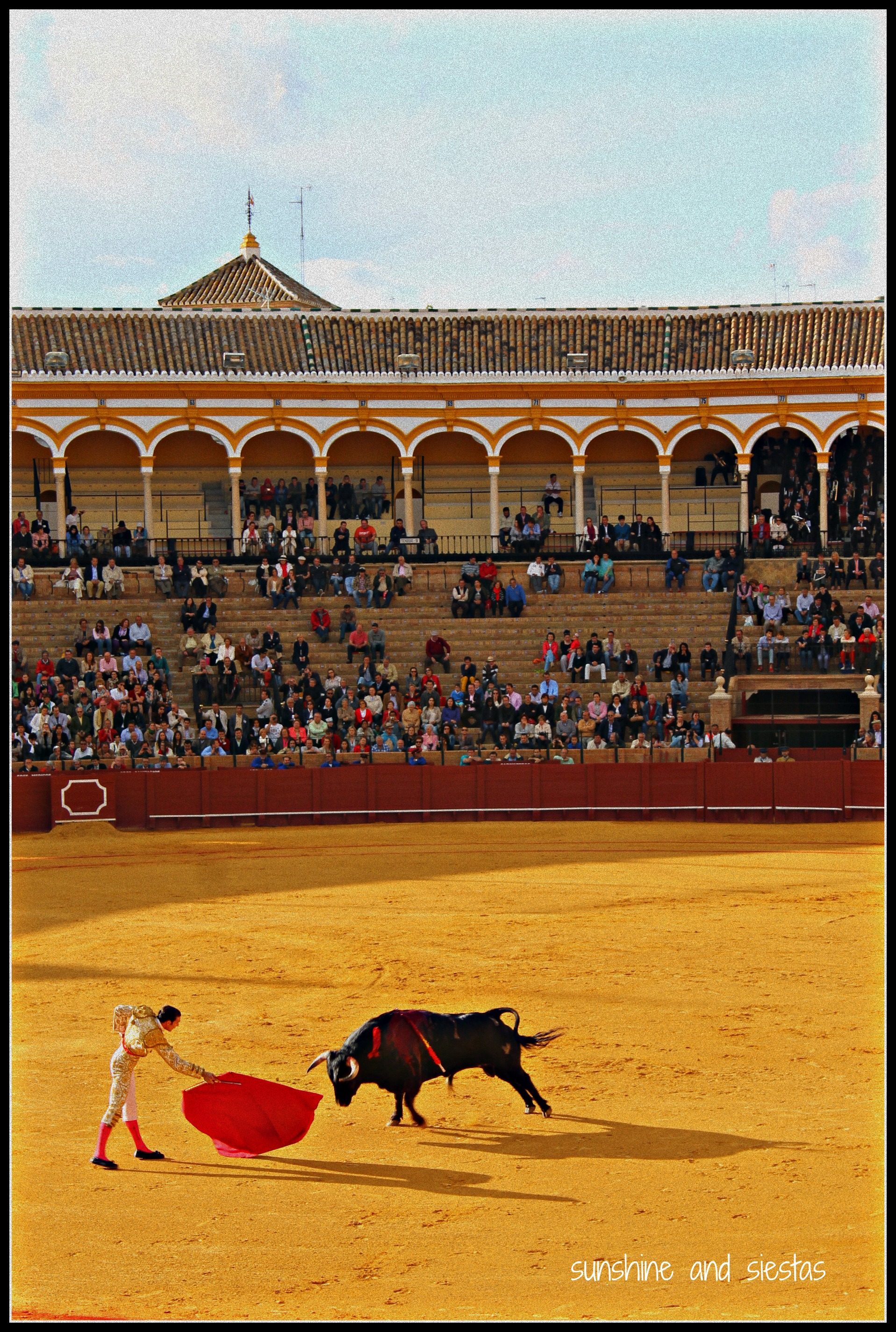
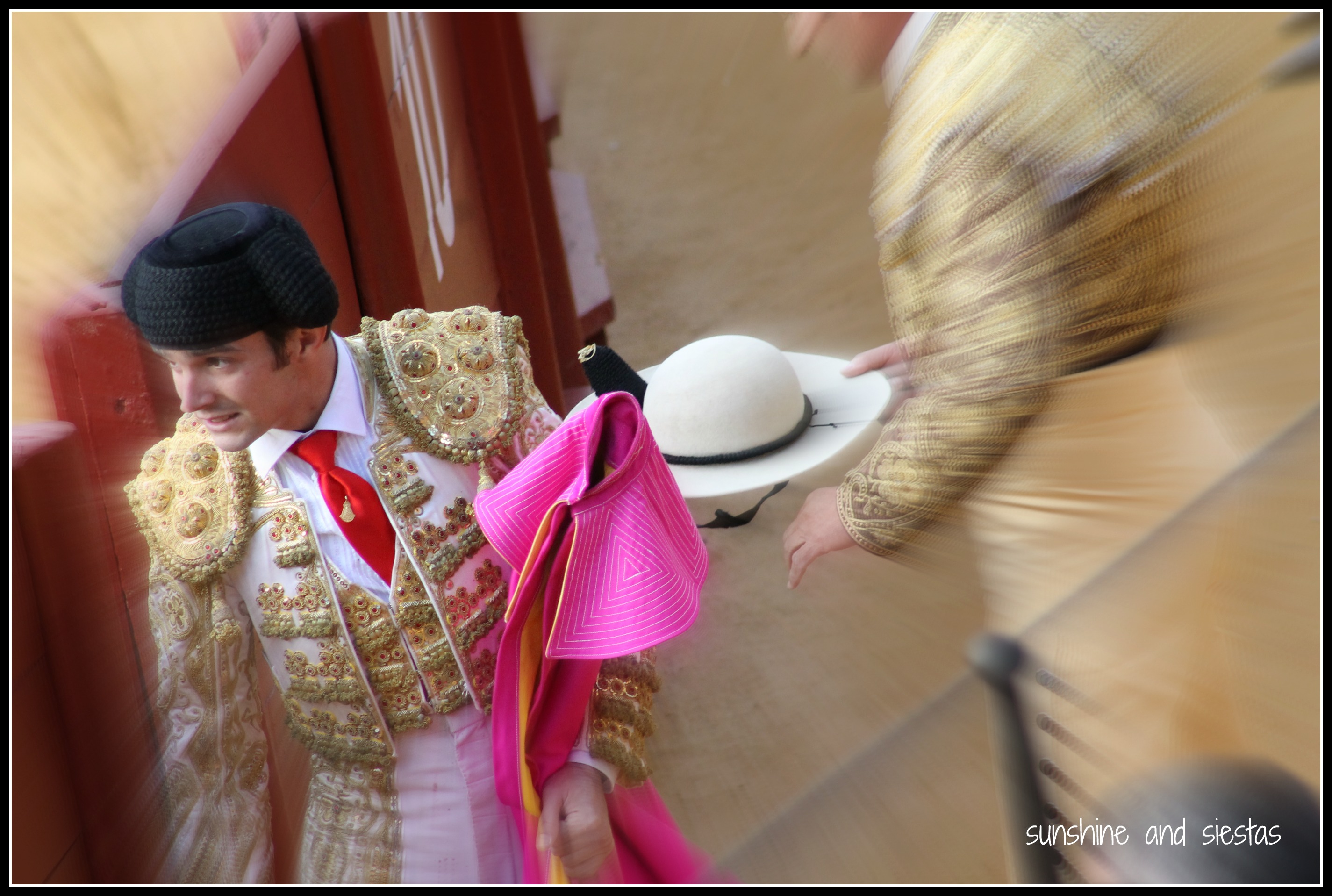
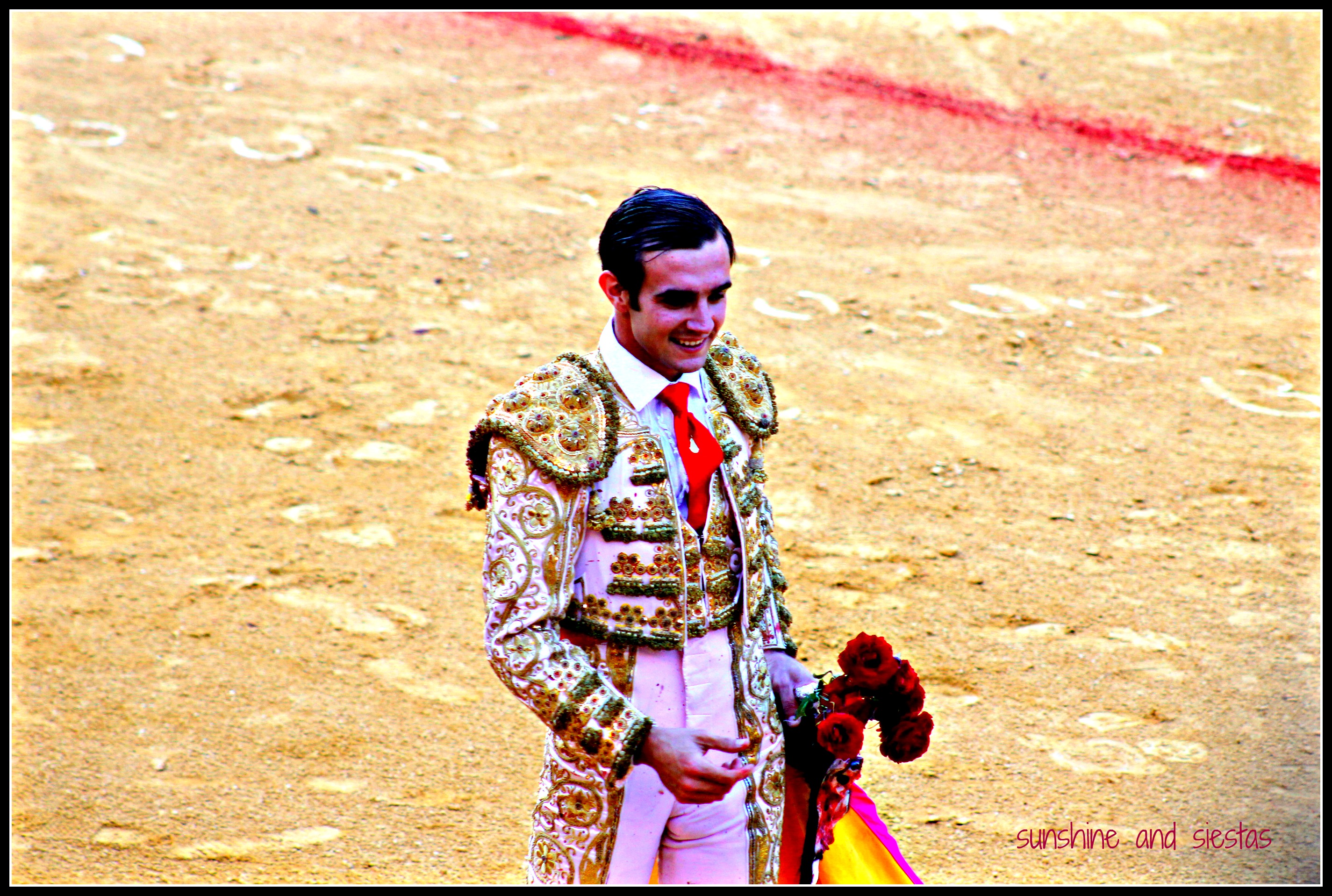
Aside from the gory part of bullfighting, I personally love the image of a bullfighter. Slight body, slicked, jet-black hair, traje de luces glimmering in the afternoon sun. What’s more, the plaza de toros in Seville is de leyenda – the mustard yellow and white colonnades offset the bluest of skies and the yellow albero dirt that lines the elliptical plaza. The pomp and circumstance of the whole thing is as breathtaking as a Virgin passing silently over the Guadalquivir River during Holy Week, alit with candles. And, really, I just wanted to bring Camarón along to get closer.

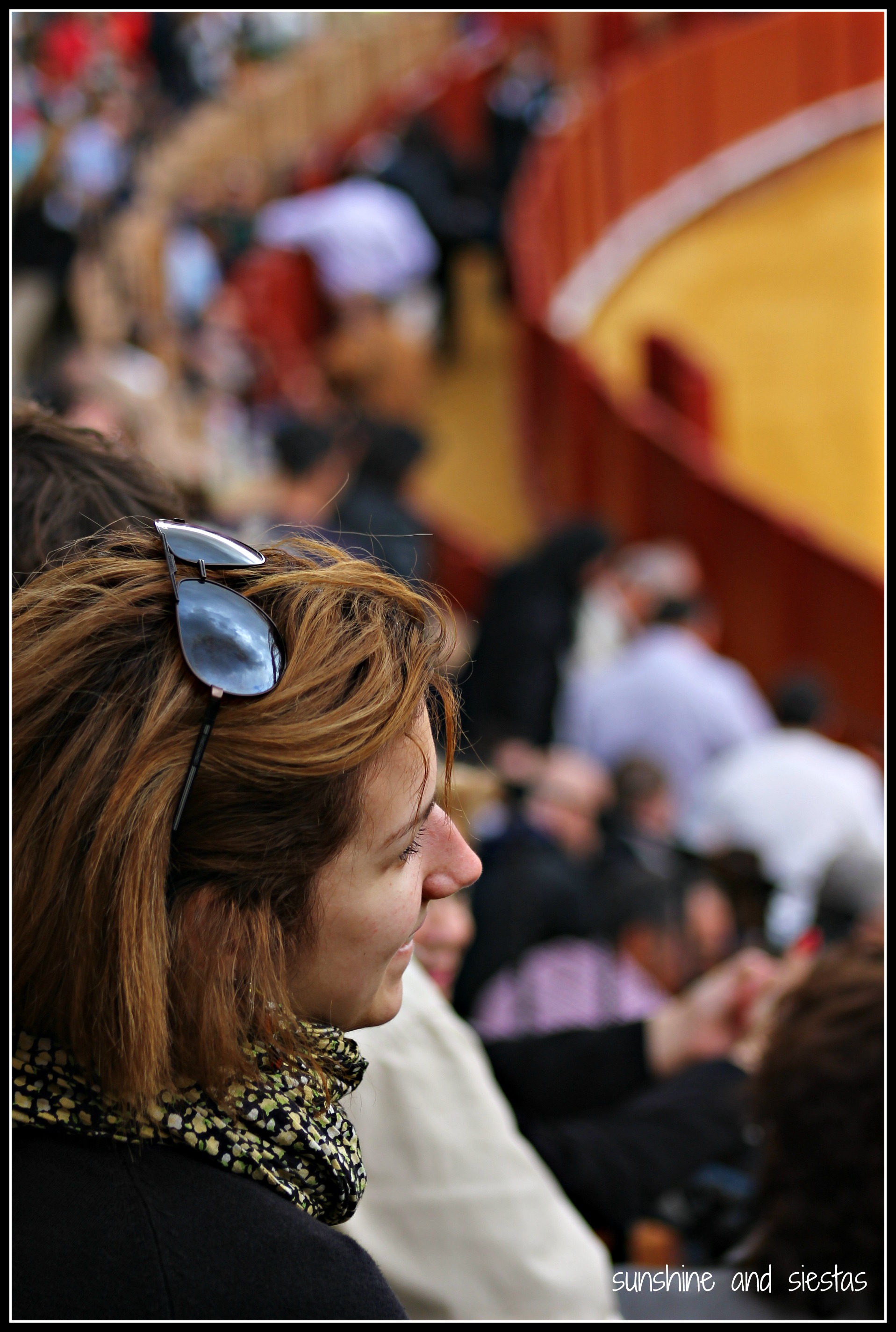
We enter the gates of the Maestranza by way of a narrow, uphill alley, the same the bullfighters take past snapping camera flashes. The toreros are celebrities in their own right – rich, often handsome and ready to face death by way of a 500-kilo animals with two piercing horns and plenty of mala ostia. Our seats are in the sol – sunny – section, but the cloud cover in the late afternoon means we’re pleasantly comfortable and have paid 20€ less for the event. People surround us on all sides – old men in caps with their grandchildren next to them munching on sunflower seeds, wealthy sevillanos with sideburns and fancy seat covers, guiris like us with cameras poised.

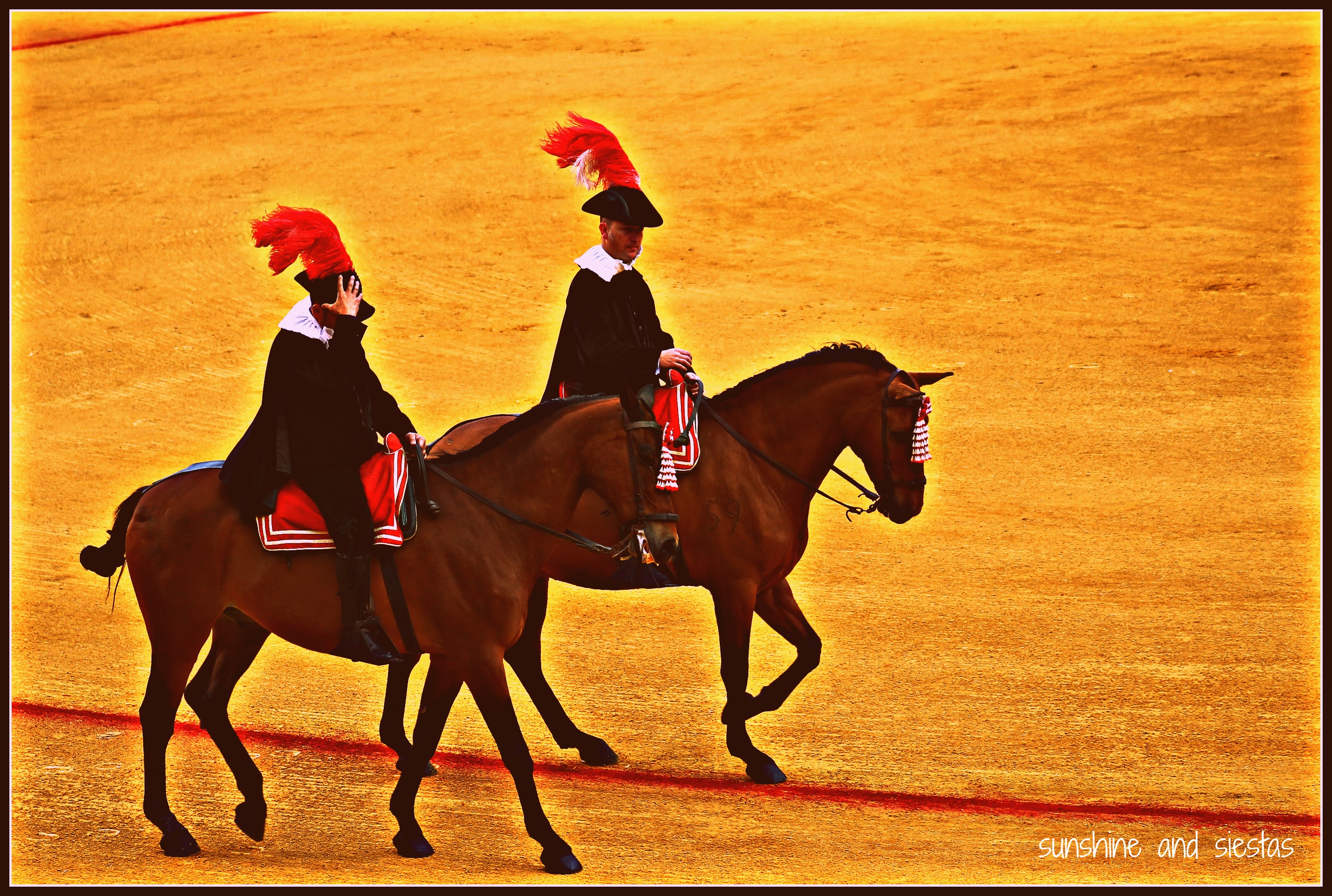
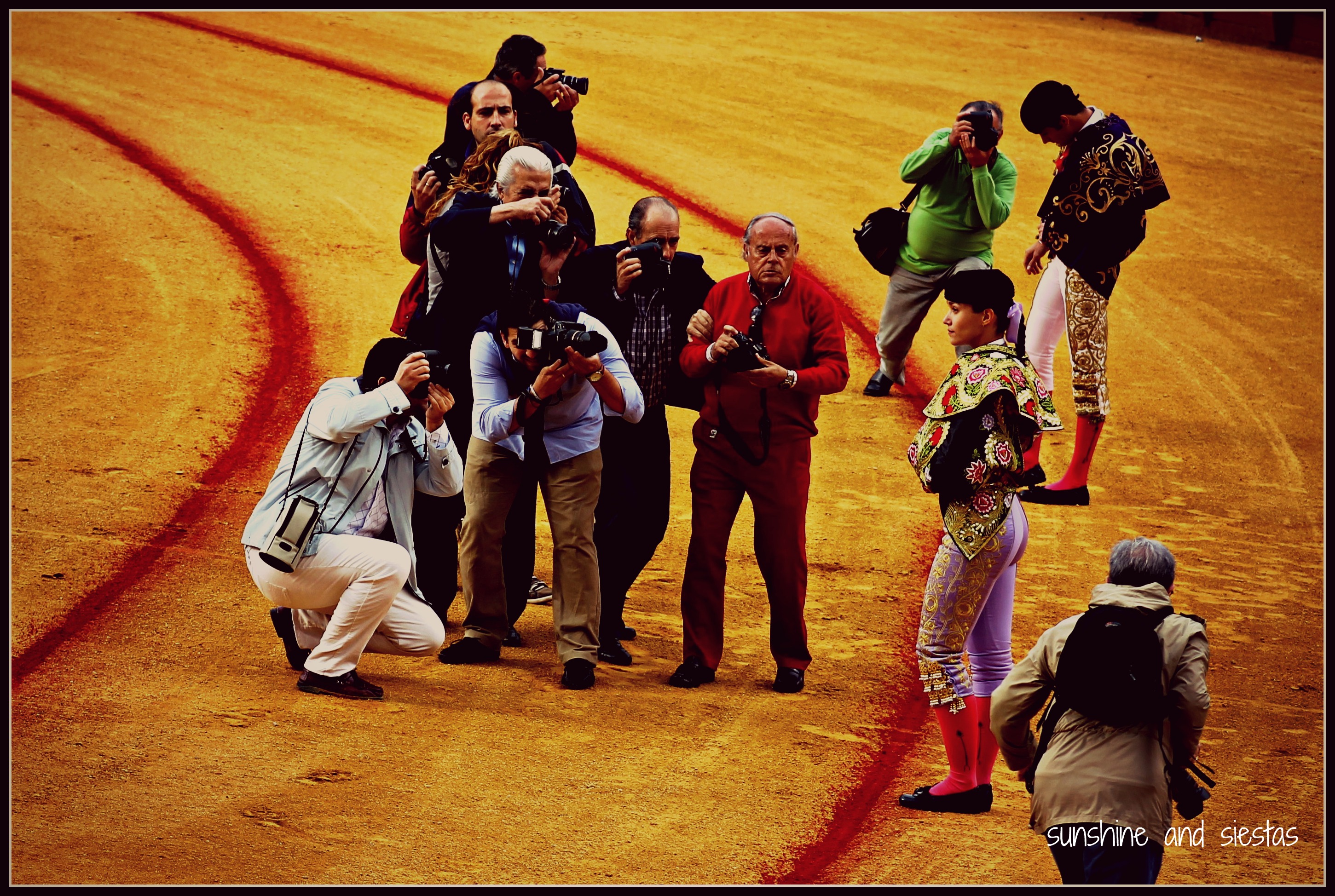
The clip clop of horses sounds in the inner bowels of the arena below me. Pages with long plumes enter the ring as the band plays from high in the sombra section. They present their hats and the bullfighters enter gallantly, a cluster of photographers crouching as the toreros gaze at the crowd before them.

We’ve come to a novillada, where young bullfighters gain experience on smaller bulls and often in bullrings of a lesser division. But here, in the Maestranza of Seville, the bulls are agile, strong and weigh in at almost 500 kilos. We’ll see each – Conchi Ríos, Emilio Huertas and Álvaro Sanlúcar – fight two bulls. One of the opponents will die, and the other survive.

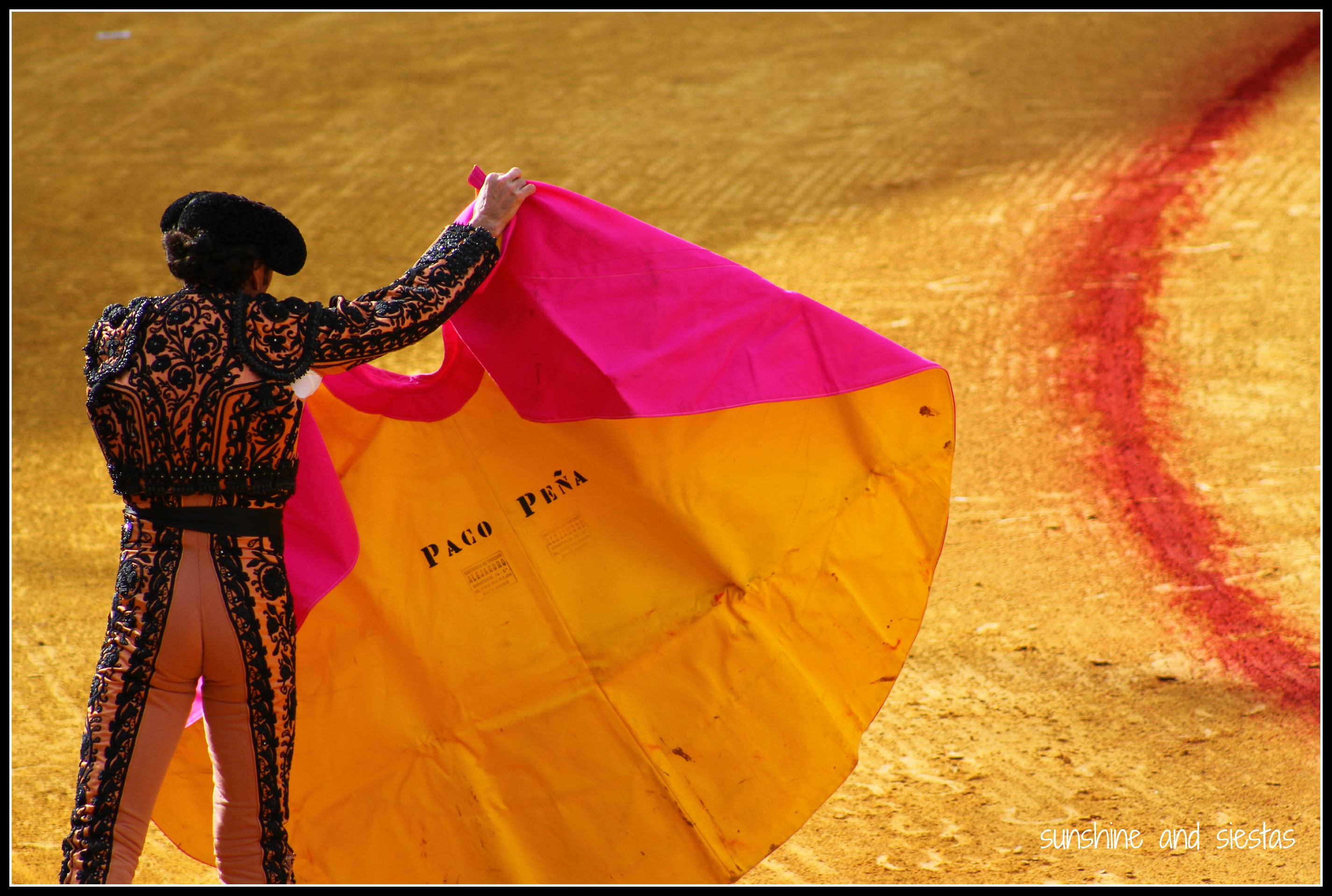
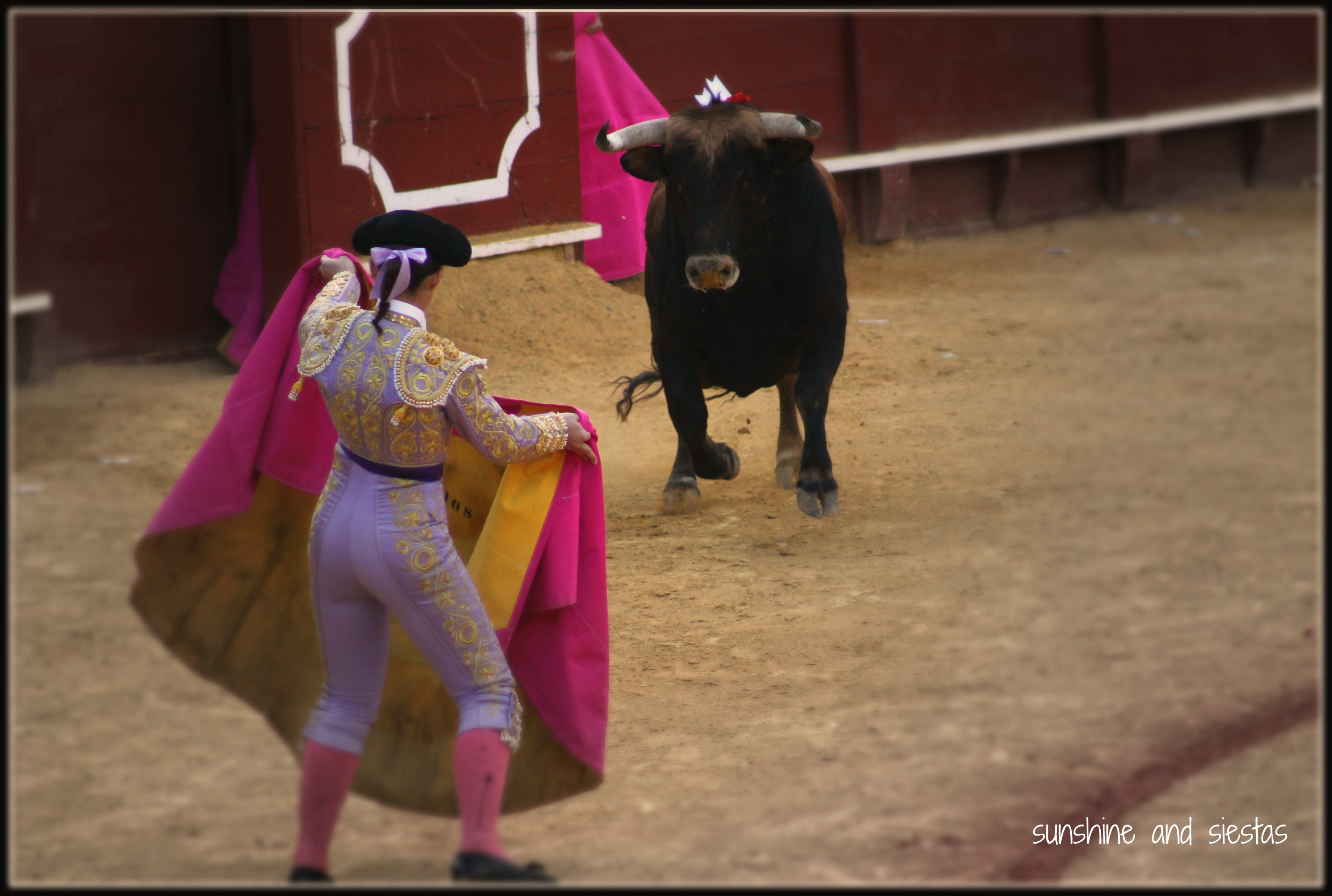
At 7pm sharp, the Puerta Gayola opens and the sounding of two cornets pierce the silent arena. Out comes Medialuna, and his statistics are announced on a placard over the door. Despite his size, he seems a bit flojillo as Conchi measures him up. Bullfighting is traditionally a male sport, but Conchi is treated equally, her cuadrilla or band of picadores, banderilleros and mozo de espada as grand as any. Using a heavy pink and yellow cape, called a capote, they measure the bull’s strength though a series of passes known as a verónica during the first third of the act. Conchi has a matador’s body and only the lavender colored ribbon in her hair gives away her gender.

The clip-clopping commences and the picaderos enter the ring through a gate adjacent to our seats. Fully armored, the horses are blindfolded and I cringe as the whole weight of the animal nearly knocks over the horse. A long rod with a hook on the end is driven between Medialuna’s shoulder blades. Conchi’s banderilleros, the three men designated to put the small flags into the bull’s mighty back take wing. The second act of the tragedy comes at a price – the bull is weakened due to the loss of blood, and it seems certain that he will meet his end. The small banderillas are fashioned after the Spanish, Andalusian and Murcian flags, paying homage to Conchi and her cuadrilla (from the region of Murcia) and the plaza.

Once the banderillas have been fixed, making the bull look as if it had won ribbons at a state fair, Conchi takes off her montera hat, saluting to the crowd. Now comes the final faena of the fight, where she manuevers the muleta, a small red cape, around the bull, using short grunts and movement to make the animal barge towards her. Though the animal passes far away from her, I’m intrigued by her foray into the sport.

Her first attempt to drive the sword between the shoulder blades, thus severing the main artery and killing the bull as cleanly as possible, is unsuccessful. Before the day is out, we’ll see five more bulls from the novilleros all hoping to present themselves as full matadors in the coming years. Álvaro Sanlúcar has a baby face and seems unsure of himself at times, while Emilio Huertas is so convincing in his second faena of the day, the band finally starts playing a paso doble as he puffs out his chest and taunts the creature.

“Oh, he’s going places,” says Cait, our resident toro aficionado. His faena is flawless (well, to me) and his efforts earn a standing ovation from the crowd. I take a kleenex out of my purse and wave it in the air, a petition to the judges to award him a special prize – an ear for his bravery and artistry. The ear is cut, and Emilio humbly takes it. Patting backs and hugging commences as he holds it triumphantly in the air and walks slowly around the ring. Fans throw flowers, hats and even painted fans at the young torero.

Placing his montera back on his head, he catapults himself out of the ring and leaves the last bull of the evening to Álvaro. He’s a fierce one who charges as soon as he catches movement. By this point, I’m already thinking about dinner (and I love bull tail, for the record). The trio walk slowly back out of the gate designated for them when it’s all over, symbolizing their triumph over death.

Not to add fuel to the fire, but have you been to a bullfight? What are your impressions of it? If you’re not into the gory stuff, please vote for me on Kaplan’s How to Teach English blog competion. My entry appeared on this blog last week, and your vote here with my name and blog URL could mean a free iPod for you, too!

Related Posts Plugin for WordPress, Blogger...