Snail Tale, Part 2

Spring in Sevilla is like a four-act play: incense and nazarenos followed by sherry and sevillanas. Next comes the heat and absence of people in the streets and, finally, signs proclaiming HAY CARACOLES. Snails here.
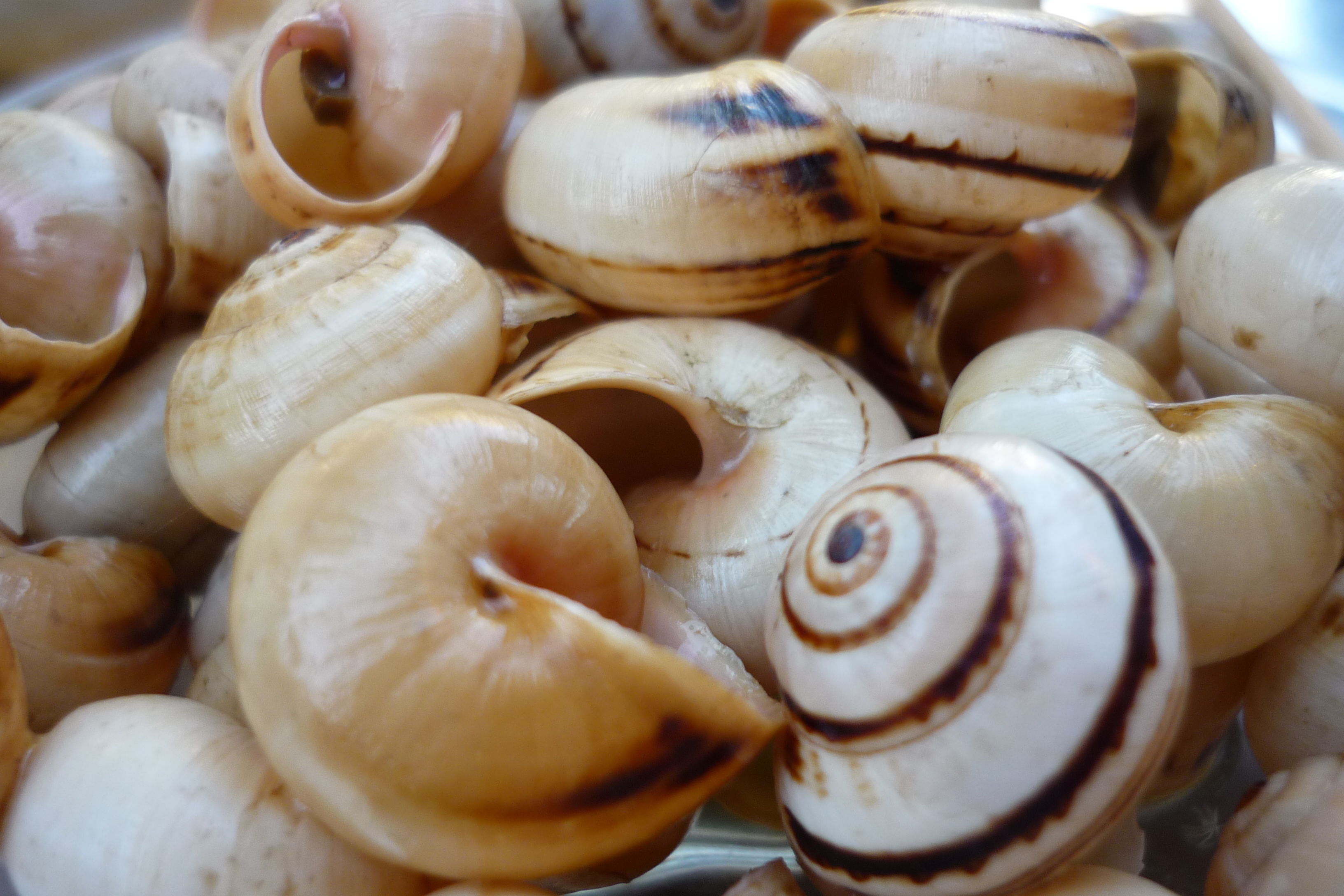
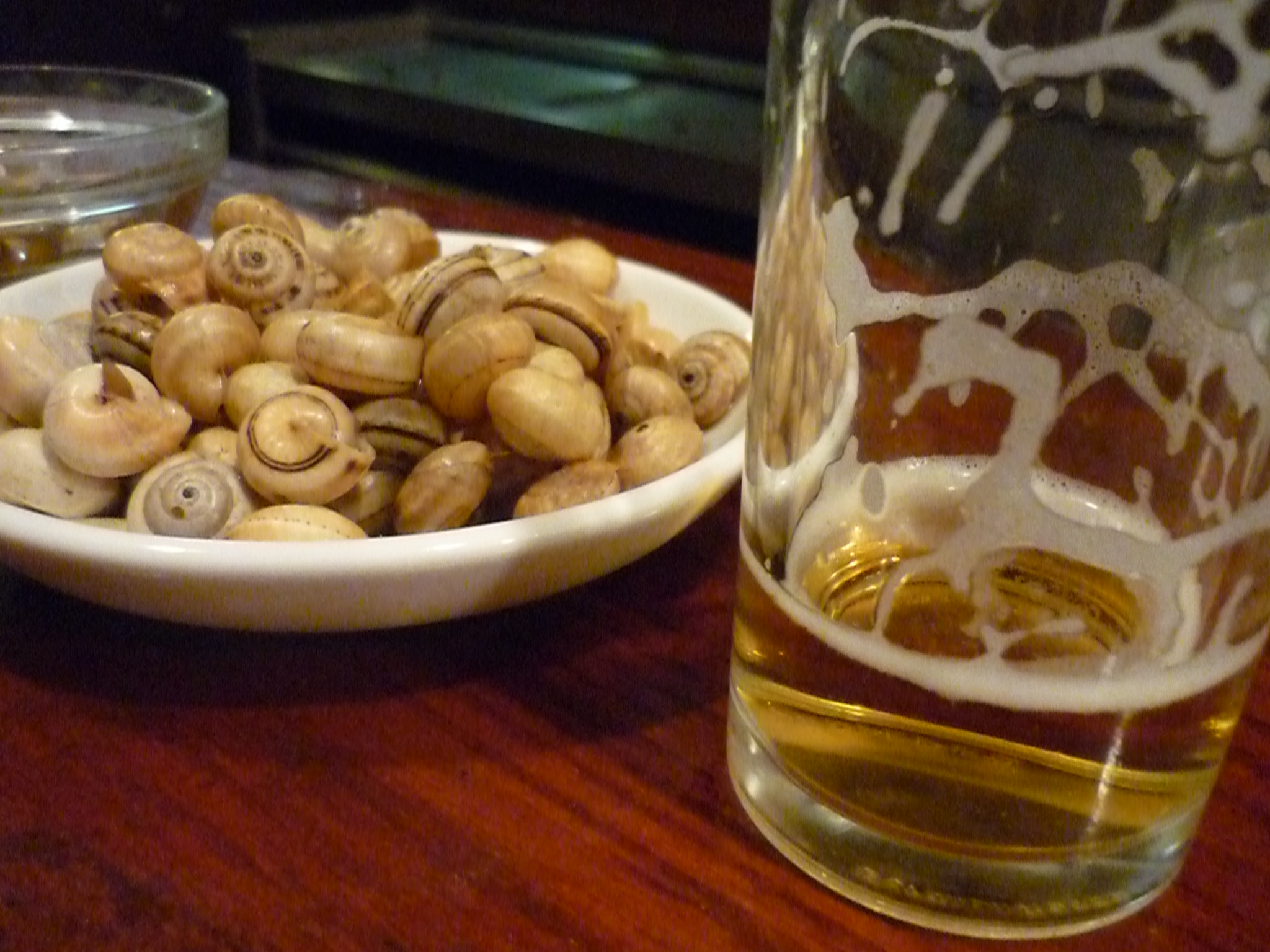
While the squishy little animal is enough to make any American squirm, caracoles are anticipated the same way that we wait for sweetcorn on the 4th. As soon as the temperature cools off about 8 p.m., people flock to the streets to slurp up caracoles.

And when I say slurp, I mean slurp. The snails are cooked in a spicy brown sauce and served in either a tapa or a plate. Though toothpicks are given, most people prefer to just suck out the little brown thing and the juice. If they don´t come out, well, you make a little hole with your tooth in the shell and he slides right out!
Below are my favorite places for snails, taking into account price, ambience and slurpiness.
CASA DIEGO
This tiny little locale on C/Esperanza de Triana is only open during snail season. The critters are cooked in a huge vat while the proprietor pours beer and throws montaditos on the grill. Diego is legendary, from the piping hot, spicy sauce the snails are cooked in to the plates balancing on the empty kegs of Cruzcampo outside. Calle Esperanza de Triana (Triana)
LA TIZA
La Tiza is typical cevercería: old men in pressed white shirts serving you your cervecita, tabbing it up on the wall or on the bar in front of you with chalk. Pictures of Toro Lidia adorn the walls and kids run around your feet. La Tiza has more elbow room for those pesky ones that won´t slide out, and they´re cheap, too – 2,50€ for a tapa is all you need to say for me to be there! Paseo de Europa, (Los Bermejales)
EL CANO
Named for the first sailor to complete a round-the.world trip by boat, El Cano is an old locale located in the old fisherman´s barrio between Heliópolis and Los Bermejales. The tile-lined bar is surrounded by a tall brick wall, perfect for resting your plate on during a warm night. These buggers are a bit more expensive, but slide right out and come extra spicy. This neighborhood has a lot of ambience, too – the fisherman’s chapel is right next door, and if you don’t like snails, the bar has everything from coagulated blood with onions to tripe. (Barriada El Cano)

LOS PAJARITOS / CASA RUPERTO

While this bar’s claim to fame is the roast and peppered birds (hence the name), the Novio swears that the creepies are exquisitos at Casa Ruperto. The bar is nestled into a small, dusty patio between two residential buildings, so it feels like a small block party of friends.  Calle Santa Cecelia (Triana)

EL KIKI

My old student Julián and I used to roam Sevilla while having conversation class, alternating neighborhoods by the month and stopping for beers often. As the caracol season snuck up on us, between the azahar and volantes, he touted Seville’s king of snails at Bar El Kiki. Tall wooden tables crowded the sidewalk under a wide awning, and the snails from Morocco are rumored to be the best in the city. I, sadly, have yet to try. off of José Laguillo (Santa Justa)

As I’m slurping up snails and celebrating Luna’s second birthday (for real! Where does the time go!?), head over to Interway, where I’ve been featured, along with Sarah of Love and Paella and fellow Seville blogger Fiona of Scribbler in Seville, for great expat blogs in Spain!

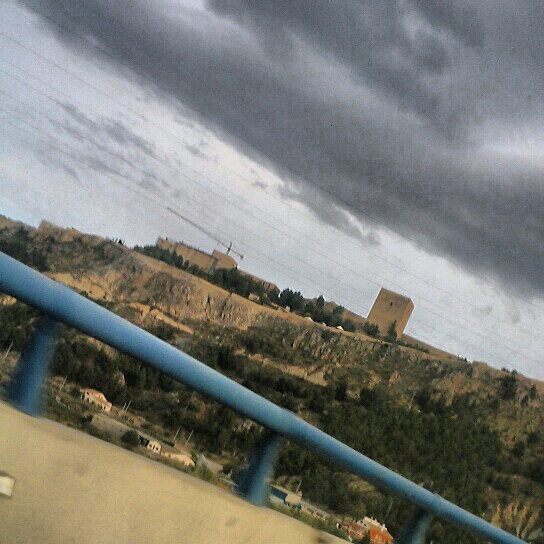
Murcia via Instagram

Lorca Castle

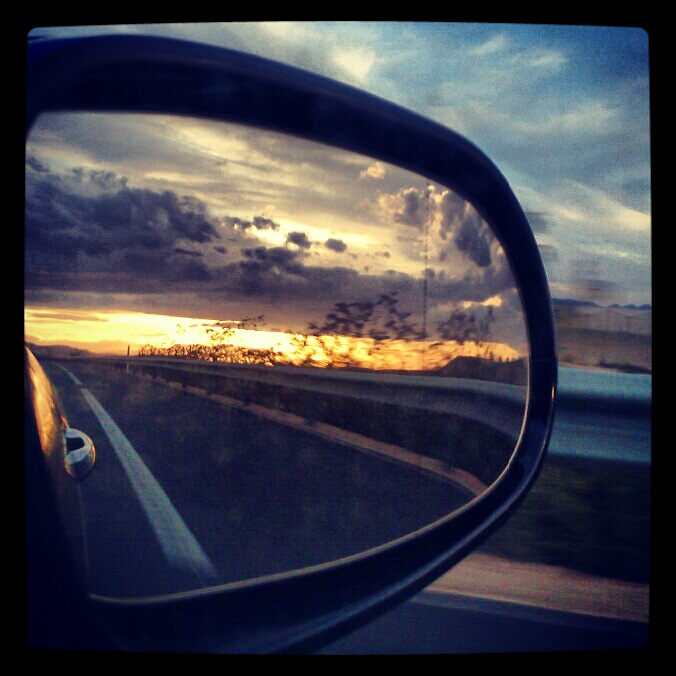
Liz of Young Adventuress recently tweeted, Am I the only one who doesn’t used what’s app or instagram? In short, yes. Social media has been taking its toll on my love life recently, as my boyfriend walks away from me any time I whip out my little htc hot mess of a phone (since my nice one was stolen in January). I squealed with delight when instagram became available for Androids just before Feria last month, and used the looooooong car ride from Sevilla to Murcia – last weekend’s destination – as a way to test it out. In short – I’m in love. While I preferred Pudding Camera for its crazy settings, Instagram’s ease with social media make it a bit more of a winner in my humble, html-challenged mind.

Nearing our final destination…

The Novio’s job takes him this week to Murcia, a strange, moon-like crater that anchors down the southeast corner of the peninsula. While I’d had little desire to ever travel there, I had a (nearly) free ride and a place to stay, so I jumped at the chance. We pulled up to Cartagena, a town rich in military history (and home to the first self-propelled submarine, who knew!) shortly after 9pm. The journey had been long, with bouts of natural beauty through the Sierra de Huétor and the green, green plains that run along its backside towards the coast.

Cartagena’s port stood quiet and still on a Friday evening, and even the Calle Mayor was lifeless. Our quick dinner of beer and ensaladilla was met with a good night’s sleep before we headed out the following day for Jumilla.

Souvenir shop in Cartagena, right off the dock

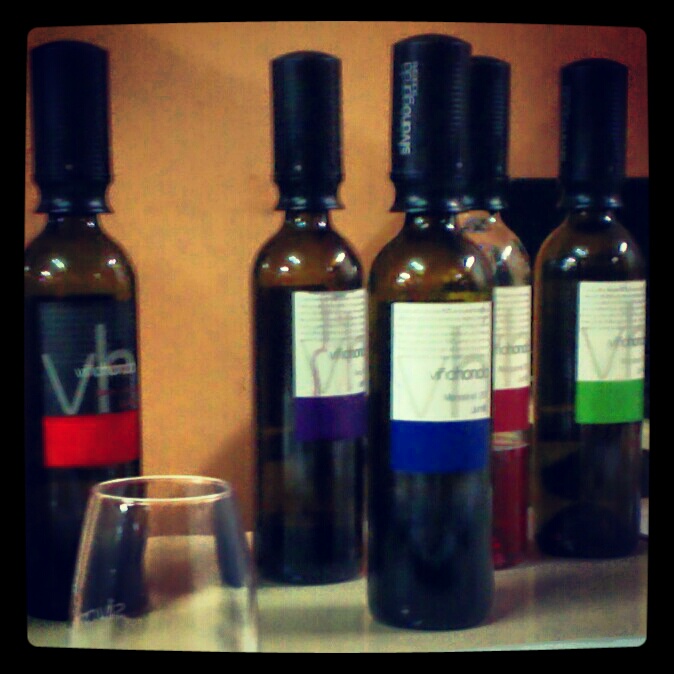
Murcia has few claims to Spain, apart from a few big cities, a bunch of expat enclaves and wine. Jumilla, a sleepy town that nearly reaches the border of Valencia, is home to several wineries, and I was dying to tour one. I had gotten in contact with Bodegas Silvano García, who graciously offered us a tour of their small, family-run bodega and a full cata de vino for only 5€. Even Mr. Grumpy, who wasn’t keen on making the drive, enjoyed himself and pumped some (grape-flavored) fuel back into the economy.

wine tasting at Bodegas Silvano García

Later that day, we headed down the coast to Águilas, where his Aunt Laura and her family live. The day was cool and drizzly, but the sound of the waves and the smell of salt somehow always makes me feel like Spain was a good, good choice. The day was far less than perfect, which made me eager to get on to Murcia.

Águilas beach

Finally, a sunny day. After a quick trip to the ER and our Sunday churros routine, The Novio and I wandered the central heart of Murcia. It was Mother’s Day, so people were overflowing the terraces in the square at the foot of the cathedral.

“Let’s go in,” I told The Novio, Camarón finally unglued from my face. The salmon and cobalt hues of the building were inviting, and I had a feeling of who I might find in the cathedral: St. Lucy, the eyeless one I chose for my confirmation name. Little known fact about me: I always add to the donation box when I find her in churches by surprise.

of course it’s sunny the day I have a seve´-hour bus ride to look forward to

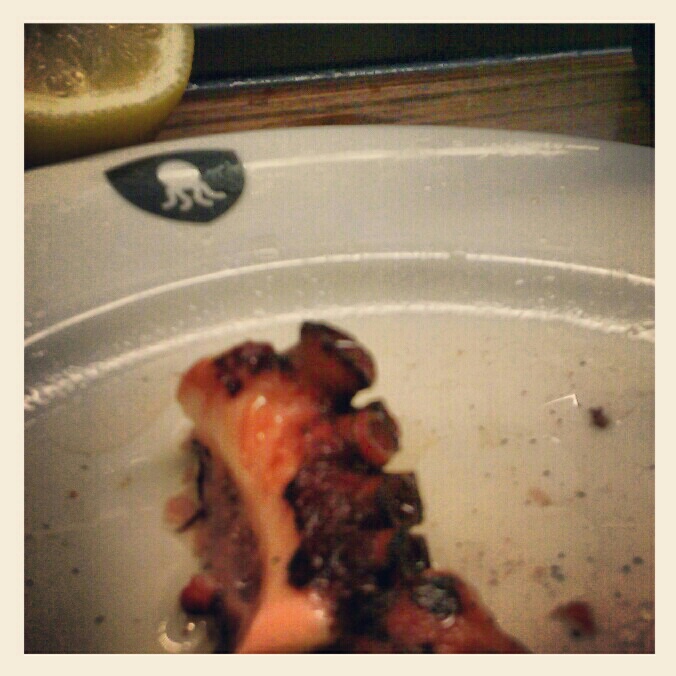
We met Paco and Inma, two of his coworkers, in Plaza de Santa Catalina. Paco is from Murcia and invited us to have lunch with him and his brother, so we squeezed into the corner of El Pulpito, awash with cool grey tones and smelling of seafood. Carmen’s mother had told me to try pulpo al horno, an octopus that’s been baked, and I was not disappointed. The caldera de arroz, stuffed clams, ensaladilla and cold beer did not disappoint, either.

murcia’s finest: pulpo al horno

I was the bus a few hours later, crammed into a window seat. I watched the craters of Murcia eventually return to the flatness of the plain where Seville sits. I can’t say Murcia is my favorite part of Spain, or that I’d ever be willing to make the seven-hour bus ride happen again. Yet, somehow, I don’t feel like I got to see all it really has to offer. My Instagram photos reveal little more than the day’s main events (I let Camarón have all of the glory, afterall), but I’m anxious to see more – and, let’s face it – eat more octopus.

Have you ever been to Murcia? What were your impressions of it? Any place in Spain you’ve never been that you’d be willing to go if you had a free ride out there? And if you’re on instagram, let’s follow! I’m found at sunshinesiestas.

¡A Vivir, que son (seis) días (de Feria)!

I’ve written for Backpacking Matt and The Spain Scoop about my favorite fiesta of the year: the Feria de Sevilla. Curve-hugging dresses, horse carriages and thousands of bottles of manzanilla sherry characterize the fiesta más alegre of the South just weeks after the gold-laden pasos are stored in their temples.

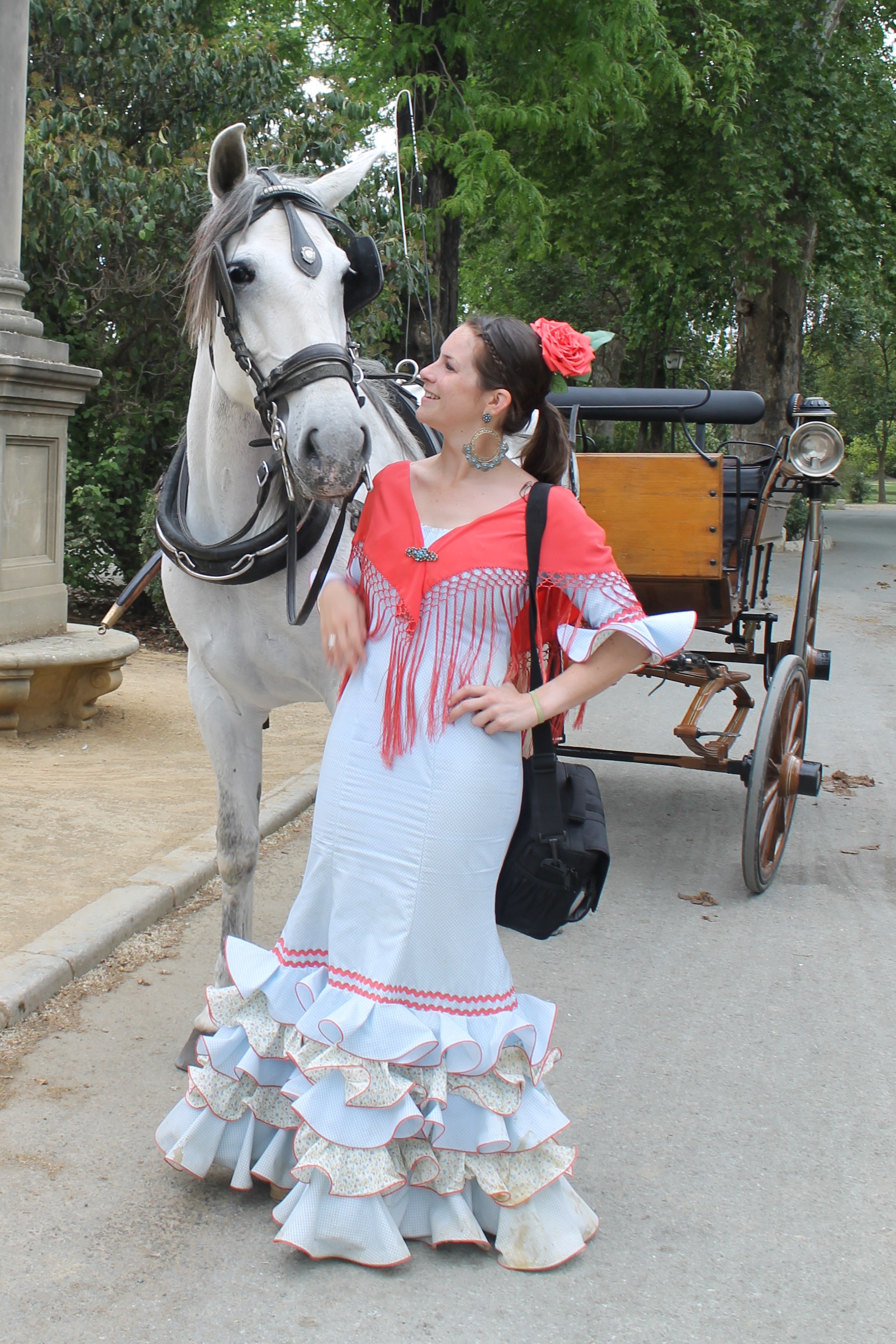
While in my surrogate caseta, Los Sanotes, my friend Susana’s cousin came to look for me. Yanking my beer out of my hand, she introduced me to a 60-something couple who were standing, dumbfounded, against the wall of the temporary tent. Introducing myself, they fired a million questions at me (whereas I asked just one: Would you like anything to drink?) about the history of the Feria, what it costs to be a member of a caseta and how to best go about enjoying themselves. For as much as I know about Feria – pescaíto etiquette, the names of the streets and how much a jar of rebujito costs – Feria is all about viviéndola. Being with friends, having a buen rato while wearing an enormous flower on yourself and admiring the trajes de gitana are all just a part of the week at the Recinto Ferial.

If the Feria is all about living it up, I’m all lived out. Three rides in horse carriages, two broken shoes and having to wash my flamenco dress three times to get all of the dirt out must mean that this ferianta did more than her fair share of dancing sevillanas and capturing the essence of the fair in pictures. Below each picture is a line from a sevillanas song (a four-part flamenco lite that’s heard emanating from each of the 1000+ casetas) with a link to the song on youtube. As the popular sevillana, A bailar por Sevillanas says, Si Ud. no ha visto la Feria, se la voy a enseñar (If you’ve never seen the Feria, I’m going to show it to you):

Ya huele a Feria, y olé, ya huele a feria

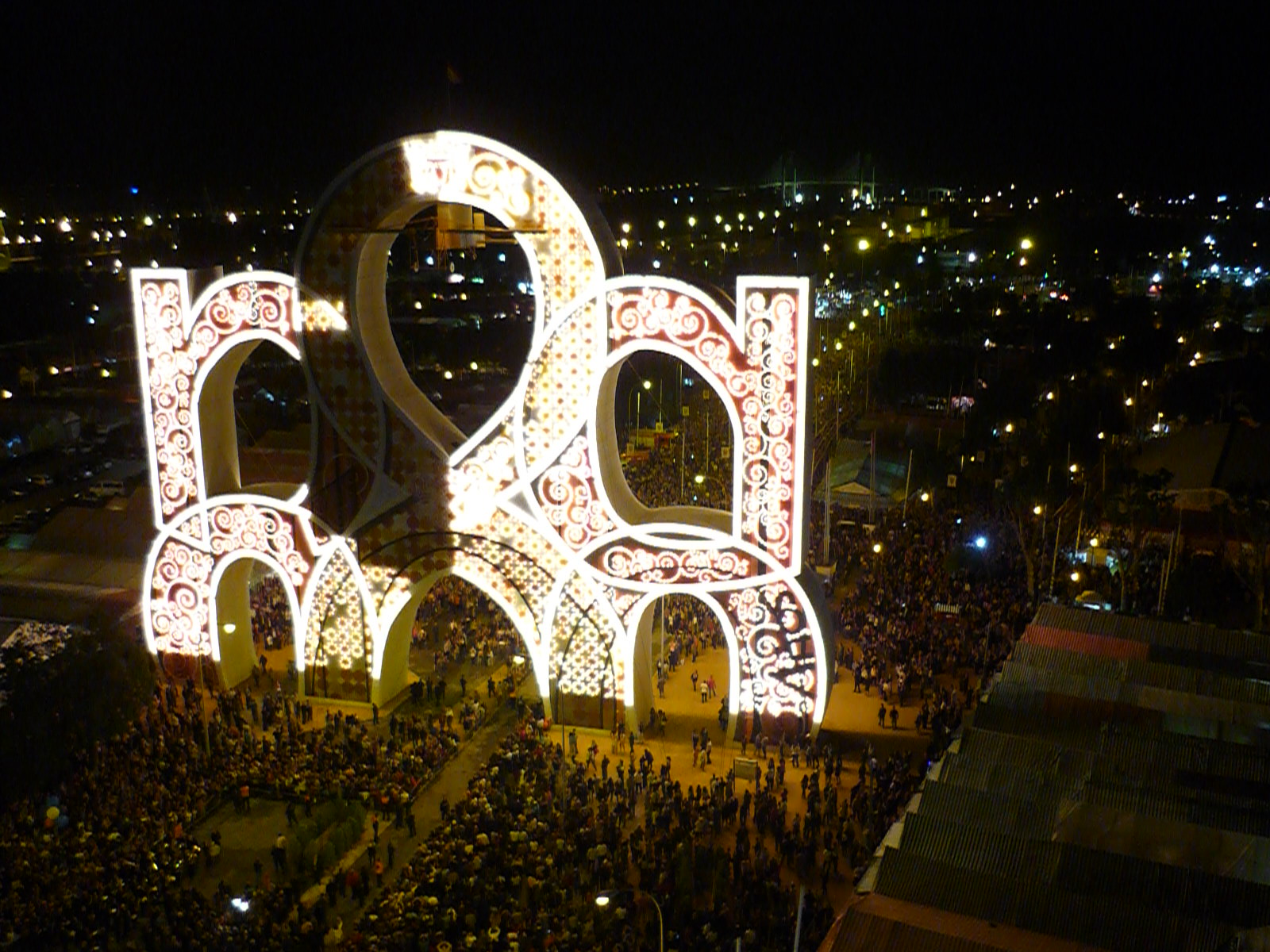
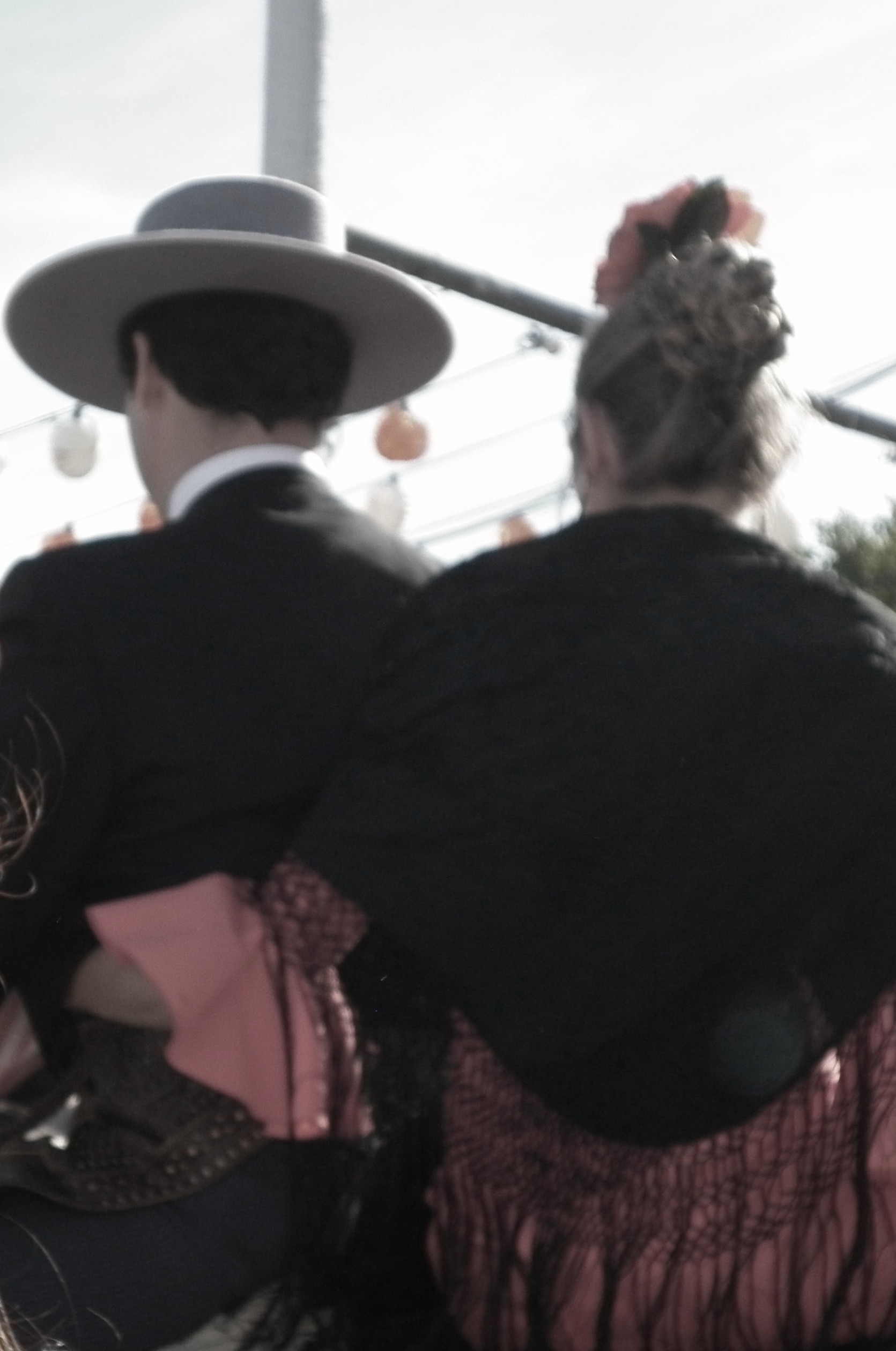
Once the somber processions and palios-encased Virgins are safely back at their churches, the construction of the main gate, called La Portada, is nearing completion, dry cleaners are working overtime to press volantes (ruffles), and the talk of Feria is imminent. Ya huele a Feria, it smells like Feria, and ¡olé!

La Feria se ilumina con su belleza

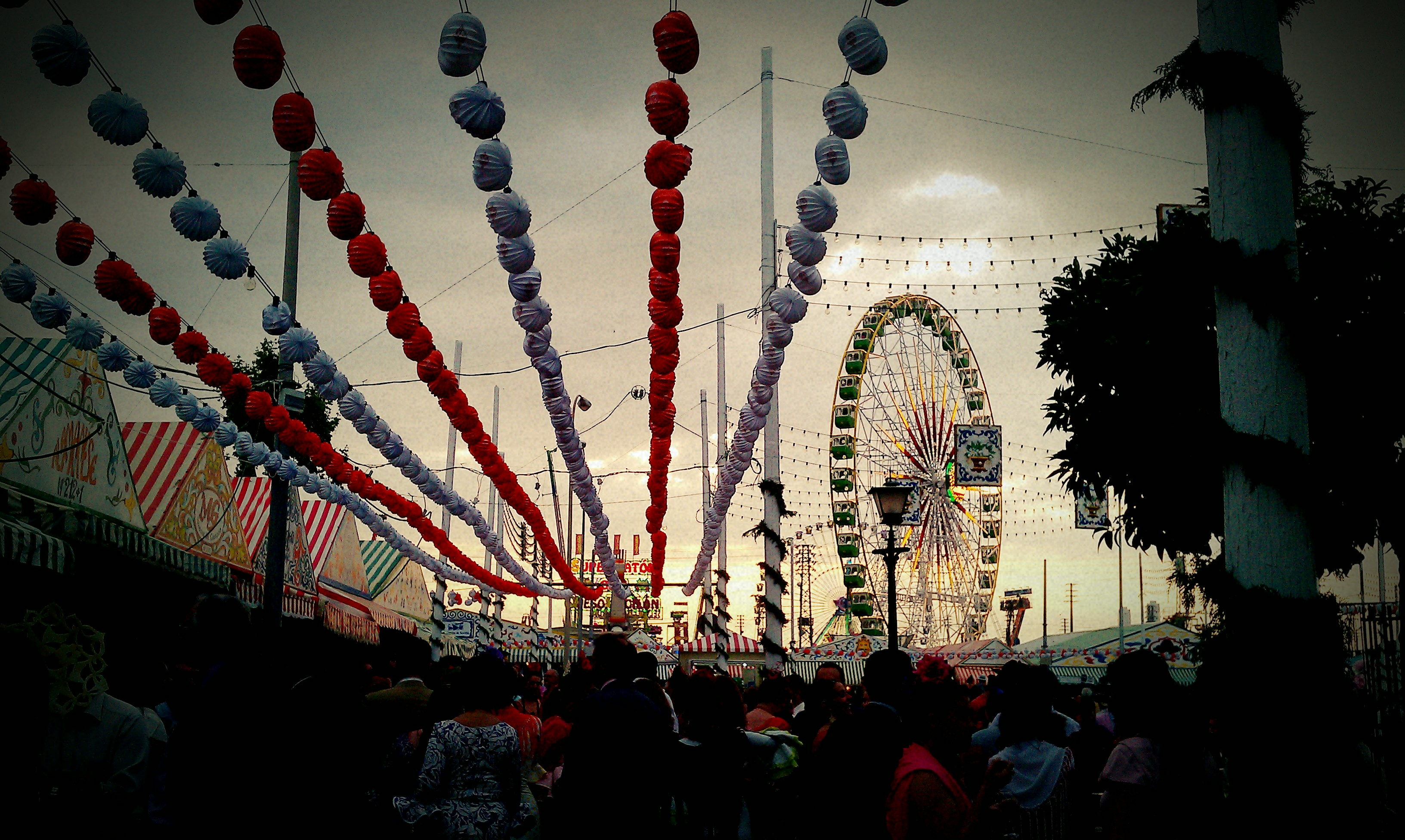
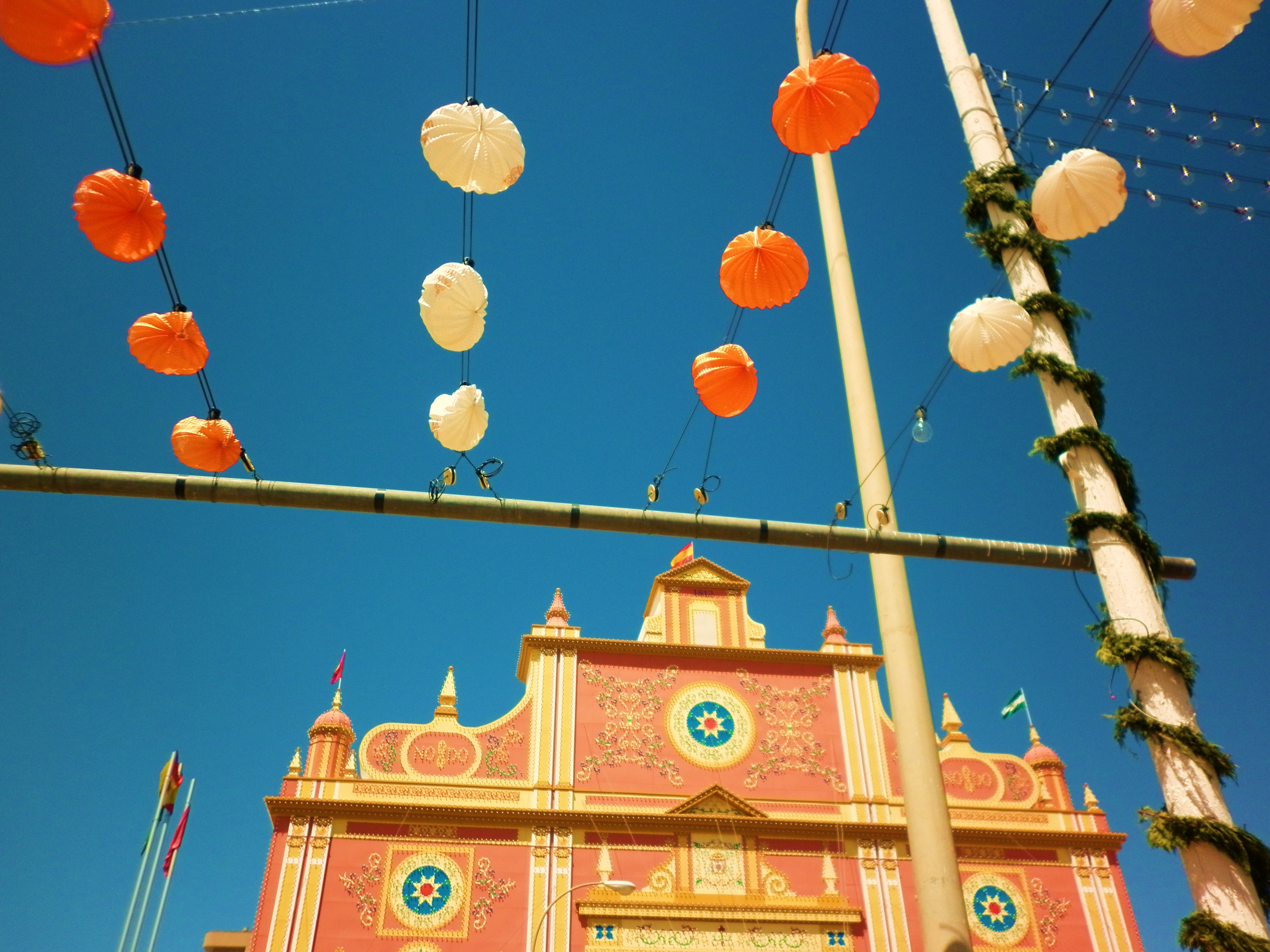
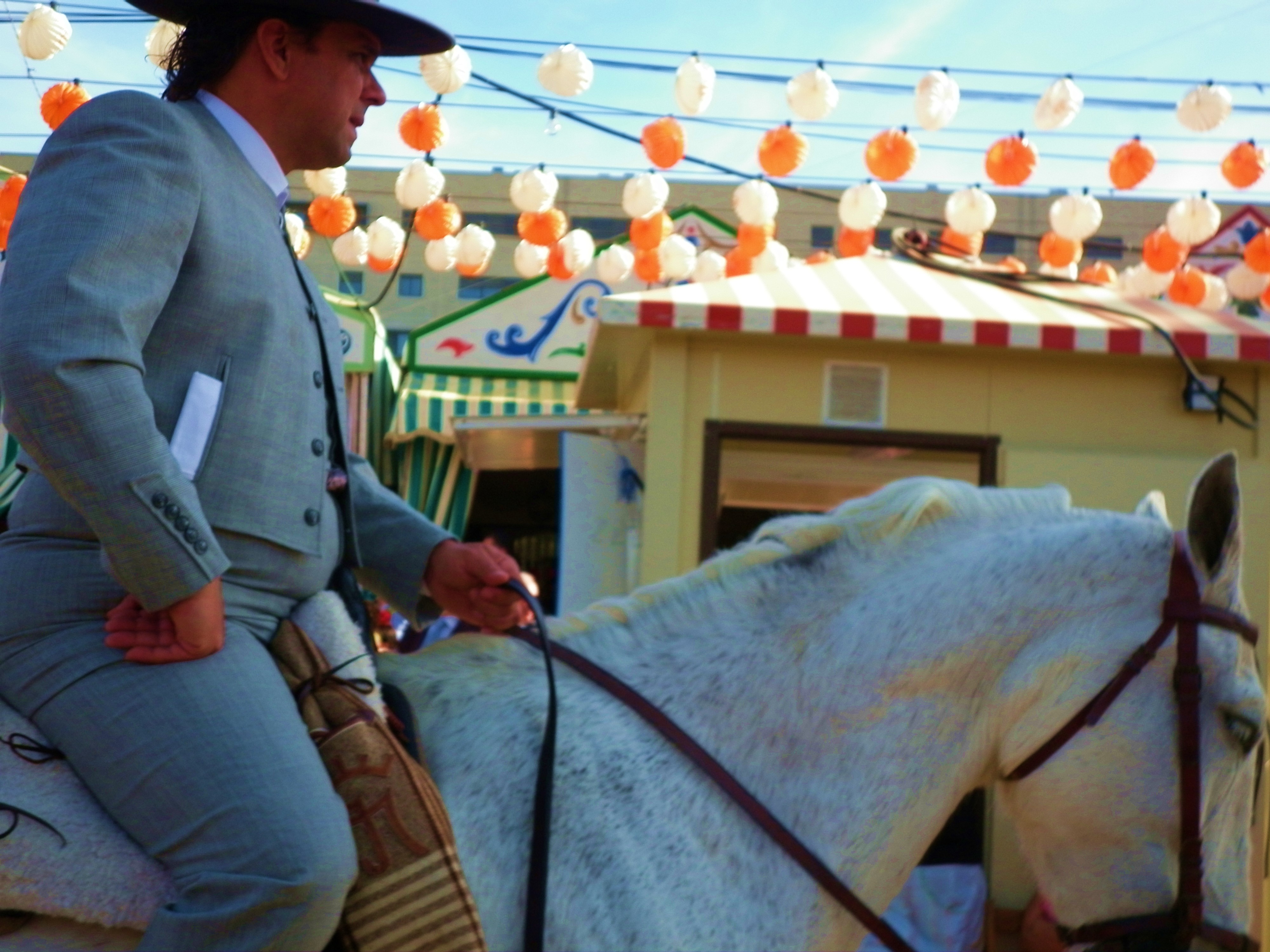
While the carnival rides and casetas are open, the fair doesn’t officially begin until midnight on Monday, after the traditional pescaíto fried fish dinner. The mayor waits until precisely the right moment to flip the switch that lights up the main gate, called the portada, and the thousands of paper lanterns, farolillos, that illuminate the street. Almost immediately after this moment, called the alumbrado, the bands start up and everyone starts dancing. ¡Olé, esa feria!

Vámanos pa la Feria, cariño mío

I’ve worked out a math equation: the less days that remain until the alumbrado, the more antsy I am. This year, as in years past, we’ve gone to have a few drinks before dinner on Sunday and enjoy the fairgrounds without people or horse carriages. The Calle del Infierno, with its circus tents and carnival rides, is the only really lively part, which means we get special treatment in the caseta. This year, I decided to skip out on the alumbrado and get a good night sleep, only to be restless and not fall asleep until 3am. I wanted to shake Kike awake and say, ¡Vámanos a la Feria, cariño mío!

Debajo de la portada, se la voy a enseñar

Imagine this: a maze of more than 20 streets, all named after bullfighters, more than 1000 red-and-white-and-green-striped tents, and a mess of people wearing brightly colored dresses. Add in all of those pesky horse carriages that clog the streets until 8pm, and there’s simply just one place to meet: under the main gate. There’s a whole lot of public casetas clumped nearby (PSOE, Garbanzo Negro, San Gonzalo), so this is a good place to begin your afternoon if you’re waiting to meet friends.

Me gusta el mosto en noviembre, y mirar al cielo azul

Feria is about as propio to Seville as the Taste of Chicago might be to my native Chicago. It’s a whole big gathering of people admiring beautiful Andalusian women, Jerezano stallions and drinking local wine. One of my favorite sevillanas is Los Amigos de Gines’s Yo Soy del Sur, I’m from the south, which pays homage to all of the best things about Andalucía – the bullfights, the crops, the never-ending blue sky, the pilgrimages. I get chills listening to its slow compás, these are my customs, and I never want to lose them. Ojalá

Se enamoró mi caballo de una yegua de Castilla

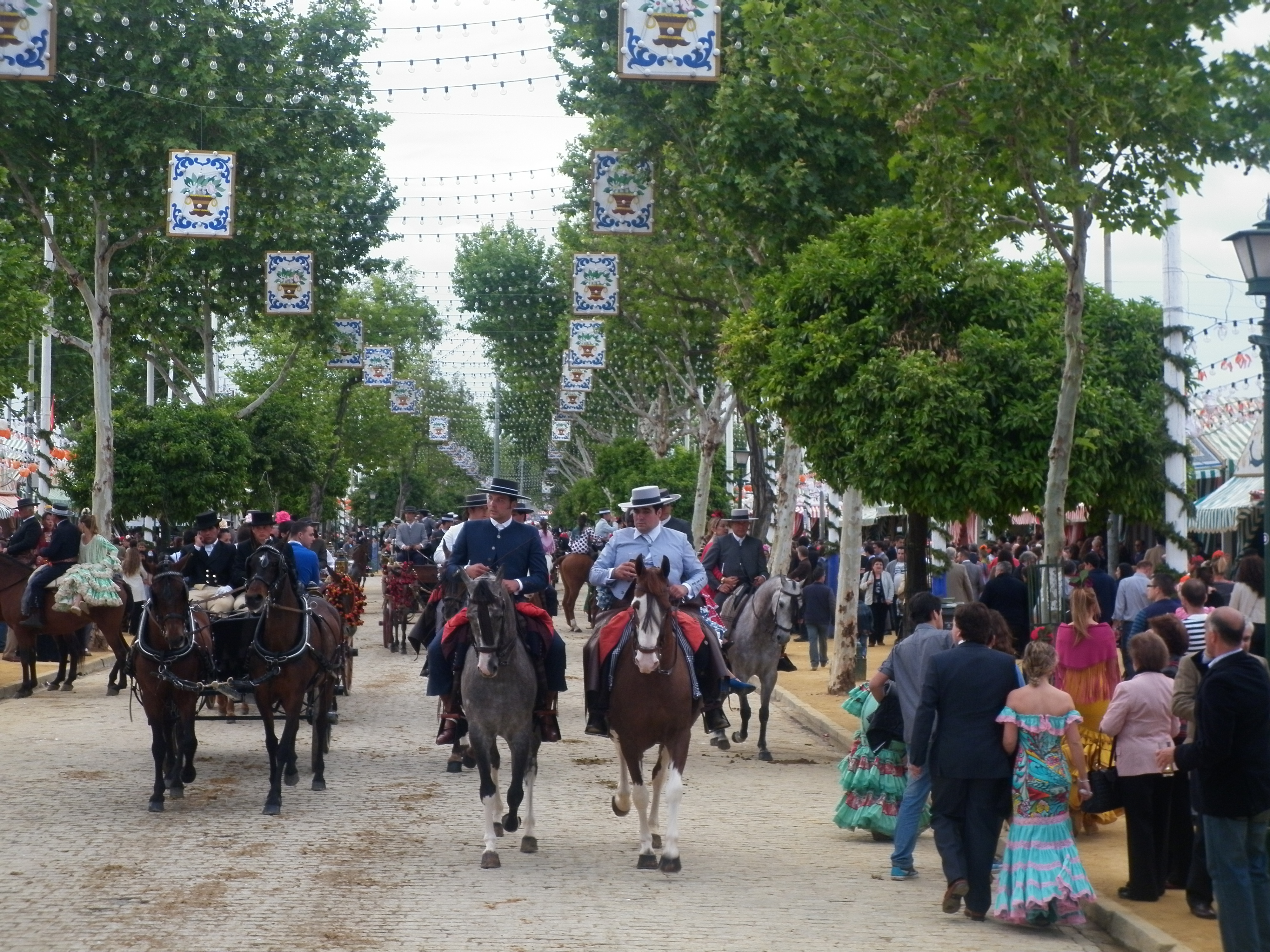
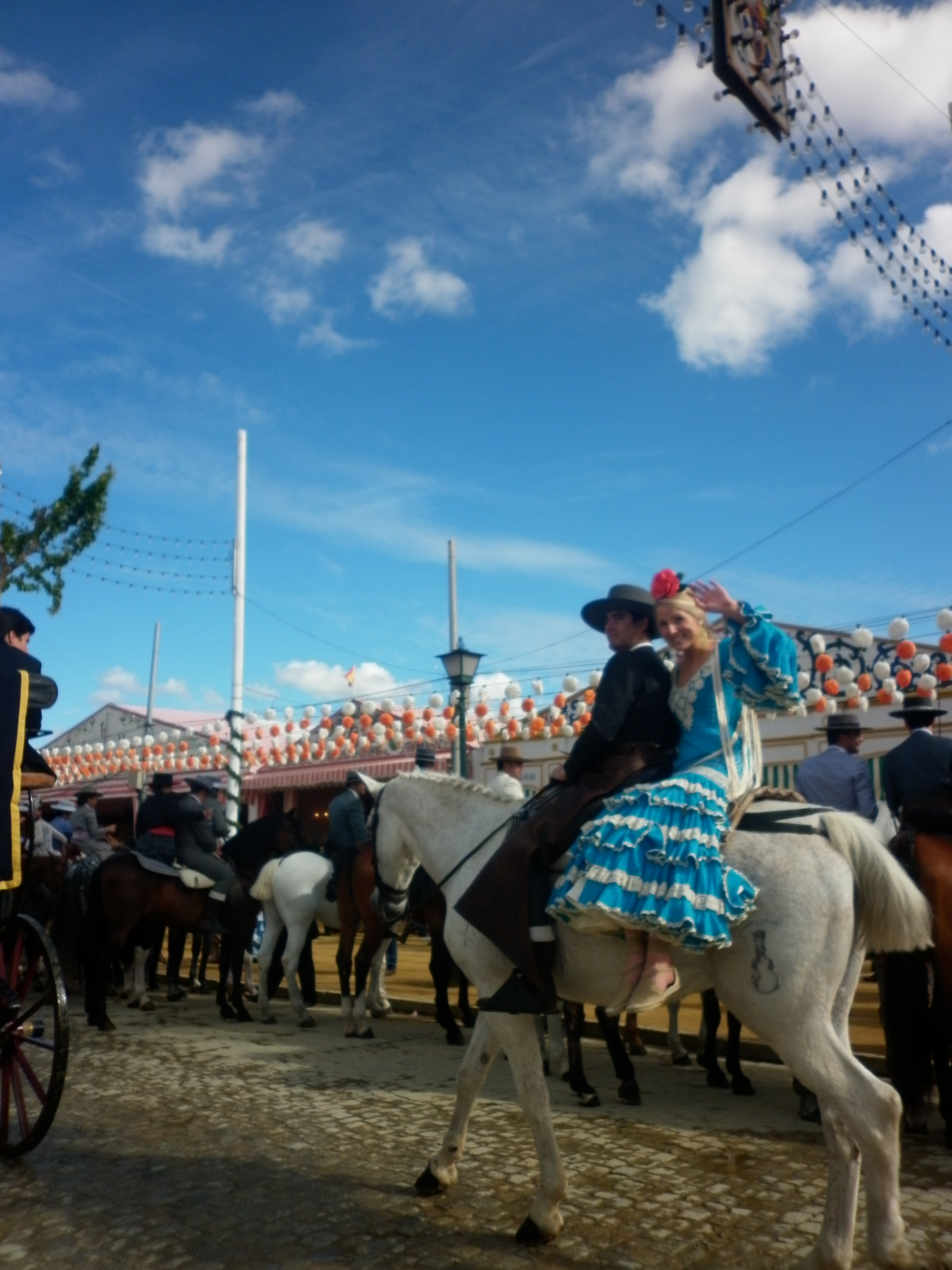
If I could bring two people to vivir la Feria, I’d have my dad chugging beers with Kike by night and my mom riding in Leonor’s horse carriage by day. From the early morning hours until the last call of 8pm, the streets jingle with cascabeles as hundreds of horse carriages parade around the Real. It’s not cheap – the little licence plate needed for circulating on the streets costs 86€ an hour!! I love living the feria by day to admire the stately Andalusian stallions which carry manzanilla-wielding men and gorgeous gitanas on their backs, and am lucky enough to have friends who bring carriages! Now if only I’d spot the Duquesa de Alba!

Me gustan los toros serios y los toreros con arte

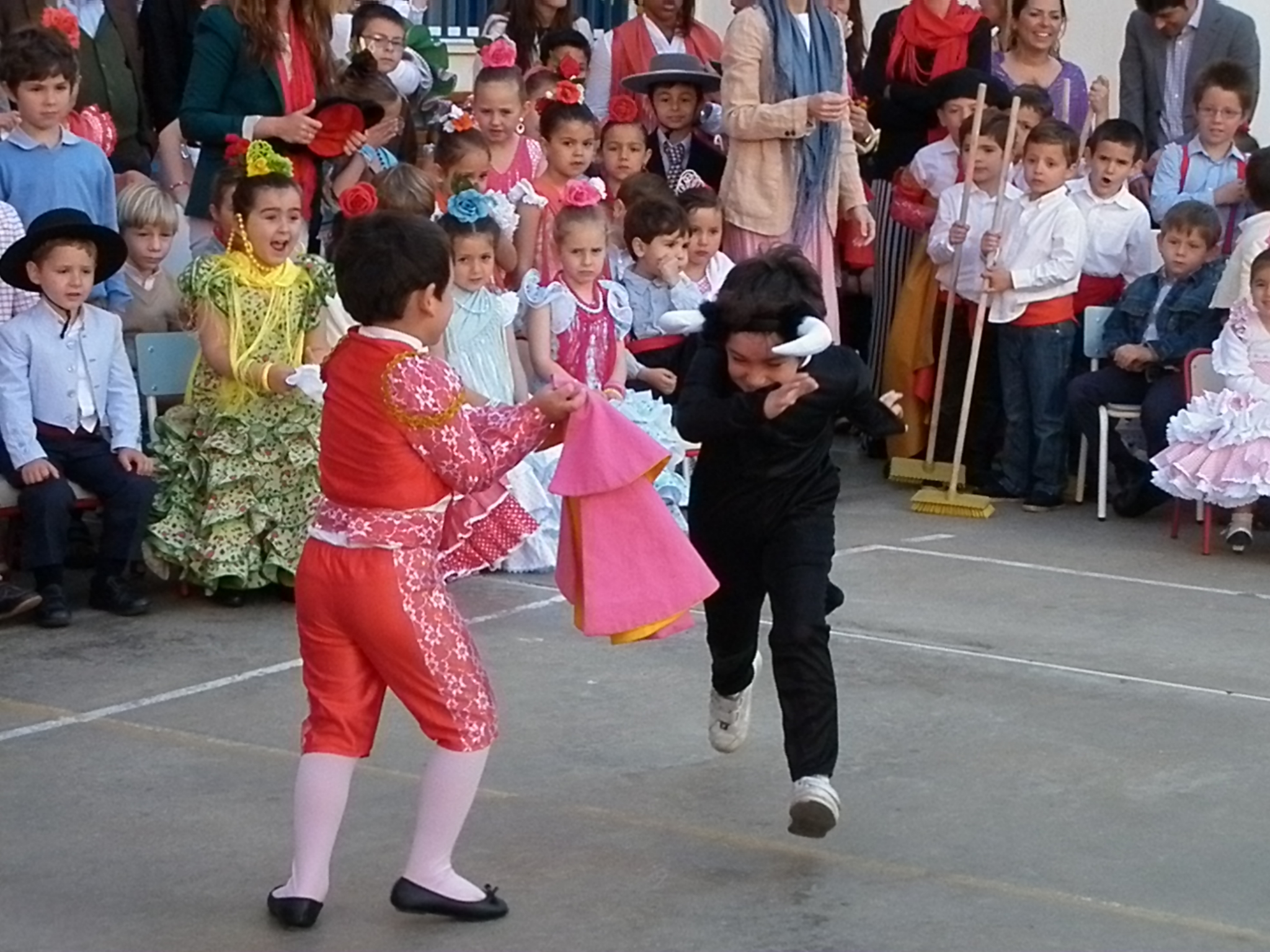
Apart from the horses, the toros de lidia bravely stare down toreros six times a day during the week’s corridas. Nothing says Feria like a stroll around the fair in the morning, mantilla firmly on your head, with an afternoon at the Maestranza. From this point in the year, the Sunday afternoon bullfights officially start. While I’ve been just once to a bullfight in Seville, we do get to enjoy a mini session at my school: the preschoolers dress up as the toros and bullfighters, and we all chant, ¡Torero, torero! as the jury decides to award the valiant baby bullfighters with an oreja or two. Arte, pero arte.

Me metí en una caseta que estaba llena de pijos, todo el mundo en traje y hablando de su cortijo

As I’ve talked about the casetas before, it’s important to note that they’re private and guarded by door guys. I once invited my friend Lindsay to Susana’s, and she told the portero that she was friends with the guiri inside. He shook his head and said, no foreigners here! Most of the tents are owned by businesses, political organizations, the armed forces and big groups of friends, but there’s no denying it – most of the people who own the tents are rich enough to pay for them. It’s not cheap – Kike and I pay 75€ for the year, but we’re just two of the hundreds of socios . Whenever I am invited to a new caseta, I like to take in the ambience of the people who are talking about their horses, wearing nice suits, and have obviously come from money. I’ve been to some of the bigger and nicer tents in Feria, but prefer the less pretentious ones (and this hilarious sevillana – I went in to a tent full of preppy people, everyone wearing a suit and talking about their horse farm).

Mírala cara a cara, que es la primera

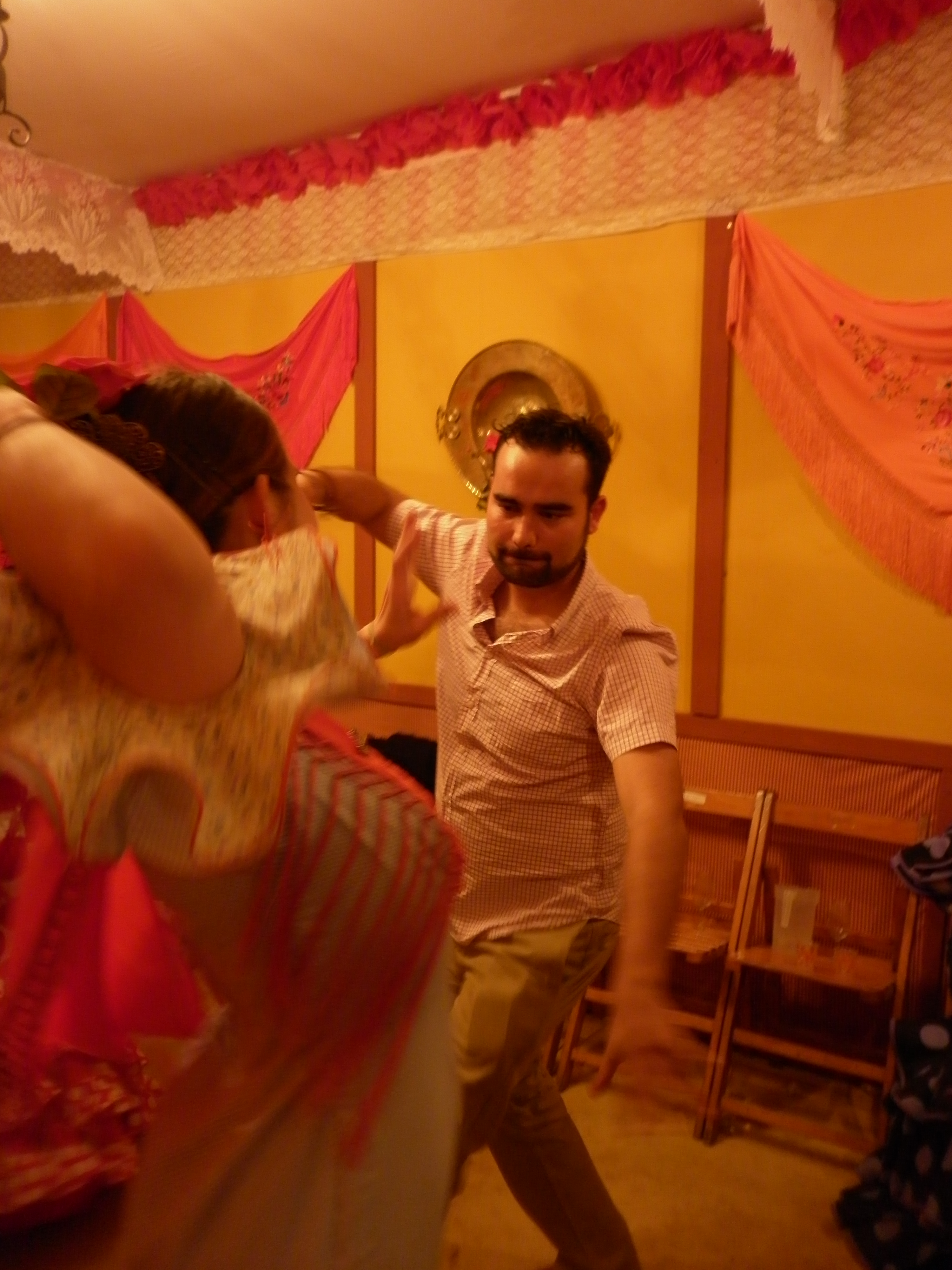
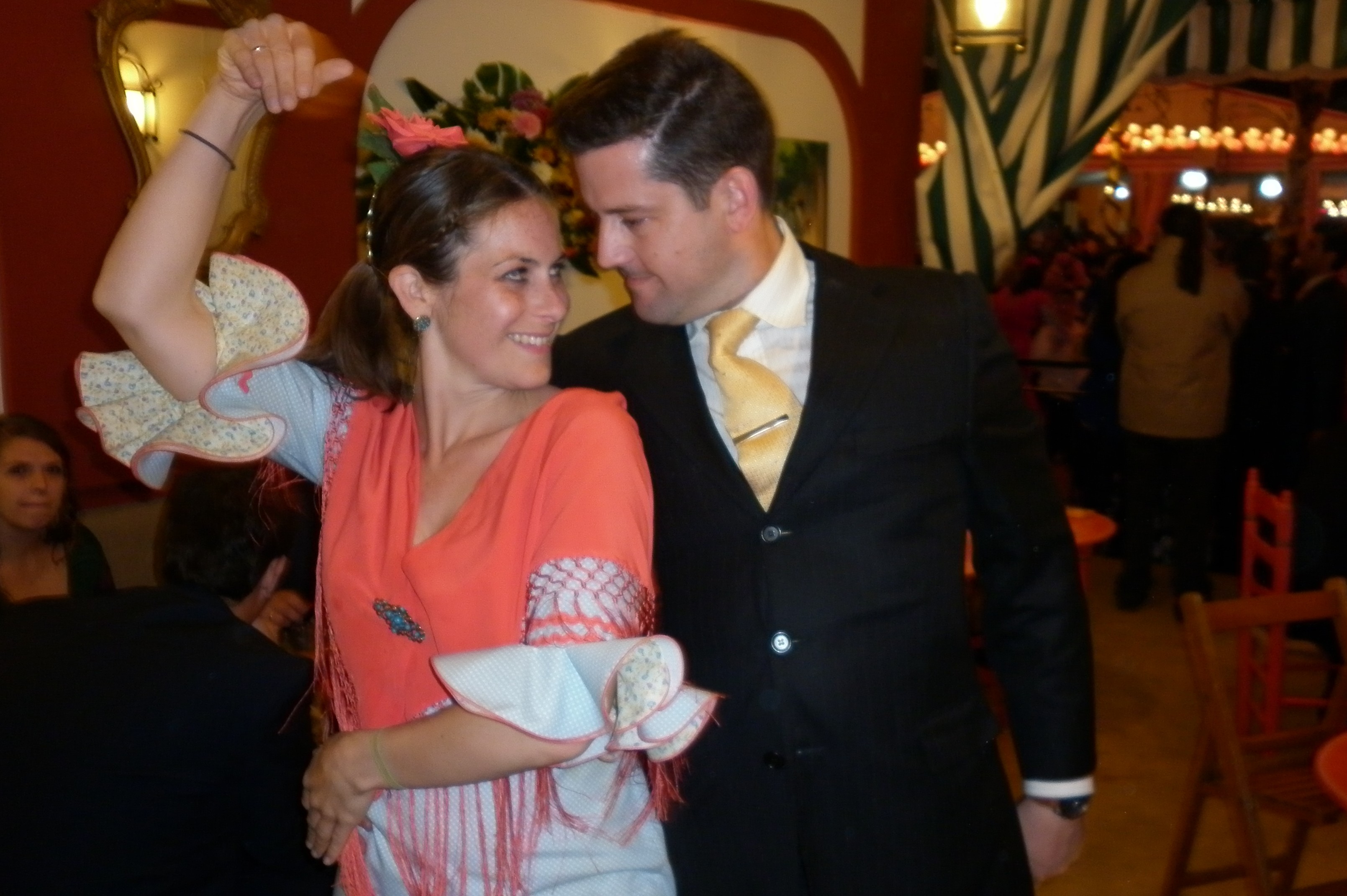
Once night falls and all of the socios have had dinner, the flamenquito bands arrive for live music and two lines of dancers form to dance sevillanas. This four-part dance is like a coqueteous encounter between two lovers: each step, they seem to get closer and more sensual. You can dance with up to four people, either boy-girl or girl-girl (but who care if you dance boy-boy!) and the music doesn’t stop until 5am. My favorite memories have been dancing – with friends, with socios, with my partner, with my students – and each year I feel more confident in my dancing. In Los Sanotes, I’m often invited to dance, and I swear it’s the least American I feel during the entire year.

Esa gita, esa gitana, se conquista bailando por sevillanas

When Susana first took me to try on my very first flamenco dress, I knew not to expect anything else but a lot of drinking and feeling very awkward in my tight dress. I was a hot gitana mess, but each year I feel just a bit more flamenca and love that the Novio has some amazing moves when it comes to dancing sevillanas (even if I have to drag him onto the dancefloor!).

Pasa la vida, pasa la vida y no has notado que no has vivido

Before you know it, the tents are coming down and the fairground is vacant. Seven days pass by in a blur of sherry and polka dots, but some of my most treasured times in Seville have been had at the fairgrounds. The famous sevillana Pasa la Vida by Albahaca talks about how life moves by so quickly and often we forget to live it, but the opposite happens to me during Feria. I can sleep four hours a night and stand dancing for 14. I feel sexier shaking my culo in my dress. I feel confident in calling everyone I know and finding them somewhere in the Real to have a drink.

When it’s all over and life goes back to normal, some little spark inside me seems to kind of flicker out, like my Amigos de Gines sing in my absolute favorite, Algo se muere en el alma. I’ve got to wait 51 excruciating long week to pin the flower back atop my head and my espartos to my feet. Something, indeed, does die in your soul.

Ever been to the Feria de Sevilla? Any good stories to share? Celebrity sightings?

92 Reasons to visit Seville

In working on an article for The Spain Scoop, I paid a visit to the Seville Tourism Board’s website. On the main page, to coincide with the World’s Fair in Seville’s 20th anniversary, the board proposes 92 reasons to visit Seville.

Among my favorites are things I enjoy about living here, like 88 (eat a montaíto de pringá), 74 (buy a flamenco dress),  55 (eat el jamón bueno bueno) and 58 (sleep a siesta). Then I remember the insane amount that I still have before me to do, like visit Doñana National Park, spot the Duquesa de Alba, see the Derbi between Mi Betí and Sevilla FC, walk el Rocío to Almonte.

I do think they gave up towards the end, as the last reason is, because you feel like it. So, so sevillano of you, VisitaSevilla. But who really needs to list 92 things to do in and around this glorious city whose history stretches back over 2000 years, whose sunsets are breathtaking and whose cuisine is tó lo bueno. Seville is more about feeling it and living it than seeing it.

Take a look, and tell me what’s on your Seville itinerary, or the reasons you’ve been here before. The Tourism Office hooked me up with this year’s Fiestas de la Primavera poster, and it can be yours if you’re chosen!

Nazareno, Nazareno

It’s Viernes de Dolores in the Catholic world, so you know what that means:

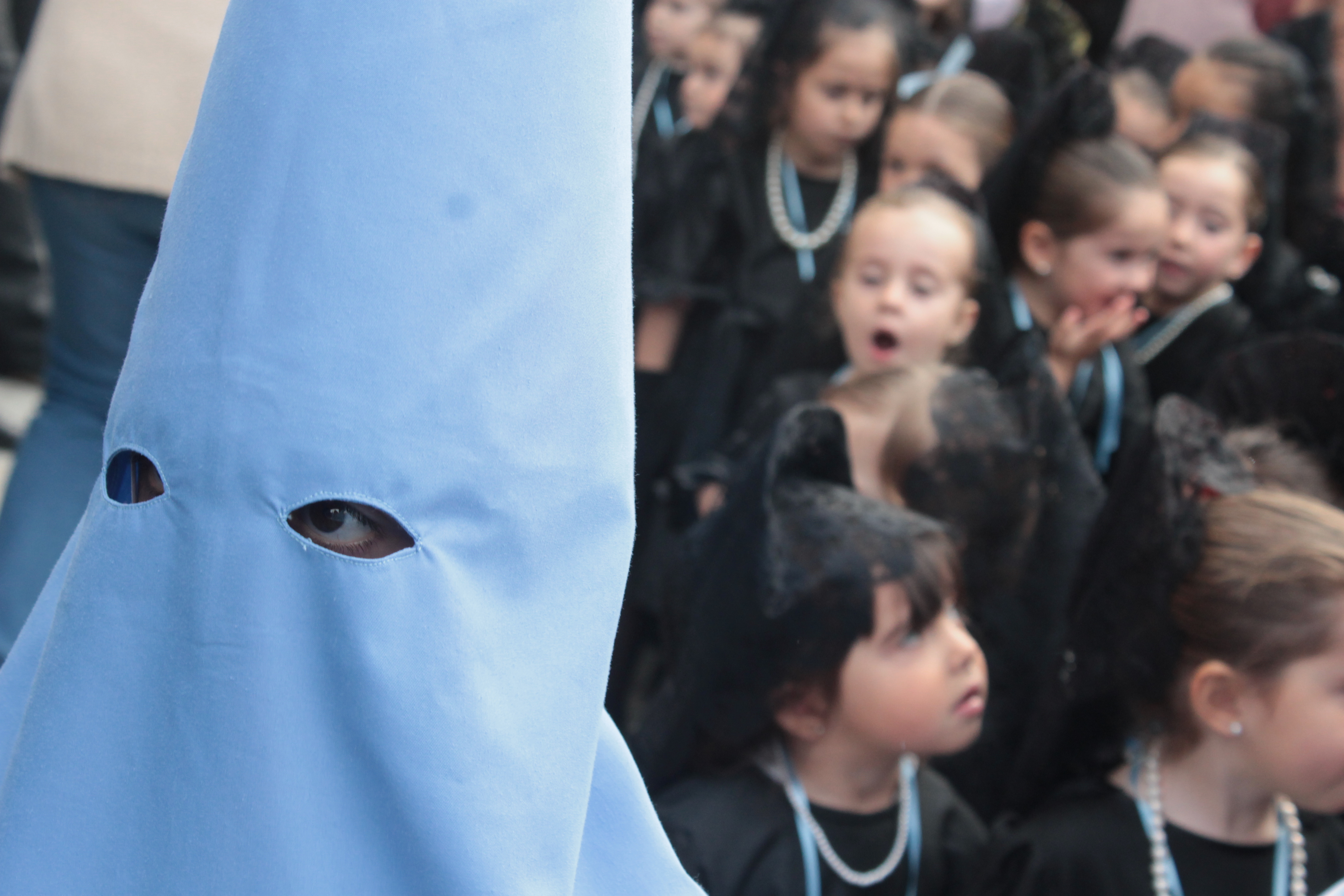
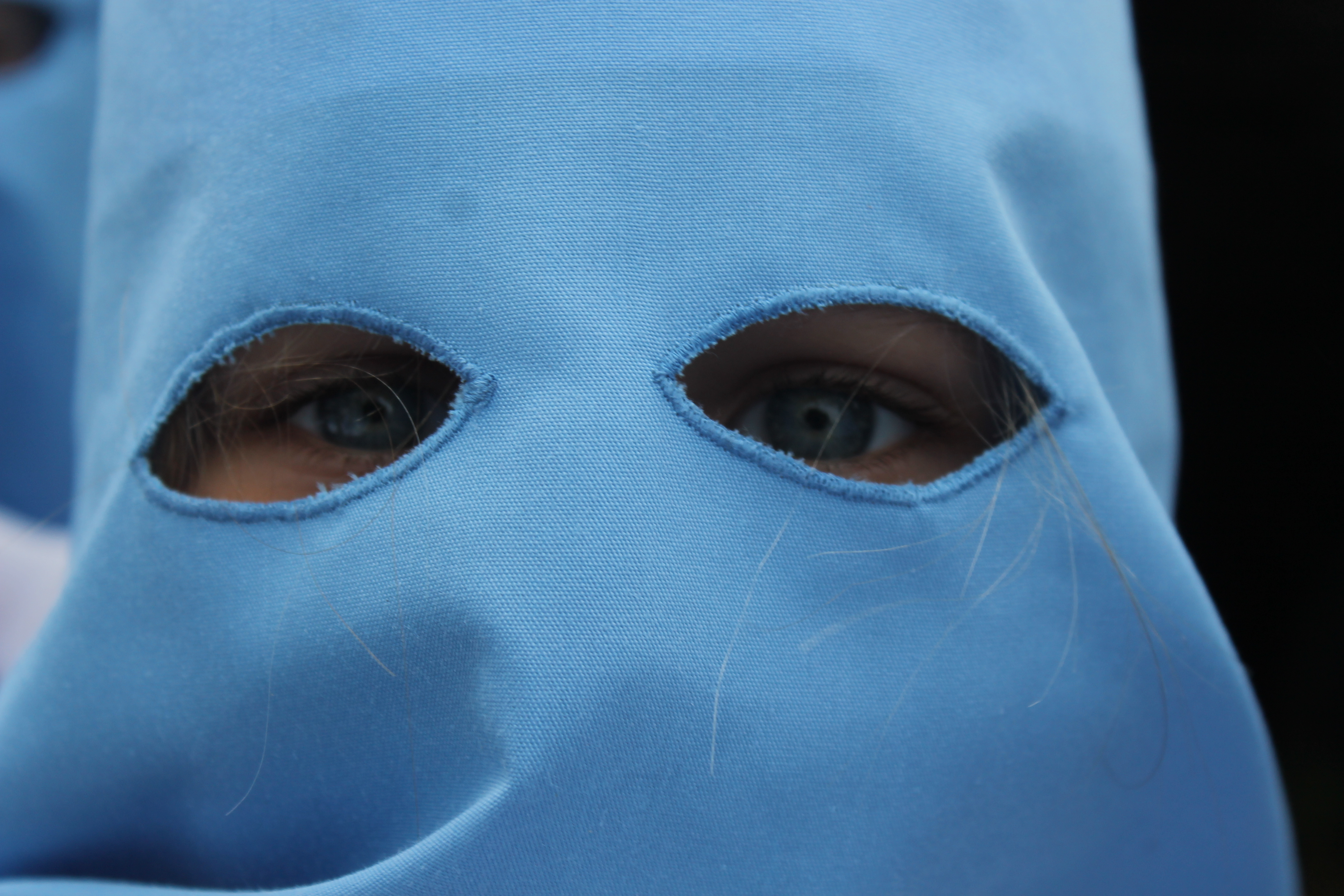
My school is full of nazarenos.

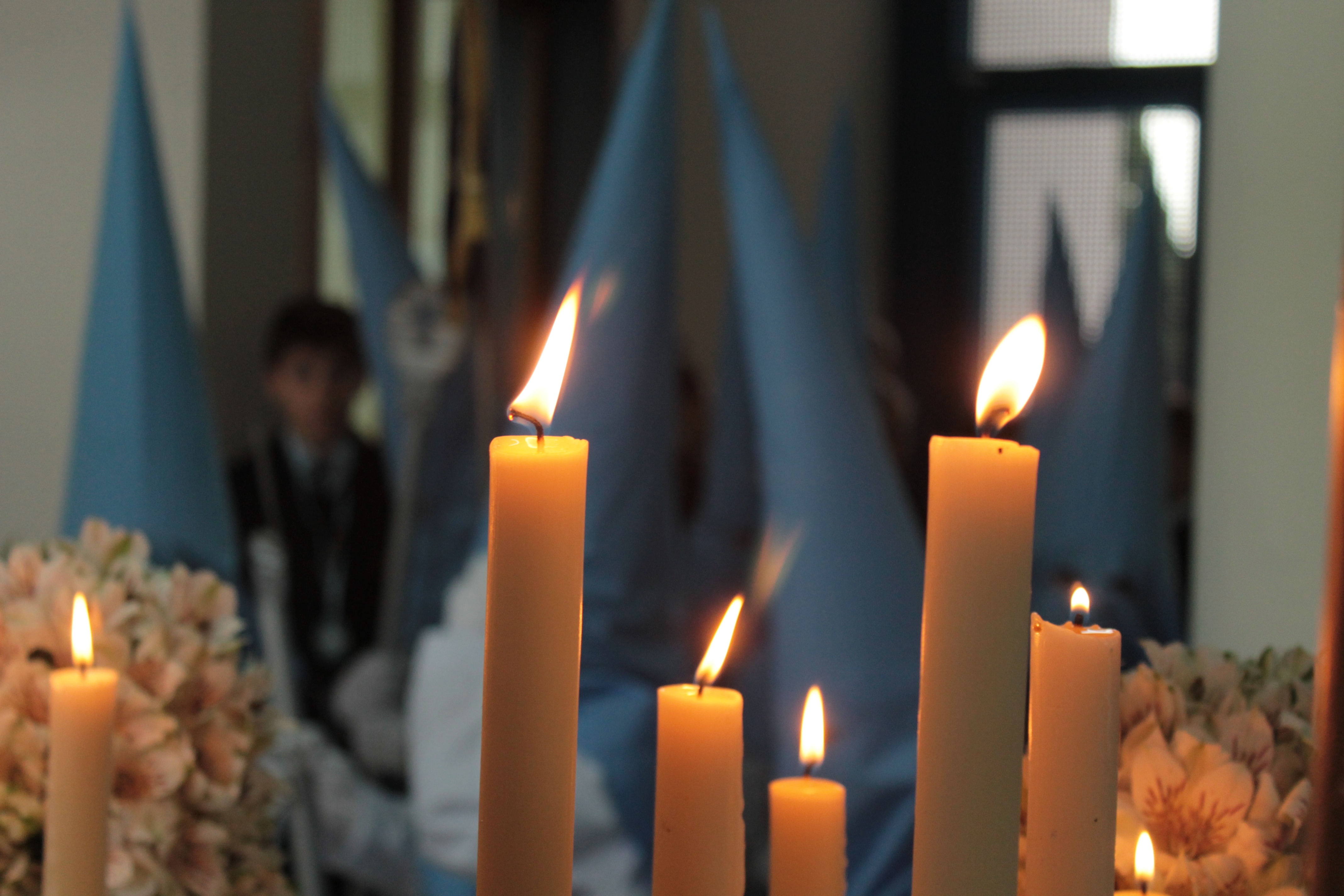
 Now, I know what your American brains are thinking, but this can’t be explained by a few letters: the nazarenos are symbolic of the penitent brothers of religious brotherhoods. In Seville and throughout Spain, these brothershoods march throughout their towns for up to 12 hours, accompanying a float adorned with candles, flowers and an image of Christ or the Virgen Mary.

They say the hoods make the sinners nearly unrecognizable to the people who come from around the world to see Seville’s famous line-up (read a few tips on how to survive it if you do come), but I’d still file it under culture shock.

Though it was tiring (they don’t called it Friday of Dolores, or Sorrows, for nothing!), it was fun to play guessing games with the students and practice prepositions on the two-hour long march.

When the faithful returned to their temple, there were pestiños and rosquillas for all. For now, the mantones and floats are stored until next year, and we teachers get a glorious ten-day break from babies and boogers.

Have you ever attended Holy Week processions in Spain? What was your reaction? Any big plans for Semana Santa? This lady is off to Turkey tomorrow!

The Serendipity of Traveling in Galicia

I have oodles of serendipitous moments while traveling through Spain and the world beyond – from sharing a tanjine with a Berber man to rubbing shoulders with Falete (seriously, he literally brushed passed me on the street in a flare of flamboyant nonchalance). Camera in hand, belly full of food and with my dad or Novio, and I’m totally in travel nirvana.

Still, I gotta throw out this disclaimer: I have just as many flubs and mess ups and utterly frustrating moments when I travel. But I wouldn’t keep traveling if those moments didn’t thrill me and push me to see more.

Just last weekend, I hopped on a plane after work to Galicia, the region where I work during the summer. The food, the people and their sing-song language, the endless stretched of rocky beaches – Spain’s northwest corner won me over on my first visit in 2008, and I now spend my summers working in A Coruña. Kike had spent just an ounce of time here, so I was eager to pay the plane fare and join him during his weekend there.

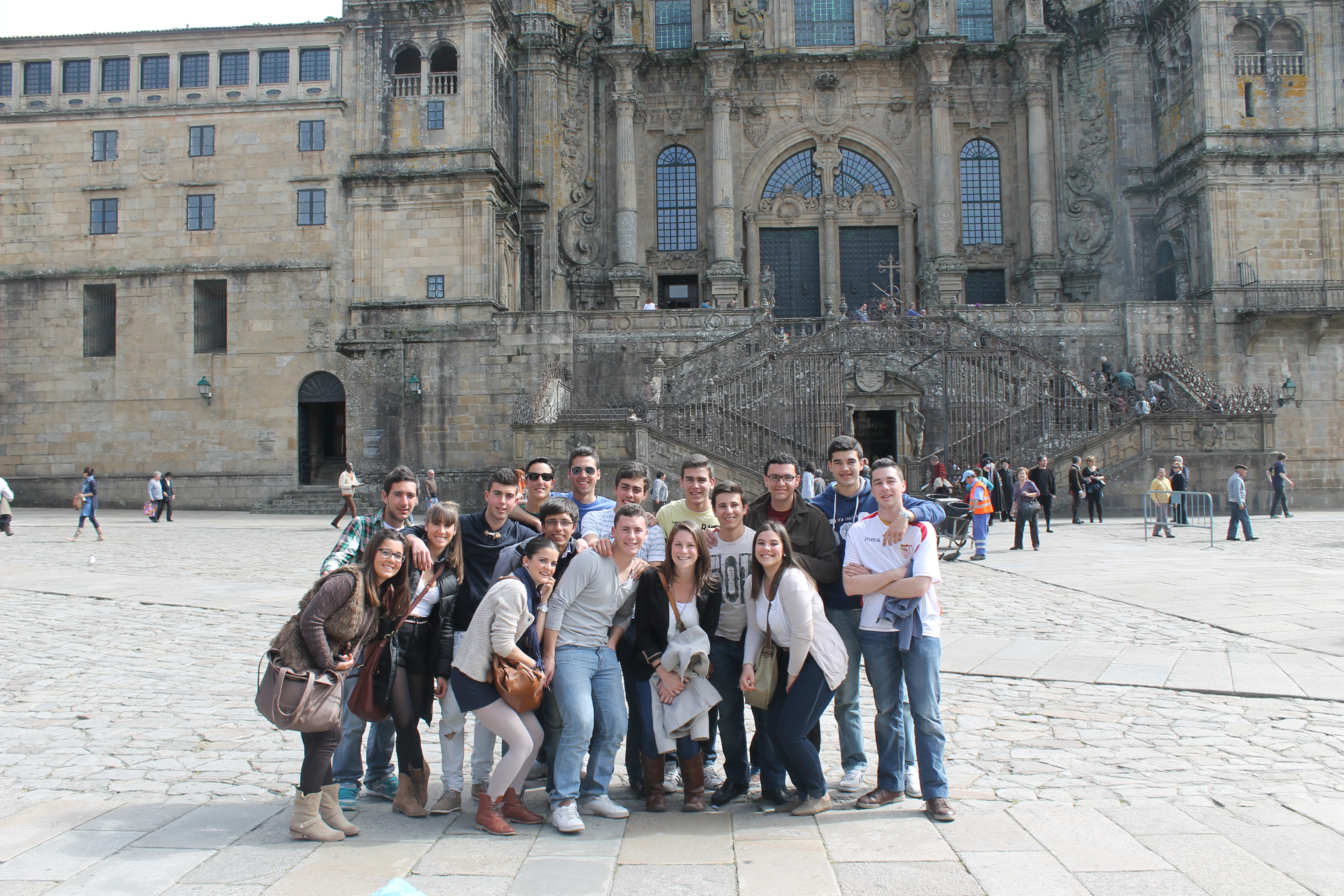
On Saturday morning, we jumped in his car and drove towards Santiago, windows down. We’d been blessed with a clear sky and warm temperatures and stripped off our jackets as soon as we got parked. I’d been to Santiago four times already, including for the fest of Spain’s patron saint, but coming into the Plaza do Obradoiro was serendipitous: the sun glinted off the stalls selling scallop shells and rosaries, and Camarón was glued to my face as I looked for new ways to capture St. James’s final resting place. From out of nowhere, I heard my name.

Standing just behind me were about a dozen of my old students from Olivares. Like a weirdo, I started sweating, my head spinning. I haven’t found a day to go back and visit a town 40 minutes away by bus, but I suddenly found myself in an entirely different corner of Spain embracing students I taught English to for three years. I promised to visit over Feria and gave everyone a quick kiss more before tailing off behind Kike to the entrance of the Cathedral.

Mass was being conducted in the high arcs of galego. Kike and I had just barely entered when the priest called for the attendants to give the sign of peace. I watched, midday light streaming in through the stained glass, as pilgrams embraced after a long Camino, backpacks still affixed on their shoulders. We circled the church’s chapels before Kike prayed to Saint James that Spain survive the economic crisis.

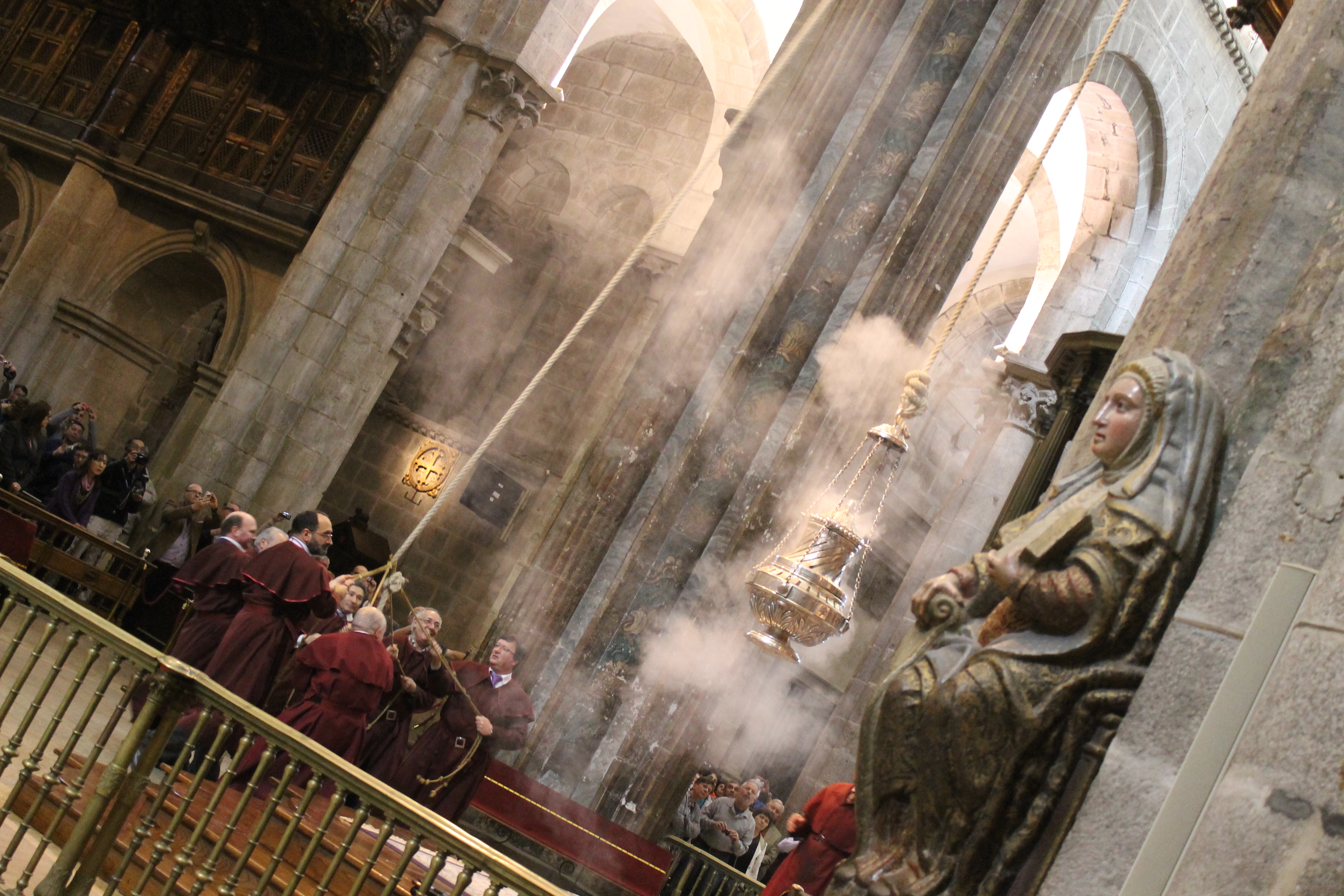
My ears perked up at the words botafumeiro. KIKEEEEEE I whispered shrilly, they’re going to do it, ¡qué suerte! I couldn’t believe our luck in seeing an enormous incense holder during a Pilgrim’s Mass. The team of scarlet-clad priests gingerly lifted the lid off of the 53kg tin and silver holder. Vaya tajá, Kike noted as I watched the men begin to pull down on the long, braided rope that attaches the botafumeiro to the high ceilings. Like ringing a bell, they heaved together in a perfect synchronization, and the botafumeiro swung like a pendulum – a small ripple that strengthened to a feverish height. My spirit soared along with it.

Kike and I spent the early afternoon walking the back streets between stone buildings, stopping at attractive plazas for a beer and pintxo of tortilla or empanada. I dragged him to O Gato Negro, an unassuming bar I’d eaten at years back. We ordered a bottle of chilled Ribeiro, drinking it out of saucers. Pulpo was our main fare, squishy and seasoned with paprika. Kike stepped outside for a cigarette and struck up conversations with a gallego leaning across the stone entryway of the bar. He returned seconds later, still putting out his cigarette, to order another round of wine and what he called “a crab’s cousin.”  Wrapped in philo dough, the slimy cousin more than got its due. “The man outside said this is the best bar in Santiago, and the cheapest, too.” He wasn’t kidding – a bottle of wine and two raciones ran us a tab of 17€.

I suggested a dessert of queso de tetilla – so named for its shape – and quince with a sweet wine at the Parador, an old hopital sitting at the foot of the Cathedral that has since been converted into a luxury hotel run by the government. Here’s to Los Puppies, Kike said as we shared tiny sherry glasses of vino de pasas. I was happy – belly full, wine making my head ring every so lightly, walking arm in arm with my love. My spirit felt as high as the spires of the temple that marks the end of a pilgrimage with as much force as the waves that batter Coruña’s rocky beaches.

The following day, the gran mariscada was planned. Since camp, I’ve craved the seafood one can eat in Galicia and often use the paycheck (or just really big denominations of euros) to get a nice mariscada, or plate full of different types of shellfish. The day was one of those perfect ones, especially in rainy Galicia – bright even with sunglasses, a hint of a breeze – and Kike had found the perfect place.

…we just never got there. On the back roads out of El Ferrol, his car box shifter thingy gears just kinda, well, gave up. He quickly got out of the car and quickly smoked a cigarette before calling his insurance company. I put my head to his chest and rubbed his back, knowing that the granola bar in my back would be consumed sooner or later.

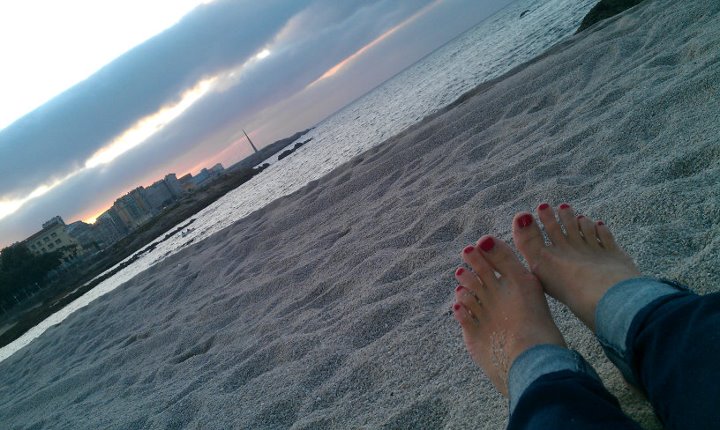
When he got off the phone, a taxi pulled up and offered to take us as far as Coruña, where I had to fly out of a few hours later. Kike griped about how much the car would cost to repair and that he may not make it down to Seville before my trip, so I suggested we grab a few bees from a grocery store and sit on the Orzán. Looking across the shallow bay to the Torre de Hércules, back leaned up against my duffel bag, we told jokes and sipped Estrella Galicia as the sunlight waned. It felt strangely good to be sharing a place in Spain that I never associated with him, and we could laugh up the negative events of the day.

Galicia has everything that I feel Andalucía lacks – the people who tug at your heartstrings with their generosity, placid beaches, a religious fervor that isn’t just about Semana Santa. I feel at my best in Spain in general, and Galicia takes it to the next level. It’s lovely on the senses and gives me a lifting feeling of serendipity.

Have you ever traveled to Galicia? What are some of your most serendipitous travel moments?

Related Posts Plugin for WordPress, Blogger...