Seville Snapshot: Playa Las Negras, Almería

The sun in Seville is deceiving in the month of October. The crisp Autumn days I remember from growing up in the Midwest mean nothing here, as the blustery weather is an afterthought and never really arrives to Seville until Winter begins in late November. While mornings can be cool, the midday sun blazes like it would on a summer beach day.

My friend Jacqui and I have a lot in common, choosing Spain after we graduated from Midwestern universities. We like being outdoors and having a beer midday. We like beaches. I begged her to send me this picture from Almería, a small corner of Andalcuía I’ve never been to.
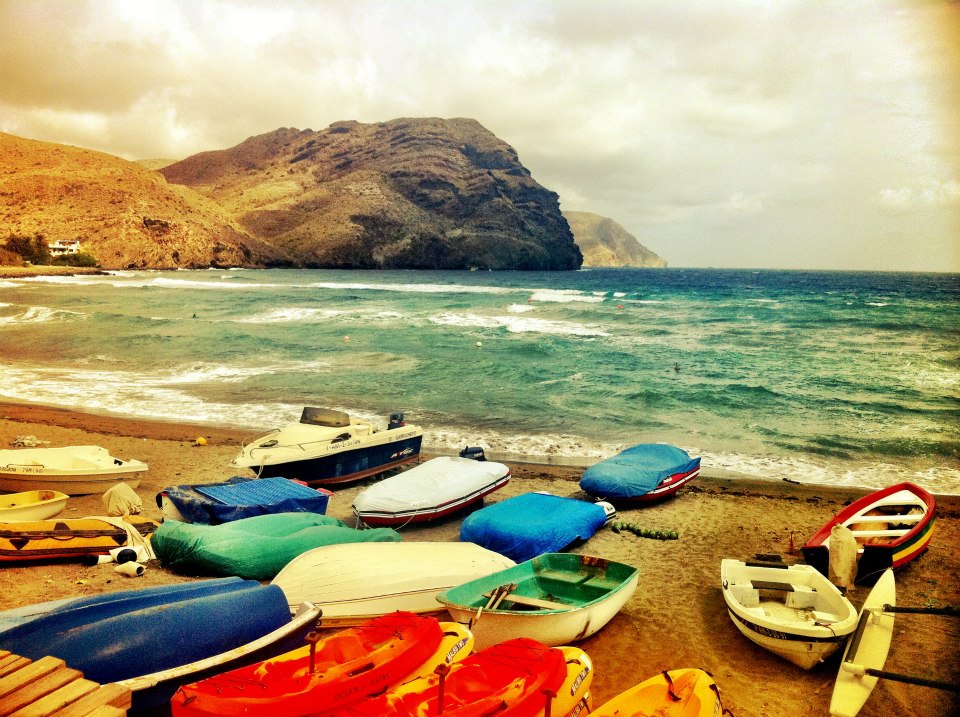
This photo was taken at the beach in Las Negras, Almería. It is a quaint, charming and peaceful town of less than 400 residents right in the middle of Almería’s Natural Park Cabo de Gata. The town got its name from the founders, a group of widows from a nearby community who had los their sailor husbands in a mysterious shipwreck. It’s a great place to stay on a trip to Almería due to its proximity  to several of the region’s best beaches and natural park.

Jacqui Davis has been living in Spain for nearly six years now, where she is a program Director for a study abroad company. She LOVES travel and languages, running, outdoor activities and her boyfriend and especially trips that include all of the above.

If you’d like to contribute your photos from Spain and Seville, please send me an email at sunshineandsiestas @ gmail.com with your name, short description of the photo, and any bio or links directing you back to your own blog, Facebook page or twitter. There’s plenty more pictures of the gorgeous Seville on Sunshine and Siesta’s new Facebook page!

Swanky Barcelona Hostels: Where to Sleep in the Ciudad Condal

The benefits of staying in hostels while traveling are numerous. Hostels offer budget-conscious travellers the opportunity to indulge in affordable lodging and take advantage of cost-saving amenities, such as community kitchens for easy meal preparation. Perhaps just as valuable as affordability, these hotel alternatives also provide residents with fantastic opportunities to engage with fellow travellers in a way that broadens the travel experience and creates friendships that span the globe. Barcelona features a wide variety of geared toward many different types of travellers, as well as numerous cool apartment rentals around the city.

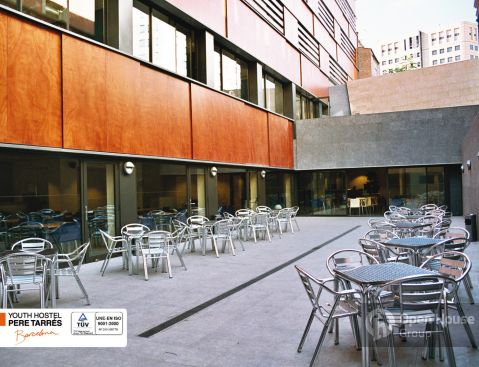
Alberg Pere Tarres
This hostel in Barcelona allows travellers to select a sex-specific dormitory, mixed dormitory or even private room. With 320 beds to choose from, this hostel is almost certain to have availability. Amenities include free internet access, free breakfast, and a community kitchen available for use. Residents are welcome to take meals and snacks at the  restaurant and utilize individual’s lockers to protect valuable items. The Alberg Pere Tarres also boasts 32 accessible beds for travellers who require special assistance.

source

Alberguinn Youth Hostel
With both mixed dorms and a female-only dorm room, this hostel is ideal for travellers who desire proximity to football stadiums, restaurants, bars, and ample shopping. Since the hostel utilizes key cards for building access, residents are welcome to visit the wonders of Barcelona without worrying about a curfew. Amenities include free internet access, free luggage storage, free breakfast, and available reception staff at all hours of the day and night.

Alternative Creative Youth Home
Whether seeking a very short stay or a month’s long place of residence, this youth hostel in Barcelona has it all. The prime location in the heart of the city, combined with a curfew-free environment, is a boon for adventurous travellers. Free internet access with specific support for Mac users and security lockers are among the features. Perhaps the best aspect of this hostel is its friendly atmosphere and dedicated staff who are always ready to provide useful information to residents. More sedate adventurers will enjoy knowing that this hostel promotes a respectful community free from excess noise or partying.

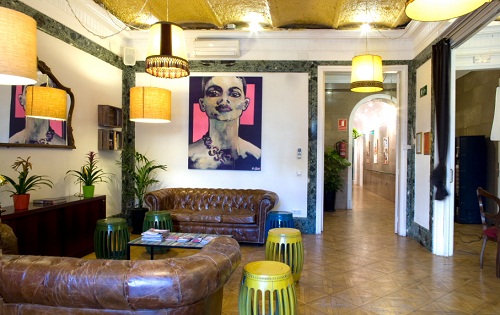
Casa Gracia Barcelona
Also located near the city centre, this youth hostel is not just a resting place for weary travellers; it is also an art gallery. Residents can choose form shared or private lodging and enjoy free internet access, a fully functional kitchen, and a living area that is perfect for meeting fellow travellers and planning the next adventure. This hostel features an elevator and is wheelchair accessible.

source

Sunshine Hostel
The Sunshine Hostel boasts many of the amenities that adventurous travellers enjoy, such as free internet access, 24 hour reception, communal kitchen access, and free luggage storage. It also provides the sight-seeing and nightlife that makes traveling so enjoyable. In fact, with its central location in Old Town near Las Ramblas, excitement can be found right outside the front door. Once a traveller is ready to relax and unwind from his or her adventures, Sunshine Hostel offers a quiet atmosphere to rest.

Sant Jordi Sagrada Familia
Of all the youth hostels in Barcelona, this hostel specifically offers accommodations and community to skateboarders and travellers who enjoy urban arts. In addition to shared dorms and private rooms, the Sant Jordi features a private terrace with mini-ramp, free internet access, and a large common area that is separate from the sleeping area. This hostel also organizes large parties to introduce travellers to the club scene and nightlife that Barcelona has to offer. Travellers who seek a hip adventure are certain to find a home at Sant Jordi.

source

Travellers from all walks of life can find hostels in Barcelona that feature accommodations and amenities that will enhance the travel experience. Individuals seeking a bustling, party-filled adventure or a quiet place to rest on a journey filled with cultural sights and attractions will both find a hostel that is ready to provide a home away from home at hostelbookers.com.

Seville Snapshots: the Nighttime Streets of Santa Cruz

Can I make a confession?

Most of you guys already know, but just in case you don’t: I am a blogger without a laptop. 

I left my laptop in the cab that took me from Barajas to a friend’s house in Madrid, and upon realizing it, went through all of the steps to find it: police denuncias, stalking taxi drivers in line, passing out my business card to any taxista willing to help me out. Six hours later, I returned home a bit defeated, but mostly just tired. It’s not the end of the world.

Still, I’m without the majority of my pictures until my parents come with the external hard drive at Christmas. So what’s a blogger to do with deadlines to meet and an audience to satisfy?

Carry Camarón on me like a third arm.

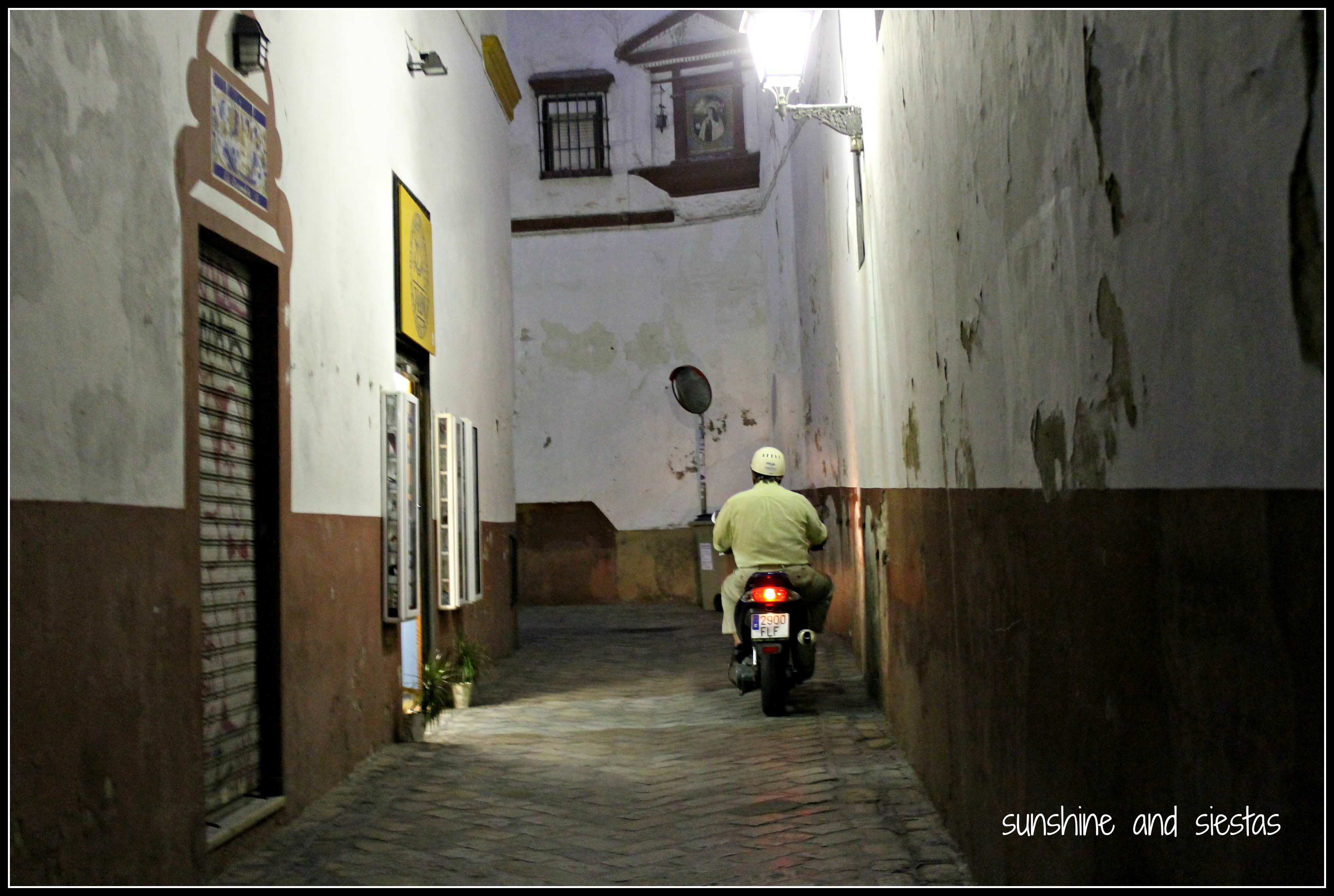
I left my new job at a a language academy on Thursday night to meet Gary of Everything Everywhere and one of my guest bloggers, Sandra of Seville Traveller, for tapas at La Bulla. As I cut through Santa Cruz’s narrow streets, the few street lights illuminating ancient streets, I heard the ZOOOOOOOOOOOOOOOOMMMMMMM of a rickety old motorbike as it zipped by me. Camarón was buried deep in my bag, but he came to life just before the motorist disappeared around the corner and onto Calle Santa Teresa.

Love taking shots? Been to Seville or Spain? I’m looking for travelers with a good eye to capture beautiful Spain and contribute to my weekly Snapshots section. Send your photos to sunshineandsiestas @ gmail.com with your name and a short description of the photo and look to be featured here!

Seville Snapshots:Centro Andaluz de Arte Contemporaneo

Well, back to sweltering Spain. After a stint at the Travel Bloggers Unite conference in Porto, I lugged my 60+ lb. suitcase back to Seville (notably missing was my laptop, which I left in a cab and have yet to recover). It left me wanting fall, a temperate and dreamy time of the year in the South. Kelly of This Blonde sent me the picture below, plunging me into reveries of comfy sweaters, Kike’s army-issued PJs and the return of boots (want black riding ones, just like the pijas!).

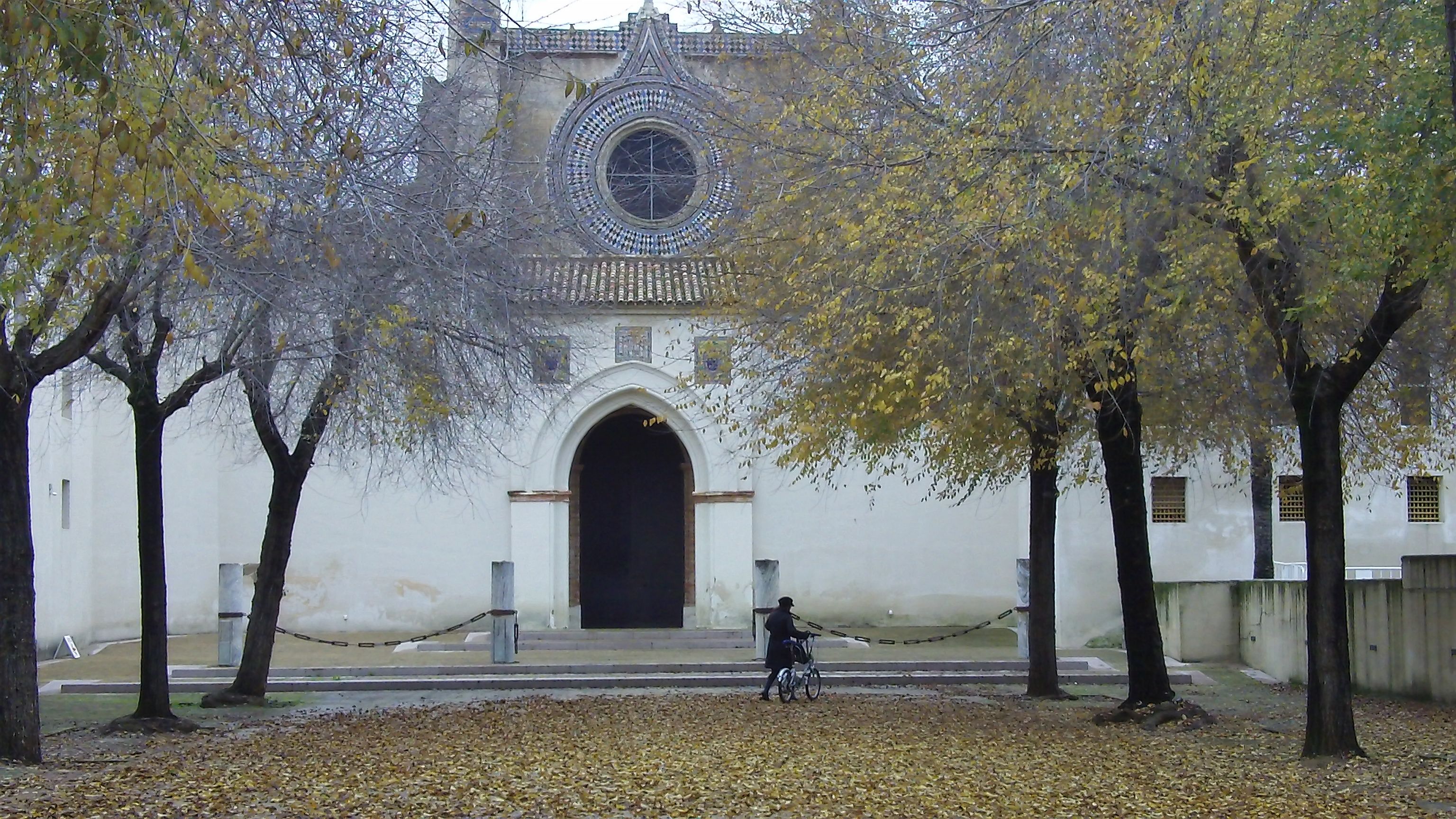
In my world, the season of fall always arrives with color. Bursting from the trees, running down the mountainside, heralding the beginning of my favorite season. In southern Spain, fall is a different species. There is hot, and there is hotter. There are green leaves, and there are wet leaves. While I was daydreaming of bundling up in a sweater and a scarf, in reality I was peeling layers off as the days rolled on. It was here on the threshold of the Museo de Arte Contemporaneo that I found a very familiar scene.This photo is startlingly full of fall for a December day in Seville. The thick carpet of leaves, a woman (a student?) in a full length trench and hat wheeling her bike out into the courtyard.

Seville’s Centro Andaluz de Arte Contemporáneo (Museum of Contemporary Andalusian Art) is located in the old Cartuja ceramic factory and monastery, which in and of itself is worth a visit. Reached by the C1 or C2 circulars, its hours are Tuesday thru Saturday 11:00 to 21:00 h, Sunday de 11:00 a 15:00 h. Closed Monday. Free entry on weekdays from 19:00 to 21:h; tickets 1,80 to 3,01€.

Bio:

twitter.com/kmarieholland
thisblonde.wordpress.com

Love taking shots? Been to Seville or Spain? I’m looking for travelers with a good eye to capture beautiful Spain and contribute to my weekly Snapshots section. Send your photos to sunshineandsiestas @ gmail.com with your name and a short description of the photo and look to be featured here!

Seville Snapshots: Tourist Season

Now that it’s August, tourist season is in full spring in all of Spain. Most professions enjoy 30 days’ vacation, most often given during the eight month of the year. Unemployment temporarily dips as resorts brace for the huge wave of tourists looking to relax, eat and spend their soon-to-be-naught bonuses, most often on the beach.

For a place like Seville that relies on tourism, the season begins well before the heavy wooden floats are pulled out from dusty churches for Holy Week processions. Lending to Seville’s climate, springtime and its festivals and orange blossoms make it a popular destination.

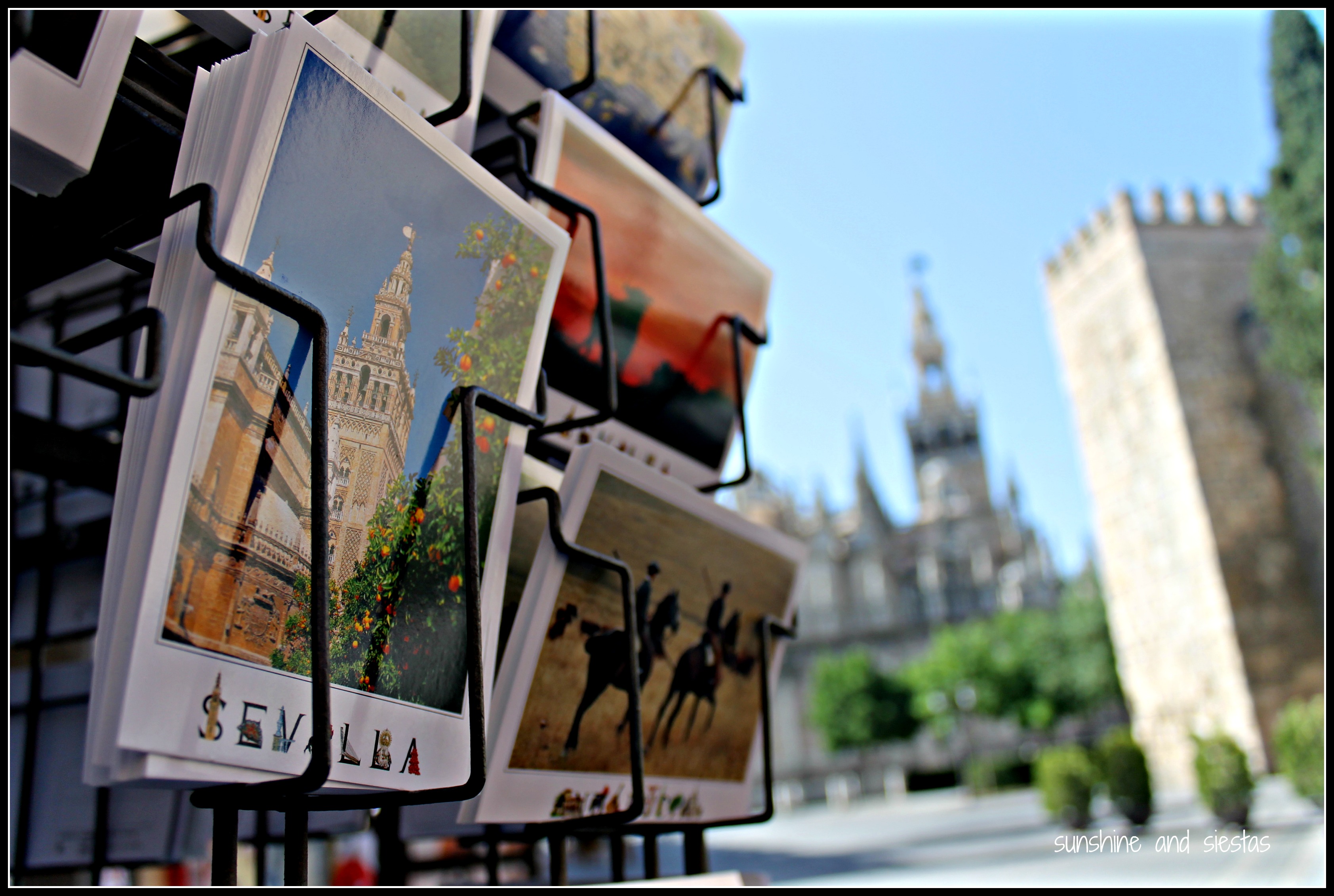
I took this picture while walking to meet friends of mine who were visiting from London, Dave and Melissa. The weather was already well past comfortable, so we stuck to lots of (alcoholic) fluids, avoiding the harsh summer hours and ducking between buildings in El Centro as much as we could. We were surrounded by scores of other camera-carrying tourists, and I let myself be considered part of that group as I looked for new angles in Plaza del Triunfo.

Love taking shots? Been to Seville or Spain? I’m looking for travelers with a good eye to capture beautiful Spain and contribute to my weekly Snapshots section. Send your photos to sunshineandsiestas @ gmail.com with your name and a short description of the photo and look to be featured here!

Places with Encanto: Casa Hernanz Alpargateria

Calle de Toledo stretches from Madrid’s crowning Plaza Mayor all the way down a hill past La Latina’s churches and bars to the Glorieta de Toledo, where I first spent the night a weekend in Madrid. Alvaro and I hiked up and down that weekend as he took me to his favorite places for a cañatapa.

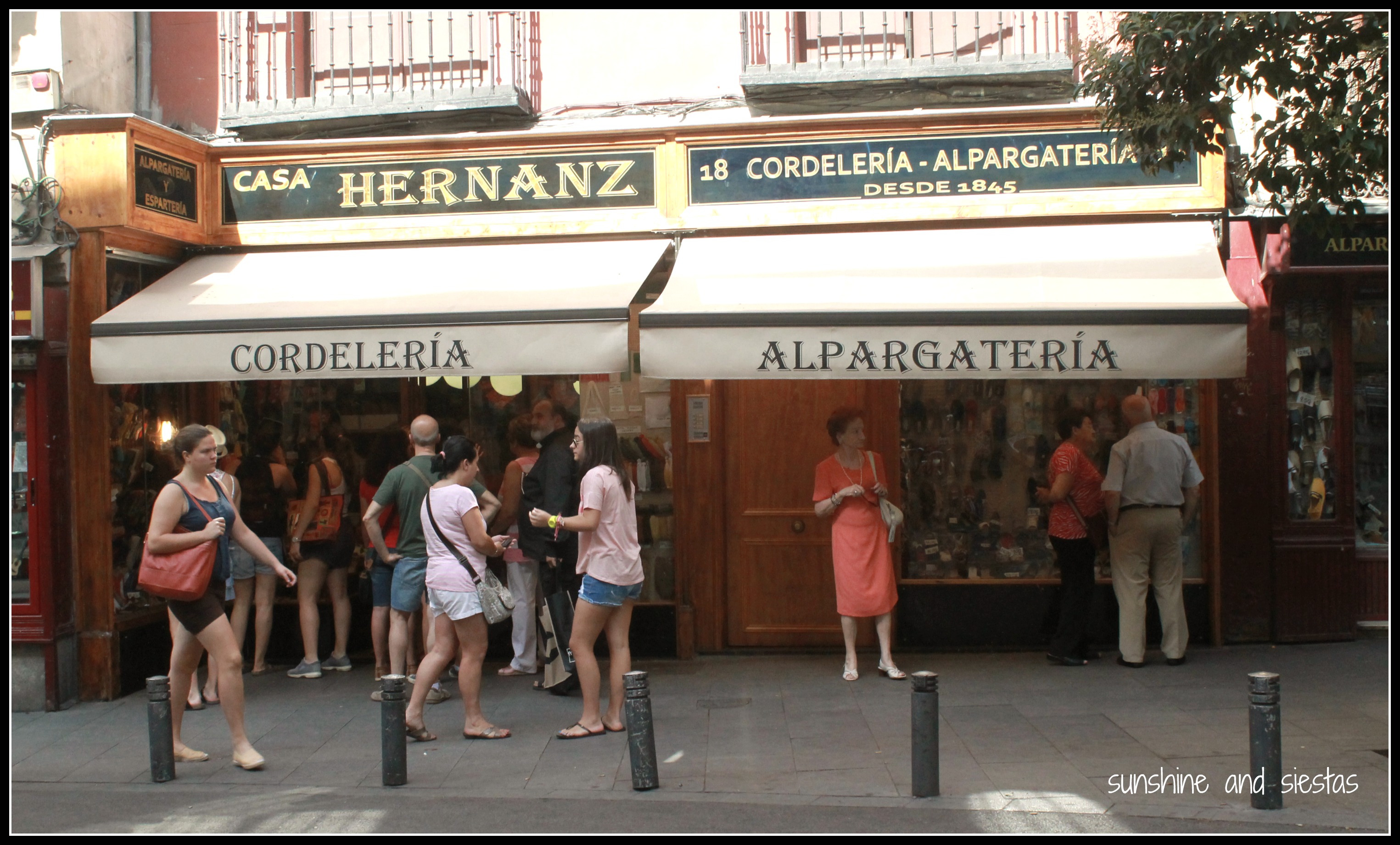
I’ve spent countless days around the Plaza Mayor, snacking on bocadillos de calamares, browsing souvenir shops. In the quest to spend a few hours before the Novio came to meet me in Madrid, I climbed up Calle de Toledo, on my way to Mercado San Anton in Chueca. Remembering an article about shopping in Madrid, I was delighted to stumble across a Madrid institution, Casa Hernánz.

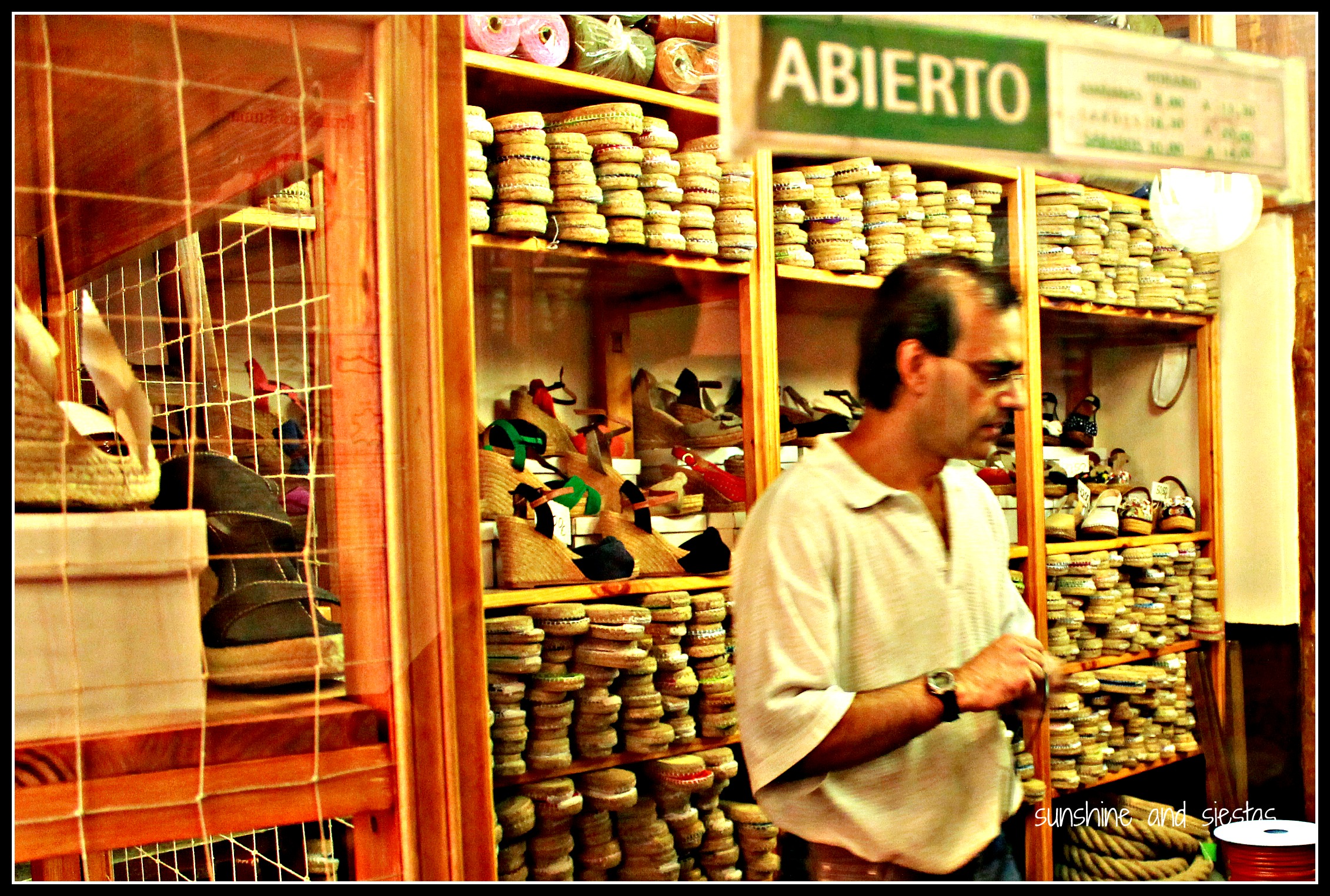
Wedged into a small workshop space just a block of Plaza Mayor, I peered in the windows showcasing the dozens of raffia-soled shoes, a popular folk style called espadrilles or alpargatas. Standing on my toes, I found a pair of beige ankle-strap sandals with a broad pink strap across the toes.

“You should take a picture to show at the mostrador,” the black-clad woman behind me said to her daughter. “This line is so long, you won’t even remember the style you want by the time you’re attended to. My company in line were two Americans with suitcases, a Crocs-wearing priest and an endless array of older madrileñas. I sighed and pulled out my smartphone, settling in for what was sure to be as long a wait as the bank.

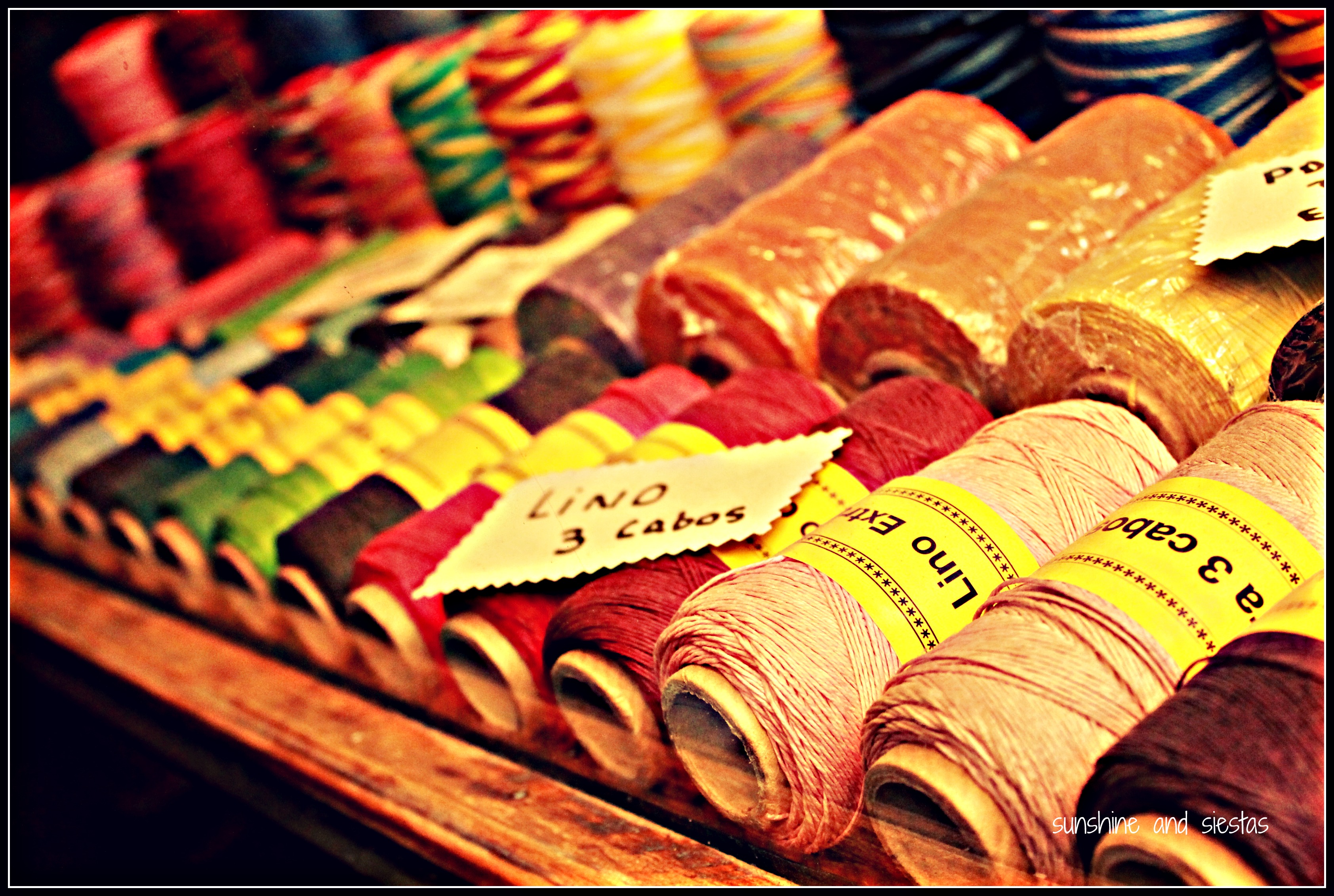
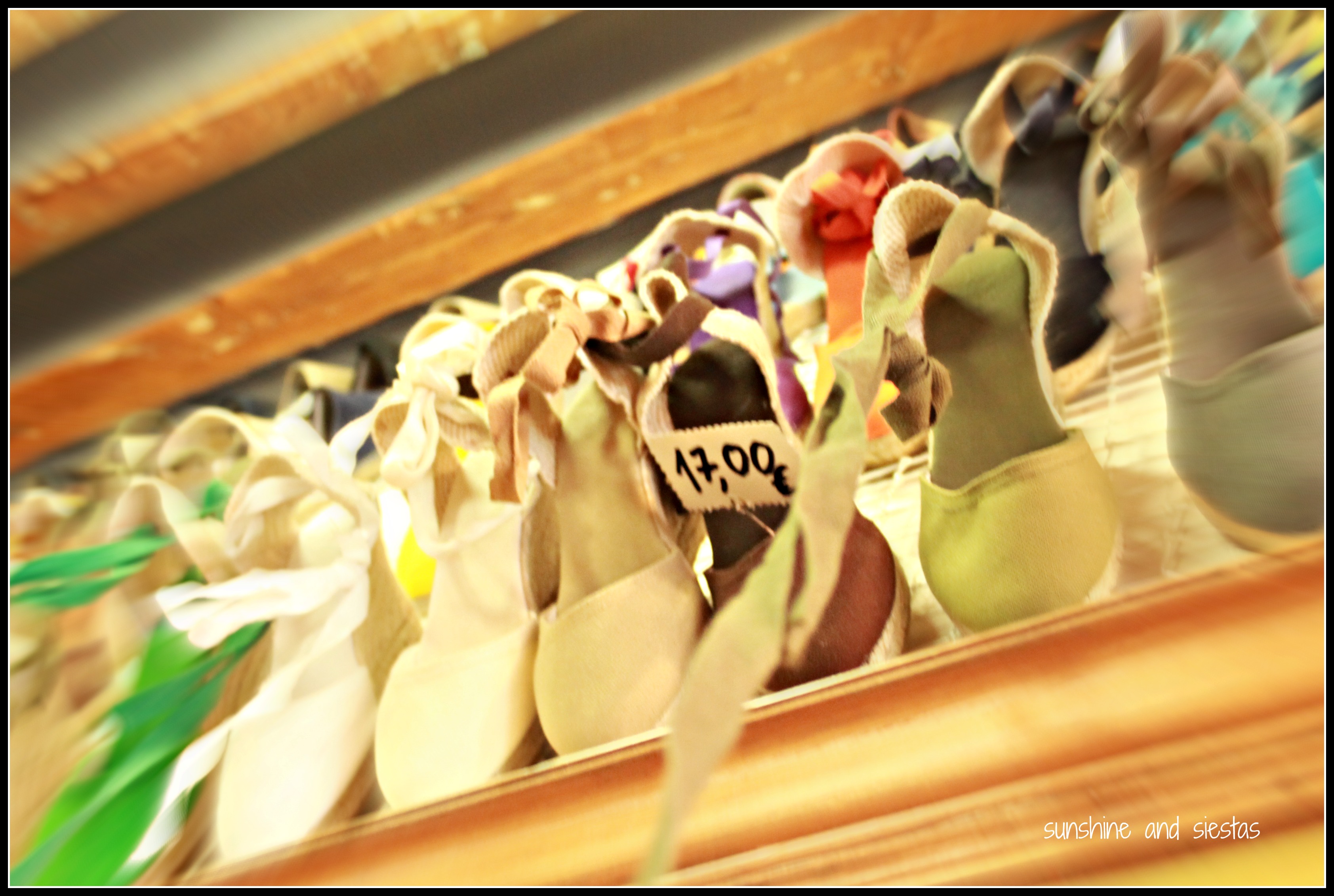
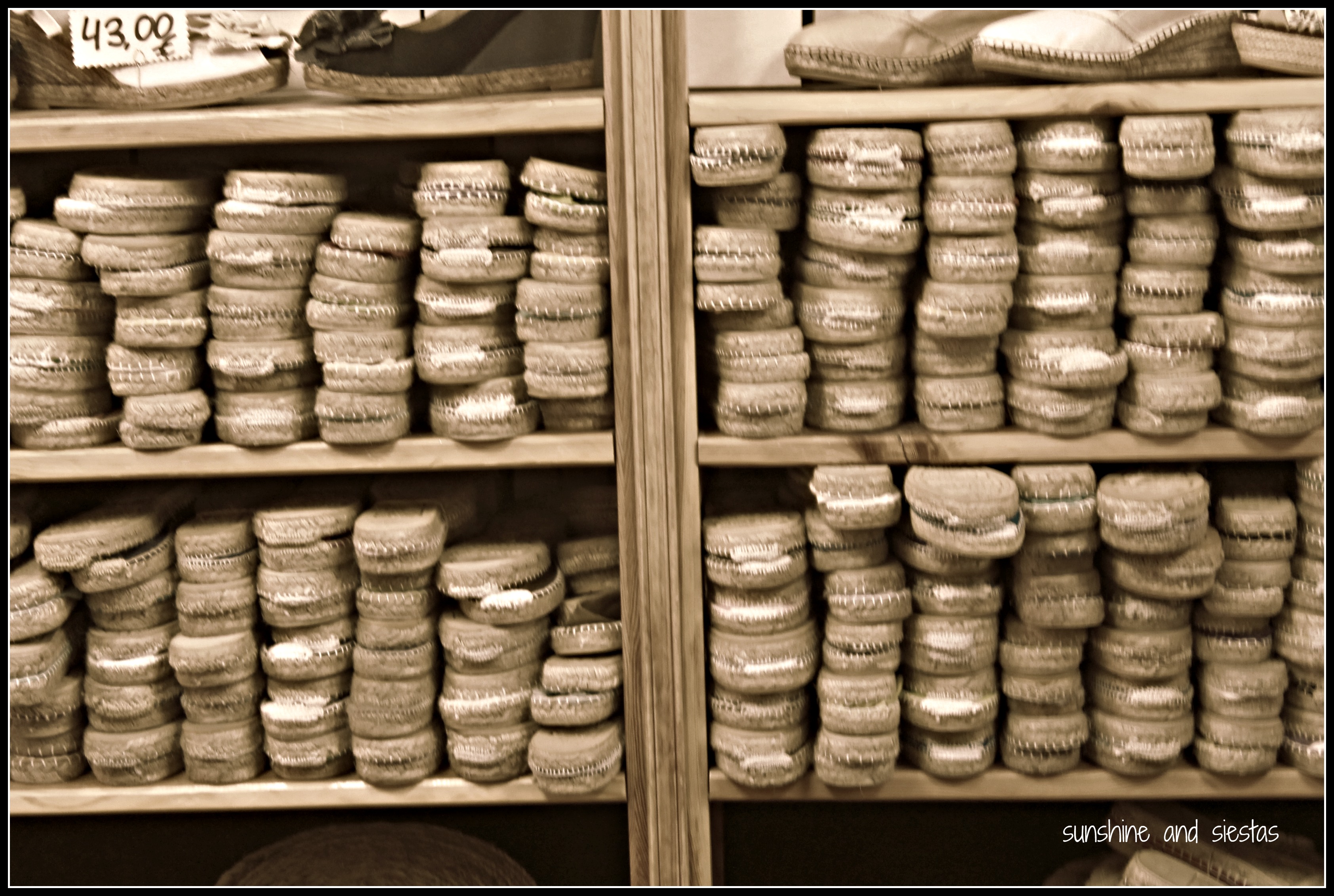
The line inched along. To pass the time, I looked into the display windows immediately next to door which were lined with a rainbow of linos, the thin thread that used for the superior part of the shoe. The soles are made of esparto, a coarse, vegetable thread that is woven together and glued onto another thin rubber sole. The lino is then hand-sewn onto the sole, called the plantilla. This type of shoe is typical in many regional costumes, come in colors as diverse as salmon or turquoise, and are often made with ribbons that lace up the calf. I myself swear by them during the Feria, as they keep my feet cool during the long nights of dancing.

As I inched closer to the shop doors, the woman behind me tried sneaking in to sit on a long wooden bench opposite the counter, which stretched from one end of the workshop to the other. The priest put up his hand, a look of anger on his face. “Senora, I’ve been waiting in line all morning. Do. Not. Pass.”

She shrunk away, probably clutching a rosary, and cursed the priest. I couldn’t help but laugh. Now that I was within the door, straddling the hot street and the even hotter workshop, I was surrounded by shoes, fabrics and the plantillas, stuffed into bookshelves behind the counter. Some were bare, while others, separated according to size, already had the fabric attached. Shoes climbed up the wall, from finger-length baby sizes and on up. Even more styles than I’d seen outside were showcased in wire cases, and miles of different types of rope snaked across the counter. An old fashioned phone called in special orders por encargo and a woman attended to them, scribbling notes and measuring soles for whoever was on the other end of the line.

The priest was there for new alpargatas in a simple black style (good, throw those Crocs away, Padre!) and a white twisting cord for his robe. The two Americans opted for simple lace-up styles in royal blue, and I suddenly had Rosary Lady pushing me to the end of the counter.

The lady on the other side of the mostrador smirked at me. “Que querías?” I fumbled for the words, wishing I had snapped a shot of the sandals I’d been eyeing. I pointed to the baby shoes just behind me. “Um, my friend has a baby. He’s small. I want some of the shoes for him,” I managed.

“Well, how big is he? How old?” I can barely remember my own shoe size in Spanish, let alone Baby Jack’s, who I had never met. I got him Cubby Blue to make his parents happy and motioned to a white pair of strappy heels for my sister. When it came time to explain the ones I liked, she knew immediately and went to fetch them.

Phew.

In the end, my wide feet wouldn’t make it into the shoe, and I knew I couldn’t cram anything more into my bag. Between my sister’s tacones and little Jack’s shoes, I paid a mere 34€  – far less than the priest and his miles of cordón!

Casa Hernanz is located on Calle de Toledo, numbers 18-20, nestled just next to the sprawling Plaza Mayor. Hours are 9:00am -1:30pm and 4:30 – 8:00pm Monday through Friday, and Saturdays 10am – 2:00pm. Lines can get long, so be sure to arrive early. Products and services can be consulted on Casa Hernanz’s website.

I’m looking for ideas for two new categories for Sunshine and Siestas – Typical Espaneesh (think, the mid morning cafelito, carrito de compras or finquillo) and Places with Encanto. If you’ve got a place to suggest or are interested in guest blogging about it, leave me a message in the comments, or write me at sunshineandsiestas @ gmail . com.

Related Posts Plugin for WordPress, Blogger...