Valencia Nocturna

The most curious thing I ever noticed about Valencia was the bat that hovers over the city crest. I had to squint, as I was coming off a wild weekend in Ibiza during my study abroad month. Present since the medieval reigns of kings on several coats of arms, the bat nowadays crowns the alcantarilla street covers, as well as the serves as the symbol of the Valencia Club de Fútbol, one of the top teams in the division.

It’s fitting, of course, as Valencia seems to be the ciudad nocturna – a place where nightlife booms and people (and boundless study abroad students) never seem to rest.

I set out with Camarón to explore the city I barely got out in when visiting, save a trip to the famed Ciutat de les Arts i Ciencies and a near-death experience driving to the beach with a 16-year-old German. Turning up from my hostel towards the city center, home to the Borgia palace and the Holy Grail (reputedly), small side streets covered in graffiti jutted off to either side, inevitably leading through the web of streets to the cathedral. Like all medieval cities, the buck stops at the Holy House, so I steered past the Torres de Quart.
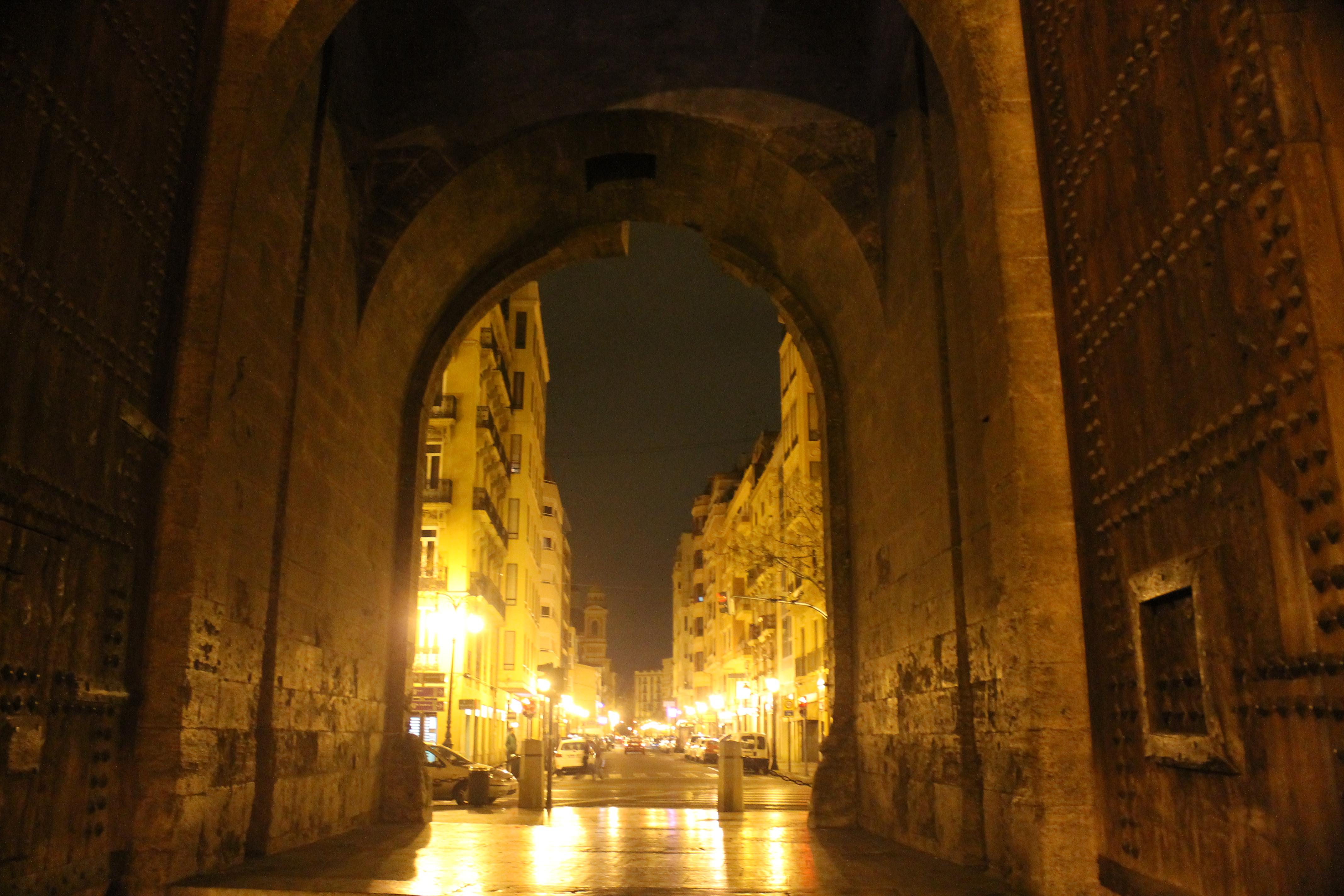
The gate, it turns out, is the one once used by travelers (and feudal lords) entering from the mountains. The church of Saint Ursula sat quietly in its wake, no doubt witness to all those entering the old city. Near-empty bars and cafés sat along the way as bartenders looked bored, glancing down the Calle des Quarts to discos further up the road. I looked back over my shoulders towards the gate, able to get a full-on view.

I kept my eyes open for interesting graffiti or a bar throbbing with people, but no one seemed to be around. I wondered if Valencia was the destination I’d always heard it was.
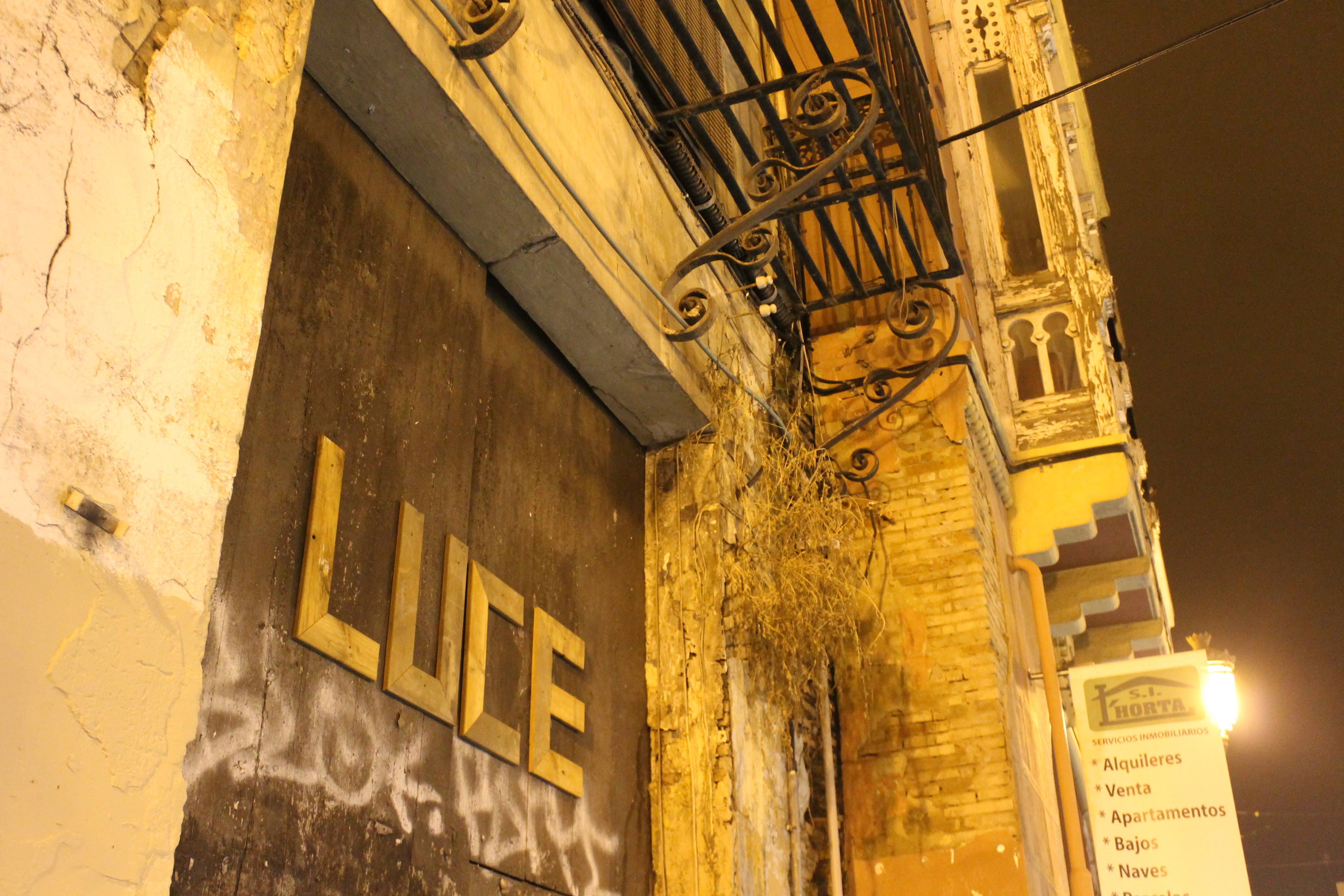
As I inched closer to the city center, camera poised, the slinky alleys began growing wider and the streetlights cried out. I was approached by a man wielding a plastic bag. ¿Cerveza? Beer? Like Madrid, I was hounded by foreigners hocking cold drinks. The lights grew harsher, as did the raucous music coming from the bars up and down the street.

Study abroad students, sleeveless in the chilly night air, stood contemplative in my wake. “Omygod I was totally out till 5am last night. Sooooo drunk!” one girl mused as a tall friend bought a beer off the street. Natives leaned casually against the stone walls of the Casa Borgia sipping gintoncitos. I felt like I was gasping for air, suddenly too overwhelmed at all of the people and afraid someone would take Camarón.
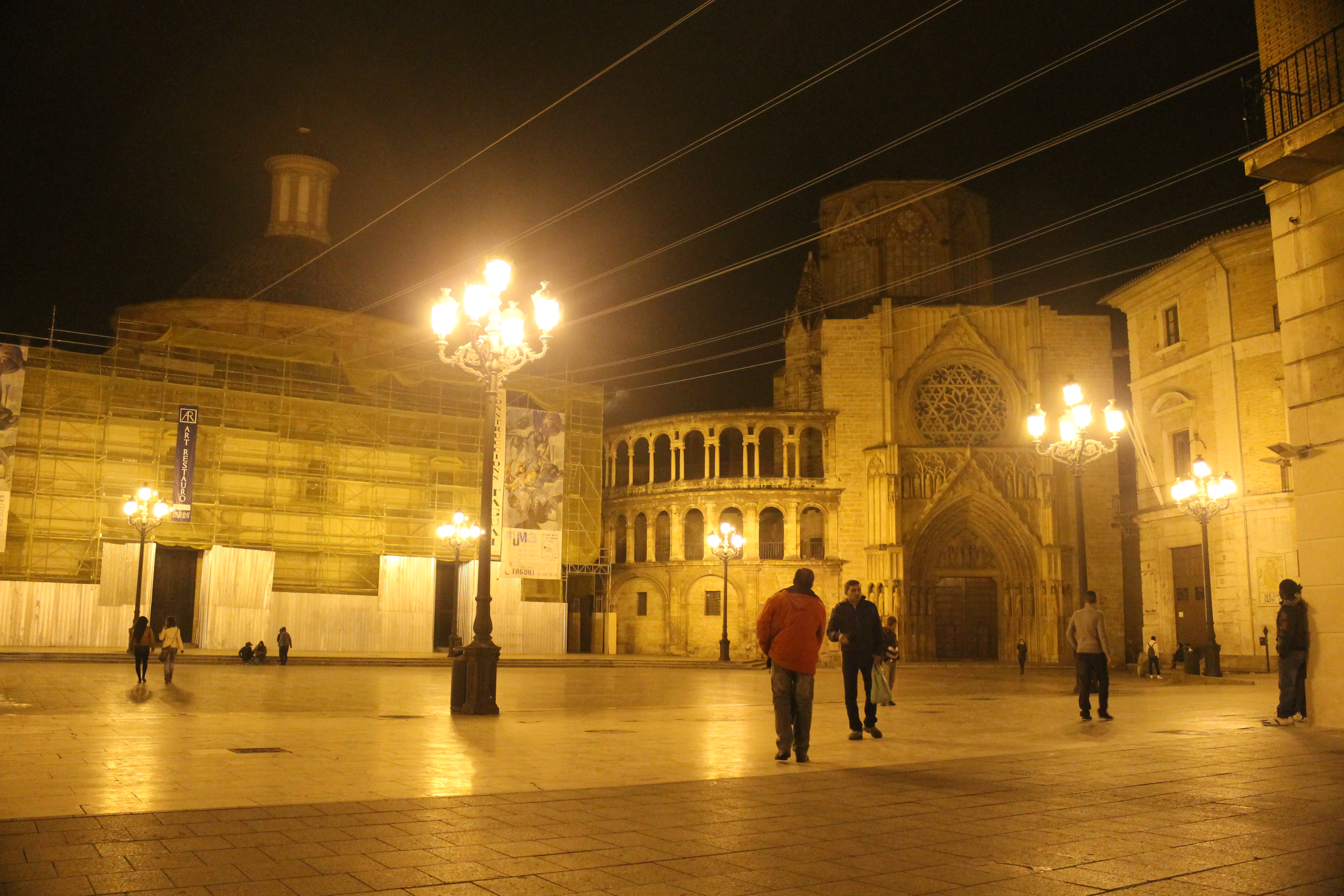
Arriving at Plaza de la Virgen, awash in yellow light and nearly empty, save some teenagers on skateboards and the municipal cleaning crew, the square was a welcome respite. I remember eating an incredible duck a l’orange at a small bar tucked away on a side street seven years ago. It seemed amazing that I was in a city that I really didn’t care for and soaking in a totally new place.

Walking around the sprawling church, the light was suddenly gone. No one was next to the Miguelete tower or around in the courtyard adjacent the Archbizopal palace. It was quiet and the city took on a medieval feeling.  Even the Pope came along.

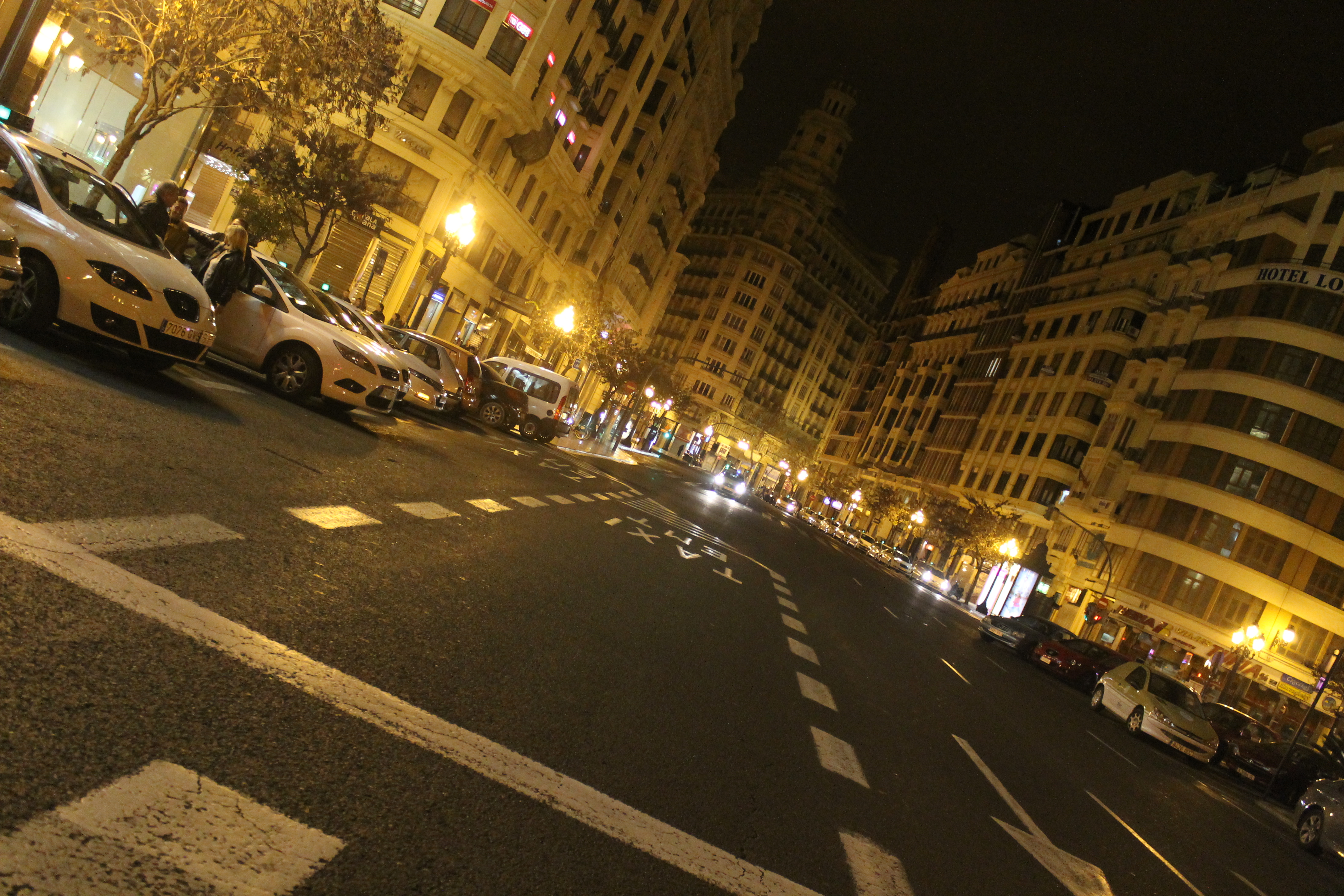
At the edge of the cathedral lies a gargantuan square that gives way to the new city, dripping in Victorian boulevards and more street food than I had imagined (I cursed myself for eating the overpriced tapa in the airport). Ah, yes, what Spain specializes in: mixing old with new.
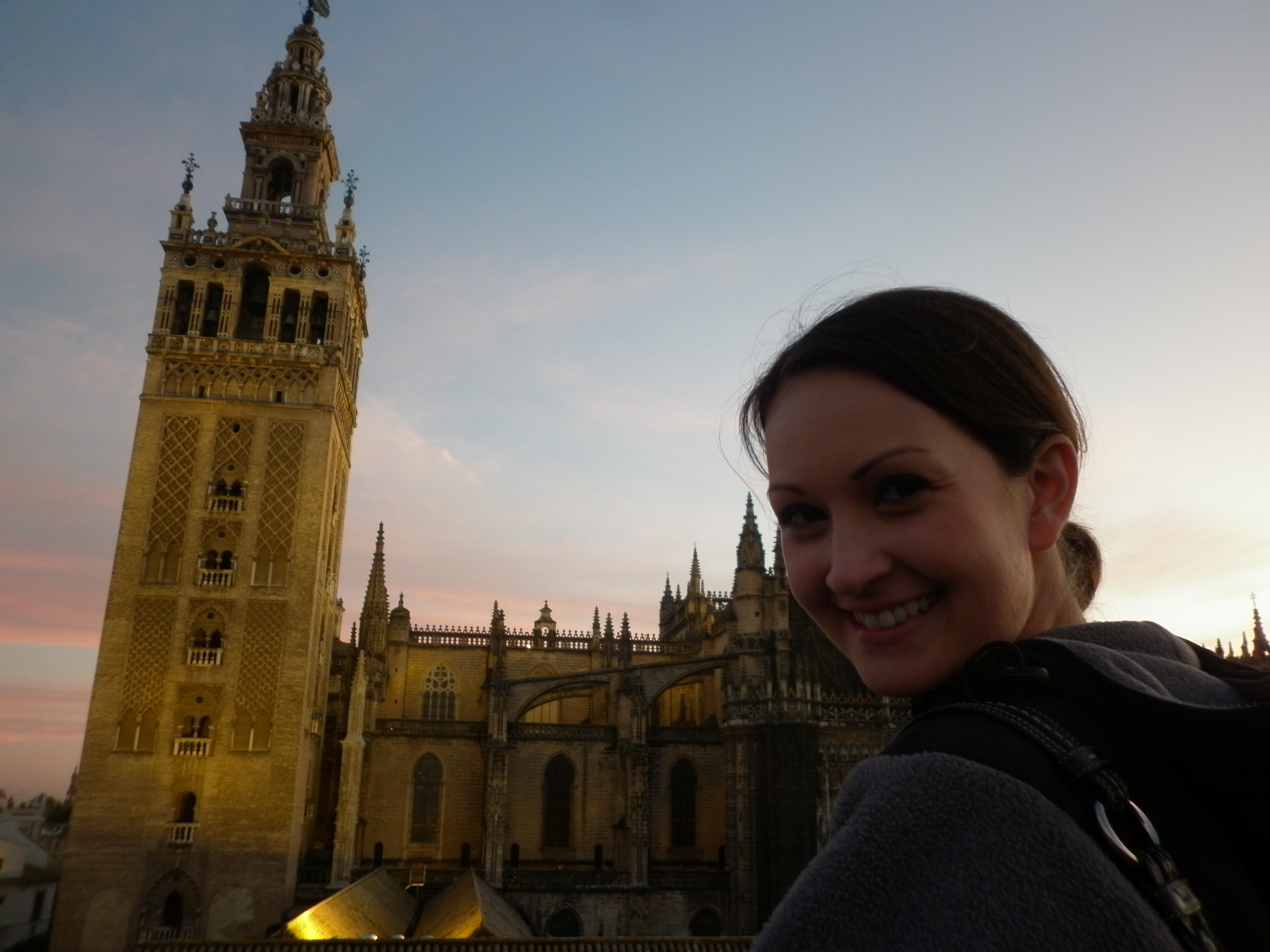
Walking around Valencia at night made me love nocturnal Seville more (despite being voted one of the most poorly lit cities in Spain) : the rings of the puente de Triana reflected on the Río Guadalquivir, the towers of Plaza de España.

As I walked back to my hostel down empty alleys, the beer men called out again. ¿Cerveza guapa? ¿Te gusta esto? Maybe he was referring to himself, but I’ll just keep thinking he was asking if I liked Valencia.

Have you been to Valencia? What was your favorite site, in or outside the city? Are there any cities you’ve only known nocturnally?


I heart Rebajas

While Liz was busy talking about how minimalism in your suitcase is a good thing, I was busy roving the stores for bargains, wardrobe staples and a little but of color for my monochrome style.

Yes friends, it’s rebajas time. Hide your wallets.

By Spanish law, shops are required to dump all of their old merchandise onto the sales floor and mark it down, sometimes up to 70%. Little orange or red tags start sticking to the bottom of my soles, popping out of my wallet on spare receipts and then my orange bank card starts acting up.

Thank God my mom raised me to search EVERY item on EVERY sale rack at EVERY store, because I always have the patience to try just one more shop and scour each rack until I am convinced there is nothing else for me.

WAIT these shoes are burgundy and it’s summer and they’re suede and I have zero anything that matches? Sure, toss them in the bag. Oh, sorry, sevillana stink face chick at Mango, for impulse buying them and then deciding against it, hence multiple trips to Nervion Plaza and a whole new wad of shopping bags.

Ok, self-confessed. You get the idea.

I’ve survived Rebajas – which for the record happen in January, February, July and August all over the peninsula – nearly a dozen times. I shudder to think how much money I’ve spent on the garments that have been purchased in that time, even if in the name of bargain basement prices. Hey, I worked in a Banana Republic outlet store and learned some simple stats – the longer it sits on the sale rack, the lower the price goes. This, sadly, is related to the decline in your size (which, in European size, means that all the Mediums and size 40s are loooong gone).

Despite the money spent and the time wasted in line (DIOSSSS the Spaniards love to hacer cola!), I’ve had some pretty memorable finds.

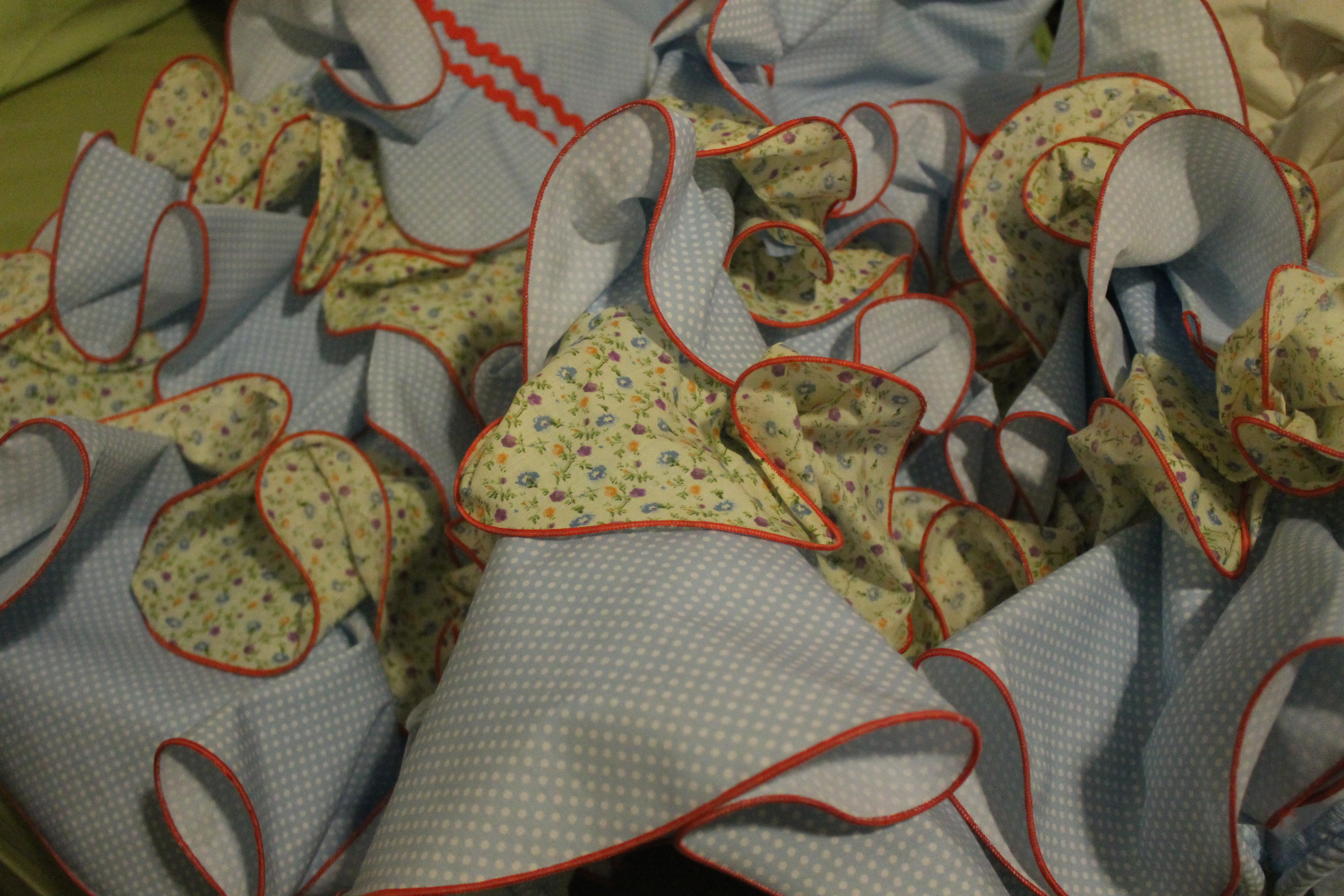
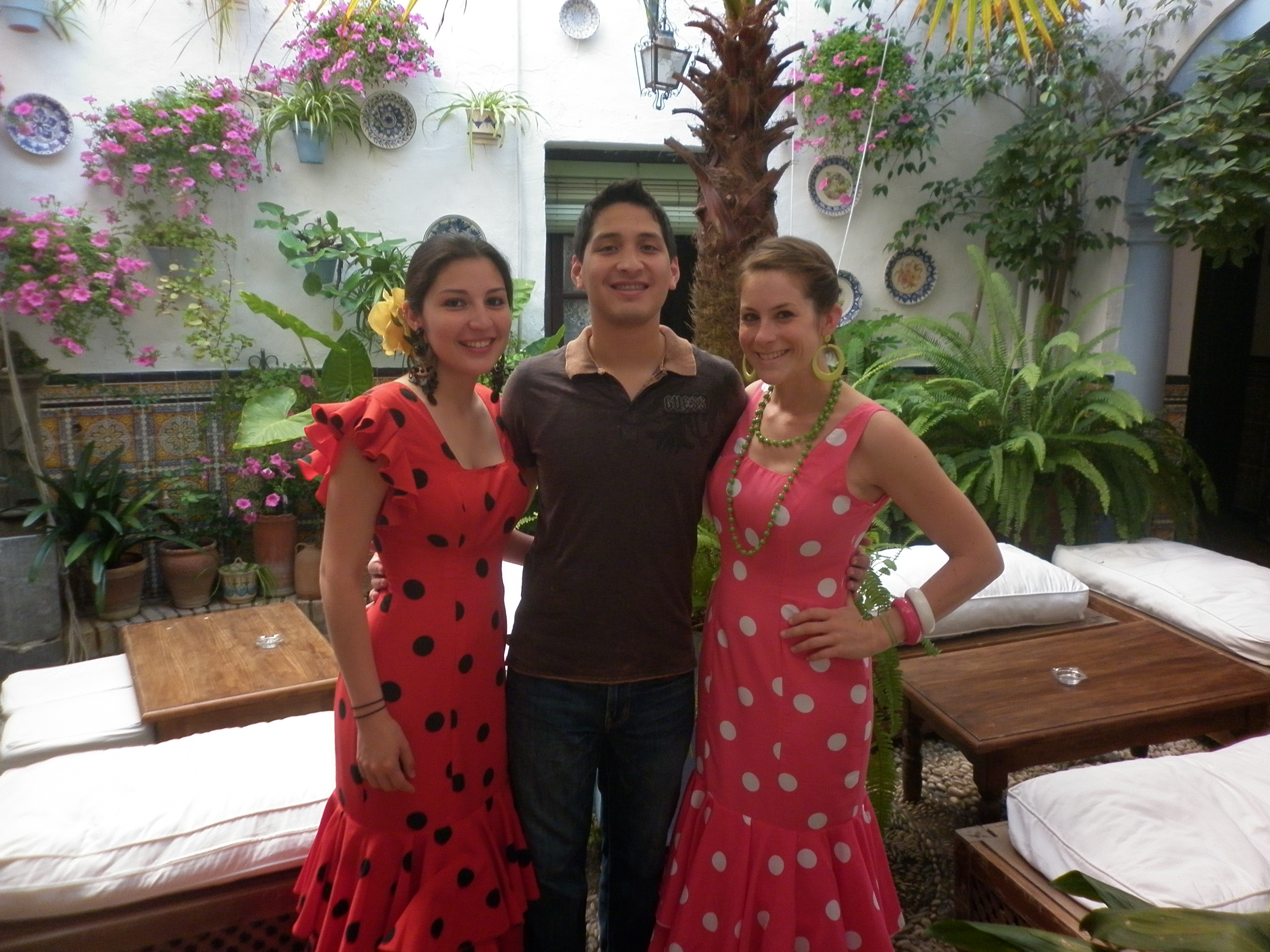
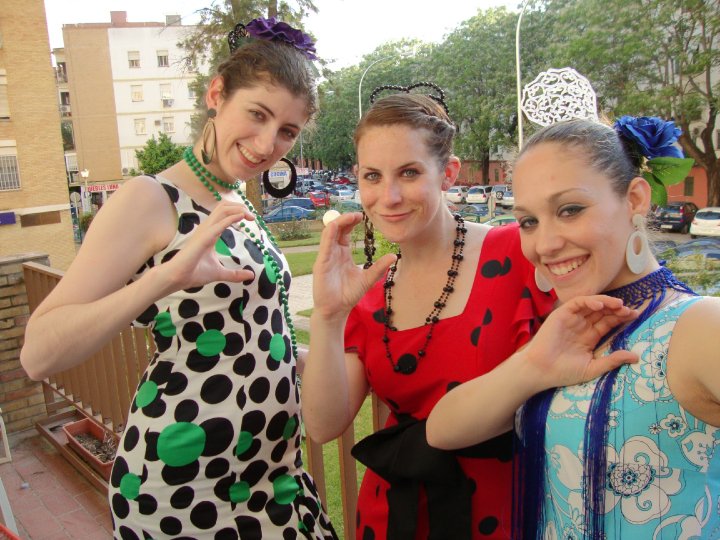
Exhibit A: A flamenco dress for 125€. And the other for 100€. And the third for 60€

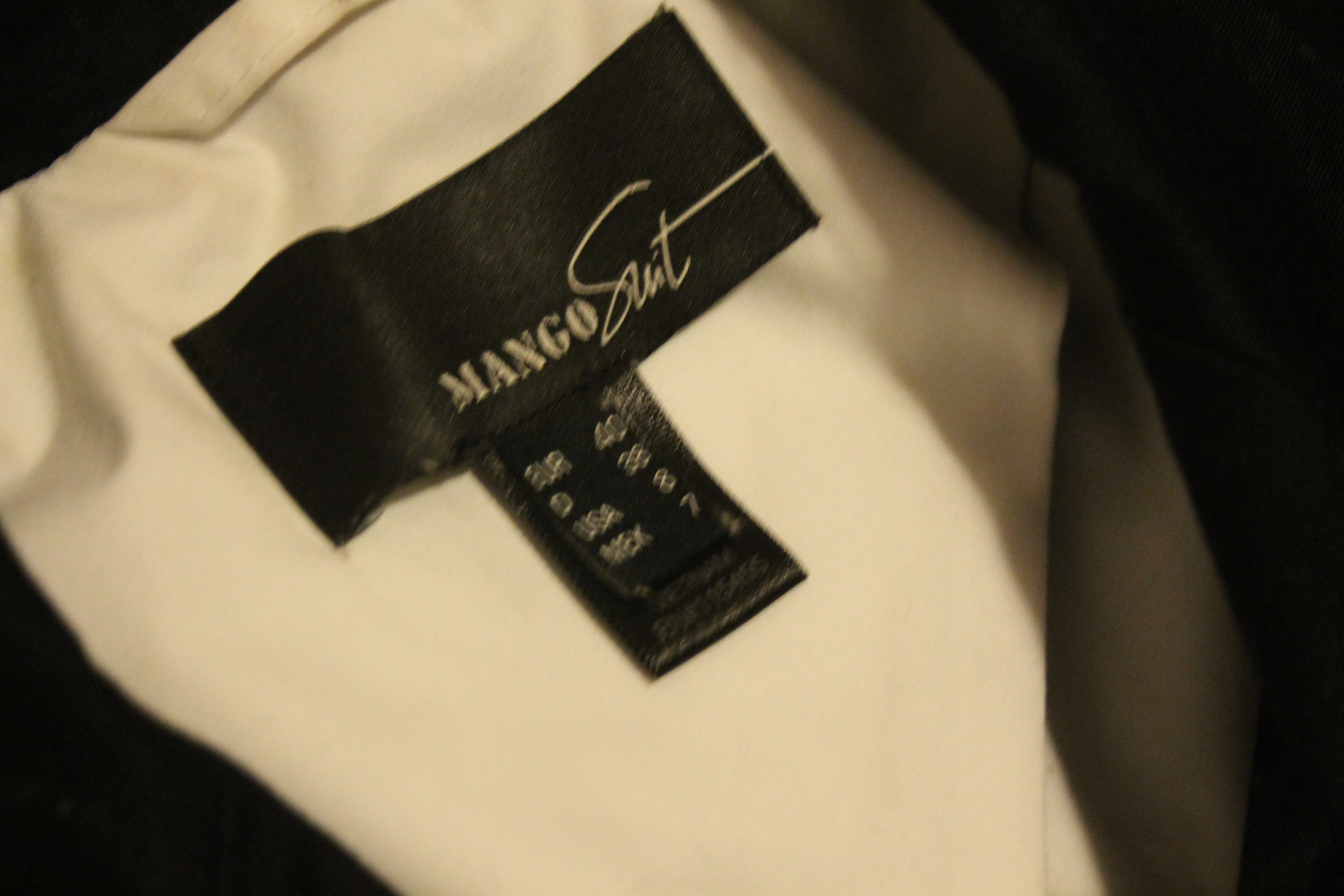
Exhibit B: The Mango Blazer I wear like I have nothing else (half-off at 25€)

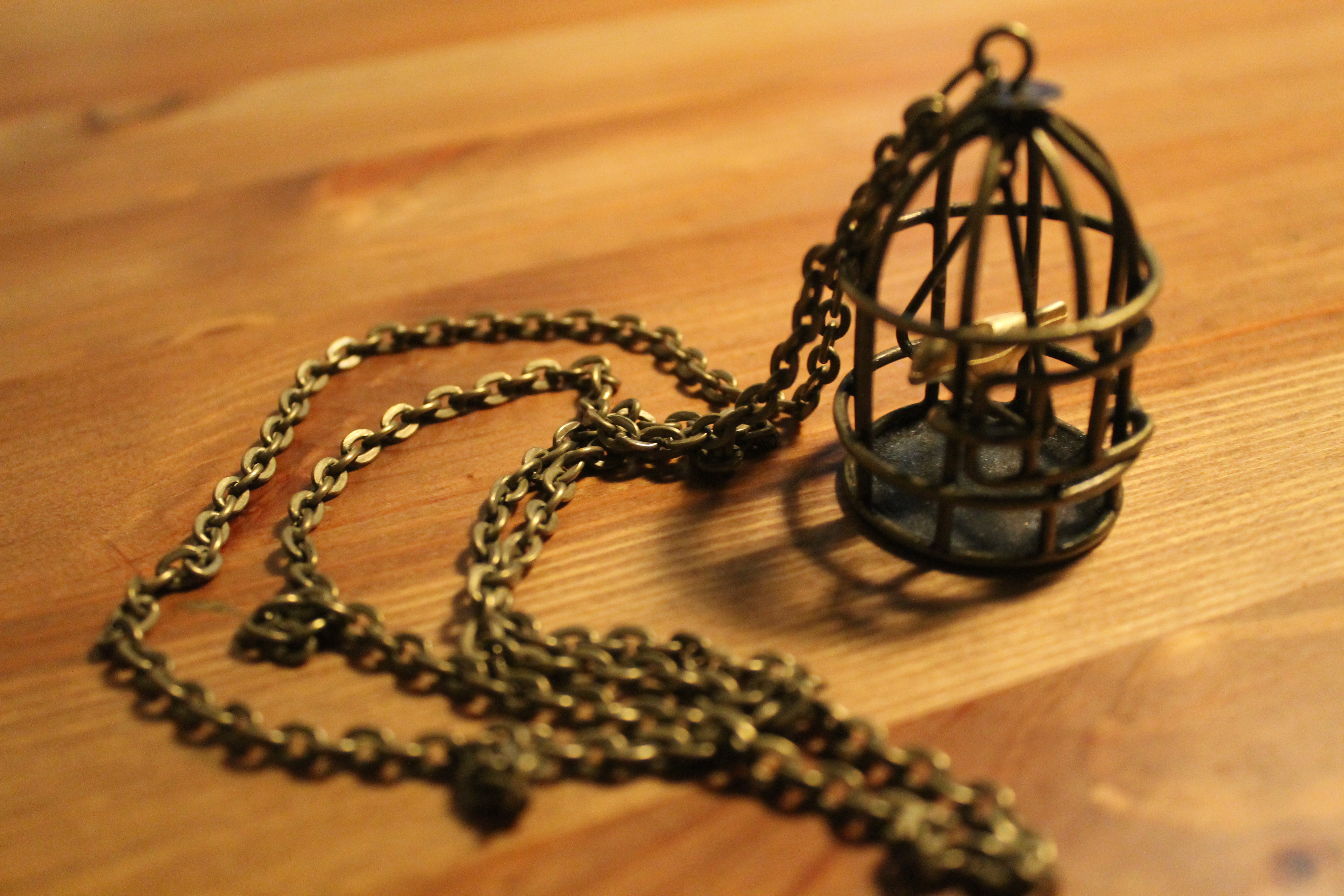
Exhibit C: My birdcage necklace that I get complimented on constantly and wear with everything (70% off, totaling 7€, not to mention the Cariocca dress marked down from 135€ to 36€ that I bought at the same time)

Exhibit D: a Panasoic Lumix, my faithful companion before NYE in Switzerland, a trip to the toilet and old age did it in, for 129€

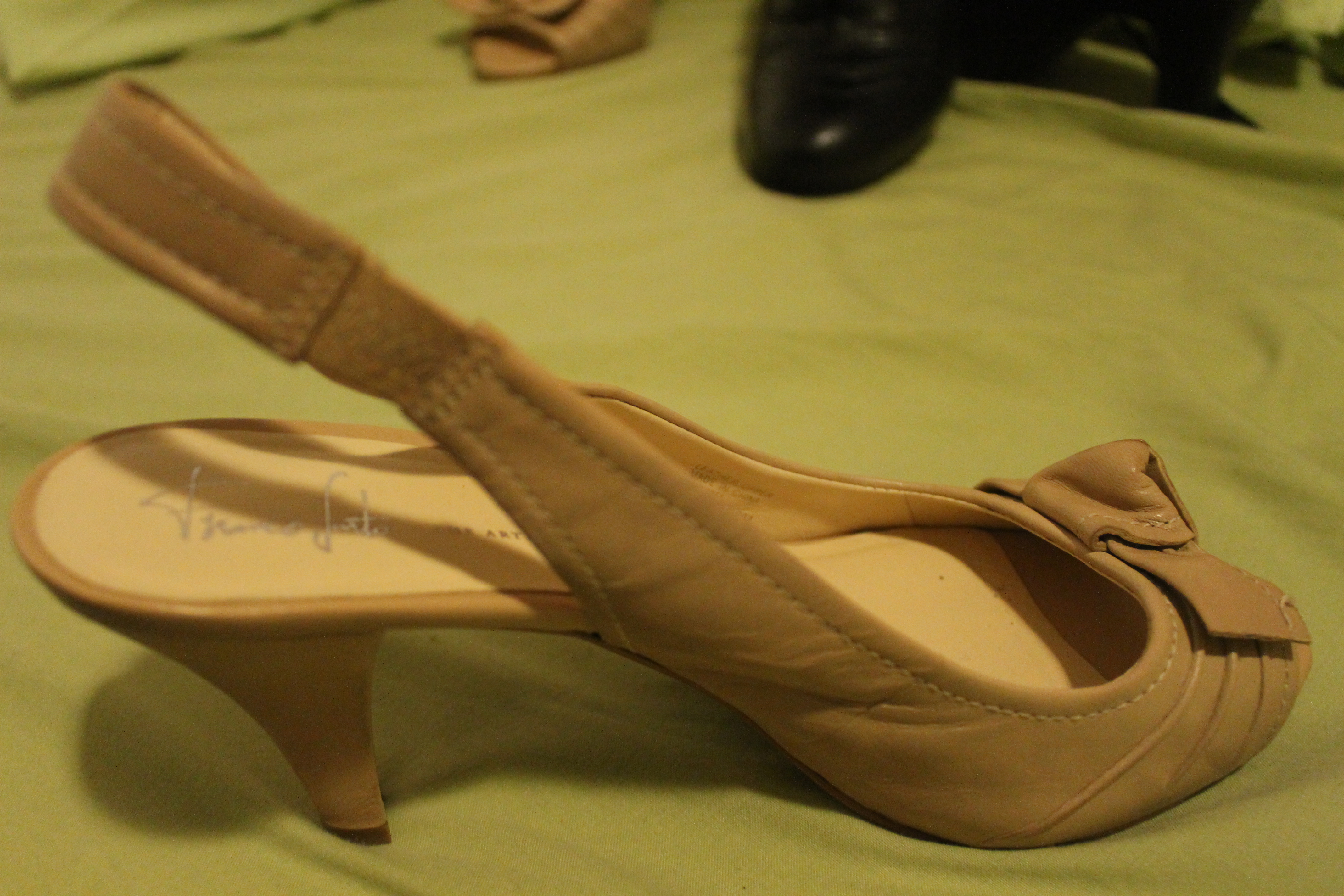
Exhibit E: In true rebajas style, three pairs of shoes (including a Franco Sarto) at the Zappos outlet for $71 this summer (it counts because it was a super ganga and it was technically during the tail end of Rebajas in Spain anyway)

Even today, to avoid a long line at Vodafone (where I eventually threw away two hours of my life and never made it to Mango), I shopped. For just under 9€, I got two pairs of underwear and a summer skirt (2€, 3€ and 4€, respectively) at Women’s Secret, along with a pair of loafers (9,99€), a light sweater (8€), a lace shirt I’ve been looking for (not on sale, but only 10€) and a mustard-color skirt (4€) for 32€ at Lefties. Forty for alllll that loot. Call me a rebajas champion.

Or call  me a maximalist, a hoarder or someone who will never have any life savings. I have two-thirds of the closet full of finds, and nothing on my body currently was bought at full-price. I call myself Spain’s only way to fight recession, really.

What did you all find at Rebajas this season, or are you taking Liz’s approach to things and steering clear of the shops? How much do you normally spend at Rebajas? Do you love my super amateur photography?!

What to do in Spain if: your phone gets lost or stolen

Ok, so in retrospect, it’s not the worst thing that’s happened to me ever. Or even in Spain. But flu + six-year-olds + stress makes losing a Smartphone way worse than it needs to be.

Think about it: people who have their contacts, photos and all-important Facebook at the touch of a button, a simple tap on a screen, become quite attached. My own love story started in March of last year when I decided to cortar la llamada with Orange, so to speak, and change to Europe’s biggest carrier, Vodafone, to get a Smartphone. I figured it would be handy to be able to Skype my mom from wherever, send tweets whenever I had the urge to and never get lost. And it was.

The greatest love I’ve ever known. That’s sad, right?

Nine months later, I’m struggling through a Thursday at work. The kids won’t behave, and it’s humid and cold out. My wooziness gets full-blown bad around lunchtime. Venga, come have something warm to eat, coax my coworkers, and I hate missing our Thursday standing date at the bar down the street. I check my phone for emails and saw that José María had messaged me. After ordering, I said goodbye to JM and put my phone in the pocket of my jeans.

Not an hour later, I’m back at school when I notice my phone missing. Not panicking (for once), I ask my coworker to call me, and her face drops. It’s off, tía, she responds, and forces me to hand over the class to run down to the bar where we’d eaten. Inquiries to the bar staff, construction workers and other patrons are met with nothing more than shrugs and sympathetic looks. It’s gone.

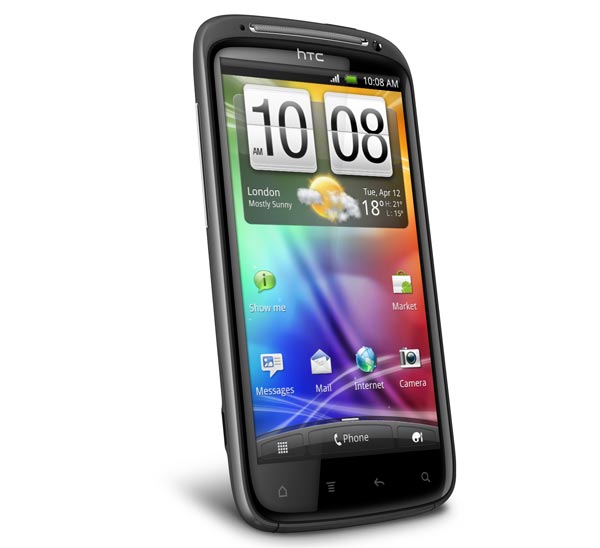
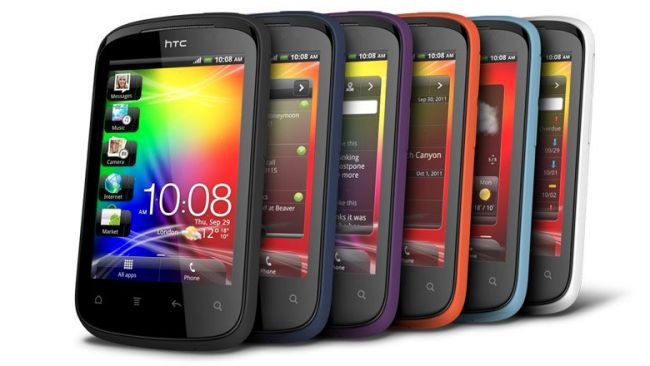
A few hours later, I’m in the Vodafone store in Nervion staring down a hipster named Miguel Angel. He patiently asks me what I was doing when the robbery occurred, if I have an htc account, etc. I’m dumbfounded (and still fighting a fever) that the sales rep who sold me the phone had not told me about the features built-in to smartphones to locate them, lock them and wipe the memory. I reluctantly hand over my debit card and choose a more rudimentary version of my old phone, 144 € in the hole.

Petty theft is perhaps the most common crime in Spain, so the age-old saying goes: watch your belongings. Don’t set your bag on the ground at a restaurant or keep it open while walking through a crowded plaza. Keep an extra copy of your flight information and passport at your hotel’s reception. Stay alert. I’ve been a victim of robbery twice now, and I can’t say it won’t happen again. But there’s a few things you can do to protect your phone.

Let’s start with the basics. In Spain, there’s a few options when it comes to cell phones. The major companies are Vodafone, Orange and Movistar, with Yoigo quickly becoming more popular. Major supermarket chains also offer discounted plans. I’ve had each of the majors and have never been 100% satisfied with any of them.

Companies typically offer two types of plans: prepago or contrato (pay-as-you-go or contract). Prepay will get you a SIM card, typically with a few euros of saldo (credit), and you’ll have to top-up when your credit gets low. All of the major carriers in Spain have pre-paid cards, and even European-based mobile broadband carriers are becoming popular for those who travel. Calls and messages usually cost more than a contract, which requires a residence card, bank account and 18 months minimum commitment, called permanencia. The benefit here is no pesky trips to the supermarket to get more saldo and reduced prices for calls and messages. What’s more, 3G has reached nearly every corner of the country, so you can Skype home from nearly anywhere (as long as you’re within your MBs, that is).

When switching companies, you’ll have to put in a claim stating that you’d like to change your portabilidad to another carrier. Then starts the war: for a week, your old company will call you and beg for your loyalty, even offering you a discounted iphone 4 or better rates. After a week, your choice carrier will activate your phone ans start charging you. 

V is for very inutil.

Anyway, I digress. When I switched companies last Spring, I was given a deal good for six months – my plan at 24,99 instead of 39,99, plus an htc sense for 75 euros. I took it, gleefully playing around on my phone and downloading apps. I had asked about insurance, and the sales rep joked around with me about how no one would ever think to rob it from a pretty girl, and I looked smart enough to not drop it. Ok, amiguito, but appearances can be deceiving. His flirtatious attitude made me grab my phone and run, and I now regret it.

When Hipster MA asked me how I protected my phone, I kinda just shrugged. “I bought a silicon case at a chino,” I replied, “and I don’t usually drop it.” He shook his head. “No, how do you protect it from thieves? Did you try and locate the phone? Or did you block it? Give me your insurance policy and let’s see how much we can get for you.”

Um, ¿cómo?

I felt like the dummy with a smartphone, and realized I’d broken my normal routine of buying insurance and sending in warrantee guarantees. In the end, I had to pay for a new phone (the plan would have been way overpriced without Internet), but this one has Alcatraz-style safety on it. Here’s some tips to protect your smartphone while in Spain:

Take out a security plan when you purchase the phone

Major companies offer security plans against forced robbery (robo con violencia), water damage, dropped phones, etc. for a premium each month. The 4 euros I pay monthly will just be tacked onto my bill each month, and iphones with Movistar are less than twice that (and those fancy new screens cost a loooot more to replace). When getting a phone, be sure to inquire about how much a plan costs per month, what is covered under the insurance and how to activate it. I also asked for duplicate copies of the plan to be sure I’d read it carefully this time. The charge should also come listed on your monthly factura (bill).

If you’ve got prepago or have a crappy little I’ll-never-break-sucker-no-matter-how-far-you-throw-me Nokia, I wouldn’t waste the money. No one steals those these days, anyway.

Download a phone tracker program

Little did I know that with an online account or app, I could track my phone to its geographical location. Could you imagine? Showing up at the door of the capullo who is enjoying my phone? When configuring most smartphones, you can add an account with the brand’s company and send a message asking the phone to be located. Within 15 minutes, you can find out if your phone is under your dirty laundry or if indeed someone has taken it. This account may also allow you to download more ringtones and wallpapers.

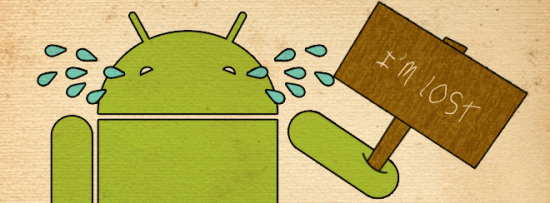
I have an htc sense account, which I found online at their website, as well as a free app called Android Lost. In the Market app, you can type in the name of the program and download it directly to your phone, or do it from a PC.

Call and block the phone

If you’ve got the box your phone came in handy, you can call customer service on most carriers and ask them to block the phone, making it useless. The operator will ask you for a code that can be found on the original box, near the bar code.

Put in a denuncia at the nearest National Police station

Just as you’d do if your passport was stolen, reporting it to the National Police can help you to get some of the value back for your lost phone, provided the robbery was committed with force. Simply head into the nearest sede, call, or take care of it over the Internet. 

Police dollars won’t get me all these, sadly.

When I went to Mexico with some friends during college, we left our bags near our chairs and jumped in the pool to cool down. Being the only one who spoke Spanish, I asked a pool attendant where our bags were a few minutes later, and he responded that he’d moved them. Lisa’s was missing, Jenn’s camera has been stolen and our room key lifted. The room keys all had the room numbers engrained on them. The five of us ran up countless flights of stairs and found the door ajar, Lisa’s bag in a nearby garbage can. I gasped, remembering that not an hour earlier, I’d wanted to come upstairs and take a nap.

The scene inside the room meant that someone had been there – overturned suitcases, change missing from the table. They’d taken our meal tickets, but we had hidden the safe key so well, our cameras and passports were still there. Sure, having someone lift your mobile phone is a pain in the culo, but I’m happy I wasn’t around to try and fight anyone for it.

Bottom line: just ask questions. I was too busy fending off a creeper to ask about anything more than when my phone would be activated. #oohguiri

If January Marks the Start…My 2011 Travel Round-up

Let me tell you a little story about peer pressure.

When I was 11, my parents informed me that the dog had taken the news well. She faintly wagged her tail.

“What news?” I asked, hoping for the trampoline I’d begged my parents to buy us for ages.

Oh no, it was the M-word. We were moving. I’d have no friends. Maybe there wasn’t a Kohl’s there. Was Chicagoland > Rockford, or had my mother just confused after consumering too many kosher hot dogs growing up and was going crazy?

Well, I wanted to fit in. I did so by going to the Von Maur and using my birthday money to buy a pair of Jnco jeans because all of the popular girls had them.

I strutted into Edison middle school the next morning and was immediately dismissed as a poser.

Well, I didn’t learn my lesson. Now that I’m blogging, I give into the peer pressure of comparing stats, doing those dumb surveys and, as the new year has already crept up on us, a year in review. In 2011, I added two new countries to the list, had five visitors from the US, got my work/residence visa paperwork all together and turned 26.  I can’t say 2011 will be the greatest I’ve had (dude, 2010 was pretty, pretty good), but I managed to see some new things, meet some new people and probably consume a new pig part.

January

Amy and I rang in the New Year with oysters, an old boxing legend and a broken camera in Lausanne, Switzerland. I moped through Season Three of Sex and the City the next day while Amy was bed ridden. Colds and booze do not mix, people.

From there, I met several  friends in Berlin, Germany and got my history nerd on as I explored a concentration camp, museums and the off-beat Berlin.

February

Apart from the usual routine, I got to go to my first flamenco fashion show and a wine festival. Cheap wine, that is.

March

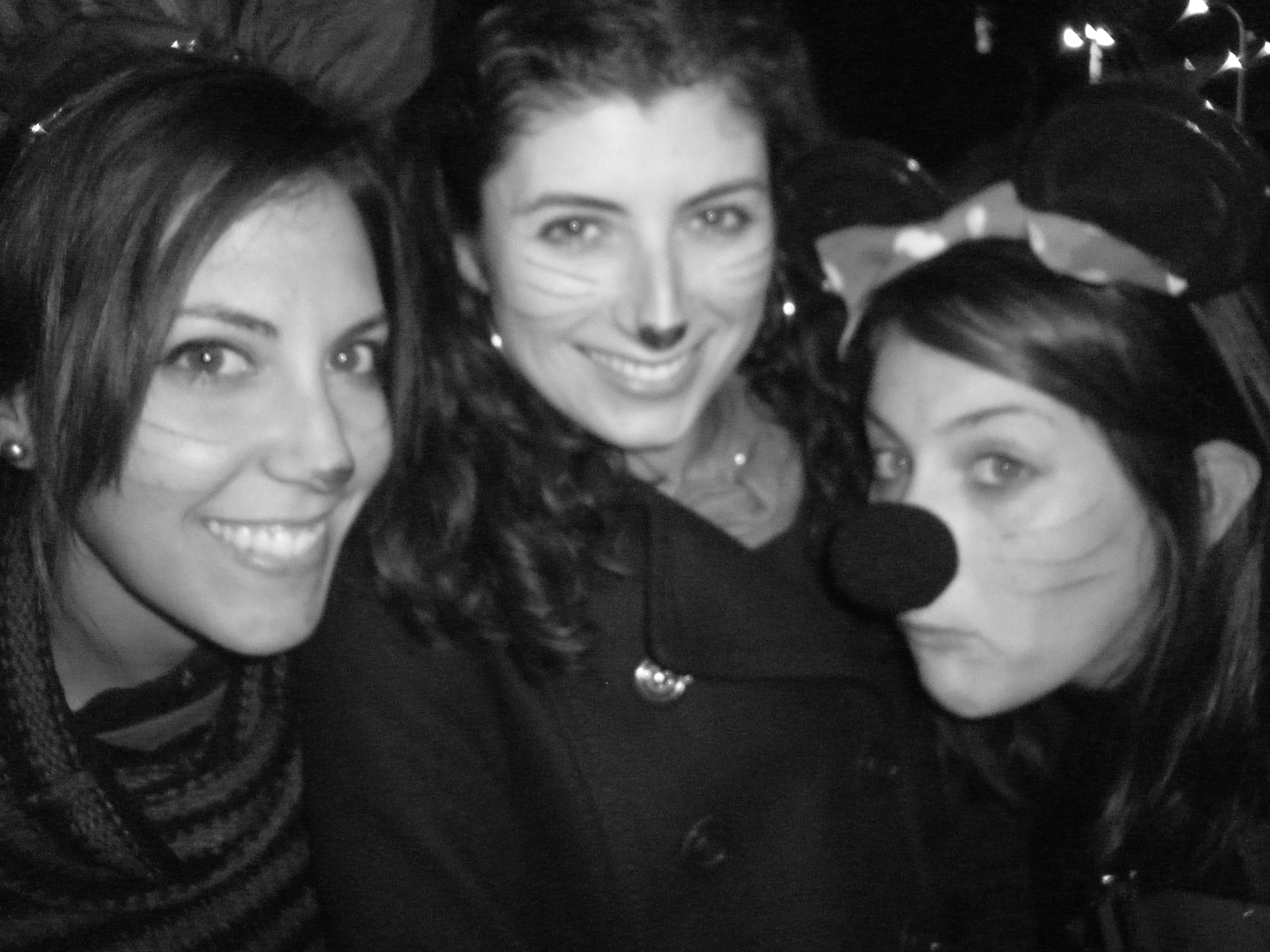
March came in like a león, as I spent a raucous night in Cádiz as a third-of the blind mice group at the annual Carnavales celebrations.

My first visitors of the year, Jason and Christine, spent a rainy sojourn in Sevilla,

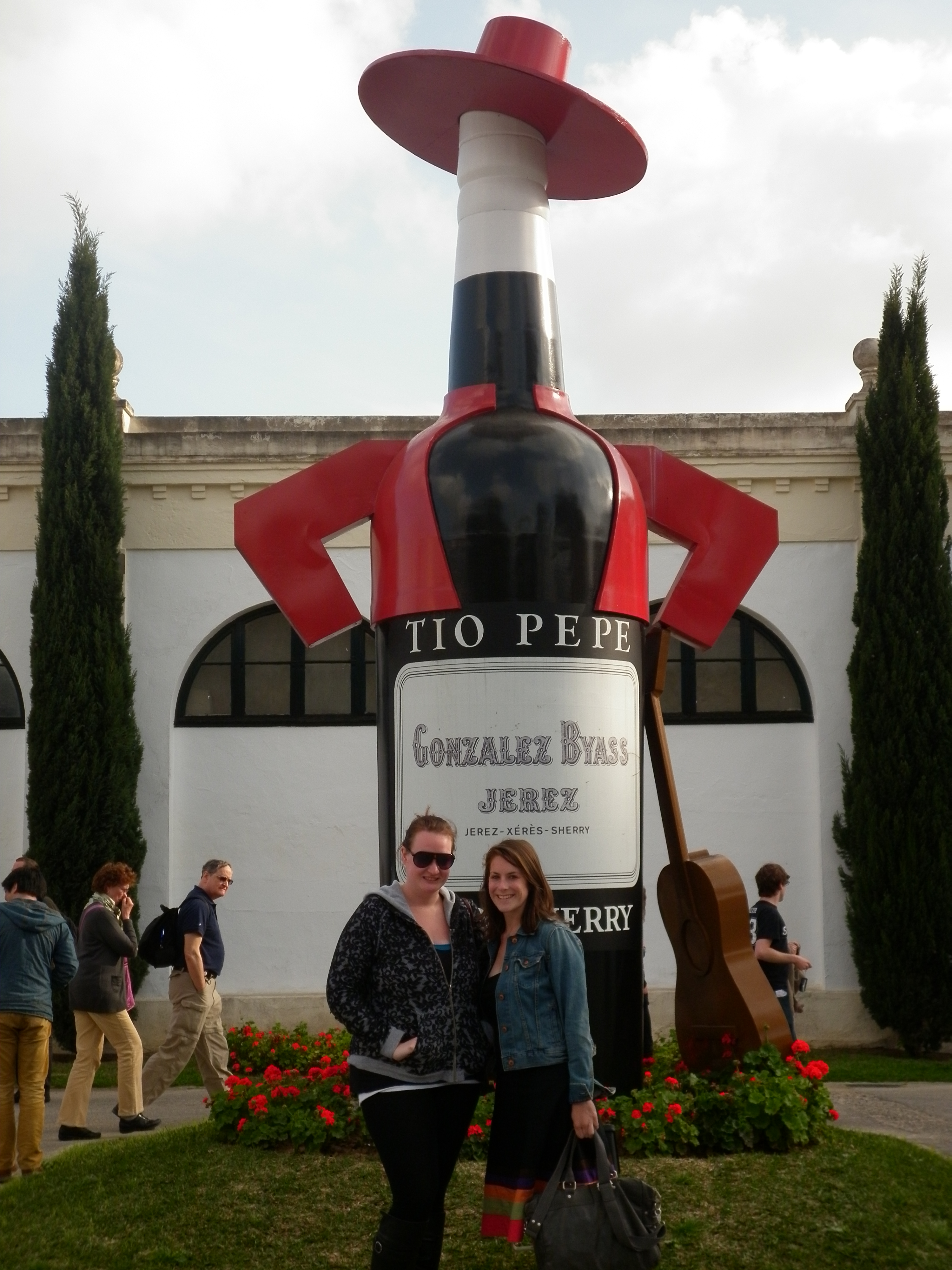
but then Beth came during the Azahar and warm weather, and we drank in Granada, Jeréz and Cádiz (and then I got strep).

April

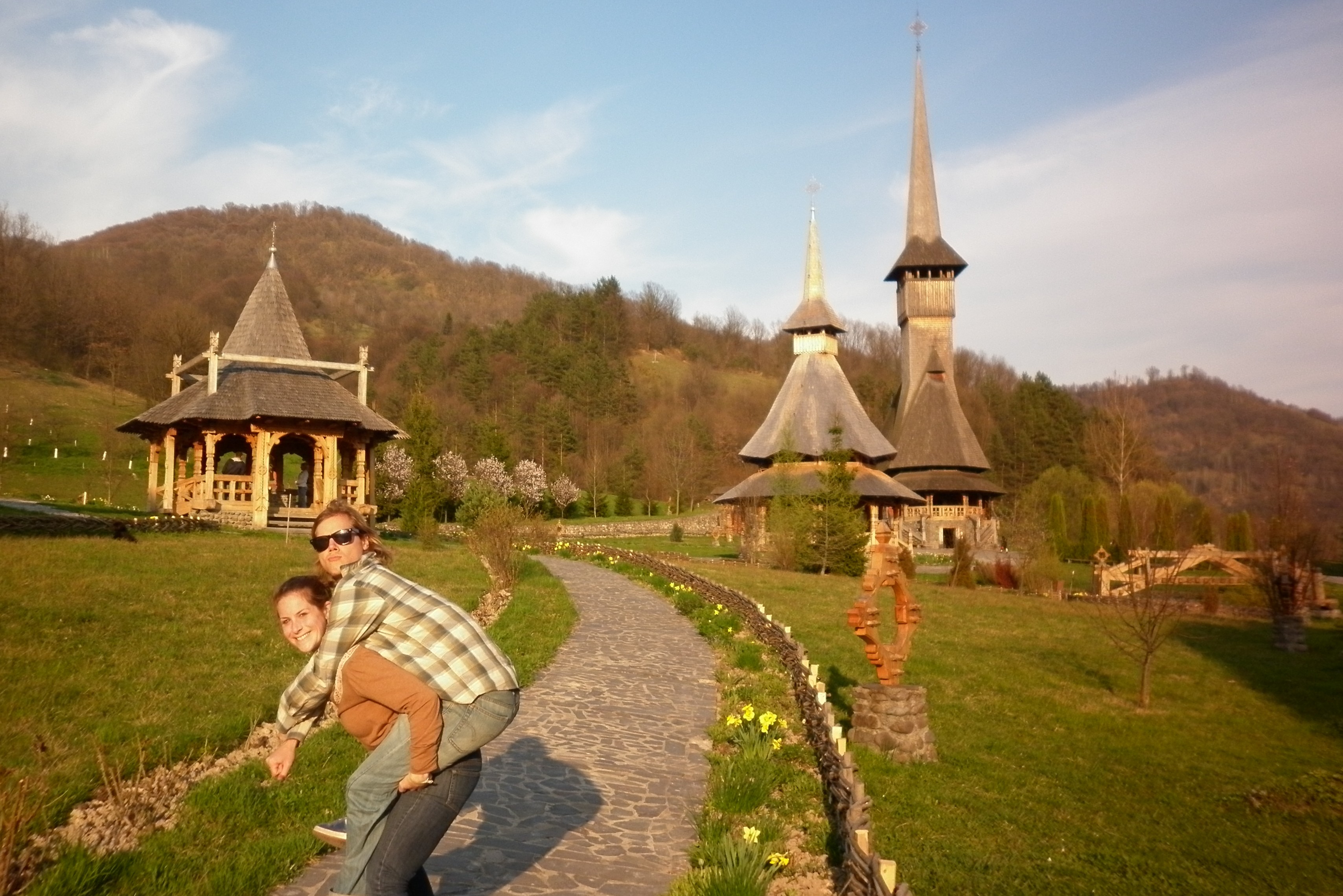
Ahh, a Sevillian primavera. I spent Easter Week in Romania with my camp buddies, driving a beat up Dacia from one forlorn corner of Romania to another. I loved it, and consider it a budget-lovers paradise – I spent in one week less than I did on my airfare! And ate a ton of pickles. I am like the Snooki of Spain when it comes to pickles.

May

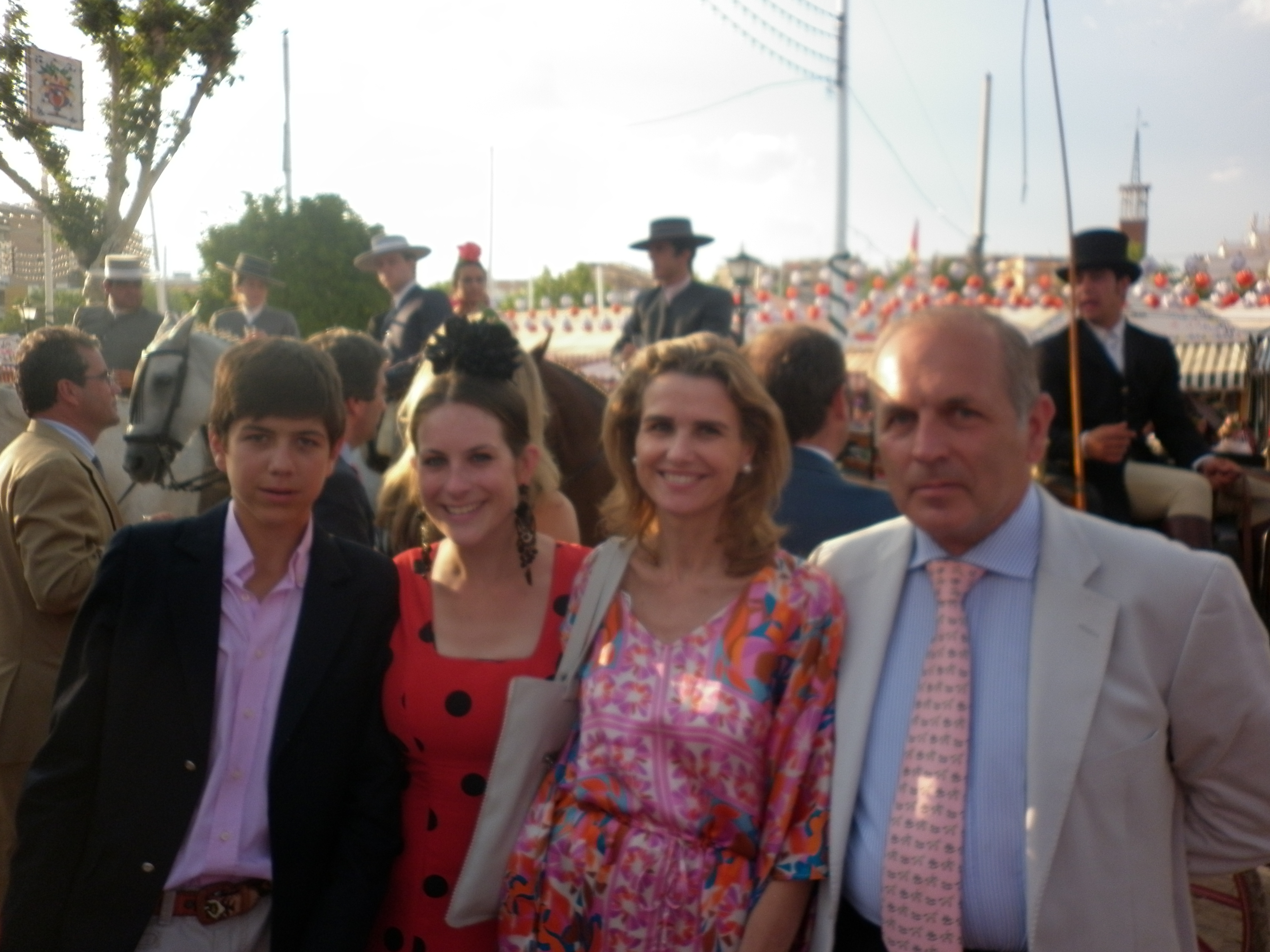
The first week of May brought flamenco dresses, sherry and my five-year win over Spanish bureaucracy during Feria week. I spent nine days riding in horse carriages and proving I have plenty of enchufe.

A few weeks later, Jackie and her brother came to visit, and we took off to Córdoba for another fair.

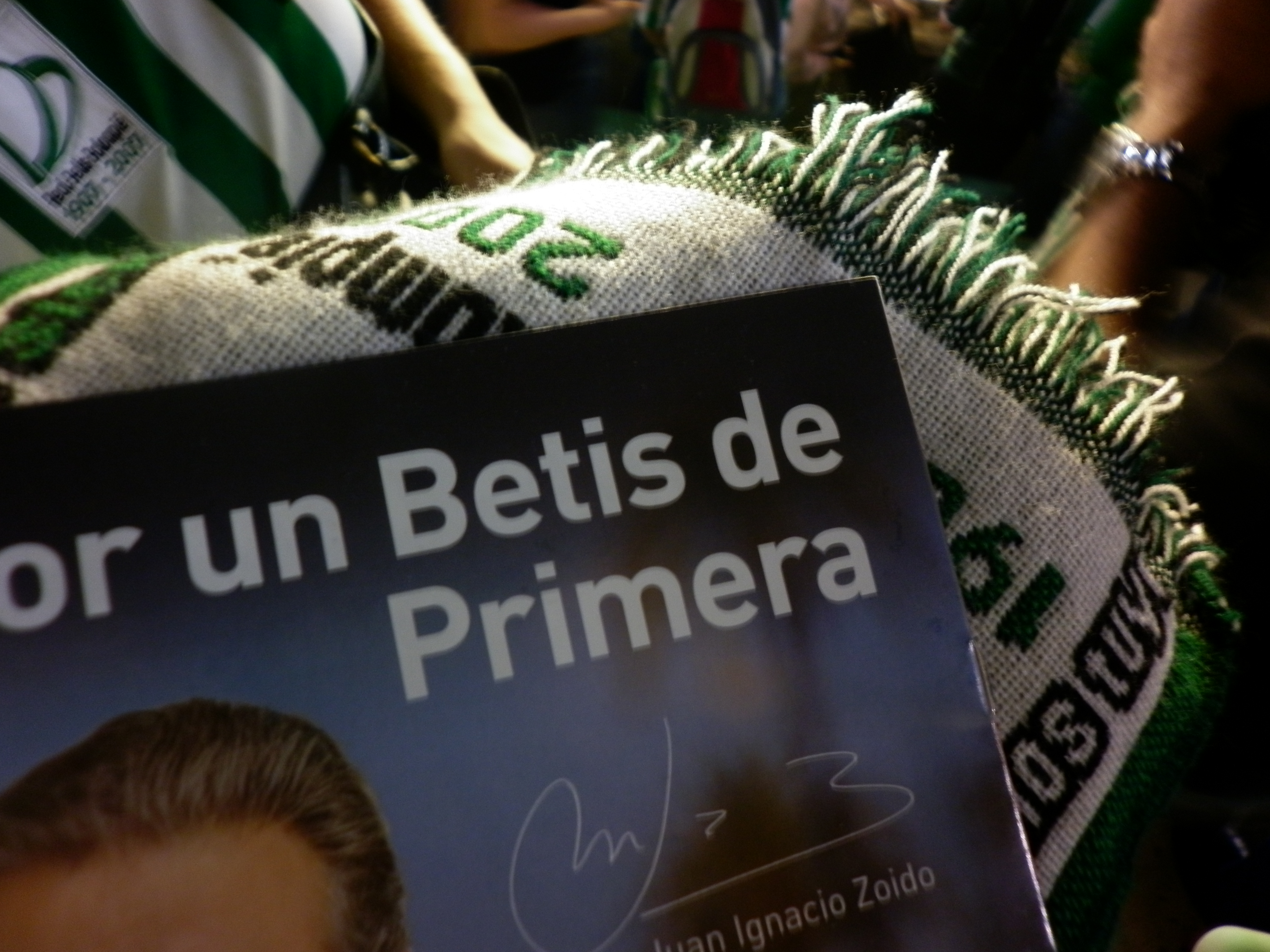
Also, Luna turned one, Betis worked its way back into the premiere league, and summer was just on the horizon.

June

Switched to half days at work just as it was impossible to take the heat. Got to watch Lauren walk down the aisle and party all night (only to fly to Madrid for a conference the next morning. I made it!). And I got my first real year of teaching done, too!

I may have, at time, been a professional baby handler, but having a peek into a kid’s world is something magical. Magical if you like boogers, of course.

July

The first of the month brought a huge triumph: I was finally given my five-year resident card and had won my battle with extranjería. For the third summer in a row, I headed up north to Galicia and to summer camp. Instead of teaching, I was given the role of Director of Studies, so I got a work phone and unlimited photocopies. Perks. Teachers got crap weather, but I a not-crap team (they were awesome.)

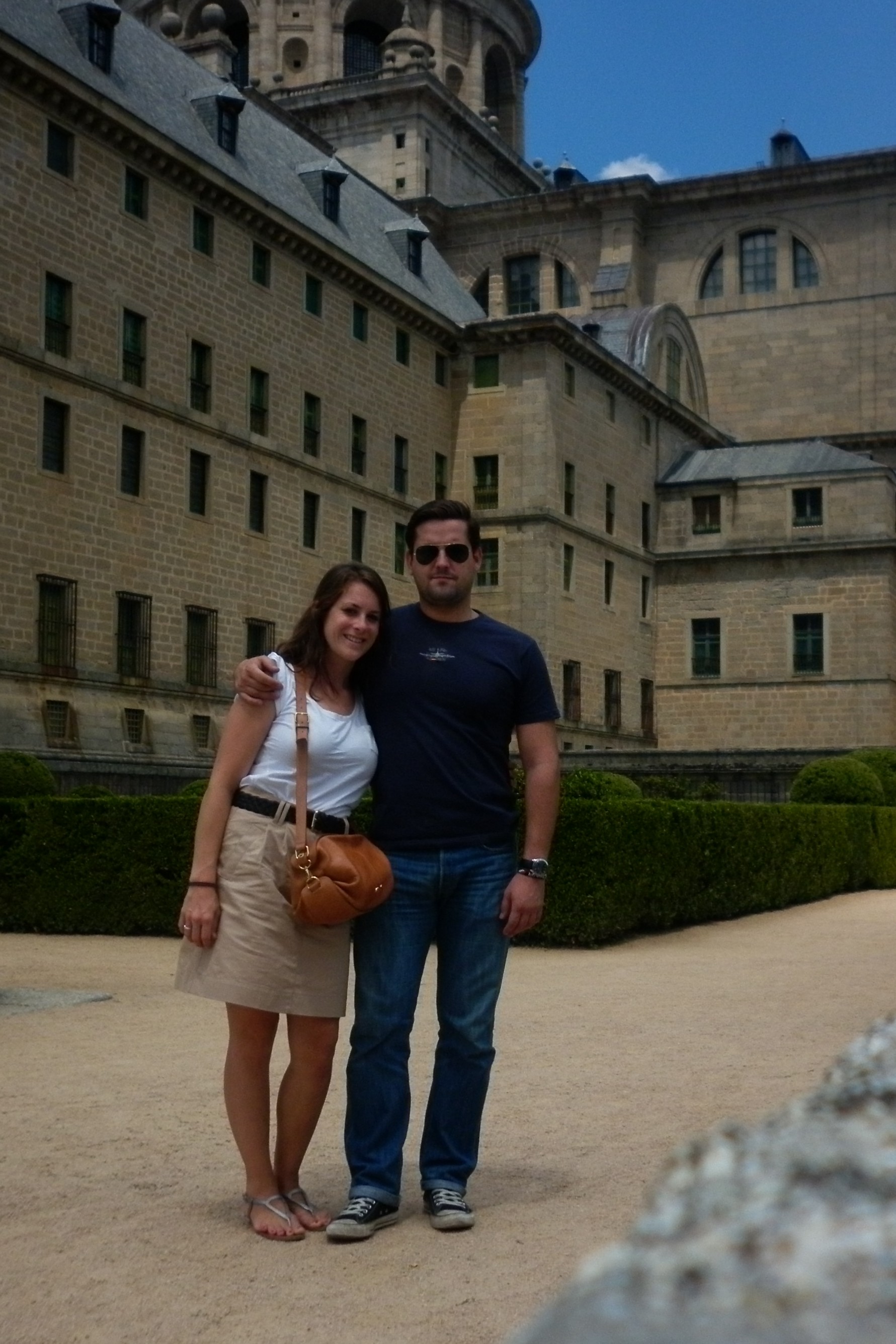
The Novio, finally back from pirate-hunting, met me in Madrid for a few days. We got the chance to, um, do what we do in Seville (eat tapas and drink beer) before making a day-trip to the sprawling El Escorial palace.

August

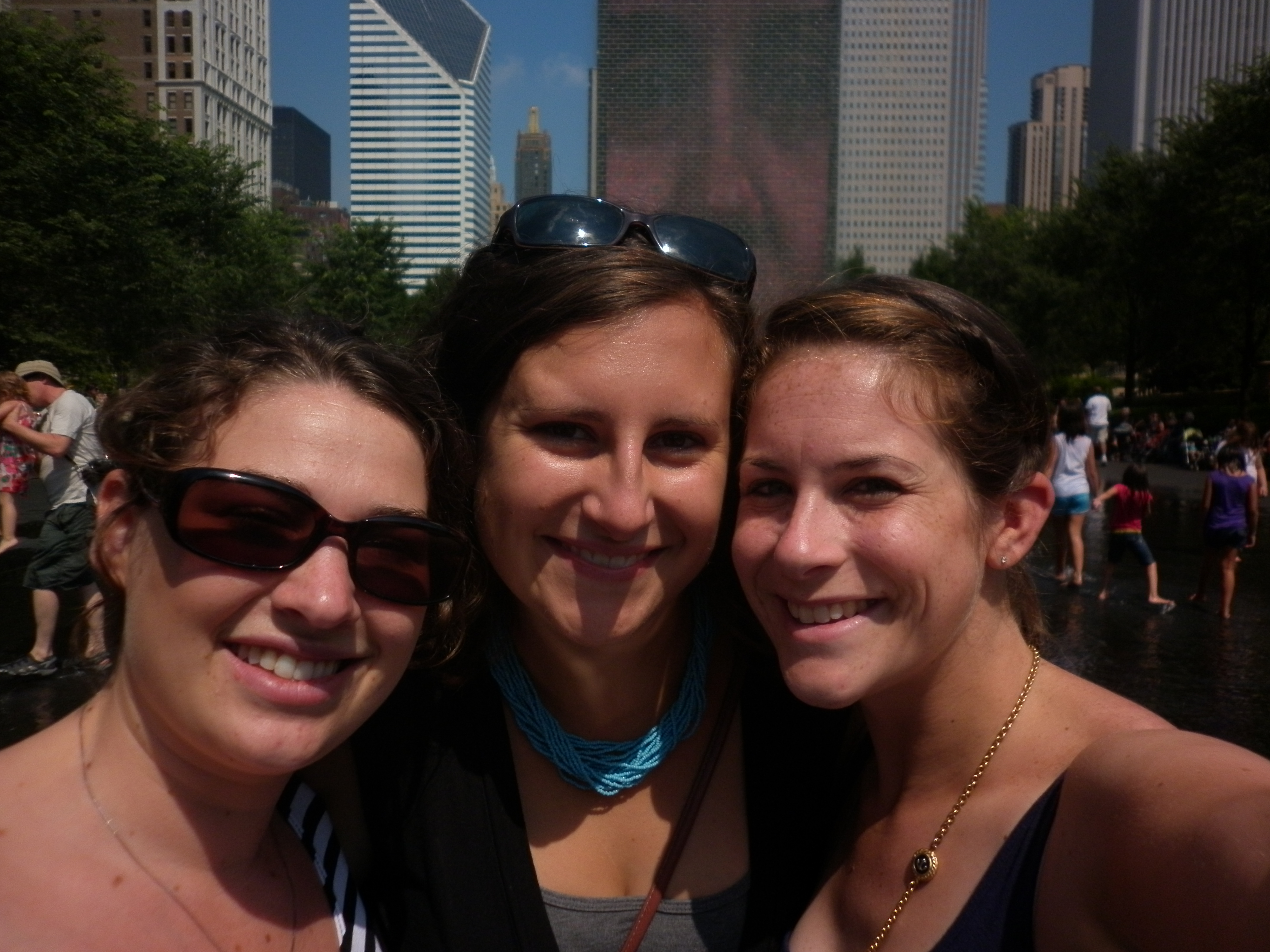
A is for August and America and fAtty, as I spent 23 days eating up all of my favorite American goodies, like real salads and Cheez-its. I had help celebrating a birthday, as my dear amigas from Spain, Meag and Bri, came to Chicago for a few days. I also got to visit Margaret in her New Kentucky Home.

What I thought would be a good little sojourn was much too short, and I boarded a Dublin-bound plane and stayed overnight on the Emerald Isle.

September

School started again September first, and my change to first grade resulted in more naps, more work and more responsibility. Thankfully, I had my great kiddos back in my (own!!!) classroom. Life resumed as normal.

October

Though I vowed to make my fifth year in Spain new (and I have been doing hiking trips, seeing theatre and exhibitions, etc.), I fell in to normal school routine. In October, this was punctuated by a work trip to Madrid for a conference, studying for the DELE and endless barbeques. When in Spainlandia, I suppose.

November

The new month meant cooler air, a focus on studying and a visit from my final visitor, Lisa. I sprinted out of the DELE to catch a train, meet her and take her to Granada. We laughed at all of our college memories and she broke out of her little mundo to try new foods and explore Seville on her own.

Bri came, so we had a small Thanksgiving dinner, and I shared it with my not-so-anxious-about-pie goodness at school.

December

Amid lots of school work and the looming Christmas play, I enjoyed the Christmas season in the city. Brilliant lights, snacking on chestnuts, window-shopping. The Novio went to the States for work, and I followed him soon after to travel around the Southwest with my parents and sister. The Valley of the Sun, Vegas and the Grand Canyon were on the itinerary, but the extra $640.55 I won on a slot machine win weren’t!

Sadly, the year ended on a sour note when I got news that the child I had repped during my years in Dance Marathon passed away after a long battle with cancer. I don’t want to preach, but you can visit the website to see what the Dance Marathon at the University of Iowa does for kids and their families who are battling cancer.

Goals for the next year? Plenty, both personal and professional. Just be better, I guess. The second part of the year has been a huge slump, so it’s time to find me again. Be a better partner, teacher, friend. Fill up those last two pages of my passport. Figure out where to go next.

I want you to share your biggest accomplishment and goals for 2011-2012! I need some inspiration, readers!

The Charca: Coming to Grips with a Life Abroad

Lisa is perched on the white mortar bench, manipulating her camera to get the best shot of the Alhambra. Al-i-Al-i-haaaambra, the Gaga fan sings to herself before turning the camera around to ask me to snap the cobalt blue clouds that hang low over her head and the majestic sight behind her. I smile at the friend I sometimes liken to a bobblehead – always cheery and pleasant – and shake my head in disbelief that she’s sitting two feet in front of me and across the valley from the most-visited site in Spain.

She, my dear high school friend and college drinking buddy (more times than we’d like to admit), was my fifth visitor to Seville this year. Between Beth, Jason and Christine, and Jackie, I’ve seen Cádiz, Córdoba, Jeréz, Granada and my own Sevilla through the eyes of long-time friends. There’s something odd about sharing your life in one country with someone you’ve lived the better part of your life with in another, a pressing need to cling to something familiar while demonstrate just how foreign you’ve become.

It goes back and forth with me, though.

Driving to the airport Thursday morning, Lisa recounts her busy 10 days ahead – plans for Bears games, her fiancé’s 30th birthday, family events and back-to-back Thanksgiving dinners upon landing.

“Oh, right!” I say, “Happy Día de Acción de Gracias!” and pull into the ramp marked Salidas, silently giving thanks that she could make the trip in the end, what with her eminent wedding and lack of wanderlust.

I go to work exhausted from two full weeks without so much as a respiro. Kat and I meet at the door to cart in six pies she’d ordered, two of which were pumpkin. I give the box to María, not wanting to be tempted to make off with it and call my parents from my cellphone to ask how their annual Christmas Tree shopping is going. Luckily, my picky niños saved me enough breakfast for the following day: tarta de calabaza, save a few small nibbles taking out by curious but cautious students.

More than ever, as my Spanish raíces grow firmer and deeper, it’s harder for me to completely uproot from America. I almost feel like I have a foot in each country, spanning the vast Atlantic Charca. Love my tortilla and jamón, but won’t turn down a hamburger. Can dance flamenco (lite, desde luego) and line dance. Miss my mommy, though I can’t complain at all about my suegra, either.

Last night I met Lindsay and Kelly for one last beer and nachos at Flaherty’s, a Sevilla institution I often choose not to go to for its overpriced Guinness and abundance of drunk guiris. But, come on, this place was MADE for us, and it closes its doors indefinitely today. We reflected on the times we’d drank more than la cuenta there, or watched a World Cup game, or met friends. A little piece of Angloism is dying here in Seville, I thought.

Then I hopped in a cab and directed the driver to my house. He was listening to a conservative radio program that was discussing American consumerism and Black Friday. Knowing full well I was foreign, he guffawed upon hearing that President Obama’s website had a deal on products available from the online store. Under his breath, he said, “You Americans are crazy.” I smiled to myself, happy to know we’re still as important to the rest of the world in the wake of economic crises, elections and FC Barcelona’s record.

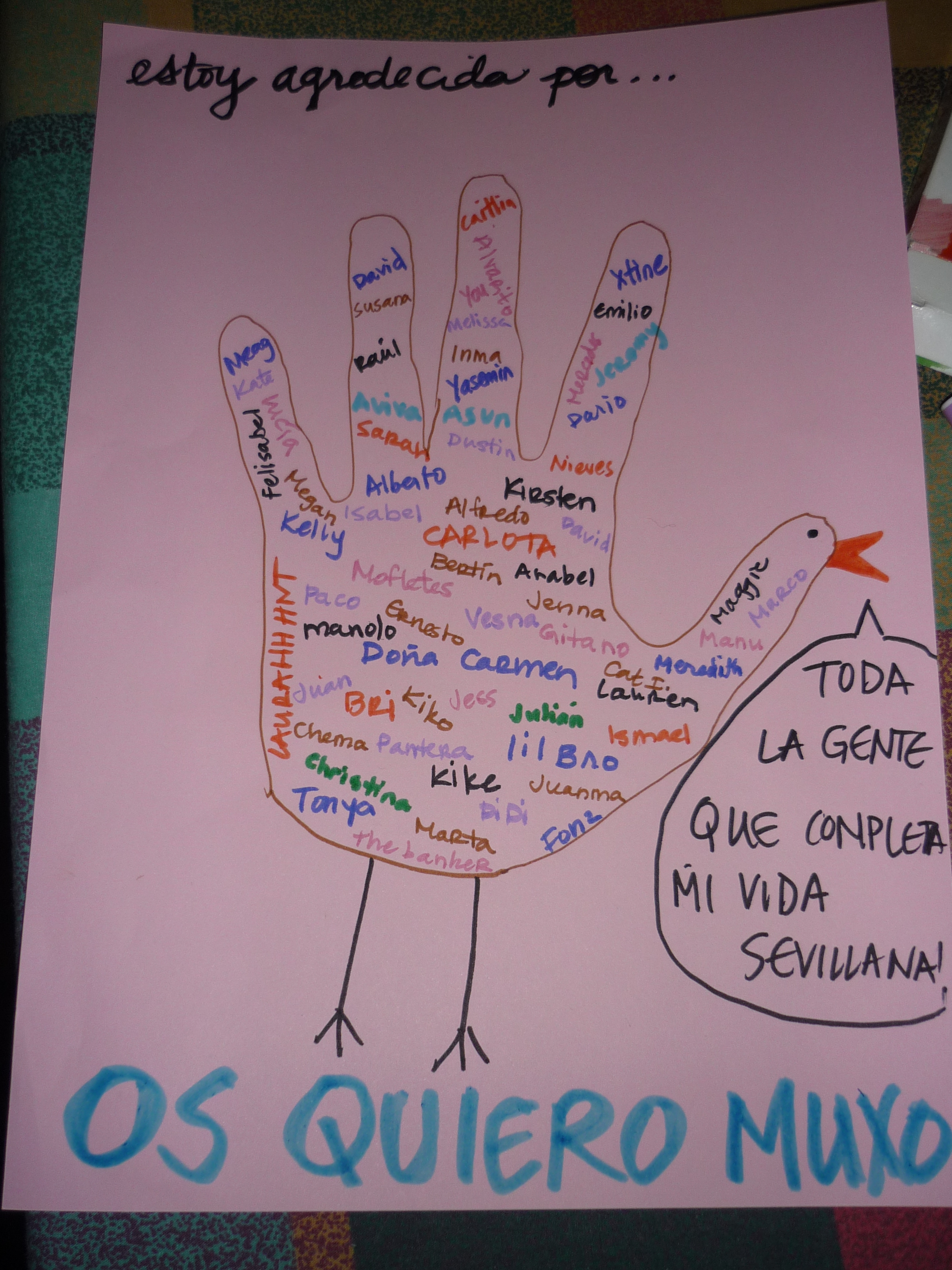
Today we’re celebrating Thanksgiving at Jenna’s house. She promises no turkey, apart from the ones we’ll make with our hands and hang on the wall. We did this two years ago in what will go down as the greatest Thanksgiving of all time – one full of non-Americans, spilling turkey gravy on made-from-scratch apple pies and more laughs than one should handle on all of that turkey. I remember writing the names of all of the special people in my life, with more Spanish Marías and Josés (and, clearly, José María) than American names. I feel thankful for the company of all of these amazing people who make handling the holidays a bit easier and are sure to bring Cruzcampo.

I can’t say I’m anything more than 100% American, despite having lived a good part of my life away from its borders and military bases. My native tongue, blue eyes and freckles define me as the opposite of mu’daquí , yet they don’t marginalize me. I even told the tribunal and examiner at the DELE speaking exam that famous story about Chicago de la Frontera.

Sometimes Hayley and I talk about how boring our lives have gotten, now that we’ve settled into our Spanish lives with a sprinkle of American holidays and outings. Over beers in la Encarnación last week, she confessed that she no longer feels interesting.

But we’ve chosen this life, I suppose, to not be entirely in one country or another, but rather straddling two cultures. I don’t know, it could be worse. I kind of like it.

…eres mi rincón favorito de Madrid.

If I were Spain, what city would I be?

I’d need to be at least big enough for an airport since I love to pack my bags and go. Have an eclectic mix of old and new, as well as domestic and foreign. I’m deathly pale, so beaches won’t really be necessary (Bye, bye Valencia and Barcelona and Málaga). A city in which graffiti is practically patrimonio de la humanidad, but monuments are revered and protected.

I wouldn’t be stuffy Seville, my Spanish pueblo natal, so to speak. I think Madrid – its bustle, its nitty-gritty neighborhoods, its hidden gems – would be my city doppelgänger, although we haven’t always been fans of one another. In fact, I can’t even see myself living in Spain’s capital (and, let’s face it, I would die without 1€ beers).

Madrid lies just two hours southwest of Valladolid, the city I learned castellano and how to sleep a siesta in. During the five-week program, our quirky director Denise (más bien, Denissshhh with her ceceo) took us first to Segovia to take in the devil’s aqueduct, to Salamanca to betake the oldest university in Spain which still retains its college town vibe, to Donostia for snacking on pintxos. I had to wait four weekends before day-trippin’ to Madrid, capital city and hub of Spanish life. Like Shakira’s hit song that summer, una tortura.

Madrid lived humbly in its early days as a shepherd’s village in the geographic belly button of Spain. Since then, a power struggle between two royal families, the Bourbons and the Haspburgs (yes, like in Austria) built the city into a thriving metropolis, home to the Spanish parliament, the largest population in Iberia and plenty of foreigners.

My trip to Madrid was supposed to be full of art at the Prado and Reina Sofía, strolls in the Parque del Retiro and cochinillo. Instead, I got a hurried tour through two important art collections, creepy Teletubbies in the park and a fried squid sandwich. Madrid was not for me.

In the 15 or so subsequent trips I’ve taken to Madrid, the most recent being this last weekend, I’ve come to appreciate its beauty in uniform buildings, wide avenues and attention to every walk of life.

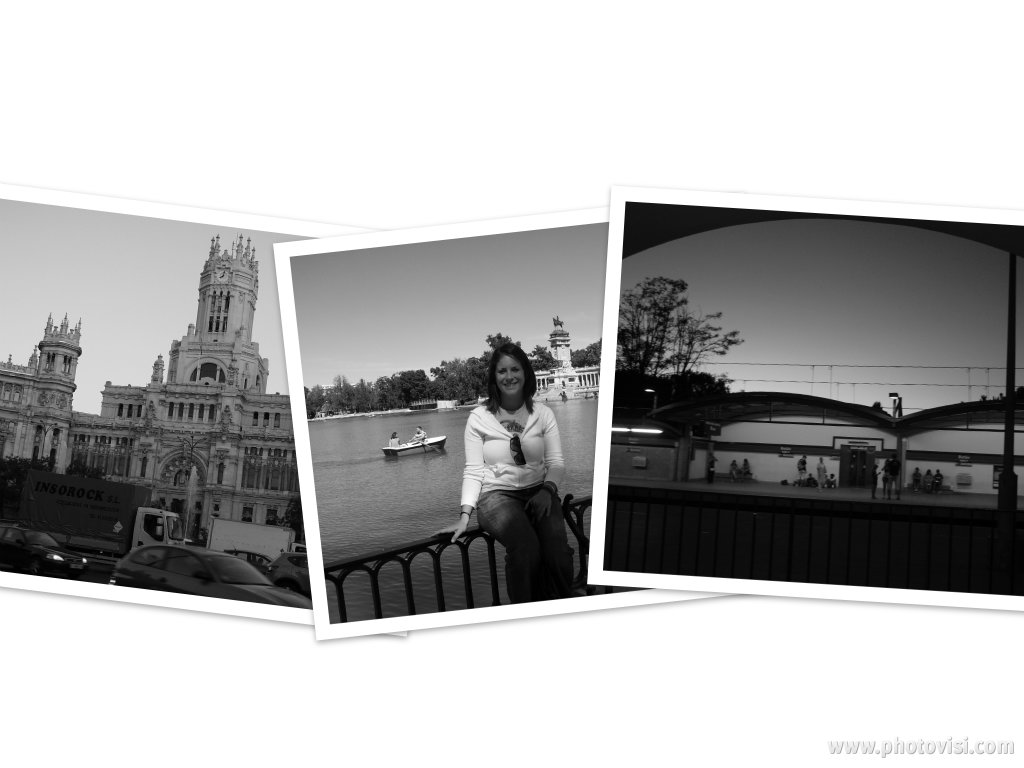
Certainly, I could sit for hours at the Estanque in Retiro and watch couples aimlessly row heavy boats back and forth in their alloted 45-minutes. Reina Sofía would be like window shopping for me, dando un capricho as I pay the steep admission to take in quirky and important pieces of artwork. Sol, the starting point to all major, national highways in Spain would become my ground zero for exploring the central neighborhoods full of immigrants. If I lived in Madrid, I would botellón at Templo del Debod and have churros at San Gines in the early morning hours. I light up when seeing Cibeles atop her lion-driven chariot and can trace the metro stops on the light blue and light green lines.

Mis rincones favoritos de Madrid…Cibeles, Retiro and the Metro

I love stumbling upon cupcake shops and Indian places along the funky Calle Huertas. Adore the wrought iron balconies facing centuries-old facades of governmental palaces. The strange mix of bus, taxi and pedestrian traffic. The noise. That Gran Via is as close as I’ve been to NYC. I love that boutiques abound around Fuencarral, and that the bartender at Kike’s childhood hangout in Malaseña gives me free anchovies with each beer, even if I don’t eat them. And nobody judges me when I dip into a Starbucks or Dunkin Donuts for coffee, nor when I stare at the “lady friends” on C/Montera.

Madrid isn’t a place I see myself living in anytime soon, but, like a moth to a flame, I love visiting. Case in point: Last Thursday, eager for some restaurant recommendations, I asked friends to suggest a good ethnic food place. Not only was the food amazing, but ten of my madriles came to enjoy it with me. Madrid, for as big and boisterous, gritty and glamorous as it is, always welcomes me with open arms, overpriced drinks and an endless agenda of things to do.

Have you visited Madrid? What impressed you – or didn’t – about the city? Any must sees (I’ve done most) or must-try restaurants? Do you feel this way about a place you’ve never lived in, but have traveled to frequently?

Related Posts Plugin for WordPress, Blogger...