Agua, Azucarillos y Aguardiente: A Night at the Zarzuela

Remember that time I told myself to take Frances Mayes’s advice and make Spain new again? I’m really trying. Honest. I mean, what could get more new than a fresh coat of “pijo” white paint on our walls after the bug infestation? And a new grade at school?

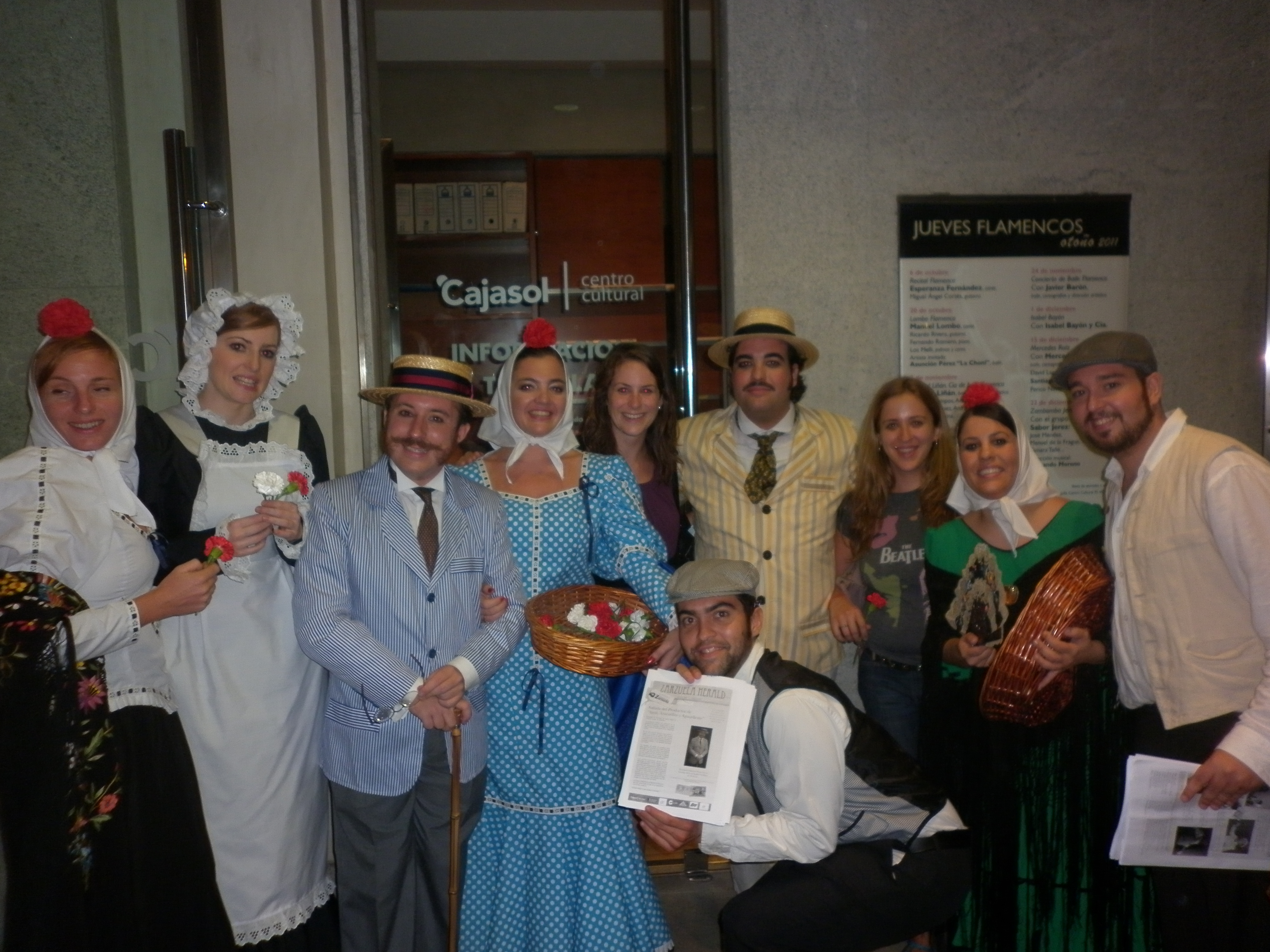
Friday rolled around again, and instead of the normal school-nap-beer routine, I substituted hops for hoops – hooped skirts, that is. My friend Inma belongs to the Compañía Sevilla de Zarzuela, a sort of traveling singing group, and invited me to an encore performance of their popular Agua, Azucarillos y Aguardiente performance.

I’d heard of zarzuela, an art form made popular in Madrid in the mid 19th Century. Truth be told, I was sitting on the beach of Las Rodas on the Atlantic isle of the Isla Ciès in August 2010, laying on my stomach on white sand. My weathered old copy of Iberia, a Michener classic with reed-thin and yellowed pages lay open on my towel. I thumbed through the colossal book’s 800 pages, stopping at a black and white photo of women dressed in an old-fashioned type of dress resembling a traje de flamenco with puffy sleeves and carnations perched atop a simple white bonnet. Quickly flipping to the beginning of the novel, where Michener describes his first days on the Iberian Penninsula, I worked my way halfway through the book before lending it to a student who went to Los Angeles for three month, never arriving to the latter chapters on Madrid. Andrés, bring back my book in one piece, please!!

Agua, Azucarillos y Aguardiente is the story of a much-smitten Asia and her mother, who have come to Madrid from Valdepatatas, a forlon town with no real inspiration for the young poet from her looks of total distress when her mother suggests they move back there to relieve some debts. When the casero comes knocking for his rent money, rollers-and-housedress-clad Mamá scrambles, saying her lovesick daughter’s rich boyfriend will lend them the money.
Zarzuela surged in the latter half of the 18th century as a folly directed towards social commentary, a way to entertain the masses before the onslaught of TV and Internet by way of poking fun of plitics, current events and the vida cotidiana, daily life. Bu using exaggerations and larger-than-life characters mixed with influences of Italian opera, a new genre was born. Zarzuelas are often an eclectic mixture of song, spoken dialogue and humor.

When Asia and her mother, who has never met the rich Serafín, set out to ask him for money, they find themselves in the Recoletos park in a beautiful and wealthy area of Madrid. Here Pepa, the wisecracking barmaid, and her husband Lorenzo are having a discussion about money that Serfín has promised them on the day before the Feast of San Lorenzo. Pepa is protagonized as a larger woman who gives her husband a bit of tough love, and their height difference in the Sevilla troupe was hilariously perfect. Pepa is soon confronted by Manuela, a lovely barmaid who also sells water and aguardiente to the patrons of Recoletos. As it turns out, Manuela is the new girlfriend of Pepa’s old flame. The two women bicker about who has the right to be selling drinks in that square of Recoletos before Asia and her mother show up to wait for Serafín. As Don Alquilino, the landlord, realizes, the 100 pesetas circulating between the hands of the cast of characters is, in fact, Serafín’s, and he is using his status as the son of an ex-minister to puff up his status. Towards the end of the night, the fighting barmaids and their men celebrate the Feast of San Lorenzo and Serafín appears, realizing he has been swindled of both wallet and pants.
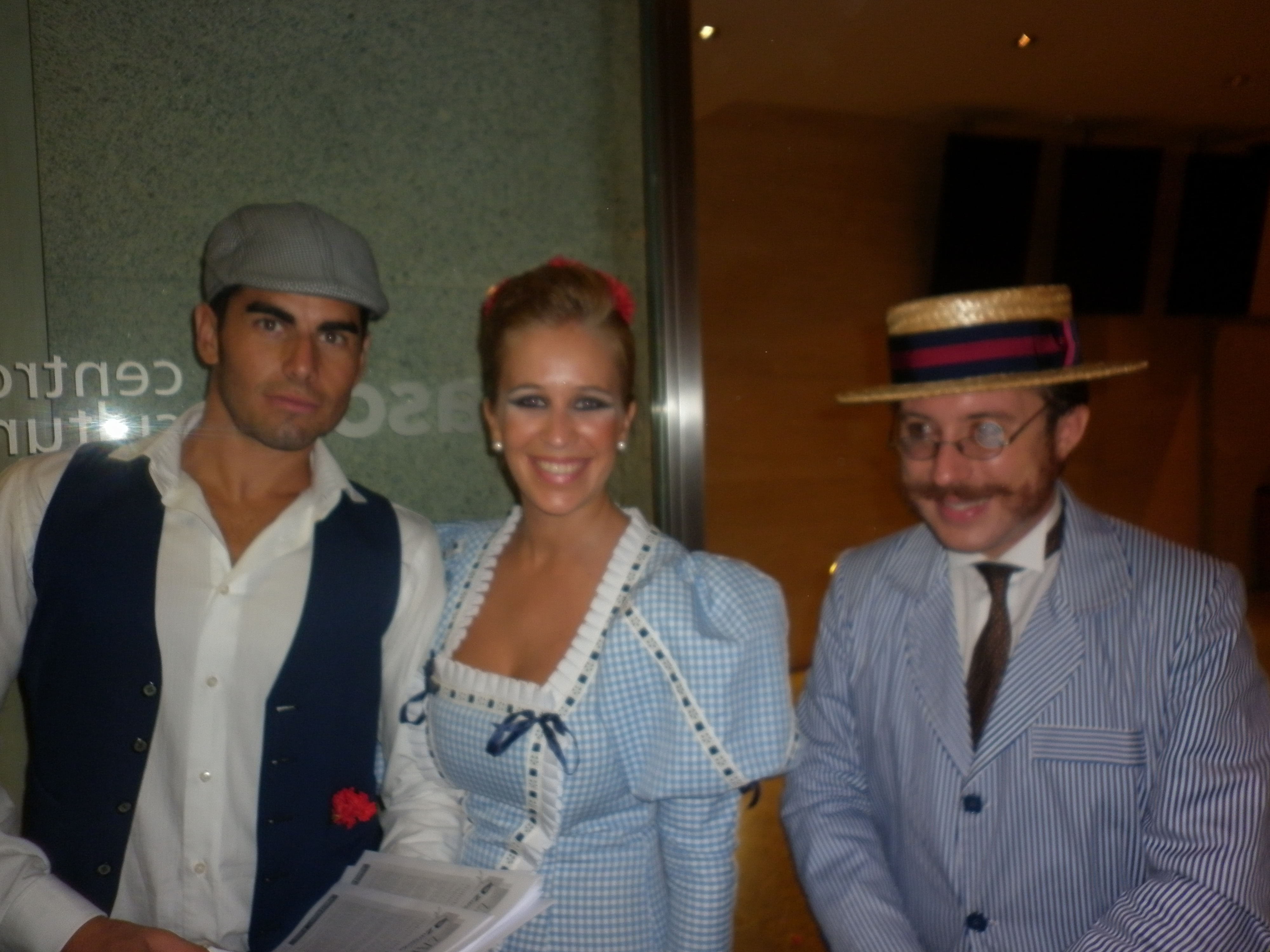
It was clear that the play takes place in turn-of-the-century Madrid for its mentions of Recoletos, Colón, Paseo de la Castellana, but for being a present-day sevillano production, there was mention ofthe liderazgo of Seville football team Betis in the BBVA league, of the crisis, and of sevillano speak (mi arma, duh). For being something composed in the last years of the 19th Century, the humor added to serious subjects allowed for the company to sing their way into the hearts of a packed house in Joaquín Turina. The cast was brought onstage for two encores, voices as big as the puffy sleeves on the women.

For doing something new, my faith is renewed in looking for new things to do in the Hispalense. I’ve dabbled in flamenco and done my obligatory bullfight, but I feel like I’ve only scratched the surface of cultural offerings in Sevilla. The offering of humor and poking at social issues reminded me of my 18th birthday, when I took a few friends to Chicago to see a Second City performance. As the improv show was sold out, we chose the smaller stage for a show called “Pants on Fire,” a hilarious take on the Iraq War. I was practically on the floor laughing as my friends stared, dumbfounded (I have been reading the newspaper since I was barely old enough to do more than understand the comics). I sometimes feel like I live in a expat Seville bublble, far away from the economic crisis and the social reforms taking place.

All I needed was a little joke, and maybe an aguardiente, to put me back in my place.

Have you got anything I should do or see in Seville that’s not on my bucketlist? Or other ideas for the bigger cities? Have you heard of zarzuela? Are there popular artforms that are characteristic of your region or country?

On Spanish Tacos and Balls.

Ah, Spain. Land of bullfighters, flamenco, tapas and tacos.

Wait, no. That’s Mexico. Four years later, my friends do ask me, “How delicious are the tacos in Spain? I bet you don’t want to eat any when you’re home.”

Quite the opposite, amigos. To a Spaniard, edible tacos are much too spicy, and tacos to a Spaniard is a generic word for swear word, meaning the same as palabrota. A Spaniard’s favorite taco? I mean, joder and mierda more than get their due, but in the South, cojones reigns supreme.

It makes sense, when you think about it. I remember when I went to the hallowed ground at Pompeii and was initially shocked with the remains of a woman trying to crawl away from the lava, only to be preserved for camera-happy tourists by being swallowed up by ash. Then, on our free hour to explore, I noticed strange symbols on streets and buildings: a phallic symbol. Come on, we’re in the Mediterranean, and everyone knows that machismo is alive and well here.

That’s right, cojones is best translated as balls.

I’ve gotten an exercise in the language this weekend at the Novio and I have been painting our 42 square meter casa (and here is your special mention, corazón). From the extreme temperatures to the falling plaster work, the word cojones has converted itself into the taco del día, the swear word of choice.

I once read a book that talked about the meaning of the word, which claimed that in older ages, having cojones was another way to say one was courageous. I am exposed to the Spanish language the majority of my day, and I’ve heard that expression infrequently. The cojones I’m talking about conjure disgust, exasperation and good old anatomy.

Estar hasta los cojones – to be sick of something

Literally meaning to be sick of something, cojones can be replaced with el mono (bun), la polla, narices, or any other body part. Since it’s got the use of a taco, it’s typically for anything severe. For example, Estaba hasta los cojones de sus tonterías might mean, He was sick of her silly games. Likewise, Estoy hasta el moño con este trabajo, is a more polite way of saying you’re f-ing sick of your job.

Tocar los cojones – to annoy, to be annoyed

This is the Novio’s favorite, and it’s often said to me! Tocar los cojones (pelotas, polla, huevos) is meant to express being bothered by something. Generally, it’s used in the negative command form, or in the positive present simple form. My nov loves to tell me, No me toques los cojones, or don’t bother me/stop doing that/you’re being annoying, go away. In the simple form, however, it states a fact and that something annoys you on a regular basis. Repasar este puto blog me toca los cojones. Proofreading this blog annoys me (hence the many mistakes).

Por cierto, tocarse los cojones, a reflexive play on the phrase, means to just be all-out lazy. What did you do today, Cat? Pues, me he tocado los huevos (though I did write this blog!) Thanks, Buckley, Jose and Juanjo for the clarification!

Mandar cojones (huevos) – what a pain, geez

This is the newest palabra acojonuda that I’ve learned, and it’s usually employed as an interjection to express surprise. For example. Your annoying neighbor leaves his fish-ridden garbage outside your door overnight and the smell has wafted into your house. That is something that manda cojones. Or you read that the Bolsa has dropped yet again and that those clowns in the parliament still have no idea how to stop it? Well they sure do mandar cojones, right? More than anything, it’s just used as it is: Manda cojones.

Sudarse los cojones – to not matter

If I ask the Novio what he’d like to eat for lunch, he sometimes answers me, a bit annoyingly, Me suda los cojones, which literally means, it makes my balls sweat. Más bien, it translates to I don’t care or it doesn’t matter. I’ve used it to tell someone to do whatever he feels like (also an eloquent, haz los que te salga de la polla, look that one up).

De los cojones – stupid (as an adjective of emphasis)

If something is bothering you, it’s athonishingly simple to add “de los cojones” to emphasize your point, such as, este calor de los cojones, this f-ing heat. It can also be used in a much more severe way, but my neighbors read this blog!

As I write this blog, Kike has started preparing his lunch. He’s bought huevas, the so-called manjar de dioses, or Gods’s treat. I was once with a vegetarian friend in the Corte Inglés supermarket when she inquired as to what exactly they were. The fish monger simply took the orangey and veiny fish part and stuck them up under a headless fish. That’s about as close to cojones as fish have got, I guess.

Any other good ones to share, Hispanophiles? Write me in the comments. This will all be useful to me when I take the DELE in a few months!

Make It New

The latest book to embed itself into memory is the delectable Every Day in Tuscany: Seasons of Italian Life by Frances Mayes. I adored it, as I love Mayes’s affection towards food, off-kilter flow and reflections on the joys of living abroad. I can relate, too.

Towards the end of her book and the end of her 20 years visiting the whimsical, dilapidated Bramasole, Mayes conjures the wisdom of Ezra Pound as she packs up to return to America for a few months: Make it new.

This afternoon, I’m returning to Spain for the fifth year. My life last year, I hate to admit, became a bit mundane. Waking up at the same time, ordering coffee from the same bar and even the same class structure became an imaginary prison, punctuated by a few trips to new places. Not proud of the lack of progress last year (except in the Spanish resident department), so I’m vowing to heed Mayes’ and Ezra’s advice and Make it New this year.

I had a great trip in America, visiting with friends new and old, eating my comfort foods and not caring for once where it sits on my waistline, roadtripping to Kentucky to prove that my sister really is more grown-up than me. I’m actually not ready to go back to Seville, just yet.

I mean, really, who could with a face like this begging you not to?

How to Survive The Foreigner’s Office

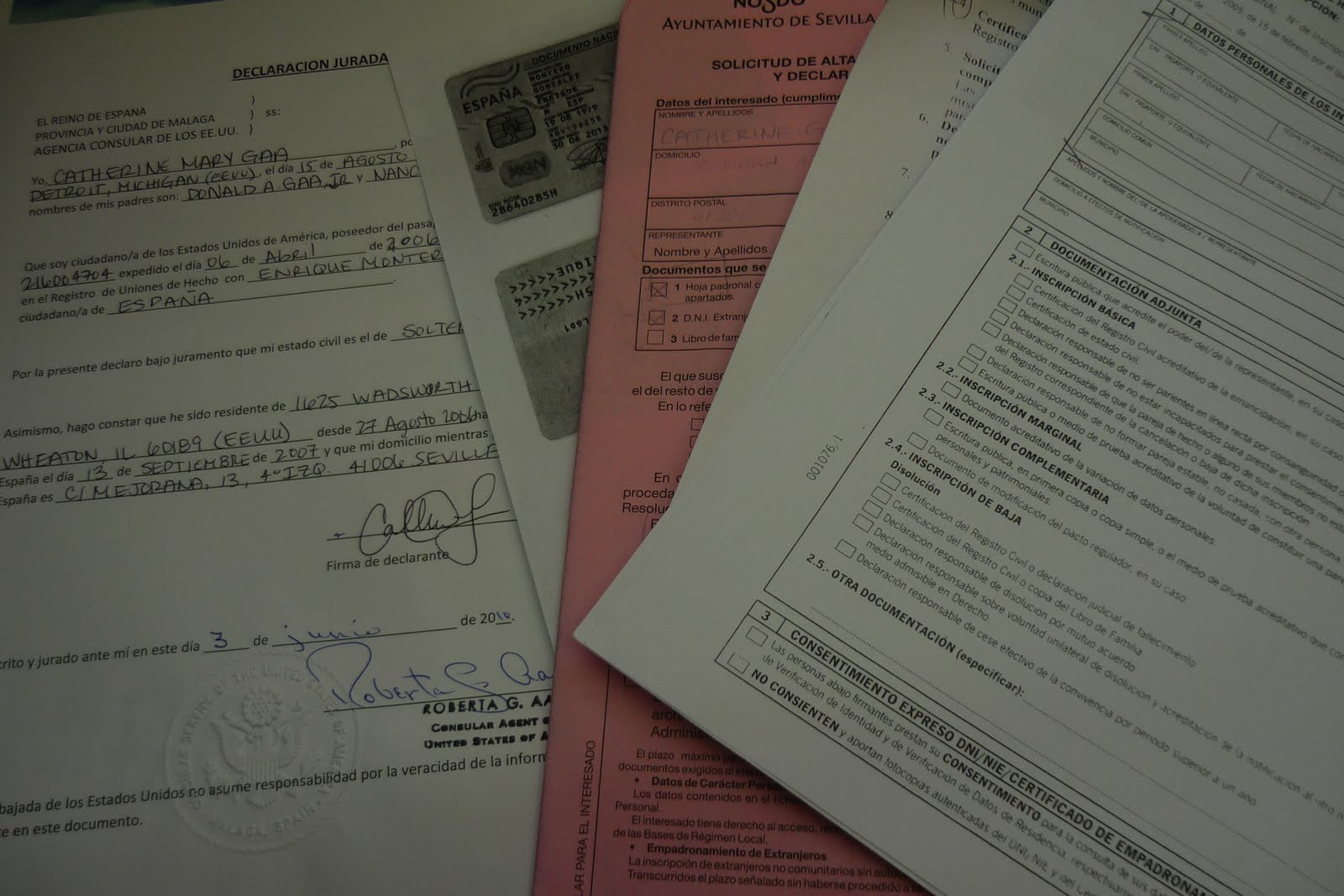
Author’s Note: This post seemed fitting today, considering my first experience with the dreaded papeleo started on July 3rd, 2007, when I applied for my student visa to come to Spain. Likewise, I just picked up my five-year residence card on Friday.

On my first trip to Sevilla, six years ago nearly to the day, I was breathless at the site of the half-moon, colonnaded Plaza de España, nestled just out of the historic center and at the helm of the plush María Luisa Park. The Triana tiles gleamed in the early July sunlight as I sat writing on a bench in the mural depicting Valladolid, a city I had just moved away from. I brought my travel partner, Catherine, the very next day. While not as bowled over as I, she did know that it was the fictional Planet Naboo of Star Wars fame.

Two years in the future, I was applying for a visa at the Chicago consulate. The deal was that Spain put a shiny visa on an entire page of my passport in exchange for 90 days in the land of toros and tapas. From there, I would need to go to local police and present a mountain of paperwork claiming I had a salary and health insurance. Seemed easy to present a few pieces of paper and stand in line.

Think again – what ensued has been a very ugly battle between me and the central immigration offices of Andalucía, a little bit of trickery (ok, flat-out lying) and finally securing a five-year residency card after thirteen months of appointments, photocopies and a lawyer.

Estés dónde estés, here’s a few tips to make your trip to Extranjeros a little more smooth:

Brush up on your vocabulary
The people who work in the oficina de extranjeros are called funcionarios. Spain, like Italy, has a high number of civil servants, and those Spaniards wishing to have job security and work short hours take an exam called an oposición to be able to be one. If selected, they are entitled to have breakfast at the precise hour you arrive to the front of the line. You’ll need to turn in all your papeleo, paperwork, to these people, so follow the advice below, too.

At the office, you’ll need to queue up and get a ticket. When your letter and number is called, you turn in your documents and receive a snobby-ass look and the word that you’ll come back for your fingerprints – your huellas, in addition to paying a tax and presenting two or three recent photos. Note that in Spain, these foto carne are much smaller than their American counterparts. After that appointment, you’ll have to wait 45 days to pick up your plastic card, and chat up a security guard to let you cut. I learned that two prorrogas in.

Know what you need to bring, and bring photocopies
Tres fotos carné? Form EX-##? Best to do your research, as every official act performed in the office has a different set of requisites. For pareja de hecho, for example, I had to present a certificate stating I wasn’t already married, signed and stamped by an official US Notary. Not necessary for an extension on your student visa. Speak to your consulate or embassy, download the forms to turn in here, ask about tasas, or fees, and bring a few small pictures. That said, made at least two photocopies of each document and have anything notarized if it’s a copy to turn in. Believe me, this will save you headaches, as this woman can tell you. Got a stapler? Toss that in your bag, just in case.

Dress appropriately, and bring a Spaniard along if you can
Showing up and looking nice can really make a difference, especially here in Sevilla, where appearances are everything. I have been in a skirt when everyone else is in flipflops and board shorts, but am generally greeted with a smile and a willing attitude.

Likewise for bringing a Spanish friend. My dear amiga Kelly told me this as she was applying for a work visa last year. She swears that having her saint of a boyfriend along meant more efficiency and no Sevillana stink face. If you’ve got a willing friend, invite them to a coffee in exchange for a few hours of quality time with you (And by quality time I mean you pulling out your hair time).

Go at the right time
Officially, winter hours in the office are like a banker’s: 9-5. In the summer, don’t expect the office to be open past 2. I remember my first trip to the office in October of 2007, clutching a paper folder with all of my documents. I left my house barely at 6am, arriving to stand at the end of a very, very long queue. At 8am, you can get your number, but our dear friends the fucnionarios won’t roll in until after 9. For this reason, I tend to show up either right at 9am, or after everyone has had their breakfast rotation at 11.30. It’s also advisable to go after 1 p.m., as the wait times are generally shorter. Note that some tasks have only a certain number of tickets assigned each day, so if you’re merely renewing a student visa, go whenever te da la gana. If it’s something like asking for your marriage book, the earlier, the better.

Be patient
Chances are you’ll be sent to multiple offices, to numerous people. The rules for every type of trámite are complex and must be followed precisely. Use message boards, other expats from your countries and the consulate to be as prepared as possible before you go, and realize there will be lines to wait in, documents missing, frustrations to be had. But, really, it all works out. I waited thirteen months to be able to hold a little red card in my hand, and now don’t have to go back (barring a residence change) until February of 2016. A little patience goes a long way in Spain, especially in the foreigner’s office.


All you expats: Have any extranjería horror stories? Tips for making the process any degree less painful? Got enchufe somewhere? Tell me about it in the comments!

Carnaval: A Photo Essay

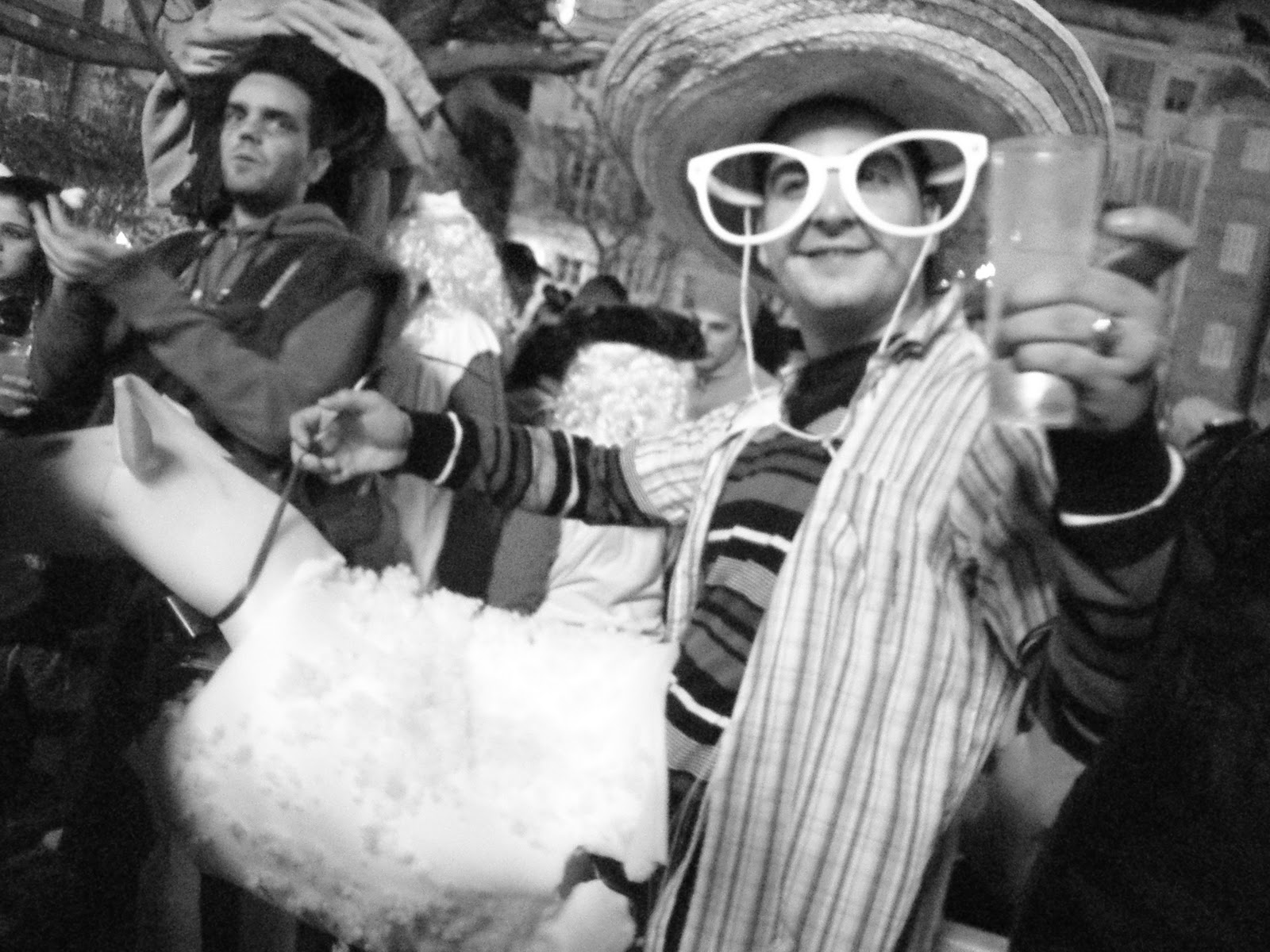
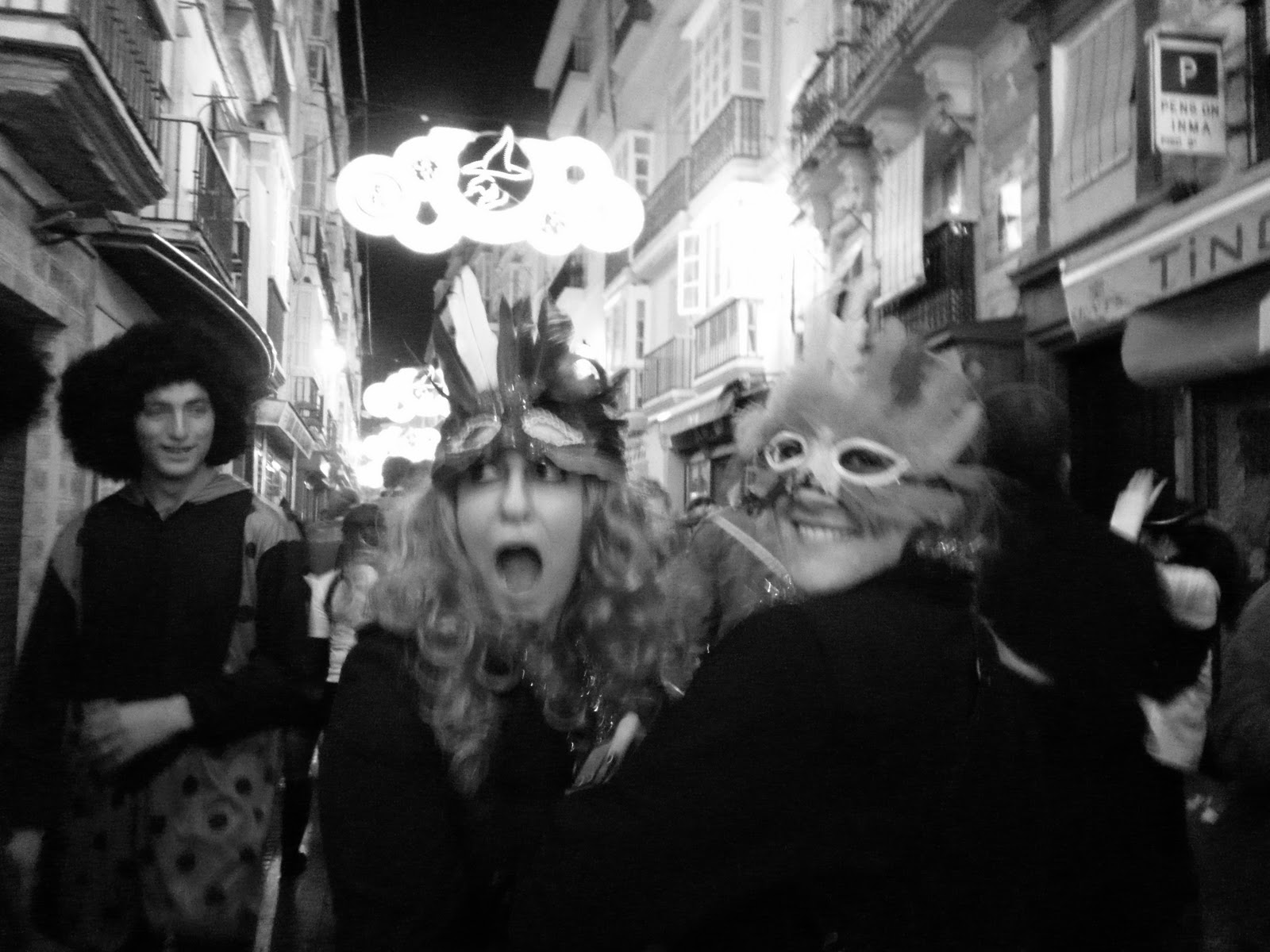
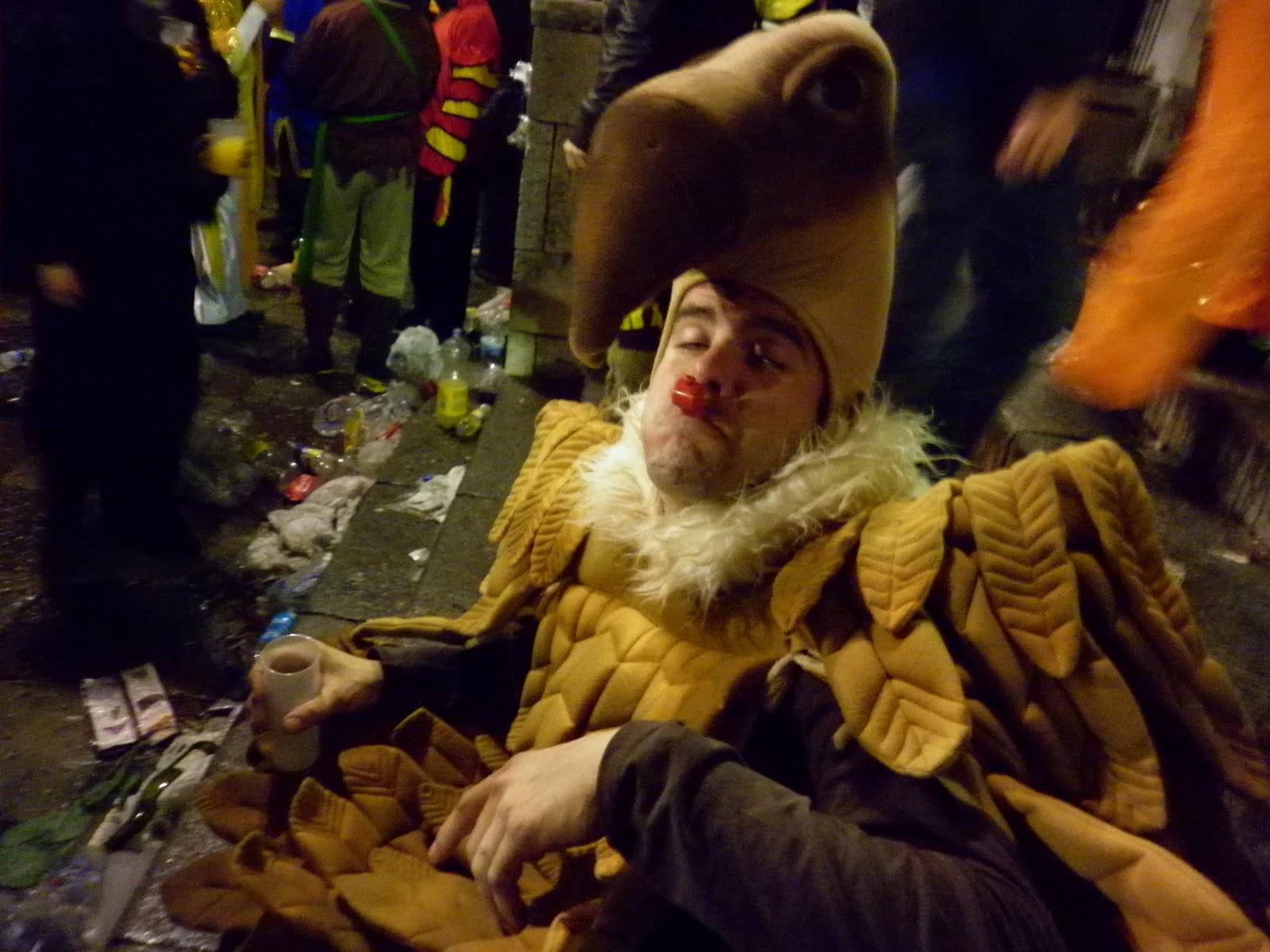
Since Katie thinks my photos are ok, Elizabeth already did it, and simply because there aren’t enough words in the world to describe the pre-Lenten debauchery of Cádiz Carnavales. Imagine the entire historic part of Europe’s longest continually inhabited city full of people in ridiculous costumes, toting bags full of alcohol and singing all night. Then, they get up during the day and watch chirigotas, or groups which sing about pop culture and satire in equally amusing costumes.

If anyone knows Catholicism, it’s the Spaniards. But they also know how to party.

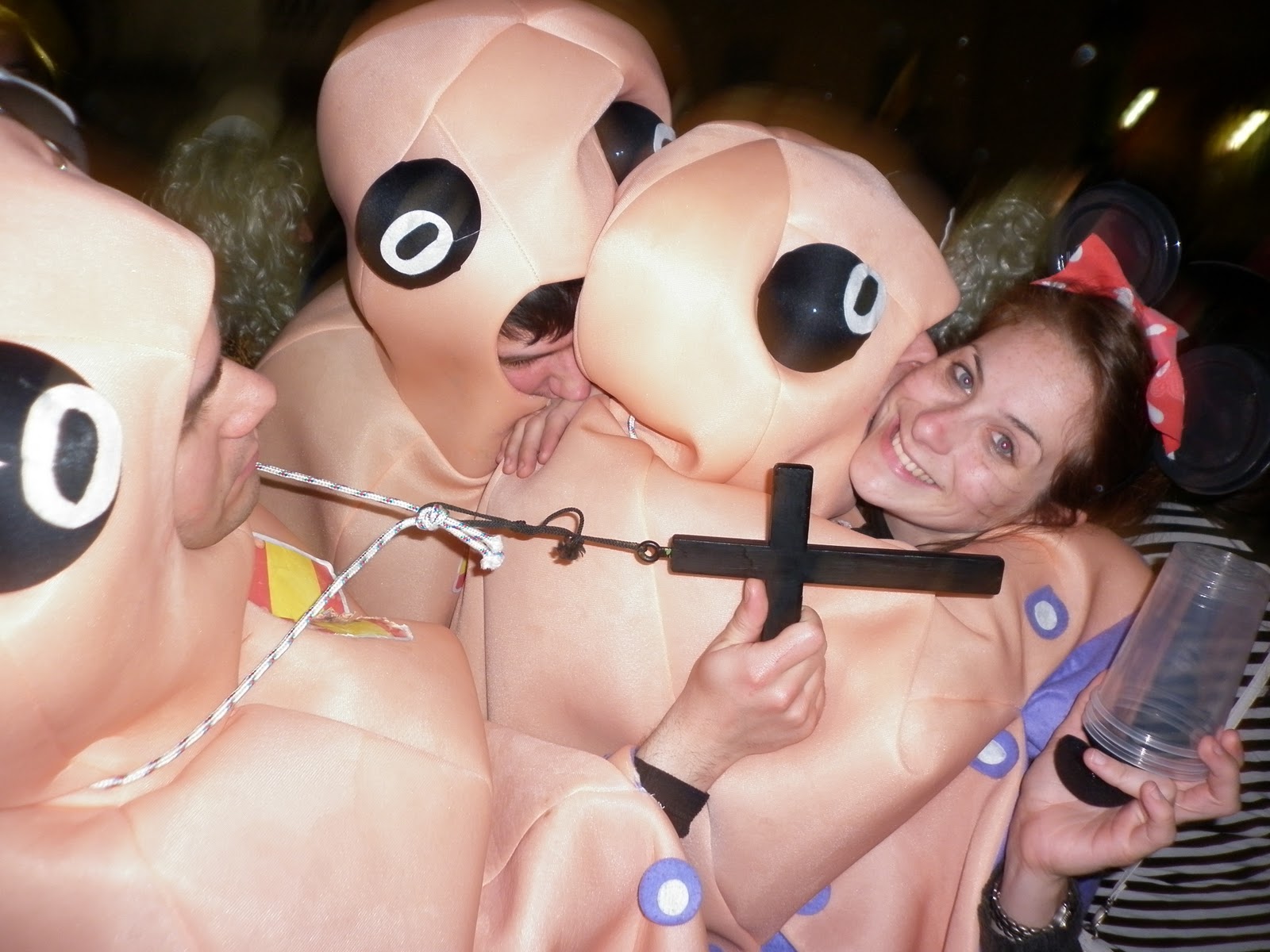
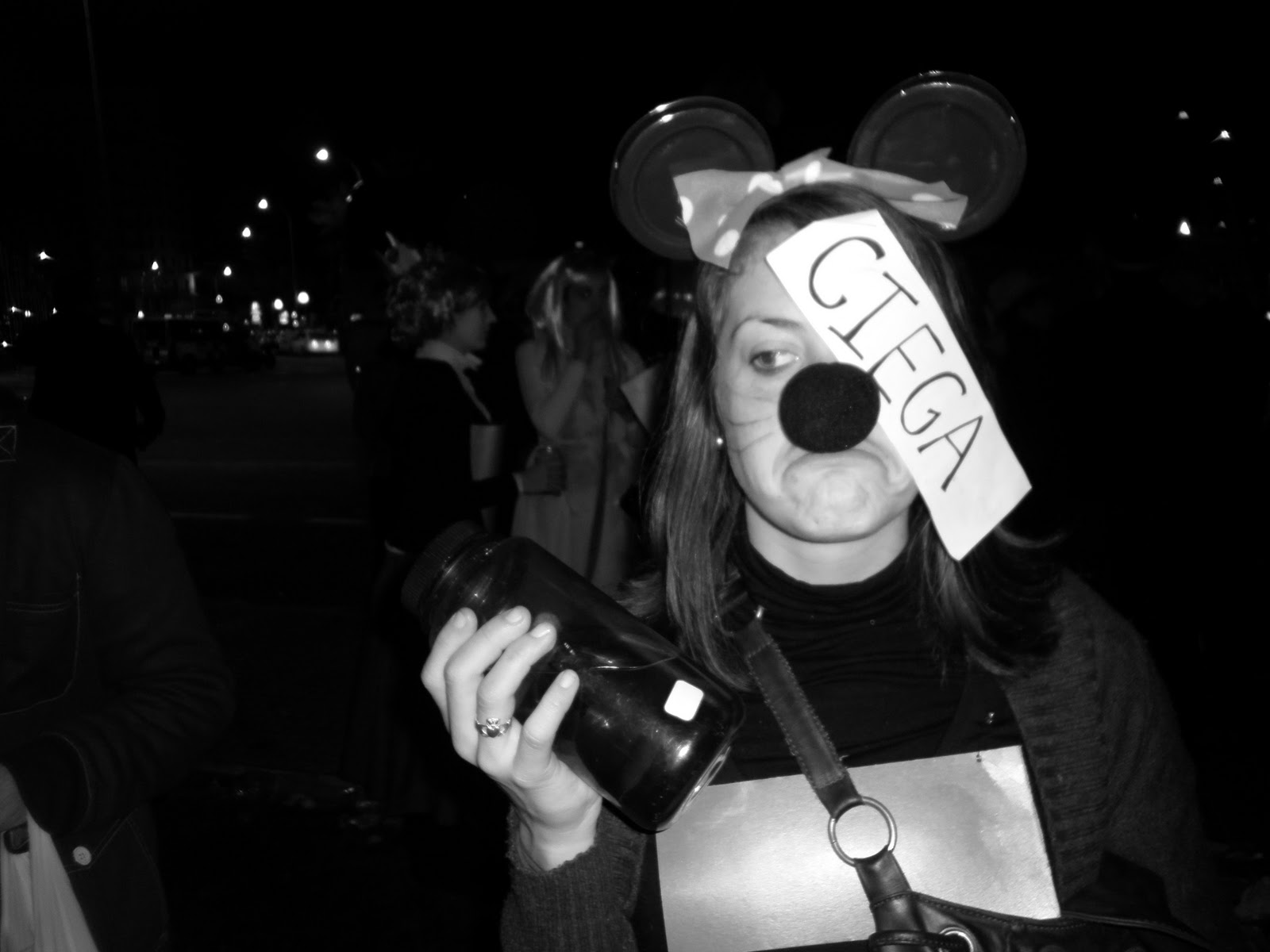
Three Blind Mice, Three Blind Mice…
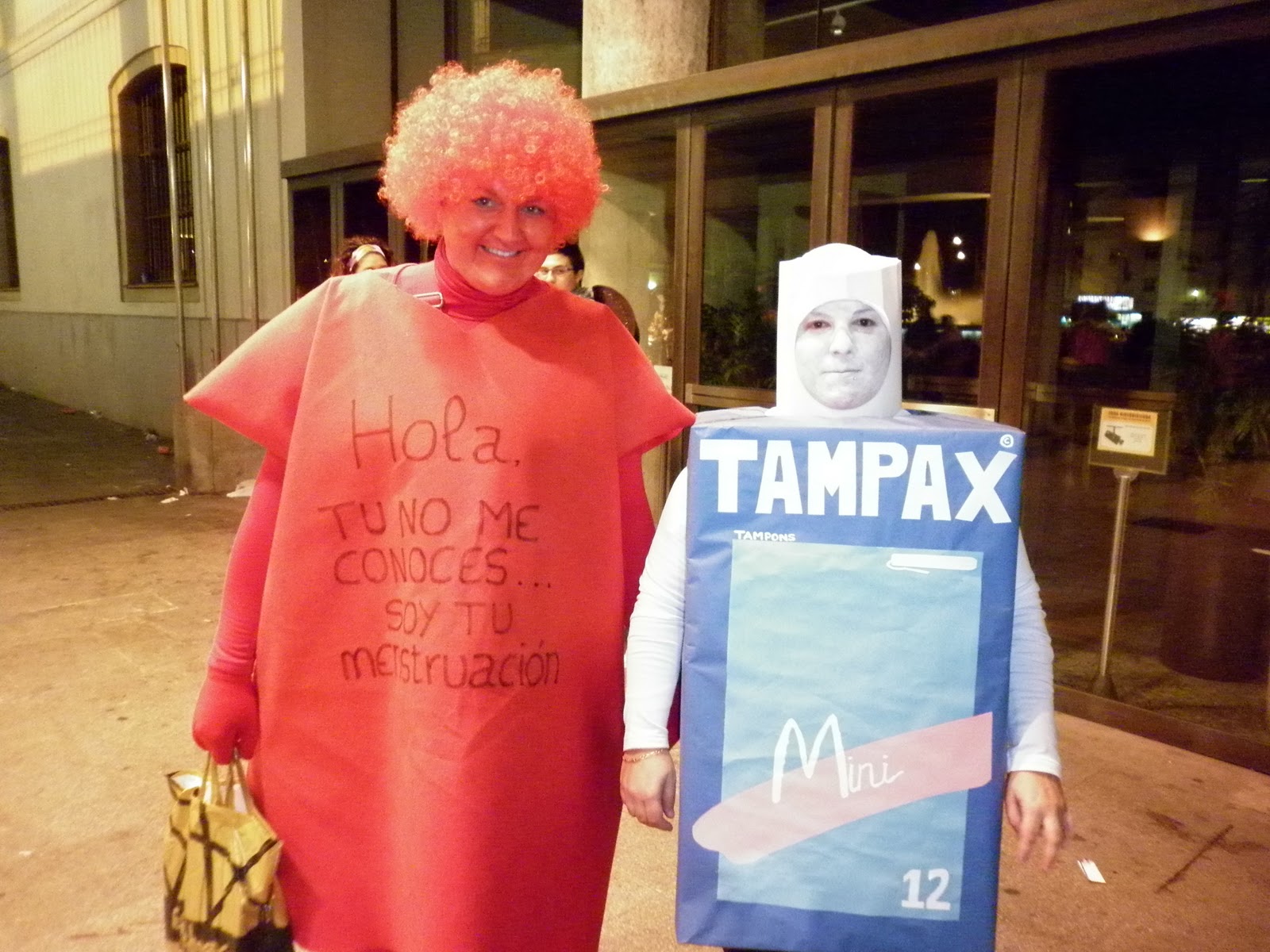
 Hello, you don’t know me, but I’m your period
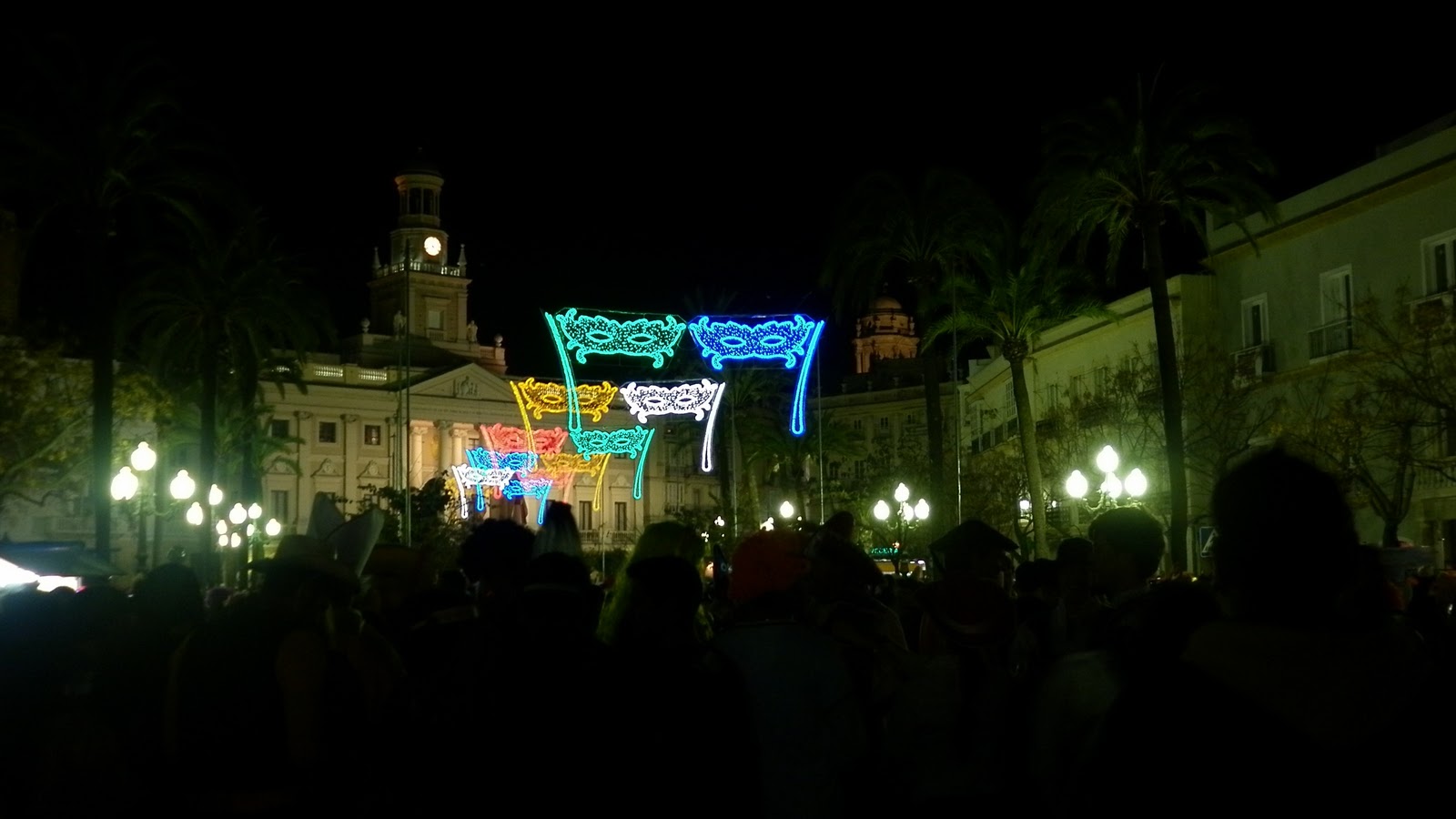
The Town Hall Square, full of party-goers
Like I said, Spain knows how to be holy and unholy at the same time
Onward and forward, says Jeremy
Crossdressing in Spain is as normal as jamón legs at bars
Costumes for every taste. Really.
Excitement and more people around every corner
Eagleman had to have been one of my favorites
 If Pulpo Paul were to predict how I’d end the night, he’d say the following:
Ciega stands for both blind and drunk.

The Spanish Outback

Tita said, “We call it Extremadura for a reason, hija: extre because we’re so far west, and madura because everything here is just more harsh.”

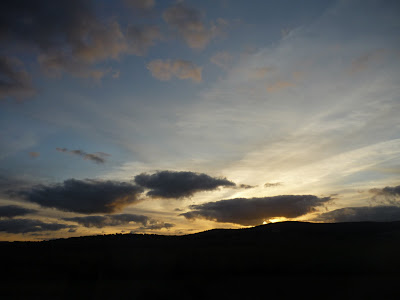
There could not be a better name for this Spanish outback, which seems to encapsulate all things salvaje, or wild: the sky is equally cloudy and empty, stretching out for miles towards, well, nothing. The towns here, with names like Saint Anthony’s houses (pop. 700) and James’s Sword, are few and far between. And the harsh wind that blows across the plains hardened conquistadores like Pizarro and Cortes.
Despite being one of the poorest regions in all of Spain, Extremadura has a rich past. Rich, literally, because all of the gold brought from the New World was unloaded in Sevilla and sent up towards the capitals of Toledo and Valladolid via Ruta de la Plata (Silver Route), which recently christened the national highway that begins in Sevilla and ends in Madrid. Because of this, lavish palaces grace the countryside, many in ruins, and ornate monasteries huddle in the stark countryside.
In these lands, Franco was proclaimed head of the Spanish state following the civil war, the first Native American was baptized and Luisitania reached prosperity. Thanks to the holiday celebrating the Spanish National Constitution, adopted a mere 30 years ago, I have five days in which to see some of Extremadura, which until now was only seen through the passenger window of Kike’s Mercedes. A land of harshness, yes, but with treasures touting its former glory days.
Christene, Alfonso’s girlfriend, and I headed up the Via de la Plata early Sunday morning towards Merida, where her boyfriend is from. After a filling extremeño lunch full of fat and meat (bones still intact, claro), Christene took me around the city. We seemed to be in accordance that NO ONE was on the street, being a Sunday and a national holiday, counting a mere 13 people between Alfonso’s residential barrio and the main shopping streets. Boarded up bars and boutiques abounded. There were few buildings taller than three or four stories, making the city seem both stunted and devoid of any beauty, power, wealth, etc. Hard to believe this was once the center of the Iberian Roman world.
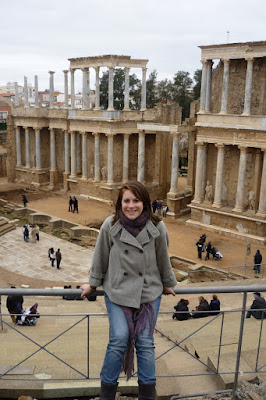
Then, out of nowhere, pops the Temple of Diana, wedged between a beauty salon and a restaurant. Further down the hill, passing by meat shops and tourist stands hacking authentic Roman busts of Trajan and Augustus, stands the only thing that has made Mérida famous: The amphitheatre and coliseum, which now form part of the UNESCO World Heritage sites. After a quick jaunt through the beautifully constructed Museum of Roman Art (free entrance, thanks to the Spanish Constitution!), we traversed the crowds.

The theatre, made up of two stories of marble columns, stands in near perfection, commanding an orchestra and crumbling stands. During the summer, it creates a backdrop for the national theatre festival. It´s astounding, really, much more than its neighbor, the coliseum that just looks like a heap of rocks. No doubt the climate, with its blustery winds and scorching sun, had contributed over centuries to its demise
Said wind continued to blow through the hilly town, so Cris and I loaded up on some chucherías and wandered towards the Guadiana river. The Alcazaba, a fortress built at the end of the longest Roman bridge in existence, was a Moorish structure built to protect Luisitania from invaders. It´s just off John Lennon street, full of bars and bocadillo joints, which seems a strange contrast to the high stone walls and grandeur of the Alcazaba.
Fed up with the cold, piercing wind and our tired bodies, Christene and I trekked home to the brasero to warm up and enjoy some of Petri´s cooking.
The following day, rain ruined our plans to be up early to explore Cáceres. I was determined to not let the day go to waste, so I convinced Alfonso to take us in his powder blue car to the UNESCO World Heritage city, which sits about one hour north of Mérida. The fog had engulfed all of Mérida, as well as the whole Guadiana valley, making the drive slow. But the cows were out, grazing amongst old stone walls and ruined estates, so we, too, could brave the rain.
The medieval part of Cáceres, known as the ciudad monumental, is chock-full of Aztec, Arabic and múdejar styles, all enclosed within a stone wall. The whole place is adorned with Renaissance flags, and the business located within it take you back to the day. The rain made the stone streets slick, and the tourists packed into such a small place was a little overwhelming, but it was easy to see what made the city amongst the richest in Spain – since all the riches from the New World passed through this town, it swelled in size and became a jewel. We traversed city walls, arches, staircases, towers and had a filling lunch of calamari and chicken. Later, as we watched an unfunny version of Supertroopers in Spanish, it was clear that either Alfonso’s sick family or the abundance of olive oil had made us both a little sick. I slept like a rock on the rock that is the guest bed.
The following day, after seeing the surviving parts of the Aqueduct and the remains of a weird devil worshipping clan, and after Petri’s special of meatballs, Pepe took us to the bus station. In Extremeño style, he stuck around until we shooed him away. Christene’s seat was in the last row (you know, the one where she’s stuck in the middle of five seats and can’t put her seat back), so the driver let us take the two front seats, so long as we didn’t bother him. We grooved to 90s music as the sun set over the empty extremeño sky.
Related Posts Plugin for WordPress, Blogger...