Seville Snapshots: Santa Catalina Church

When my friend Nancy came to visit nearly five years ago, she had two goals in mind: to not eat anything with a head on it, and to see as many Catholic temples as she could.

Since I had to work, I let Nancy loose with little more than a map, marked with circles around all of the places I thought interesting and worth a visit. She, instead, gravitated towards the churches. Her walk down Calle Imágen took her all the way to Santa Catalina de Alejanría, a mudejar style church right next to the bus depot and steps away from the Duquesa de Alba’s house.

The church has been closed to the public since 2004, upon which is was deemed in ruins. Despite the local government proclaiming its worth, no public money was put towards its restoration, even though immediate action was called for eight years ago. Locals have called for the intervention of the Cultural commission in the city to finance the project, but it may be that St. Catherine’s is closed forever.

You can sign a petition for the call to action by sending an email to elrinconcitocofrade@yahoo.es (Asunto: “Por Santa Catalina”) and leaving your full name.

If you’d like to contribute your photos from Spain and Seville, please send me an email at sunshineandsiestas @ gmail.com with your name, short description of the photo, and any bio or links directing you back to your own blog, Facebook page or twitter. There’s plenty more pictures of the gorgeous Seville on Sunshine and Siesta’s new Facebook page!

How to Vote Abroad from Spain

post edited February 4th, 2016

Only a teacher would think to bring a map of the United States, a blue marker and a red one, to an Election Day party in Spain.

“Ok, everybody! Teacher’s here with the electoral map!” Lindsay called out as I hung it on the wall under the TV, and I had miniature US flags waved in my face as a show of solidarity in the upstairs bar of Merchant’s Malt House in Seville.I don’t remember if it was a blustery sort of November that we tend to have In Chicago on Election Night, or which states I colored in, tallying up the electoral votes for each candidate. I do remember the elation of knowing the small team, spearheaded by an incredibly savvy and forward-thinking American woman, had registered dozens of study abroad students and American residents to vote from sunny Spain.

It's easier than ever to vote from abroad as an American citizen or military personnel. Here's how.

For someone who is not overly patriotic on the outside, voting is one of the most important responsibilities I feel I have while overseas. In fact, it’s the only ONLY right I don’t have as a permanent resident in Spain, which makes my voice all the more important when every first Tuesday in November rolls around.

Voting abroad is simple, so there’s no reason to not do it! Here’s how to easily cast your ballot from abroad:

First: Make sure you’re actually registered to vote!

Remember all of those civics classes you had to sit through in high school? By now you should know that no one counts as 2/3 of a person and you can vote as a woman, so there’s absolutely no reason on this big Earth why you can’t do it (unless you’re under 18). Plus, it’s easier than ever to vote from abroad.

Registering to vote is an insanely simple process that can be done in person at a local election office, by heading into the DMV, or even by soliciting this information through the mail. If you’re currently abroad, you can print off these forms and mail, fax or email them back Stateside to your local office.

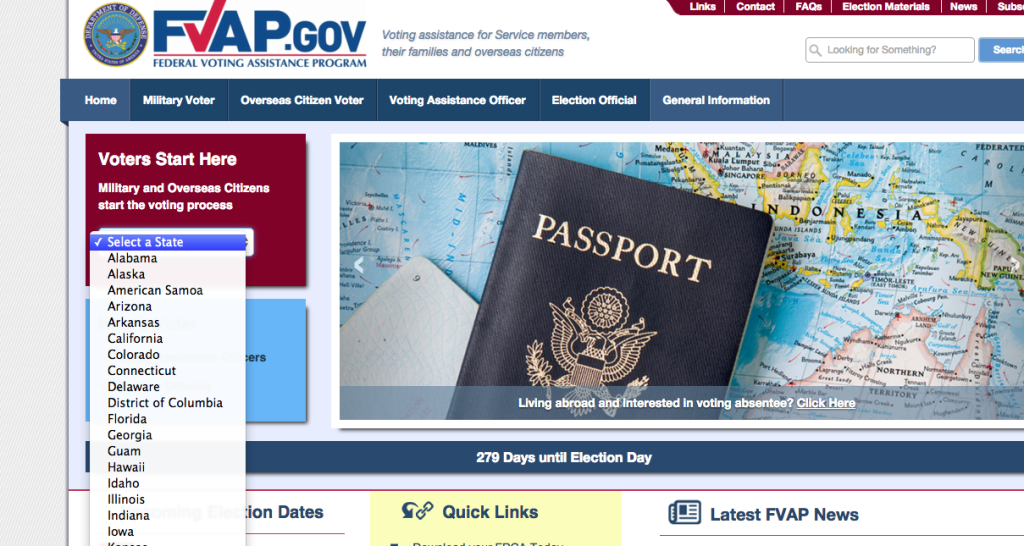
Screen Shot 2016-02-04 at 12.24.54 PM

If you are already overseas, you will have to print out the forms listed on your state’s election website and mail it to your election office, or complete the online registration at the Federal Voter Assistance Program. You’ll need to provide basic information, including your driver’s license number, or the last four digits of your Social Security number. Each states has slightly different rules – remember Florida in 2000, or the reputed coin tosses during the Iowa Caucuses? – so pay attention to any pop ups you receive while registering. 

Also be sure to tick the elections you want to participate in. If you’re only overseas for the primaries, be sure to notify your election office that you’ll be back for the general election in November. 

Second: Educate yourself, duh.

I don’t like no stupids, so please be a good person and do your research. There are loads of sites out there, but I’ve been following the Inside Gov page and using their political matchers to dive deeper into the issues at stake this election cycle. 

And use the resources you have in your city abroad – study abroad office, US Consulate or interest groups. Many set up informational meetings or even ballot drives to register voters. Get involved!

ThirdRequest an Absentee Ballot

Click to the FVAP’s site, read about the process, choose ‘request an absentee ballot’ from the menu and click on the state you are registered to vote in (this is usually wherever your permanent mailing address or what your driver’s license says is your home address).

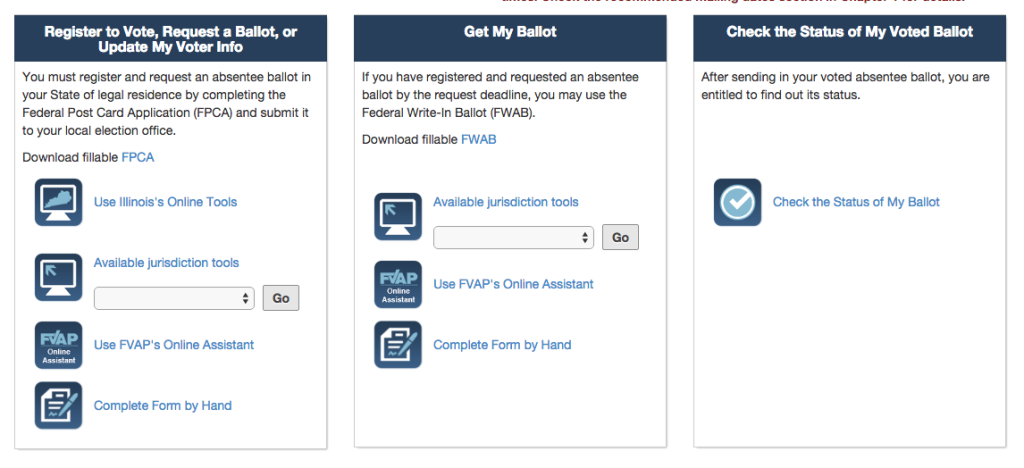
From here, you will be directed away from FVAP’s site and to your home state’s election registration page. You’ll have to create a log-in and password before being directed to a wizard. Carefully fill in your pertinent information, using your home address as your voting residence and adding your address abroad in the correct box.

Screen Shot 2016-02-04 at 12.25.37 PM

You can request the ballot by email, fax or regular mail. Do note that, using this method, you can mail in the registration and the ballot at the same time in most states.

You’ll receive a PDF with all of your information immediately. This must be printed, signed and dated, then sent to your local election office, whose mailing address can be found on the second page of your PDF, along with any special instructions for your county. I emailed my request into my local office in Illinois and received my write-in ballot not 12 hours later. Double-check to be sure all of your contact information is correct.

Finally: Cast your ballot and enjoy elections parties around Spain on November 8th!

Your local election office will send you the PDF form of a write-in ballot. Your state will have its own regulations about how to return the ballot and whether there is additional information required of you (Illinois, for example, requires a secrecy waiver). Some states will allow you to email or fax an absentee ballot, or check to see if your local embassy or consulate can do it for you, free of charge. Be aware that ballots dated and received after November 8th will likely not be counted, so make it a priority to cast your vote and make your voice heard.

Your party likely has affiliated members around Spain, so check for election parties and events. Or, get involved with voter registration or fundraising – any large expat enclaves abroad will have larger party organizers. As someone who can’t vote in Spain, I am always sure to fulfill my civic duty.

Please educate yourself, register to vote and exercise your liberties as an American citizen.

For more information, check the Department of State’s Overseas Voting page

How to Survive The Foreigner’s Office

Author’s Note: This post seemed fitting today, considering my first experience with the dreaded papeleo started on July 3rd, 2007, when I applied for my student visa to come to Spain. Likewise, I just picked up my five-year residence card on Friday.

On my first trip to Sevilla, six years ago nearly to the day, I was breathless at the site of the half-moon, colonnaded Plaza de España, nestled just out of the historic center and at the helm of the plush María Luisa Park. The Triana tiles gleamed in the early July sunlight as I sat writing on a bench in the mural depicting Valladolid, a city I had just moved away from. I brought my travel partner, Catherine, the very next day. While not as bowled over as I, she did know that it was the fictional Planet Naboo of Star Wars fame.

Two years in the future, I was applying for a visa at the Chicago consulate. The deal was that Spain put a shiny visa on an entire page of my passport in exchange for 90 days in the land of toros and tapas. From there, I would need to go to local police and present a mountain of paperwork claiming I had a salary and health insurance. Seemed easy to present a few pieces of paper and stand in line.

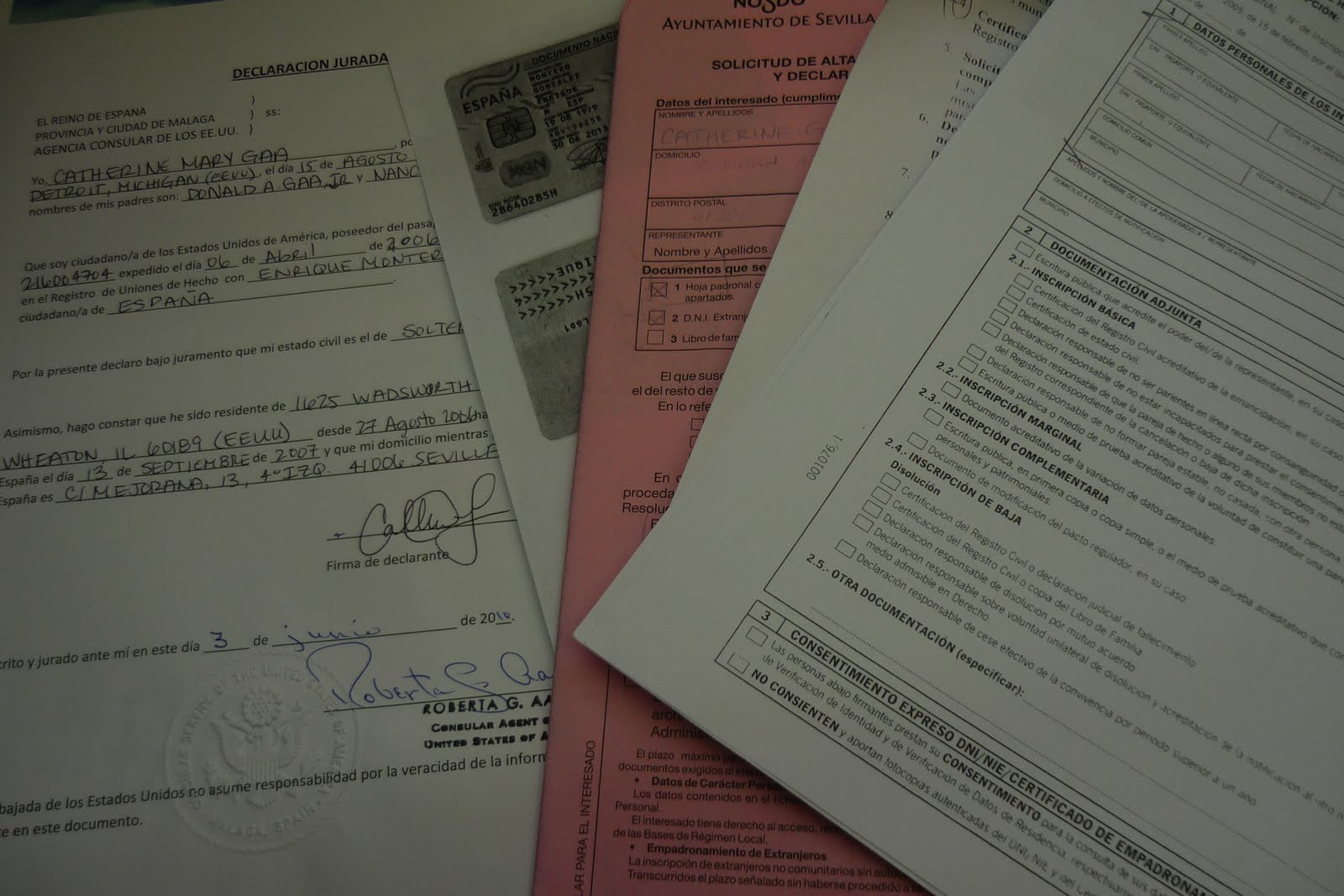
Think again – what ensued has been a very ugly battle between me and the central immigration offices of Andalucía, a little bit of trickery (ok, flat-out lying) and finally securing a five-year residency card after thirteen months of appointments, photocopies and a lawyer.

Estés dónde estés, here’s a few tips to make your trip to Extranjeros a little more smooth:

Brush up on your vocabulary
The people who work in the oficina de extranjeros are called funcionarios. Spain, like Italy, has a high number of civil servants, and those Spaniards wishing to have job security and work short hours take an exam called an oposición to be able to be one. If selected, they are entitled to have breakfast at the precise hour you arrive to the front of the line. You’ll need to turn in all your papeleo, paperwork, to these people, so follow the advice below, too.

At the office, you’ll need to queue up and get a ticket. When your letter and number is called, you turn in your documents and receive a snobby-ass look and the word that you’ll come back for your fingerprints – your huellas, in addition to paying a tax and presenting two or three recent photos. Note that in Spain, these foto carne are much smaller than their American counterparts. After that appointment, you’ll have to wait 45 days to pick up your plastic card, and chat up a security guard to let you cut. I learned that two prorrogas in.

Know what you need to bring, and bring photocopies
Tres fotos carné? Form EX-##? Best to do your research, as every official act performed in the office has a different set of requisites. For pareja de hecho, for example, I had to present a certificate stating I wasn’t already married, signed and stamped by an official US Notary. Not necessary for an extension on your student visa. Speak to your consulate or embassy, download the forms to turn in here, ask about tasas, or fees, and bring a few small pictures. That said, made at least two photocopies of each document and have anything notarized if it’s a copy to turn in. Believe me, this will save you headaches, as this woman can tell you. Got a stapler? Toss that in your bag, just in case.

Dress appropriately, and bring a Spaniard along if you can
Showing up and looking nice can really make a difference, especially here in Sevilla, where appearances are everything. I have been in a skirt when everyone else is in flipflops and board shorts, but am generally greeted with a smile and a willing attitude.

Likewise for bringing a Spanish friend. My dear amiga Kelly told me this as she was applying for a work visa last year. She swears that having her saint of a boyfriend along meant more efficiency and no Sevillana stink face. If you’ve got a willing friend, invite them to a coffee in exchange for a few hours of quality time with you (And by quality time I mean you pulling out your hair time).

Go at the right time
Officially, winter hours in the office are like a banker’s: 9-5. In the summer, don’t expect the office to be open past 2. I remember my first trip to the office in October of 2007, clutching a paper folder with all of my documents. I left my house barely at 6am, arriving to stand at the end of a very, very long queue. At 8am, you can get your number, but our dear friends the fucnionarios won’t roll in until after 9. For this reason, I tend to show up either right at 9am, or after everyone has had their breakfast rotation at 11.30. It’s also advisable to go after 1 p.m., as the wait times are generally shorter. Note that some tasks have only a certain number of tickets assigned each day, so if you’re merely renewing a student visa, go whenever te da la gana. If it’s something like asking for your marriage book, the earlier, the better.

Be patient
Chances are you’ll be sent to multiple offices, to numerous people. The rules for every type of trámite are complex and must be followed precisely. Use message boards, other expats from your countries and the consulate to be as prepared as possible before you go, and realize there will be lines to wait in, documents missing, frustrations to be had. But, really, it all works out. I waited thirteen months to be able to hold a little red card in my hand, and now don’t have to go back (barring a residence change) until February of 2016. A little patience goes a long way in Spain, especially in the foreigner’s office.


All you expats: Have any extranjería horror stories? Tips for making the process any degree less painful? Got enchufe somewhere? Tell me about it in the comments!

Spaniards and the Inauguration

Yesterday I was so anxious about the inauguration and the start of a new presidency, I could hardly sit still. The historic day was darkened by sad news over here in Spain, and I forgot to cancel a class to watch the ceremonies.

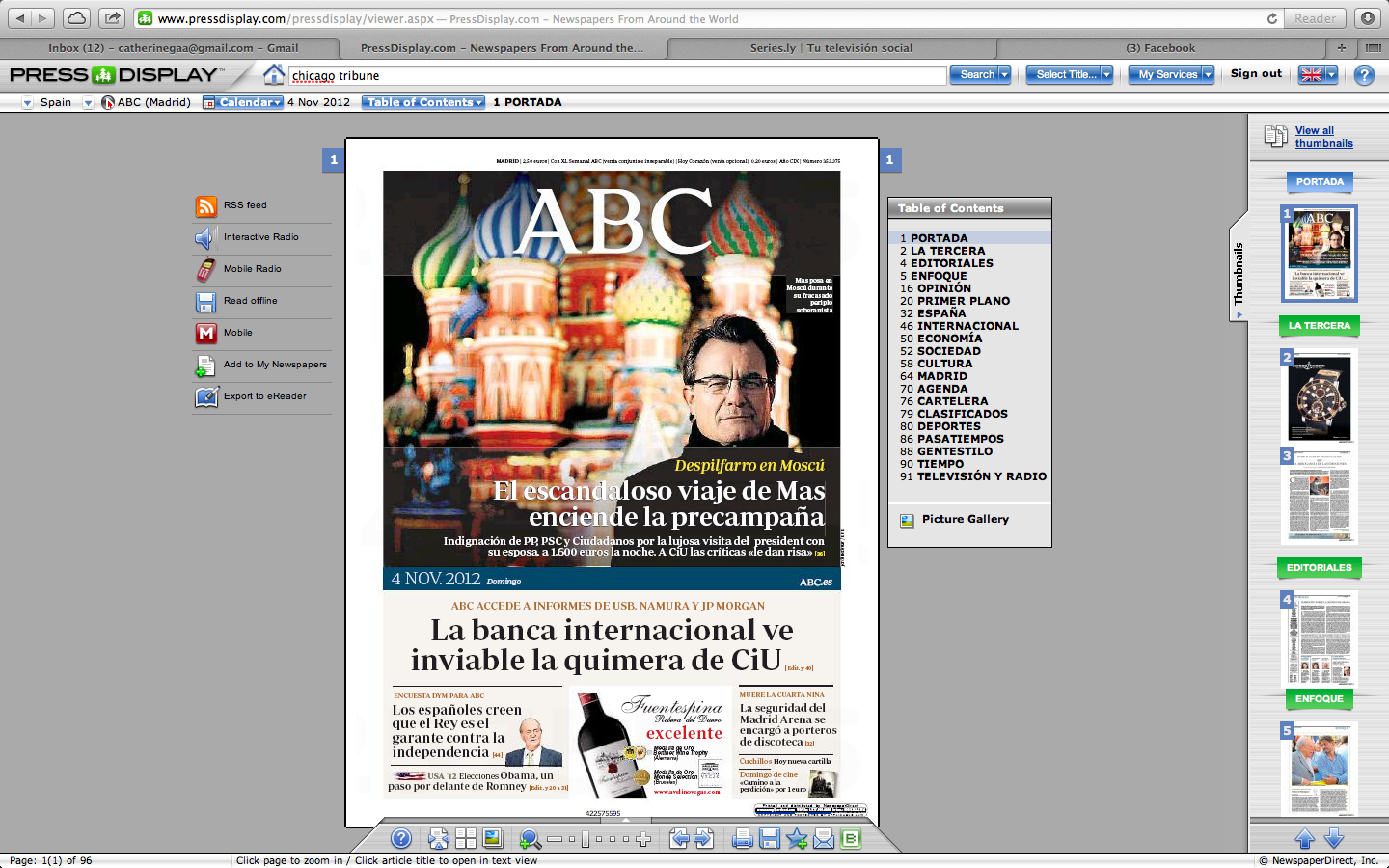
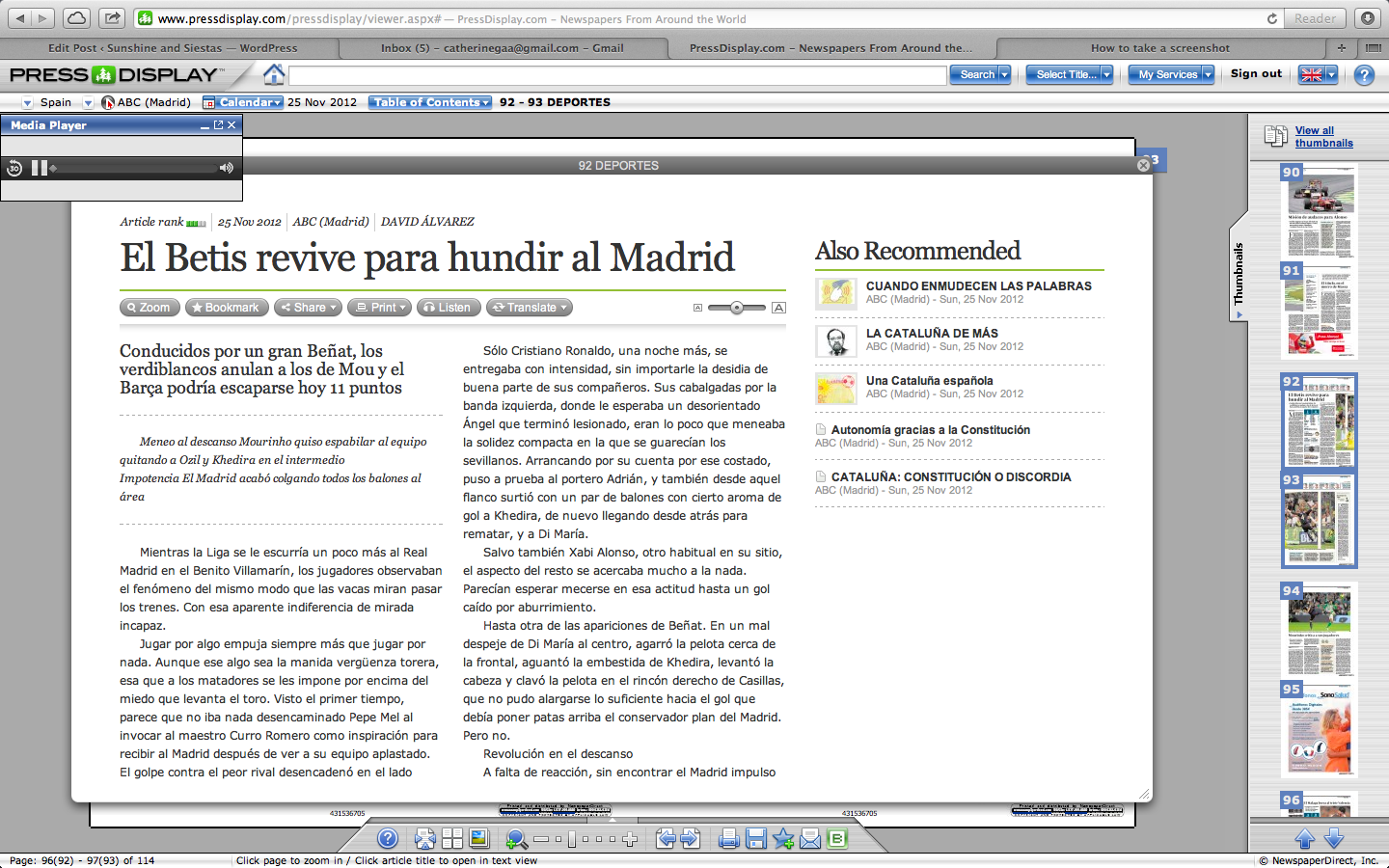
What hs stood out most in m mind was the reaction of Spaniards. News pages here in Spain have uploaded videos and transcripts of the speech translated into Castillian and Obama and his supporters’ faces have crossed every broadsheet. Yesterday morning, I read an article on the bus called “Los Siete Pecados de Bush” – Bush’s Seven Sins. While Bush has been shown recently as aged by office, Obama is either shown as relaxing and portraying how normal he is, or looking serious while making a speech. Although President Zapatero warns that Obama can’t solve all the problems that face the US and Spain alike, Spaniards are ever-confident in a president that isn’t theirs. I got lots of congratulations, handshakes, the like. My students in 1D, instead of applauding when I walked down the hall, chanted “O BA MA! O BA MA!”

But by far the most surprising was how all of the women were asking me about what I thought of Michelle Obama’s dress. While I hadn’t spent a lot of time looking at it (I’m listening to his speech for the first time right now, nearly 24 hours after he spoke it), I wasn’t thrilled. Listening chatter about it around the brasero and in the car, they seemed to criticize everything about it. I told them the two dresses were designed by minorities and that, to me, was the message, they just shrugged it off and commented on how the boxy jacket made her look fat.

There’s an interesting saying in Spanish: “Cuando los Estados Unidos estronuda, nos refriamos” -When the US sneezes, we catch a cold. How very true.

2008 Elections

My friend Cat and I at the Democrats Abroad Election Viewing Party
Before my first trip to Spain as a study abroad student in 2005, I was warned that the question “Kerry or Bush?” would only be preceded by “What’s your name?”This year, my coworkers and students have all entered election week with a similar question: “Obama or McCain?”And that wasn’t the end of it. I also had to answer “Who is Joe el fontanero?” and why the symbol of the Democratic party is a donkey, since calling someone an ass in Spanish means you’re calling them stupid. Take that as you will.
Their interest reflects on the rest of their country’s attitude towards America and the elections. The anti-Bush, and therefore anti-Republican, sentiment here in Spain is heard as often as shouts of “Olé!” I picked up an issue of Spain’s political satire mag, El Jueves, last month because it was curiously accompanied by a roll of toilet paper emblazoned with President Bush’s face. Spanish President José Luis Rodríguez Zapatero famously sat while an American flag was being hoisted at the Olympics Games this summer. And in my mock elections, Instituto Heliche unanimously voted for Obama, with only three or four saying they didn’t care.

I wouldn’t call myself a political junkie – not by a long shot – but this year’s elections have excited me more than I expected, especially being in a country that has a stake in what the next four years could bring. As John Micklethwait and Adrian Wooldridge wrote in 2004’s “The Right Nation,” “American power is so overwhelming that people everywhere watch America’s politicians just as closely as they watch their own…People around the world feel that they are citizens of the United States in the sense that they are participants in its culture and politics.”
Take, for instance, my boyfriend. He’s a fighter pilot in the Spanish armed forces and has been serving in Somalia for nearly two months. If my country were to send troops, he could come back to Seville. He follows election coverage more closely than I do, which is why he saw my interview on Televisión Espanol and I didn’t.
And what about the Spanish public? They’re in the midst of a financial crisis, too, which has forced many of my friends here to scramble for cash. When my country, they say, with one of the biggest economies, gets back on track, they can get on to enjoying themselves more.
The Democratic win was a partial victory for them, too. Zapatero praised Obama and looked ahead to better relations with theUS. I was congratulated by plenty of the school staff and my students on Wednesday morning as if I had just won the position.
My students and the other English teachers were especially engaged this year. We spent the week looking at pictures of the White House, learning the words to “You’re a Grand Old Flag” and why the flag has 13 stripes, and talking about the concept of democracy. I’m not overly patriotic and am glad to be living abroad. But I kind of got chills thinking about the democratic process and how the US had overcome several setbacks before becoming a great and powerful nation. That’s not to say we haven’t had huge screw-ups and upset people in the process. I am an American and my passport says so. I have to endure everything that comes along with that.
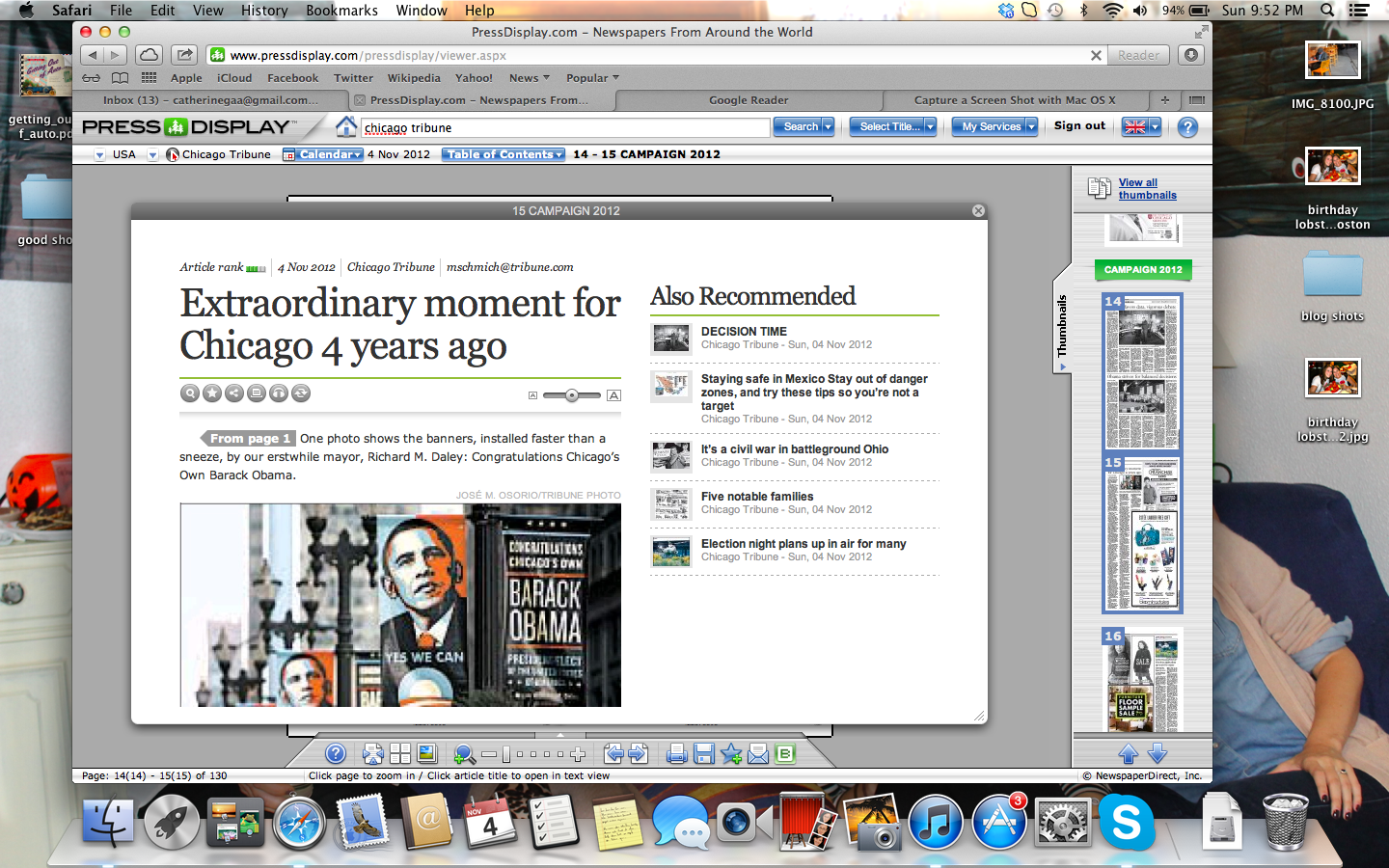
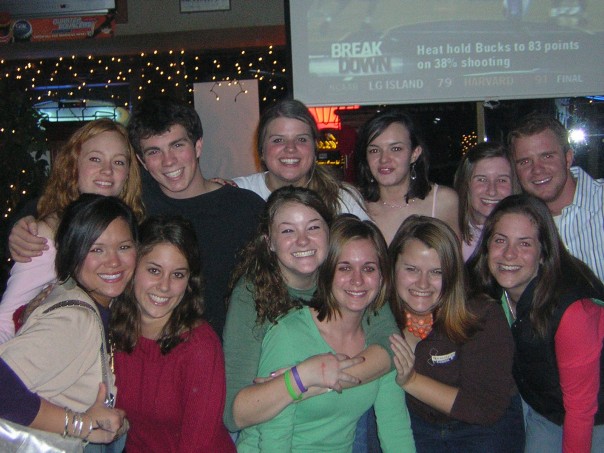
Democrats Abroad held an election viewing party Tuesday night at an Irish Pub. I arrived early, at 11pm (5pm EST) so that I could get a seat and have a hot dog before they ran out or the kitchen closed. The top floor of the bar was packed and covered in American memorabilia – flags, red and blue balloons and empty Budweiser bottles. Photogs and journalists were interviewing until the first polls were called around 1:30 a.m. Being the great teacher I am, I brought red and blue markers and a huge map of America, to which I had written all the electoral votes at stake in each state. I colored in New Hampshire while Lindsay colored in red with dismay but without losing any ounce of hope.

Kelly and I are from a blue state!

As the night wore on, people from all over the place and from all ages were gathering to support Obama. There were so many people upstairs that the stairway was blocked off! The whole place was full of cheers and chants whenever a state turned blue, and the nail biter states being won by Obama were celebrated with near tears. It was simple – we were enjoying the democratic process and the chance to exercise their freedoms, a concepts even my 12 year olds could understand.

As Spanish as I sometimes feel, I’m still American and very much so.

Related Posts Plugin for WordPress, Blogger...