Applying to to the Auxiliares Program: How to Apply to be a Language Assistant in Spain

this post was updated in February 2016.

Nine years ago, I began researching a way to make it back to Spain. I was a senior at the University of Iowa, finishing a degree in journalism and minoring in the inter-disciplinary “how the hell do I get abroad.” 

Fast-forwarding to the present day, I’m sitting in the sunlight basking into my new home with a café con leche. My one goal post-college was to move abroad, and thankfully the North American Language and Culture Assistants gave me a visa, a job and the ability to make Spain my hogar dulce hogar. And since it began nearly a decade ago, loads more teaching programs in Spain have begun.

Remember Mike? He wrote about his intention to start a new life in Spain through the same program, and has gladly shared his experience of tackling the application process.
Tips on How to apply to teach English in Spain on the North American Language Assistant Program

Well, the application period for the Auxiliares de conversaciones extranjeros en España finally opened up. However, I felt that I was going into this application process basically blind. All I really knew is that I had to login to Profex (the application system they use), and upload documents. Everything I had read of various blogs and forums said that you should apply AS QUICKLY AS POSSIBLE! Basically, once someone applies they are assigned a number, and then once the application has been approved, placements in regions and schools are given out in the order of the application received. First preference being given to those who are renewing their current placements.

The website has a program manual that outlines the application process and a Profex manual that detailed each screen on Profex and how to navigate the page. Once I was actually in the process of applying, these documents were actually very helpful. I was able to begin working on the list of documents on the website which needed to be submitted for the application:

  • The main page of a U.S. or Canadian passport
  • A copy of college transcripts or college degree
  • Letter of intent or statement of purpose
  • Medical certificate (if not a U.S. citizen) – to be turned in during VISA application process
  • Letter of recommendation

Before the application period opened, I was diligently working on the collecting all the items above. The passport page was an easy photocopy, as was the copy of my college transcript. I browsed many forums and blogs, as well as the Facebook group for this year’s auxiliares to see if it mattered between the transcript or the degree. Everything I came across said that it didn’t matter as long as one was uploaded. Needless to say, I chose the transcript. The letter of intent was fairly simple, as I had to put into words why I wanted to teach in Spain. However, the only glitch with it was that it had to be 300 words, so my 750 word first draft had to be significantly reduced. Who knows if they really even read it though?
The website had a guide for how to write and submit the letter of recommendation. The letter had to come from a professor or former professor unless the applicant has been out of school for over five years. I contacted my former professor and faculty advisor. She was ecstatic to be writing the letter for me. I was thrilled because I had been nervous that since I could not ask her in person she may say no or put it on the back-burner and finish it later than when the application opened. My professor wrote the letter in the format they requested and mailed it in. I asked that she send me an electronic copy so I could upload it online just in case it got lost in the mail. Luckily, she obliged and I was able to upload a copy when I was applying.

On January 10th and 5:01 p.m. here in Milwaukee, WI, (00:01 a.m. in Madrid), the application period finally opened. I began logging in and creating a user account, while following the Profex manual. After I had created a username and began entering my personal information, the system started to load very slow and kept shutting me out. I attempted to login a few times and kept receiving an error message from the website. Quickly, I began searching forums to see if others were having this problem, and I found out that others had the same exact problem. It seemed as though the mad rush of applicants had overloaded their server.

I attempted to login nearly every hour, sans when I briefly slept; however, it was to no avail. The same error message popped up every time. Since it didn’t work through Friday Spain time, I figured it would be down through the weekend, which it was. Although, it did not stop me from constantly checking to see if for some reason it would work! On Monday, I was able to login and finish my application. The Profex Manual was a breeze to follow with actually having the web page up in front of me. Most of the fields that need to be filled in are personal information, college information, any teaching experience, and any study abroad experience, fairly straight forward.
After all that information was completed, the fun part began: selecting region, type of city, and school preferences. For regional preferences the applicant put each group in order of preference, from 1 to 3, and then selects one region within each of those three groups. The options for regional placements are:

Group A: Asturias, Cueta y Melilla, Extremadura, La Rioja, Navarra, País Vasco

Group B: Aragón, Cantabria, Castilla-La Mancha, Cataluña, Galicia, Islas Canarias

Group C: Andalucía, Castilla y León, Islas Baleares, Madrid, Murcia, Valencia

The regional preferences are followed by the type of city preferences, which allows the preferences of a rural community, medium sized community, an urban community, or no preference. Then, the school preferences consist of primera, secondaria, or no preference. Personally, I found this to be the most exciting part, as I was actually selecting where I would prefer to be located. Now, I know that I may not get placed in any of my selected preferences, which is perfectly fine with me. I was just excited to be actually submitting something that said where I would like to go and what I would like to do.

Once this part of the application is finished, Profex generates a .pdf print out. It is necessary to print this out and sign it because it needs to be mailed in to a specified regional coordinator along with a checklist that is initialed and signed.

An application becomes Inscrita once the online part is complete. When the regional coordinator receives all the documents the status is changed to Registrada. This is where my application is at this point. Admitada is the next stage, which is when all the submitted documents have been accepted. So far, no one that I know of has been placed past this stage this year.

According to everything I have read, it takes a long time to reach the next stage, Adjudicada, which is when they send the autonomous community assignment that the applicant has been placed in. You have seven days to accept or reject this placement. Assuming it’s accepted, the status becomes Aceptada. The final stage is when you receive your Carta de nombramiento, your school placements. These latter stages of the Profex application process are exciting to think about, but still seem far off for me. I’m just looking forward to being Admitada!

This whole Profex process was not actually as difficult as I had anticipated. Current assstant blogs and forums were incredibly helpful and reassuring throughout the process. Unfortunately, I discovered Facebook group for those applying to teach after I applied, otherwise that would have been pretty helpful too. In the end, I wound up with number 780. While it’s not the best number in the world, I still feel as though it is respectable and feel very comfortable that I should get a placement. I’m checking my applications status every hour, if not even more frequently, and I look forward to keeping everyone updated with my thoughts about this whole process.

Got any questions for Mike or me about the program?

Making the Choice to Live Abroad (and Stay)

My first steps in Spain landed in a big wipeout.

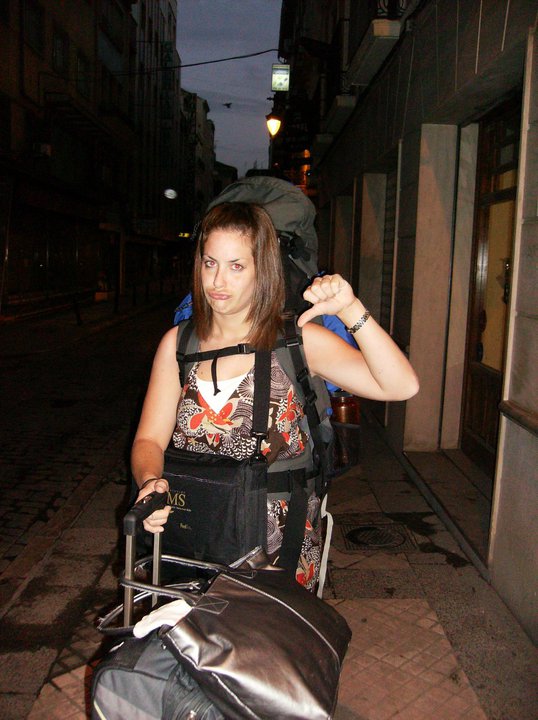
Armed with two suitcases, a carry-on and my laptop bag, I tried to hoist my backpack onto my bag, using a round, aluminum can as a platform from which to ease my arms into the padded straps.

Yes, I brought all of that with me. Two free pieces of luggage? Those were the days.


And I fell, right on my culo. I roared with laughter, falling over on my side and howling. That’s just kind of been my story in Spain.

After five years of living abroad, I’m often asked why I’ve chosen to live a life abroad in sunny Spain. The reasons that have kept me here are quite simple – ask any of my dozen friends who have been here to visit over the last few years, question my parents, read this blog start to finish in one sitting to really swallow the heartbreak of defeat, the uncertainness of a new relationship, crap work experiences. I have slowly made my life in Spain, from the first few shaky steps and the fall on my butt to establishing my version of happiness in my little burbuja in Seville.

—–

Studying abroad is what made me want to move away from the US in the first place. Perhaps after reading too many of those Chicken Soup for the Teenage Soul books, I decided that living abroad was ever going to happen, it needed to be right after graduation.


Just days before commencement, the North American Language and Culture Assistant Program offered me  visa and the promise of a job in a high school somewhere in Andalucia. The summer before leaving was full of hurried preparations, tearful goodbyes, and a yo-yo like inner peace with my decision. I kept telling myself it was just eight months, and that no one would be mad at me if I messed up and came home.

My reasons were simple enough: to learn Spanish and travel during a second chance at studying abroad. DJ Yabis, the blogger behind Dream Euro Trip had similar intentions. He writes: I wanted to study and live in Europe so I applied for a prestigious full scholarship (read: tuition, roundtrip flights, insurance and monthly allowance for 2 years) sponsored by the European Commission and GOT IT! Similarly, Mariann Kun-Szabo of tiny girl with a big bag said: I was selected for a scholarship to spend my internship in Spain, with all the costs covered, then I could not stop traveling. Like DJ and Marianne, I had an opportunity fall right in my lap to obtain a visa, work and live in Europe for eight months.

Then suddenly, a week before my plane took off rumbo Madrid, I felt like Spain was where I needed to be. On the plane I went, waving giddily to my parents as I skipped through security at O’Hare and into the International Departures terminal.

My year was not without its ups and downs – I struggled to learn Spanish, had trouble making friends and tried to not think about the life I was putting on hold for a year. Facebook became my enemy, my Skype calls home barely concealed my homesickness. I felt that every label I’d ever used to describe myself had suddenly been stripped away, leaving me fumbling for some sense of self-awareness. But I met the Novio, and he was worth sticking around for. My Spanish Adventure began to take root.

—–

I have started looking at my life in terms of school years, just as I always have. After all, I’m a teacher and a student, and my worklife is measured in school years. My mother said, “Think of Spain as your super senior year of college.” Poor woman didn’t know I’d be on super senior year número six already, but giving myself a few months’ break in between keeps one foot in each bucket – one in España and the other in America. No one is really making my choose just one yet, but I’m sure that will come.

Seville throws me curveballs every other day it seems. If it’s not dropping my clothes out of the window when hanging them to dry (no tumble dryer), it’s the sting of not knowing if I’m always making the right decision. But the feel of the sunshine on my face, the fresh produce and the andalú that has kept me here. If I had to put it down in 25 words or less, I’d write that the folklore, the daily challenges and the blunders have kept me here, not to mention love.

—–


When I put the question to my readers, it was clear that moving abroad is a change that many have decided to make. Be it the draw of adventure or to try something new, the promise of fresh love, language learning and running your fingers along walls that have existed far longer than you have. Spain is the romantic realization of sultry Latin dreams and of wild jet-setter nights.

Many of them wrote that they, too, had been lured by Spain’s familiar, yet exotic traditions and the chance to live a new adventure. Jackie’s response that she ended up in her happy place, Shannon remarking “I’d love to live in a place where something centuries old is still considered new. I want the romance of history, culture and new adventures,” and Robin of A Lot of Wind just wanted the adventure: We chose to live abroad because we wanted to reach out and grab a bit of life that wouldn’t have dropped into our laps otherwise! And I just love how Marianne of East of Malaga summed it up: It’s a land of beauty, wine and dance – with always a hint of a little romance ;)


And I’m not the only one to follow my heart when it came to sticking around in Seville for more than just the sunshine and siestas. Four readers met their partner while on short-term stays in Spain:

Natalia’s husband danced right into her heart on a week-long trip to la Hispalense: Feria de Sevilla, 2009—I spotted a charismatic Sevillano in a caseta and asked him to dance. Happily married and still dancing sevillanas! while Kaley met hers after a pick-up basketball game in Salamanca while studying abroad: 2009 Salamanca. Basketball win. Hemos quedado. Spilled the wine. Climbed the cathedral. Fell in love. 3 years later: I said yes! And Steph of Discovering Ice uses her boyfriend as the perfect scapegoat for her wanderlust: I was in love with a Colombian who was literally half the world away…we just used travel as an excuse to be together! :)

I sometimes think how different my life in Spain would have been had I not accepted the invitation from Kate to go out the night the Novio and I met. Like Melanie: I met my Spanish husband on a bus traveling from Madrid to Cáceres. One seat away then could have meant a world of difference now.

—–

Travel Bloggers’s responses interested me, too. As I make connection with like-minded travelers, I find that we have much more in common than the T-word. When it comes down to it, an adventurous spirit and the will to do something about it. When I think back on the times when Spain almost didn’t happen because of my own fears or the unwillingness to miss a Hawkeye Football season, I cringe at being so stupid. Alexandra Kovacova of Crazy Sexy Fun Traveler said: I hate boredom and wanted to learn more about this amazing world out there and different cultures. Raymond Walsh of Man on the Lam confessed: I wanted to cover the earth before it covered me.

Some worldly parents, like Talon Windwalker of 1Dad, 1Kid, 1Crazy Adventures said he “wanted my son to see the world and be raised as a global citizen & I wanted to get more living into our life,” whereas Durant Imboden told me that he “didn’t have a choice” because his parents took him along. My parents encouraged my traveling – even if it was just running from one end of the house to the other when I was a kid – and I feel I owe them for instilling an adventurous spirit and apetite for me, and taking me abroad when I was just old enough to have it stick in my head and put me on a direction for life.

Ash of The Most Alive hit the proverbial clavo on the head: Decided to build my life on the principles of adventure, learning and justice – not the social norms of 9-5 mortgage and retirement…
 
…now there’s something to live and travel up to.
 
Lex of Lex Paradise had the mentality for why I came, seizing a pasing opportunity and fulfilling a dream. He wrote: Well, I am now living in Spain as well ;) never thought but it just happened as it suppose to be ;)” which is why I’ve chosen for him to win the $15 Amazon Gift Card. I loved this project and the responses, so don’t forget that Karen’s book, Dancing in the Fountain: How to Enjoy Living Abroad, full of loads of laughs and sage advice, is available on Amazon for purchase (in paperback and Kindle format).

PressReader Newspaper Application: A Review

When I was seven, my favorite place in the world was my best friend Megan’s farm. Even though she needed to shove her cats into the basement and vacuum the entire house so my allergies could be kept at bay, the farm and her mother’s cooking made for many happy memories. Among these were having her mother carefully split the comics section down the middle, serve us pipping hot pancakes and mason jars of milk and digging into two things I have always loved – newspapers and breakfast food.

I graduated from college 15 years later with a journalism degree.

While I’m abroad, my desire for news seems to be more acute. Even Spanish news programs are on at 3pm, the time at which most families are sitting down to lunch. I devour newspapers each morning over breakfast – this time with a cup of coffee instead of a mason jar of milk.

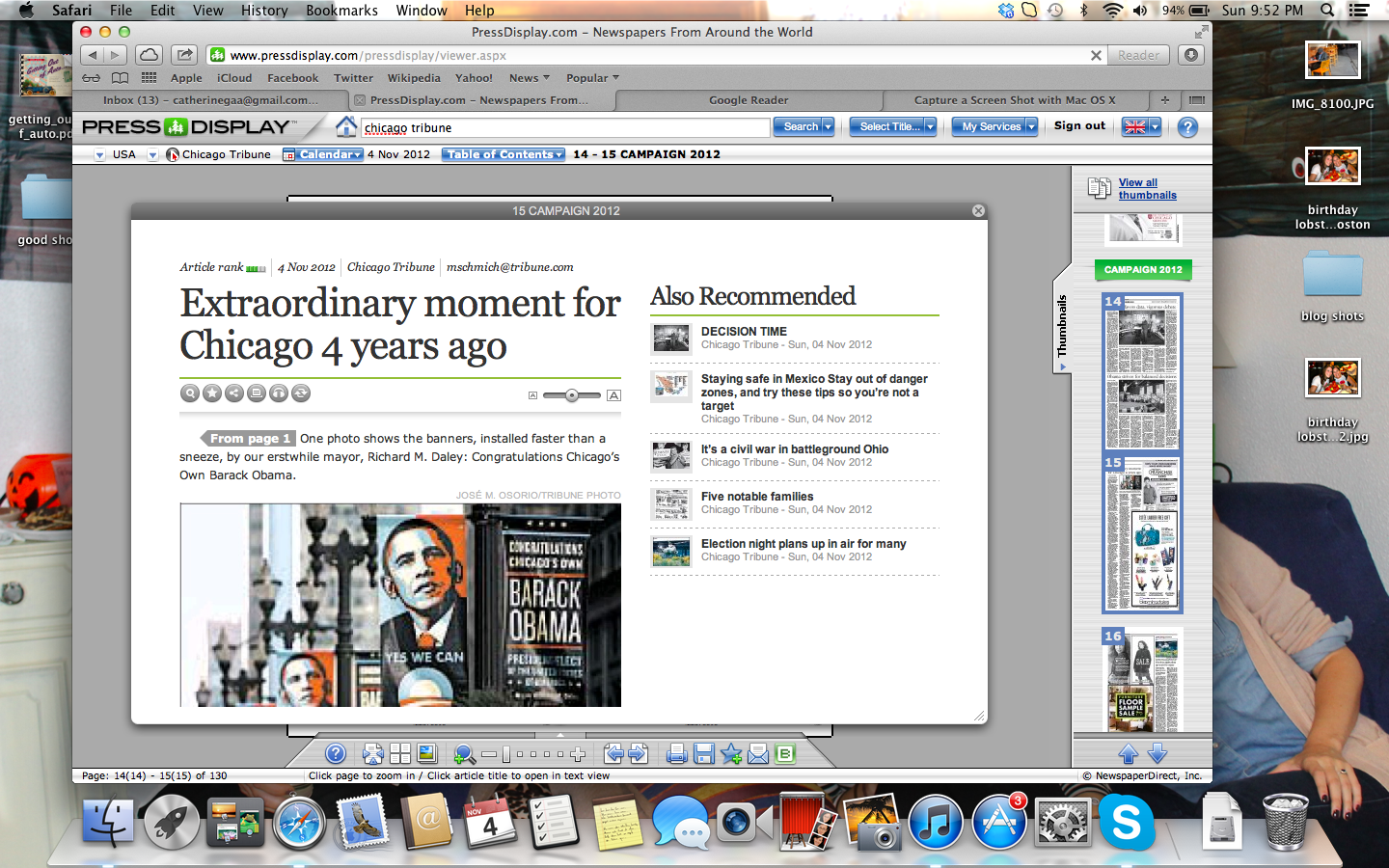
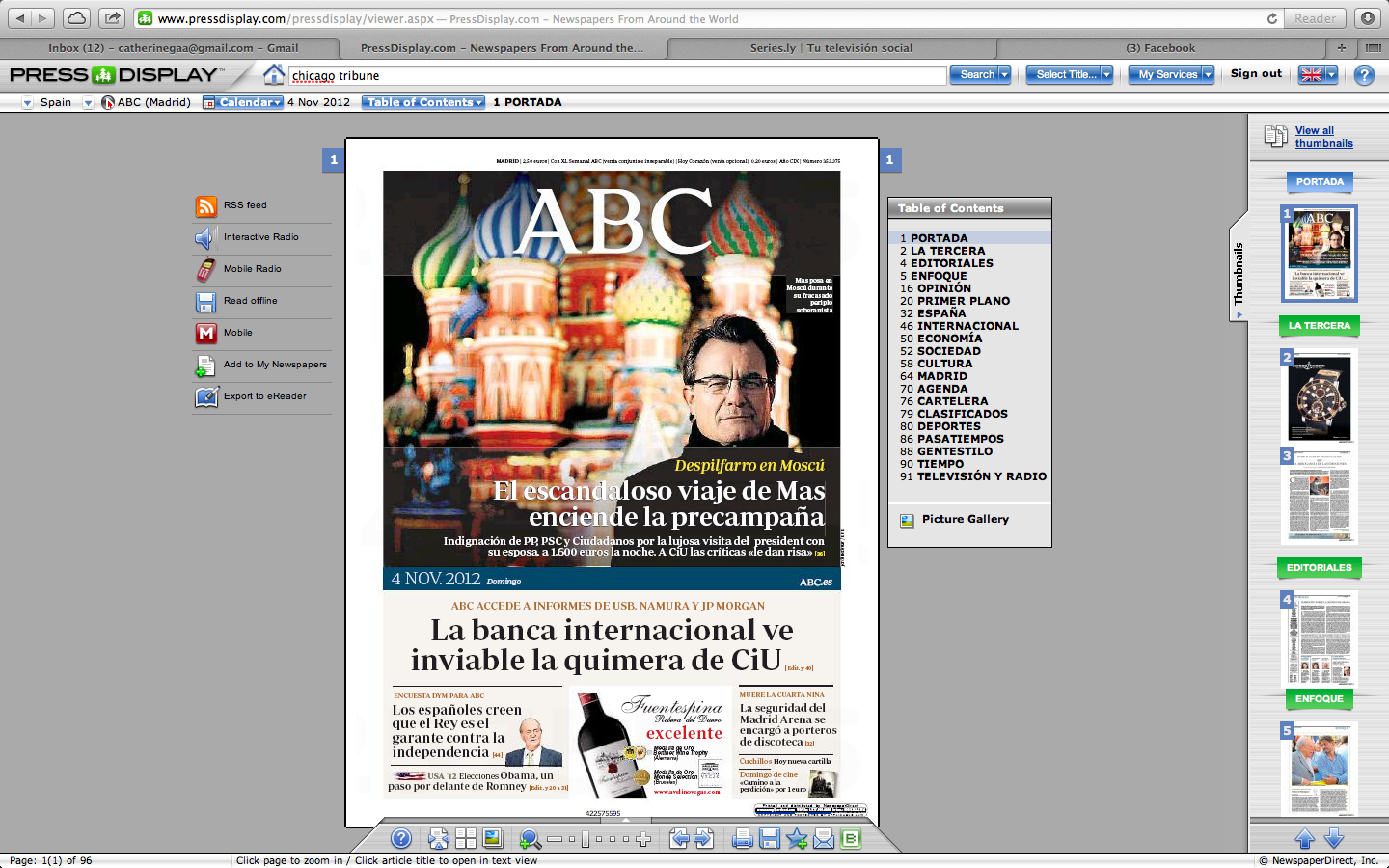
I recently took a test run of PressReader, the largest online kiosk for reading newspapers from around the world on a mobile device, tablet or computer. Over 2,300 newspapers in 54 languages are available for browsing, and my subscription started just before the 2012 Presidential Elections. I opened the application to find loads of information about the impending polling and last minute pushes in swing states, quickly saved a few English and Spanish language newspapers into my favorites and dove right in, cup of tea in hand.

They say no news is good news, but no news makes for a deprived Cat with nothing to do to keep her entertained in the morning. Here’s what I thought of PressReader’s application.

What I liked

The benefits of PressReader stuck out right from the beginning. I could easily move through titles, sections and languages and get a good feel for the applications and its capabilities.

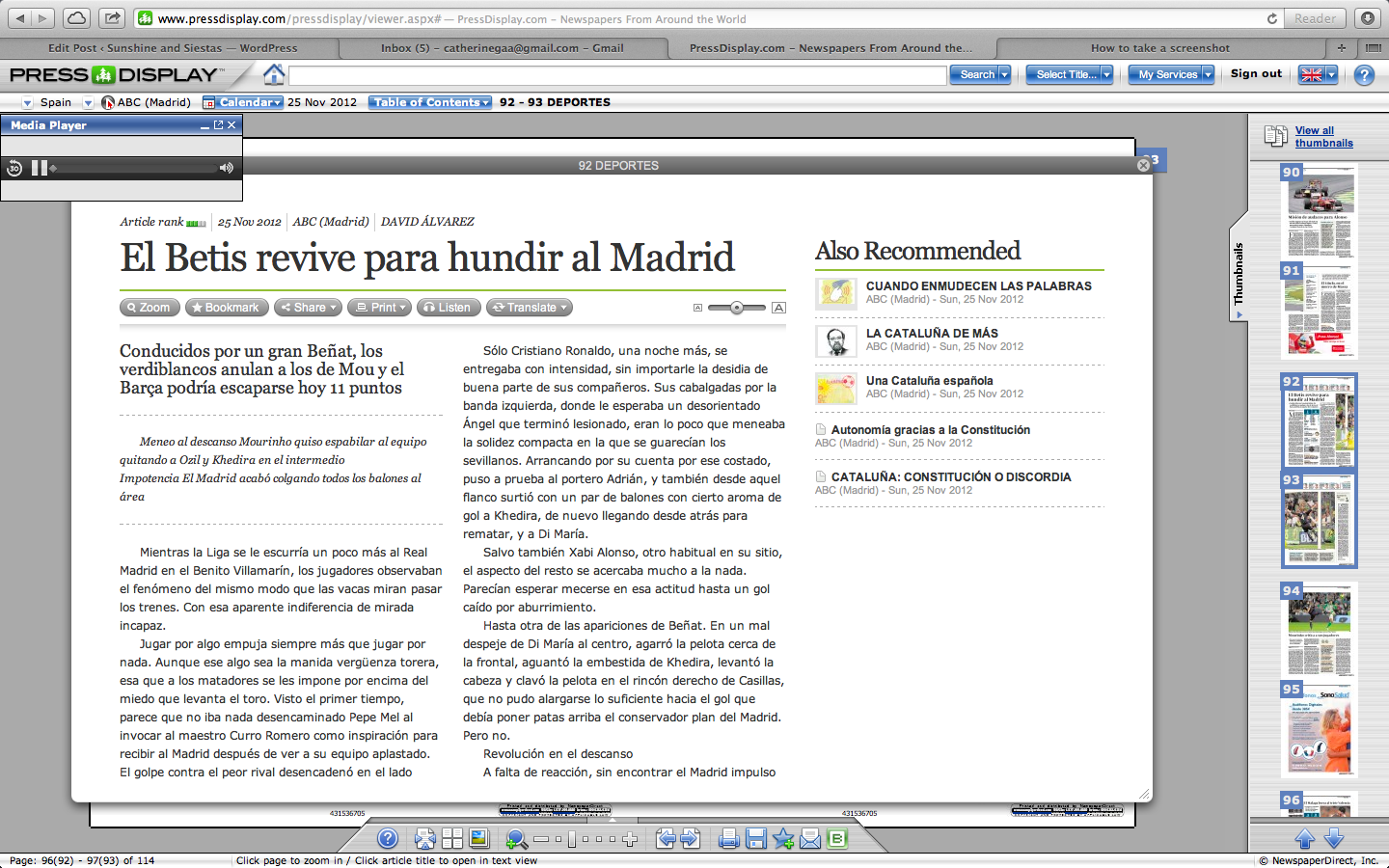
Easy Navigation and Stellar Graphics – When each new newspaper is opened, found through a keyword search or by choosing a language, the front cover pops up and the sections can be found on the right hand side. Here, one can browse the sections that interests them the most, using either the table of contents or the thumbnails of the paper’s actual content. There’s also the option to download the paper to a mobile reading device or to send the article to an email address. The newspaper appears just as it was if it were in your hand, with crisp graphics and the ability to open a separate window with larger text and related articles. If anything, I’d prefer the icons for zooming in, turning the page and closing the article to be floating, rather than on the bottom.

Radio Option –  An automated reading of the piece is available in all languages, perfect for multi-tasking or downloading for later listening. The Spanish readings actually sounded better than the English ones!

The Price – After frustratingly trying to open articles to just browse and get my news fill, having to click to read through Facebook ro other social media was irritating. PressReader offers a close to unlimited number of views for a flat fee of $0.99 cents per download, or a rate of $29.95 a month. Considering you’ve got access to well over 2,000 newspapers and all of its content (including the crosswords!), it’s a great deal for keeping informed.

What could be improved

Small Type – The small type led to problems with me clicking on the wrong articles or links. I couldn’t find a magnifying glass to help me sort it out, either.

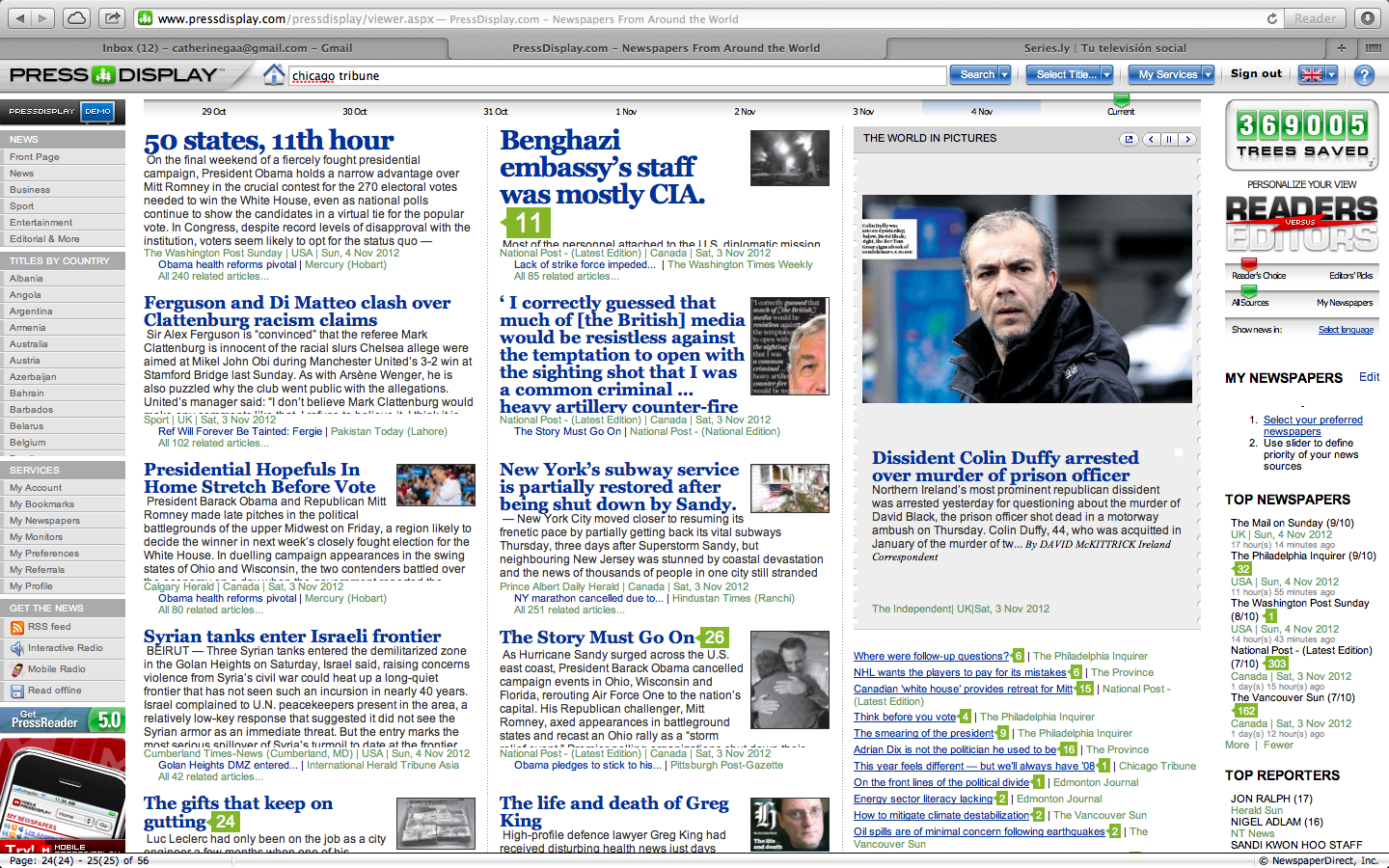
Not personalized enough from the beginning – Largely due to the enormous number of newspapers availble, the front page is a big jumble of popular articles, my saved newspapers and a dashboard. Trying to find articles that interested me was tougher than I expected, so I would have liked the application to begin with a short questionnaire about my preferences, geographic location and preferred language, along with the look of my homepage.

Overall Value

While PressReader is great for the traveler and the digital minded, I miss the slight weight of a newspaper and the smell of ink on my hands. Regardless, PressReader offers travelers an easy way to stay in touch with no pesky “two clicks a day” limit and a reasonable price to have it all at their fingerprints, no matter where or when they’re having their coffee and paper break.

PressReader generously offered me a multiple-month trial of their application for my desktop. As always, all opinion are my own.

How a misguided GPS lead us to a good find, but bad luck

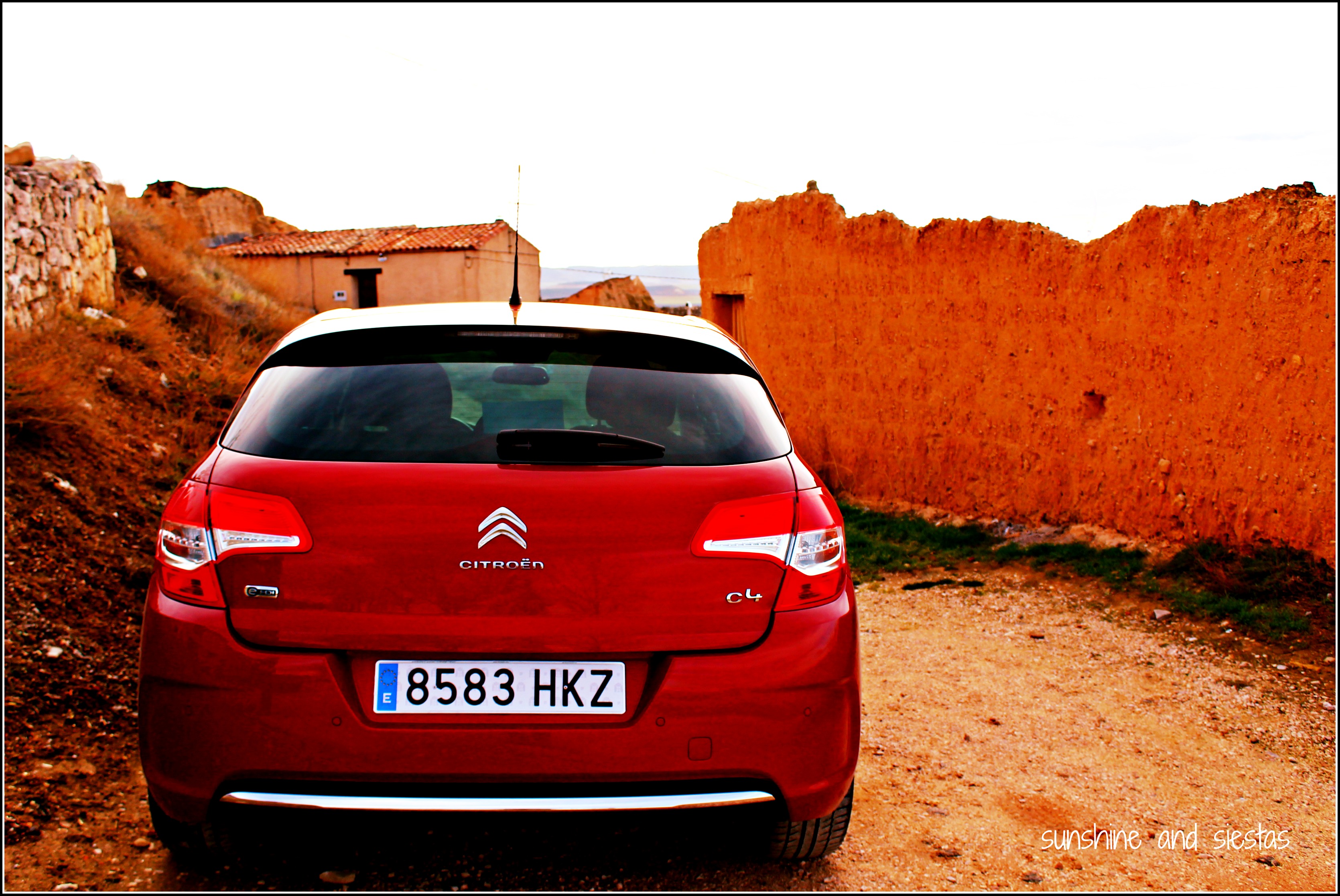
“BUT I CAN’T FIGURE OUT HOW TO GET OUT OF THE PARKING LOT!” I wailed, confused at how to even put the rental car into reverse.

“Dude, let’s ask PSY,” T suggested, and the site of a Gangnam-style doppleganger set me into a fit of giggles. Today was going to be a good day. After loads of back luck during 2012, I finally felt blessed, and that our trip would be  luck at the end of a bad streak.

I asked the car rental guy the easiest way to get out of Madrid, and he asked our destination.

Burgos, I said, as H responded with Logroño, our final destination.

The GPS navigated us out of Madrid and out towards Burgos. Being together outside of camp felt almost strange, but we chattered away to make the kilometres pass by as quickly as they got racked up on the dashboard.

Just past the border of Madrid and Segovia, the GPS spoke again to tell us to turn off the main road and onto a secondary highway.

“It’s probably just avoiding the toll roads or something,” H suggested when I told her that the Internet had suggested driving up past Burgos and veering off on the highway that stretches across the North, following the Ebro river that feeds the grapevines of La Rioja.

The mountain range that separates the two comunidades rolled out on the right side of the window as the vegas turned into golden-leafed forests. As we snaked into Soria – the most sparsely populated region of Spain – my eyes and brain begged for a coffee.

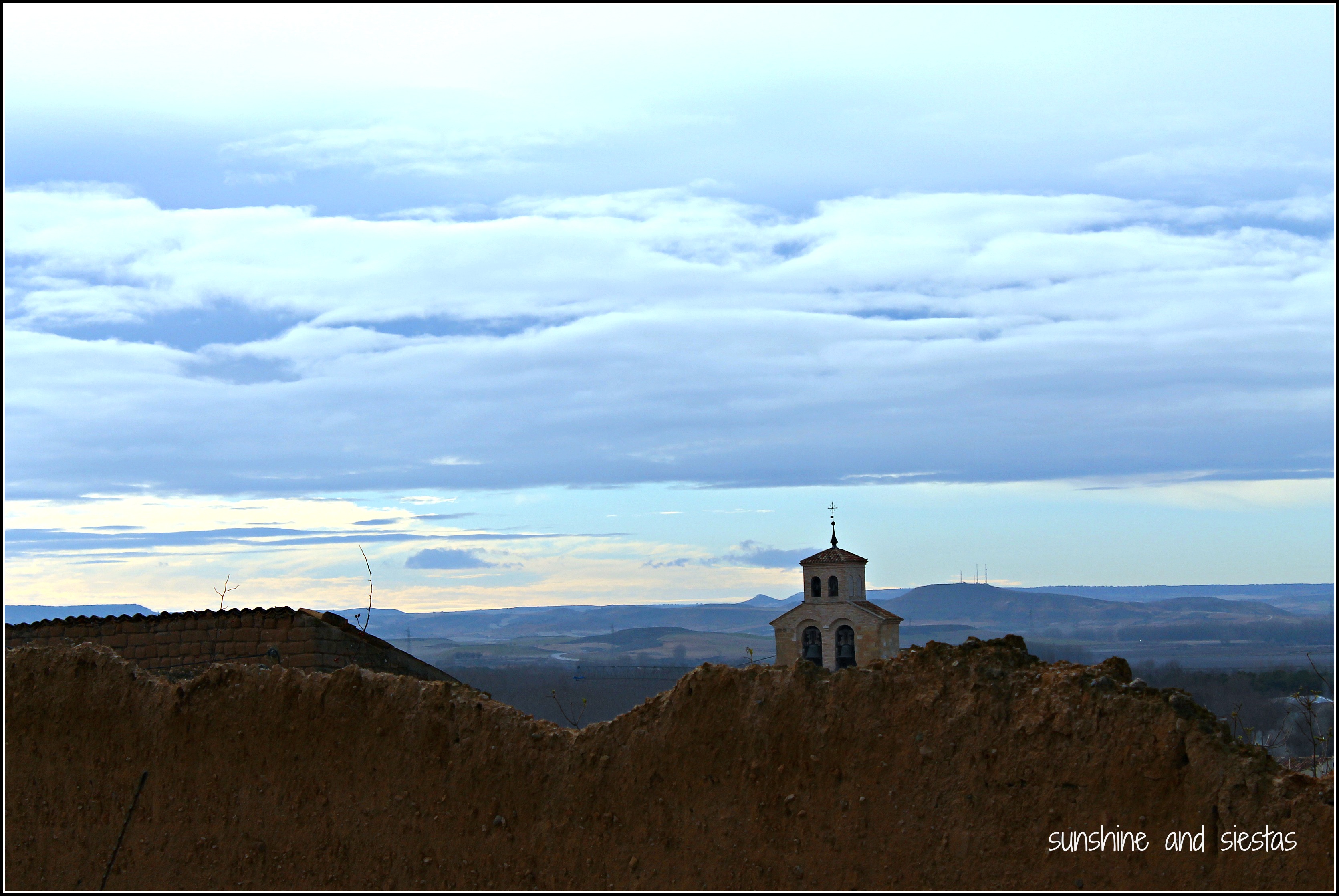
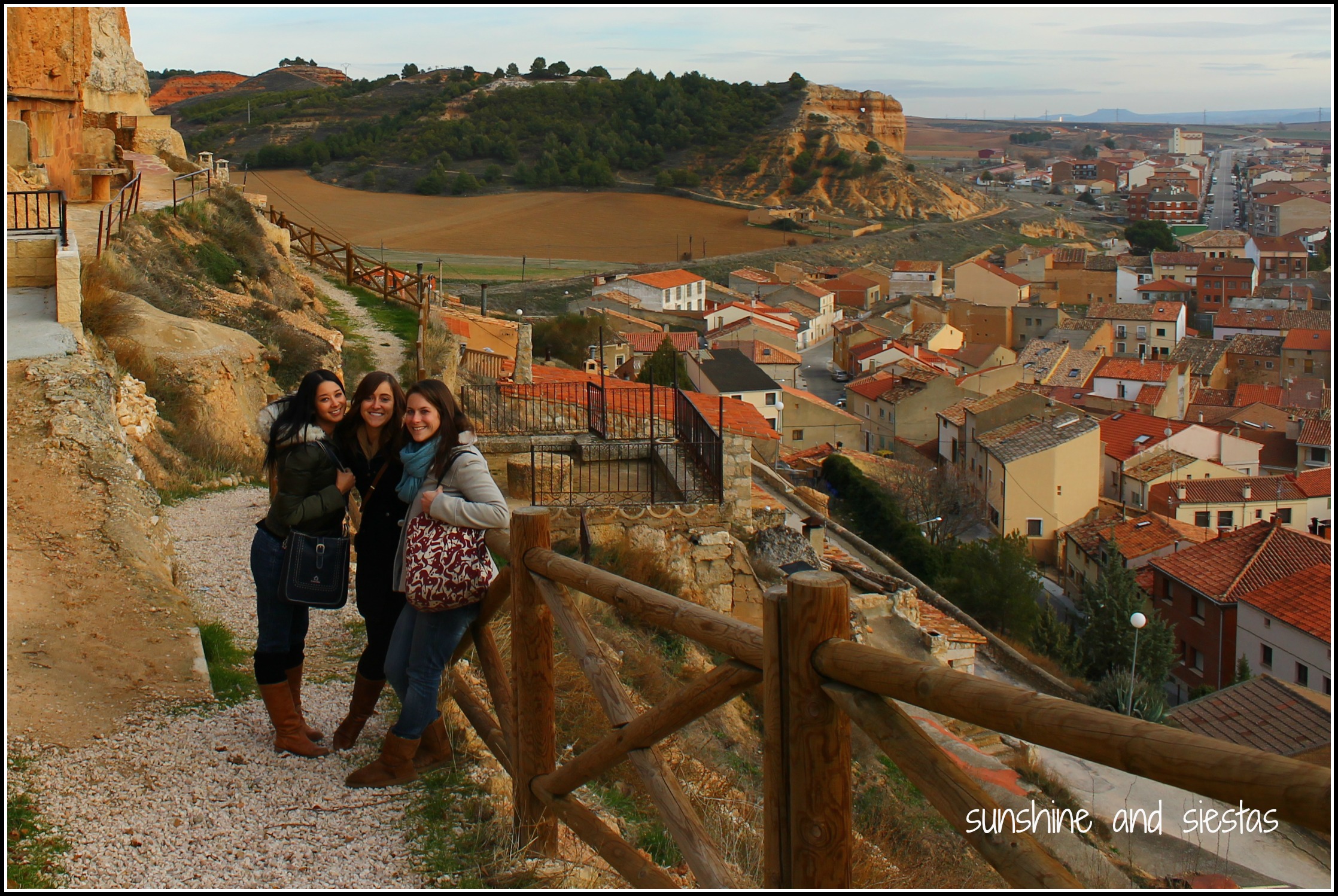
The GPS sounded, as if it read my brain. It directed us into a town on the banks of the Duero, San Esteban de Gormáz. I saw the town’s castle spires on our way in, and we drove as high as the rental car would take us into the town’s midget bodegas with cracked, wooden doors. The place felt a bit like Guadix with the homes carved into the walls, the creaky stairs and catwalks leading across the sides of the mountain. The ancient stones of the small town had lead the namesake to write El Cid Campeador, the famous novel of Spain’s chivalrous knights of the middle ages.

After a quick stop for coffee, we set out towards Soria, passing small towns not big enough for even a church. Coming around a bend in a small aldea, we came across a truck and a guardia civil car. The young office signaled us over to the shoulder and I gulped hard, stone silent in my fear.

Here’s the thing: I knew that the crime for driving without a license could be a 500€ fine and up to six months in prison. 

“Play STUPID!” T hissed as I rolled down the window and uttered hola with my best guiri accent. The cop asked for the car’s registration and my driver’s license. Kike had warned me something like this could happen not two days before, and to be extremely careful. I wasn’t breaking the law, but had been pulled over by a routine check on small country roads.

Using his iPhone as a translator, the cop told me I needed an international driver’s license to be able to rent a car and that we would be fined 100€ on the spot and get a “get out of jail” card until we made it to Logroño. I felt waves of nausea as I forked over two fifties and tried hard not to let onto the fact that I understood, even stifling a small shudder when his partner said, “Wasn’t it 500€ for driving without a license?”

As we drove away after a hurried buenos dias at 4 o’clock in the afternoon, I felt my heart stop racing as we laughed nervously. Luckily, wine country was our destination, and it wasn’t long before I was taking the edge off with a glass of Rioja and cheap tapas. My friends were glad I was driving and that my guiri-speaking-Spanish impression was spot-on.

The rest of our weekend included me losing a cell phone, breaking a few wine glasses and having the worst wine hangovers of our lives, but there are few things I appreciate more than a good glass of tinto, my friends and new places.

LUXE: Seville’s Luxury Hostel

When  I first moved to La Hispalense, I was in touch with Shawn, the woman behind Seville Tapas Tours, about an apartment. The balcony overlooked the bustling Mateos Gago Street and was within earshot of the Giralda’s massive church bells. I could image the smell of orange blossoms wafting into my bedroom window at night as the sounds below lulled me to sleep, but the apartment was not meant to be. Living right in the middle of the historic quarter would have been lovely, but perhaps a bit noisy.

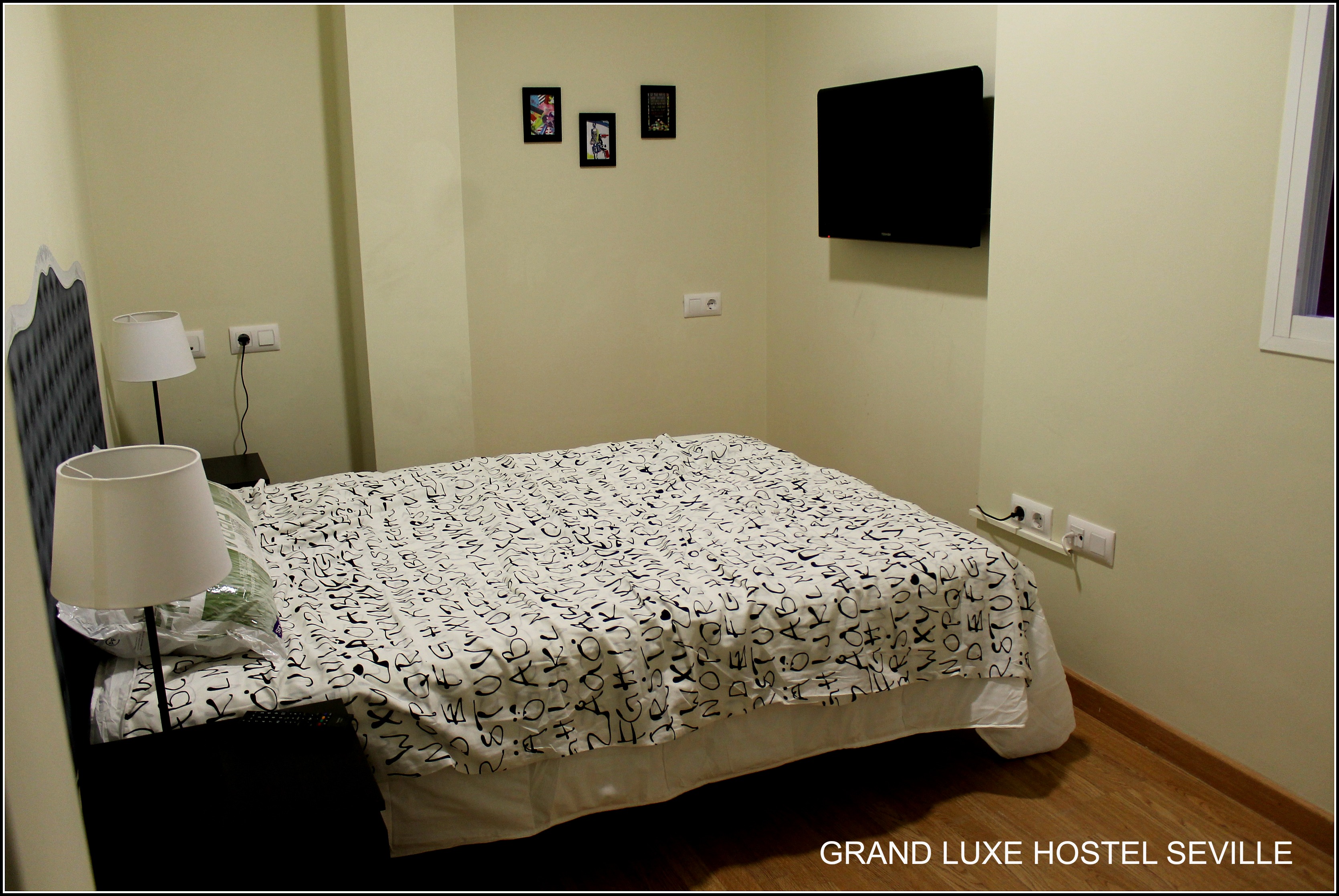
When visiting, my friends who prefer to stay in the city center always look for a place near the Cathedral for its proximity to tapas bars and attractions. Tucked into a side street just steps off of the Plaza de la Virgen de los Reyes is Grand Luxe Hostel, a hostel concept offering premium accomodation in the middle of Spain’s most vibrant city.

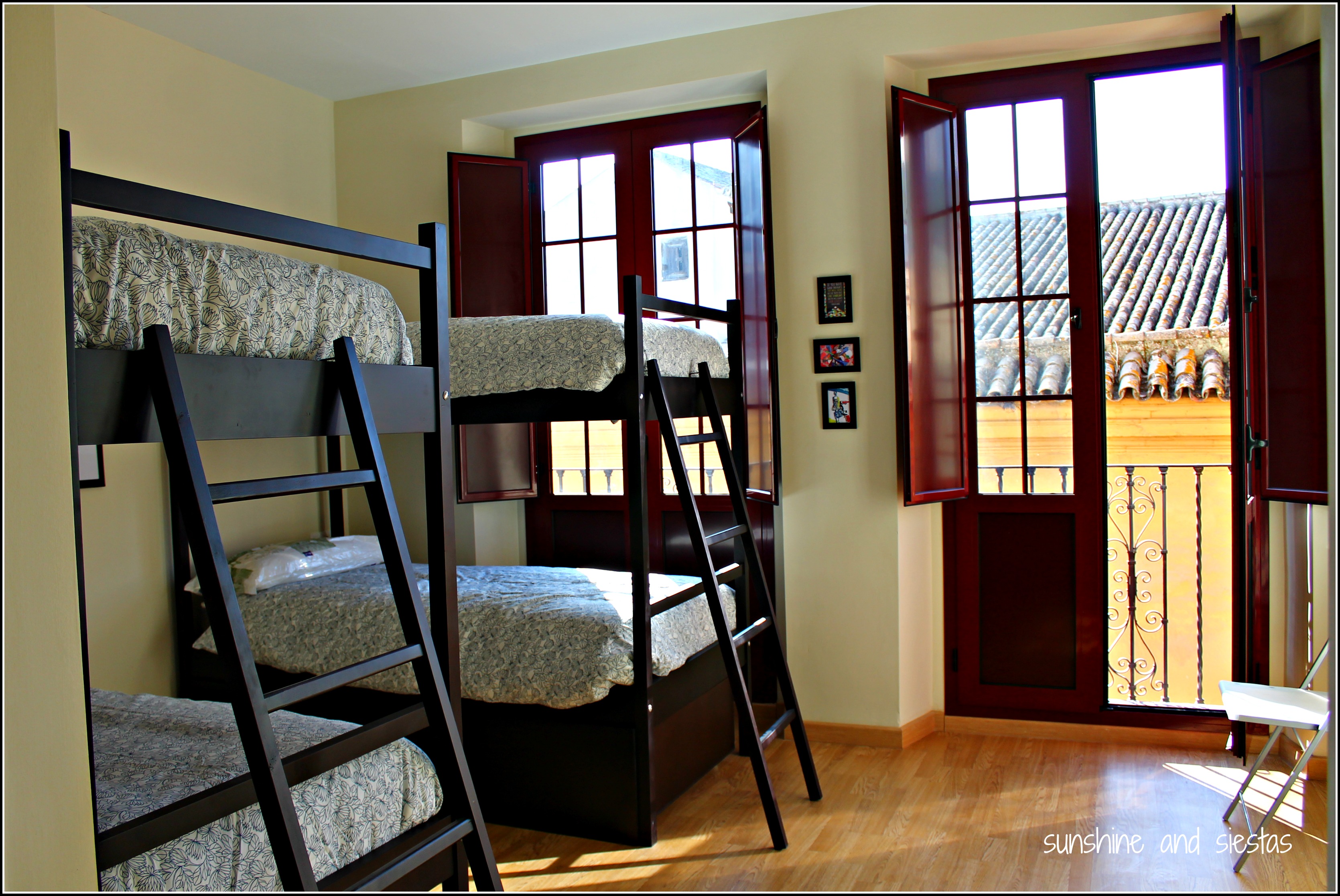
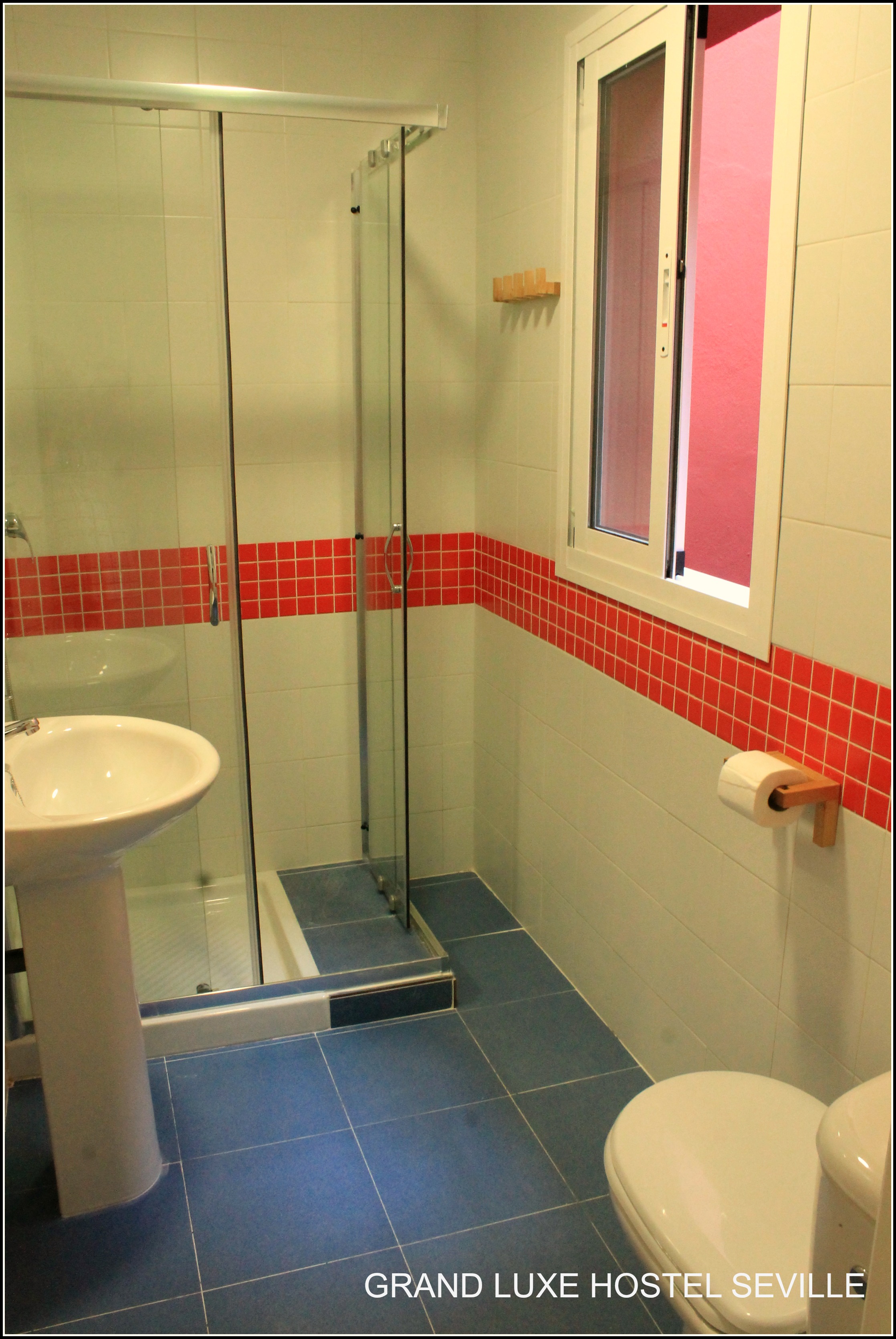
The cobblestoned alleyway leads you to the heavy wooden door of Grand Luxe Hostel. The building, restored in the late 19th Century, is modern and fully-quipped, featuring in-suite bathrooms and rooms especially for families. Grand Luze features 64 for beds in a mix of private double, mixed dorms, girls-only dorms and private twin, all at afforable prices right in the heart of Seville’s quaint Santa Cruz neighborhood.

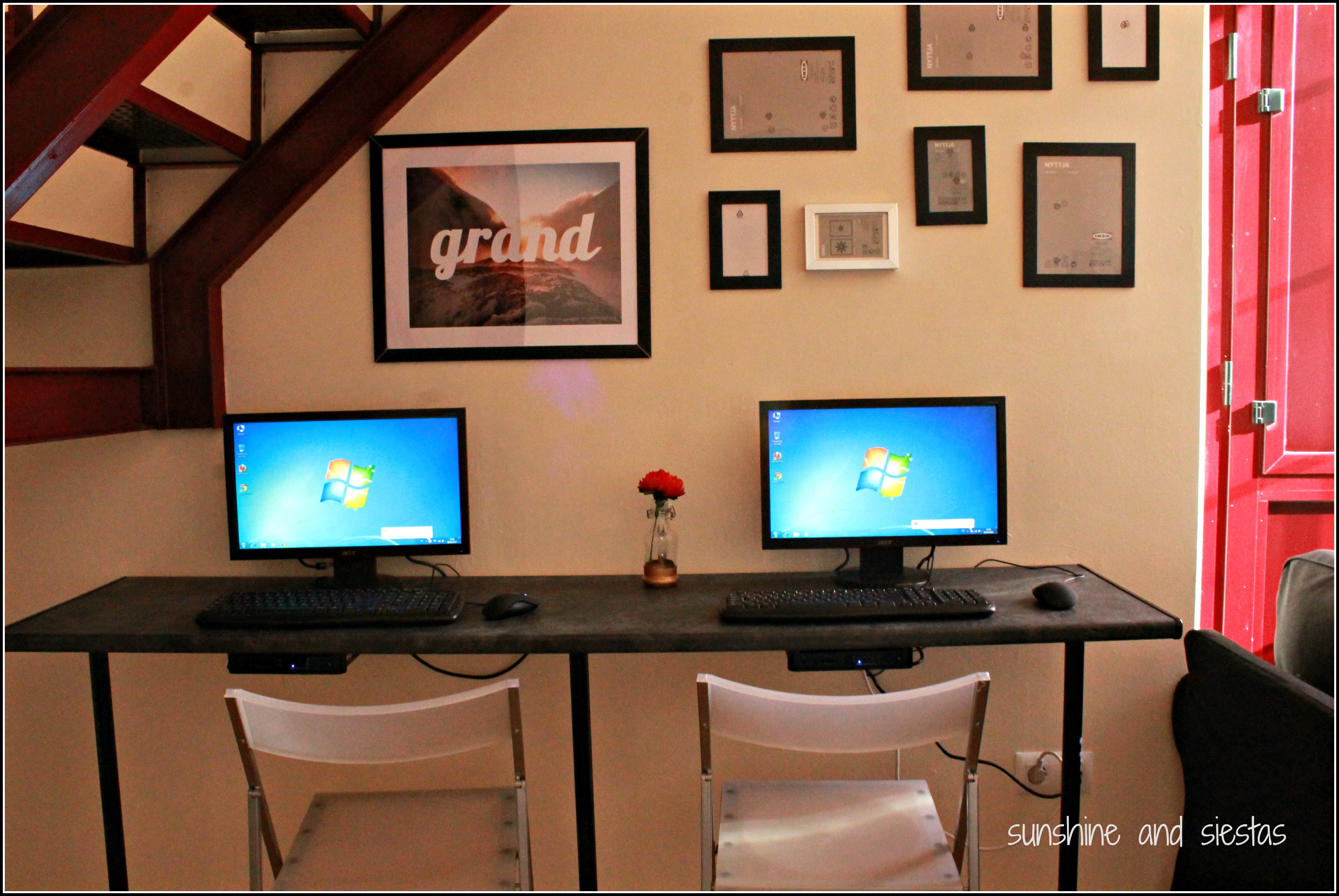
The building has several ammenities – such as an elevator, free wi-fi, a kitchen with complmentary breakfast, and even free gym access at nearby Cuesta Sport in the morning. What’s more, the open areas are comfy and condusive for mingling.

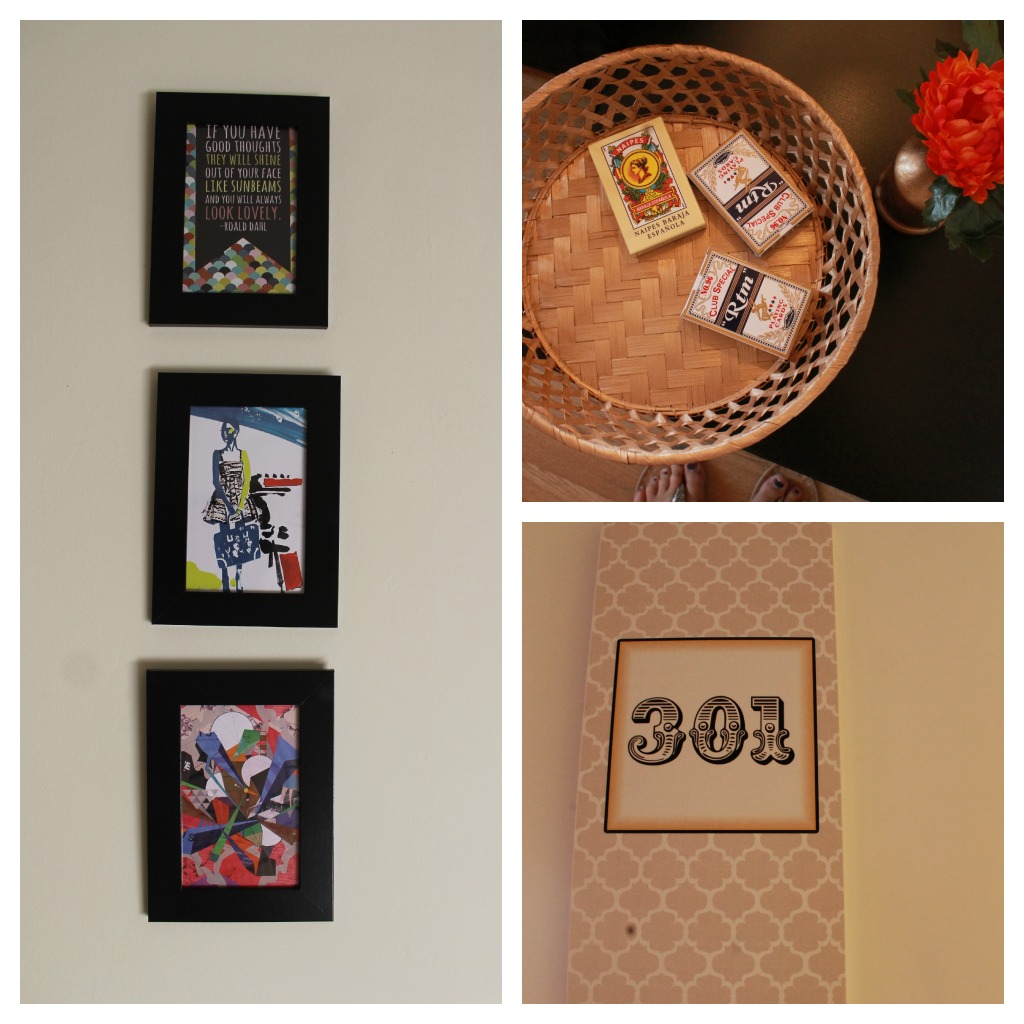
Owner Kate’s eye for design makes the space modern, bright and fun, while the building still retains its charm. In each room, guests enjoy free reading lamps, personal cubbies and private lockers.

The hostel’s best kept secret? The terrace views of the Cathedral and Giralda, which can be enjoyed with a complimentary glass of wine at dusk. The hostel is a prefect jumping off point for Seville’s famous nightlife – great tapas bars, flamenco peñas and cocktail bars are only a stone’s throw away from Grand Luxe, and it’s also within walking distance of the bus station for a quick getaway.

Owners José Luis and Kate

Rooms and bed are available from December 16th, 2012. You can find LUXE on Hostelworld, Hostelbookers or their personal website. They’ve also got a Facebook page, or you can look them up on twitter at @grandluxehostel.

I was not compensated in any way for this article. All views and opinions are my own.

Things I’ve Gotten Better at Since Moving to Spain

Coming from a family of teachers (and officially calling myself one on paper), my mother always taught me the value in learning outside the classroom. Though she counts on her fingers, lady’s a wiz with fractions, teaching my sister and I as we baked Christmas cookies. She taught us animal care by taking us weekly to the barn to groom and feed our first family pet, Pudge, and made us join Girl Scouts.

Any wonder who was my biggest supporter when I decided to move to Spain?

I was recently talking to my friend Gonzalo, one of the Novio’s compañeros from the military academy who lives in Zaragosa. He told me that his parents were amazed at how I’d come to Spain alone and with very little Spanish…and then stayed.

Call it the evolution of a species if you like: adapt or die.

I’ve learned to live without peanut butter, accept that baking here is nothing like it was in Nancy’s kitchen, and spend copious amounts of time on Facebook and Skype in the name of staying involved back home. But, with all of this, I’ve also learned a thing or two and have improved skills that I never thought would be necessary.

Parallel Parking

Recently, my friend Sandra of Seville Traveller and I were attending the Evento Blog España. The rain was pouring down, so we took her car to a nearby barrio for lunch. I watched as she maneuvered her compact car into an even tinier parking spot in a garage littered with cars, scooters and the like.

I’m American, from a place with wide open (parking) spaces, often the diagonal type that are simple to pull in and out of. Coming to live in a place like Spain means that I’ve had to adapt to their bumper kissing, doble fila and maneuvering Kike’s enormous vehicle when it’s my turn to drive. Something to work on? My tendency to panic when driving in a place I don’t know.

This, of course, has not been without oops moments – two years ago, Kike’s tank of a car got a big scratch from my carelessness when pulling it into a parking space, rather than backing it in.

Eating fish

Nothing says Midwesterner like my love for beef and grain. I accidentally consumed fish before realizing that I actually liked it. Since I had never learned names of fish and seafood, I often ordered sea creatures – as well as tripe stew, kidneys and coagulated blood – without knowing what I was really eating.

I’ve also learned how to clean it properly, from pulling the ink sacs and backbone out of a chipirón to lifting the bones of a white fish. It reminds me of a picture of my sister and I during a fishing trip in Wisconsin when we pinched our noses and stuck out our tongues as my father cleaned and grilled the perch we’d caught – it seems I’ve come full circle.

Travel has also made me an adventurous eater, in that I’m the first to try whatever is on the menu – even bugs, weird organs and live oysters.

Cutting Onions Without Crying

When I met Melissa, she told me that part of our monthly rent would go towards things we’d need in the house: cleaning supplies, olive oil and onions.

Onions have also crept into my diet just as fish have, but the hardest thing was learning to cut them without crying – I used to have to wear sunglasses to stay dry! Now, I usually cry while cooking the onions, but that could just be the smoke.

The secret? Doing it fast and cutting on a slant.

Sticking up for Myself

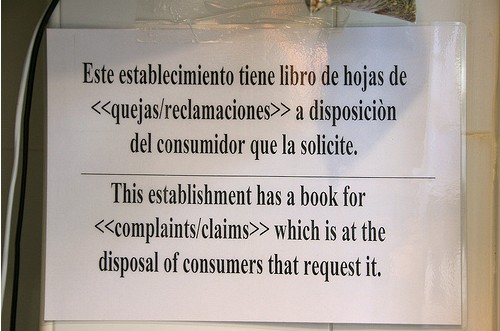
When studying for the DELE exams last November, I had Kike read all of my writing prompts. His conclusion is that I’m really good at reclamaciones, or complaint letters. I used to be the girl who would gulp down food that should have been sent back, or turn on my heel and not stand up to the funcionarios when they turn me away.

That all changed when a taxi driver took me the wrong way and wanted to charge me for it. I asked him to leave me at a cross street, but he insisted it was a shortcut and that would take me to where I needed to go. When I asked him to leave me off and let me walk the rest of the way, he tried to charge me the full amount. I insisted on him stopping the meter, leaving me a receipt and taking down his licence number. With that, he charged me just half and let it go.

I’ve learned to be proactive and not let people or silly rules walk all over me. Not the Vodafone salesman can turn me away when I start running my mouth about how they never signed me up for the insurance I had paid for on my bills, or to a nurse who was verbally abusive to a friend (we filled out a claim in the much-advertised LIBRO DE RECLAMACIONES). I’ve also told a few little lies to the people in extranjería to help speed up the process of getting paperwork done.

In Spain’s current economic situation, people are trying to squeeze as much out of every person as they can, which means that foreigners sometimes bear the brunt of their bad service and overcharging. Being assertive won’t cost you anything.

I still think I’m a little lost guiri whose luck just happens to never run out. Living abroad is a test in patience and resilience, yes, but it’s a lot about stepping back, taking a deep breath and remembering that it could happen the same way in your country.

What have you learned to do better during your time abroad? What do you want to improve on?

Related Posts Plugin for WordPress, Blogger...