Seville Snapshots: Verano de San Miguel

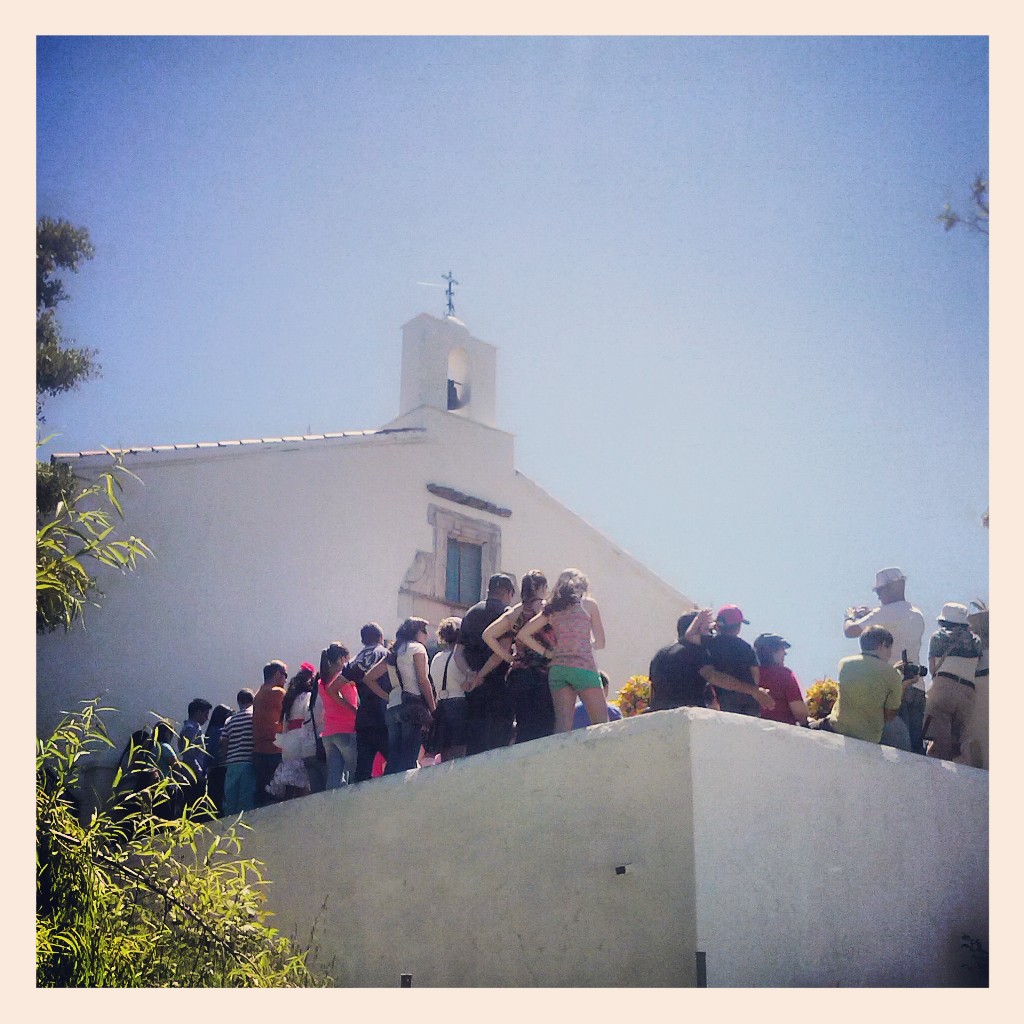
The streets hummed – literally, I mean: on one end of San Jacinto, a religious procession was led by a brass band playing melancholical music while a cover band rocked the steps at Capote. We could barely skirt around the throngs of people enjoying the early evening breeze near the Guadalquivir during Seville’s Golden Hour, though I was enamored with the colors and the sky (I have not touched this photo, save to put a border and a water mark!)

This is what the Spaniards call Verano de San Miguel: coinciding with the feast day of San Miguel, the summer makes one more valiant push before the days in Seville turn crisp and cool. Just when I thought I could sleep soundly at night, we were surprised by a heat wave and had to turn on the air again. But there are vegetable cream soups and comfy sweaters to look forward to (and hopefully some rain so that I can stop washing my car every damn week!).

Are you looking forward to welcoming fall? I’m already longing for next summer – the World Cup, a trip home and fried sardines!

Exploring the Roman Ruins of Itálica Near Sevilla

Shame on me: my blog friend Trevor Huxham of A Texan In Spain pointed out that, in six years blogging about Seville, I’ve not ONCE written about Itálica, a former Roman settlement that you can practically see from the city. Trevor offered to write about this once-bustling city that saw Hadrian and Trajan grow up (while I go sulk in shame):

It’s a little-known fact that half an hour from the southern Spanish city of Sevilla you can find the ruins of an ancient Roman town. Now, I know you’re going to say, But Trevor, Sevilla started as the Roman city of Hispalis, why is this so special? Well, I’ll tell you. Modern Sevilla sits upon two thousand years of not just Roman history but also Moorish, Christian, and contemporary reworkings—so hardly any vestiges of the Roman city remain to be seen. The town of Itálica, however, was long deserted before major architectural upheavals beginning in the Middle Ages could erase its Roman character, so the ruins you see give you an idea what it was like ca. two millennia ago.

Itálica’s claim to fame is being the first Roman settlement in Spain. After a battle during the 2nd Punic War (which was fought between the ancient Mediterranean powers of Rome and Carthage), General Scipio’s troops became stationed at this outpost on the important Guadalquivir River. Centuries later, two of the city’s sons would become Roman emperors: Trajan and Hadrian. The brochure I picked up at the ruins explains that, despite being developed during those emperors’ reigns, the town fizzled out and was ultimately abandoned by the medieval era. The nearby pueblo of Santiponce was founded only in the 17th century.

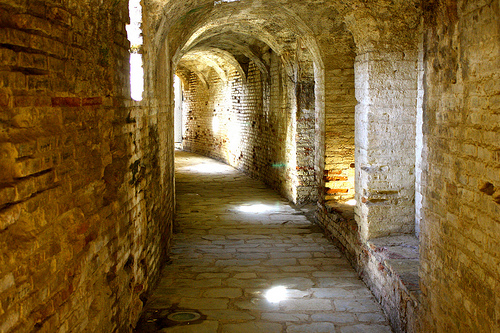
The large amphitheater is what primarily draws folks to the ruins. About half the size of Rome’s Flavian Amphitheater (aka the Colosseum), it would have hosted sporting events and gladiator fights for the local population. For modern-day spectators, it no longer has such a Colosseum-esque grandeur, having lost its stair-step grandstands long ago. But you can still amble through the gently-lit galleries that link what remains of the seating and envision toga-clad Romans hurrying through the tunnels to the nearest urinal or picking up a box of popcorn from the concessions. (Forgive the anachronisms…I couldn’t resist!)

Beyond the amphitheater you can hike across an original Roman road and appreciate the ancient municipal street grid. Itálica has little left apart from a few house walls here, some foundations there, but what remains is particularly powerful. Colorful, pixelated mosaics set a scene of reclining diners enjoying bread and wine…or they recall the pensive, candlelit face of a woman pacing the colonnaded porch, in between first and second sleeps. You can touch the still-sharp, right-angle bricks that form corners of a shop or a bedroom and wonder—who must have made those bricks, who must have set them in place? Sleepy from too much bread at lunch, peer inside a shadowy oven and imagine a tunic-clad baker removing warm loaves that would have fed the town.

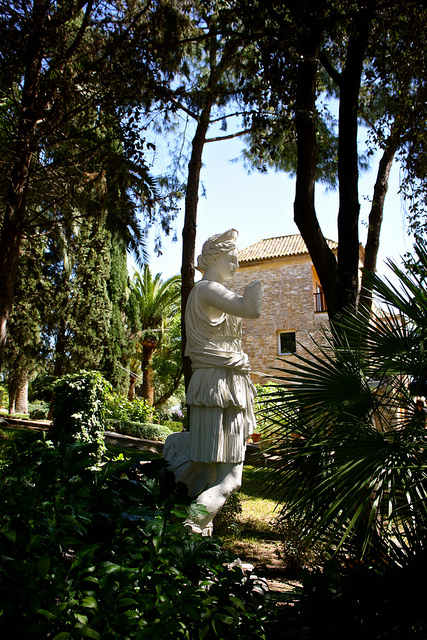
It’s fun to fantasize about what life might have been like in a Roman town, but there’s only so much you can do with stone foundations. Most of the fascinating artifacts, statues, and inscriptions are housed in the Archaeology Museum of Sevilla, a museum that you can find in the Maria Luisa Park just to the south of Sevilla’s historic center. Inside, you can see impressive, sprawling mosaics, serene busts depicting the emperors Trajan and Hadrian, and even political documents written on bronze tablets. Don’t miss this museum when you visit Itálica!

How to get there

The ruins aren’t technically in Sevilla proper but in a suburb called Santiponce. I took the M-172 bus line from Sevilla’s big Plaza de Armas bus station to the end of the line, where I was dropped off in front of the entrance (Avenida de Extremadura, 2). Itálica is free for EU residents and 1,50€ for everyone else.

Trevor Huxham is a language assistant in between teaching placements in Úbeda (Andalucía) and Santiago de Compostela (Galicia). A native of Texas, he blogs at A Texan in Spain where you are welcome to say “howdy!” and stick around for a while.

Have you ever been to the Itálica ruins before? Do you prefer exploring remnants of the past or taking in contemporary culture more? Comment below!

A Por Ellos: What to Know Before Attending a Spanish Soccer Game

My first true sports love was the Green Bay Packers. Growing up along the border of Wisconsin-Illinois, my classmates were divided between Cheesehead lovers and the Monsters of Midway, making the Bears-Packers games something of legend. Nevermind the fact that I was born the year Ditka took Da Bears to Da Superbowl – Brett Favre and Vince Lombardi were my childhood heroes, along with Nadia Comaneci.

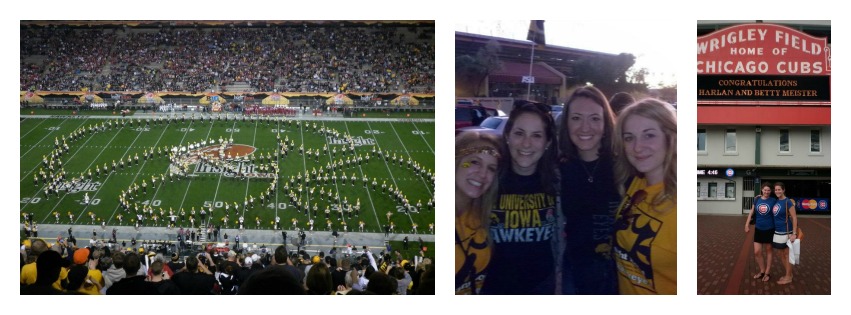
I soon took up a profound love for my university team, the Iowa Hawkeyes, as well as the Chicago Cubs, both perennial underdogs in their leagues. Then I up and moved to Spain, where no pigskins or baseballs are readily sold. I’d have to choose between tennis, synchronized swimming or fútbol to satisfy my sports cravings.

Thankfully, fútbol is sacred in Spain, and I was soon watching games every week with friends around the city. I learned the names of all the players on the Spanish national team and followed them earnestly (I even jumped into the Cantábrico when they won the World Cup in 2010, one of my fondest memories of my time in Spain). But I never answered the question so many students posed: ¿Sevilla ó Betis?

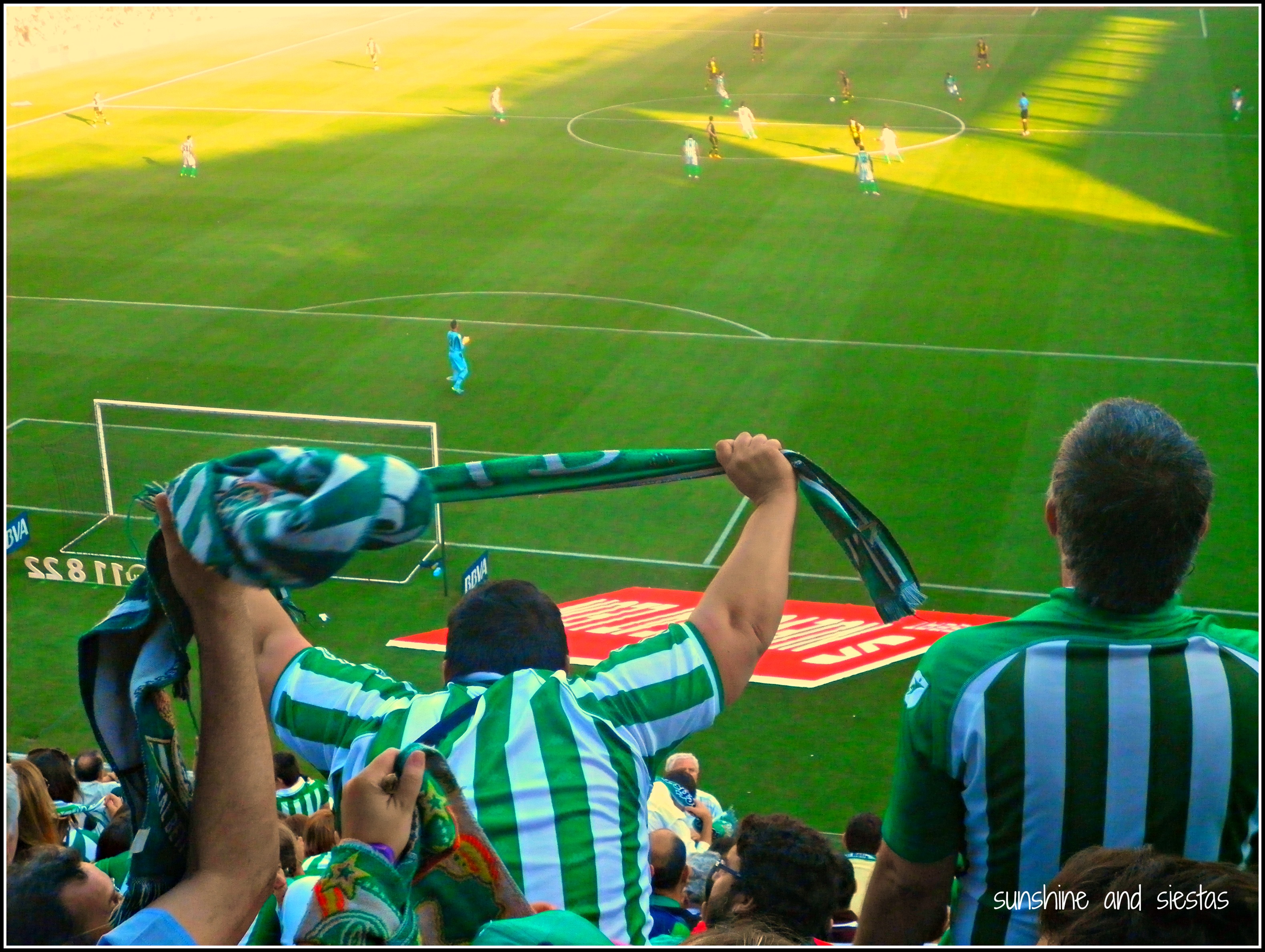
Thanks to some earnest friends and invitations to Estadio Benito Villamarin, I have become bética, which is Seville’s lesser-known team and home to one of Spain’s biggest fan bases (true story: there’s a Peña Bética club in NYC). Friends like JM, the Novio, Manuel, Pedro and even my former boss sold me on the idea of the underdog, the verdiblancos whose reputation took a beating in 2009 when they descended from the top Division Primera of La Liga into Segunda, where they spent two seasons. I attended the match late in the 2011 season los de la Palmera secured enough points to ascend back to Primera, and my heart swelled. That was all it took – living on the borde of a victory or a terrible defeat, the colorful ways the fans would insult the refs, the other team, even their own players and coach. If Barcelona Futbol Club is “Mes que un Club,” Betis is more than a feeling.

Note to self: it’s a fútbol team, no need to wax poetic. Besides, this post is about the matches and not my team.

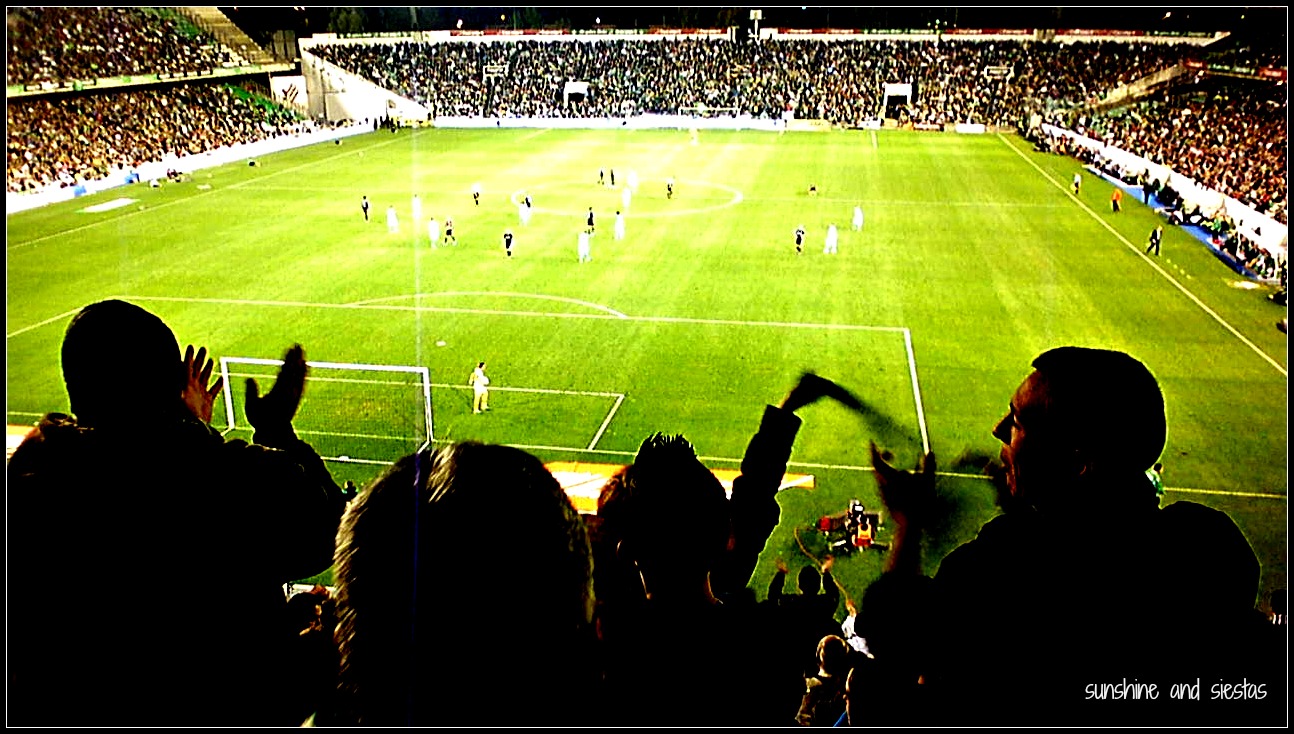
Towards the end of the 2012-13 season, I went to the Derbi Sevillano, a pre-Feria tradition where Seville’s two teams square off. Season records are broken in attendance, and police forces swell to accommodate the botellones before kickoff. Tickets are a hot commodity, but the Novio’s business trip meant Emilio and I would be squished together in Gol Norte, cheering on our afición.

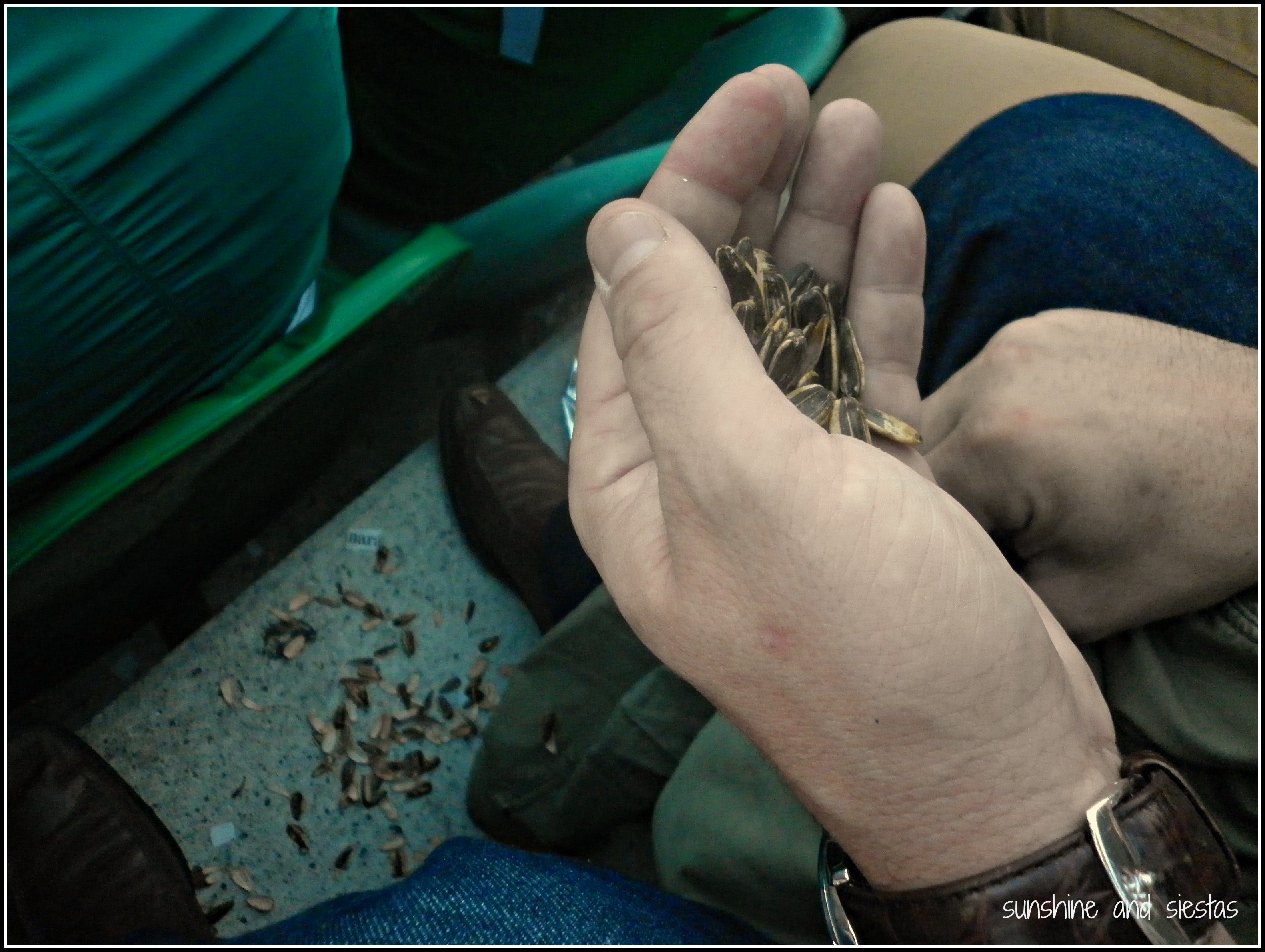
Attending a match with socios is a lot like attending a reunion – everyone knows one another, passing around packs of sunflower seeds and glasses of wine. Everything is debated and criticized, from calls to inability to stop goals. People go hoarse slinging insults at the other team (or even their own), hugging and giving slaps on the back when the team scores or has a good rebote. The two halves pass by quickly when you’re up, or excruciatingly slow when you’re down.

For my birthday last week, the Novio bought Emilio’s season passes off him, so we’re in for another season of debilitating defeats! The season started last week and will last until June, then it’s World Cup time again! Move over, Cubbies, attending a Spanish fútbol match is a whoooole new ballgame:

Understand the Organigrama of the Liga BBVA

The BBVA Spanish soccer league is composed of 20 teams in the top tier, called La Liga in Spanish and is one of the most-watched leagues in the World (duh, Spain has won the 2008 and 2012 Euro Cups and the 2010 World Cup). Each team plays a schedule of two rounds against the other teams, once home and once away, for 38 weeks, each called a jornada. Depending on match outcome, the teams earn up to three points, and they accumulate points throughout the season.

The team with the highest amount of points is crowned Campeón de Liga, and often clinches the playoff title, too, and the three lowest scoring teams are automatically moved down to Segunda División. Teams at the top of the second tier are welcomed back into the Primera División, and there is a playoff to determine the last spot. You’ll often see people at games who are also following other matched with their mobile phones or radios, jotting down points scored during the week and configuring where their team stands at the end of the jornada.

Not that you’re interested, but there’s also Segunda B and a Tercera División (an American friend of mine played for Albacete, who is in Primera B, thus making himself way cooler than anyone else I know).

But what about Fernando Torres and Jesús Navas, who play for the Selección Española national team? Many Spanish soccer stars opt to go to the Premiere League in the UK for their salaries and prestige. The same goes for Lionel Messi, who plays in La Liga for Barcelona, but also for the Argentinian National Team.

The bocata is sacred

After you’ve suffered through 45 minutes of tiki-taka, or the juggling between players that is characteristic of fútbol in Spain, the field suddenly empties and fans grab their bocata and can of pop. This, of course, after they’ve had an aperativo of pipas, or sunflower seeds.

Make sure you bring yourself a sandwich for halftime, and make sure it’s big enough to share. It may be a good idea to bring wet wipes for when you’re done, too (or maybe that’s just me).

Know your curse words

On my second day in Seville, my grandmother and I attended a Sevilla Fútbol Club match against Recreativo de Huelva. My grandmother is a demure woman, but fun-loving and open to new adventures. We climb up to the far reaches of the Sánchez Pizjuan stadium, and I settled in between a concrete wall and a man whose stomach stuck out as if to catch all of the pipas falling out of his mouth. Not knowing enough Spanish, my abuelita sat in the empty seat in front of me. I’m pretty sure she got pipas in her hair, too.

Whenever Sevilla lost posession of the ball, the man next to me would shout, JOOOOOOOOOder. joDER. JODER.

Naturally, my grandma thought it was a victory cry, even though the club was up 3-0. She began chanting it, too, and I couldn’t find the heart to tell her that it was a strong explicative because she looked so happy feeling integrated into a very Spanish part of life. Now that I’ve been to several more fútbol matches, I sling insults at players (often from my own team) and the refs with a well-crafted swear word or two. Try it, you’ll love it.

It’s expected to use strong adjectives

It has to be said: Andaluces are exceptionally good at exaggerating, and football is no exception. A well-deserved goal becomes a golazo, a blocked goal, a paradón. When discussing plays with your neighbor, be sure to add -azo, -ón, -ote to the end of nouns, and súper- and híper- to both nouns and adjectives.

And don’t be alarmed when you see grown men cry, either.

People throw things. Often.

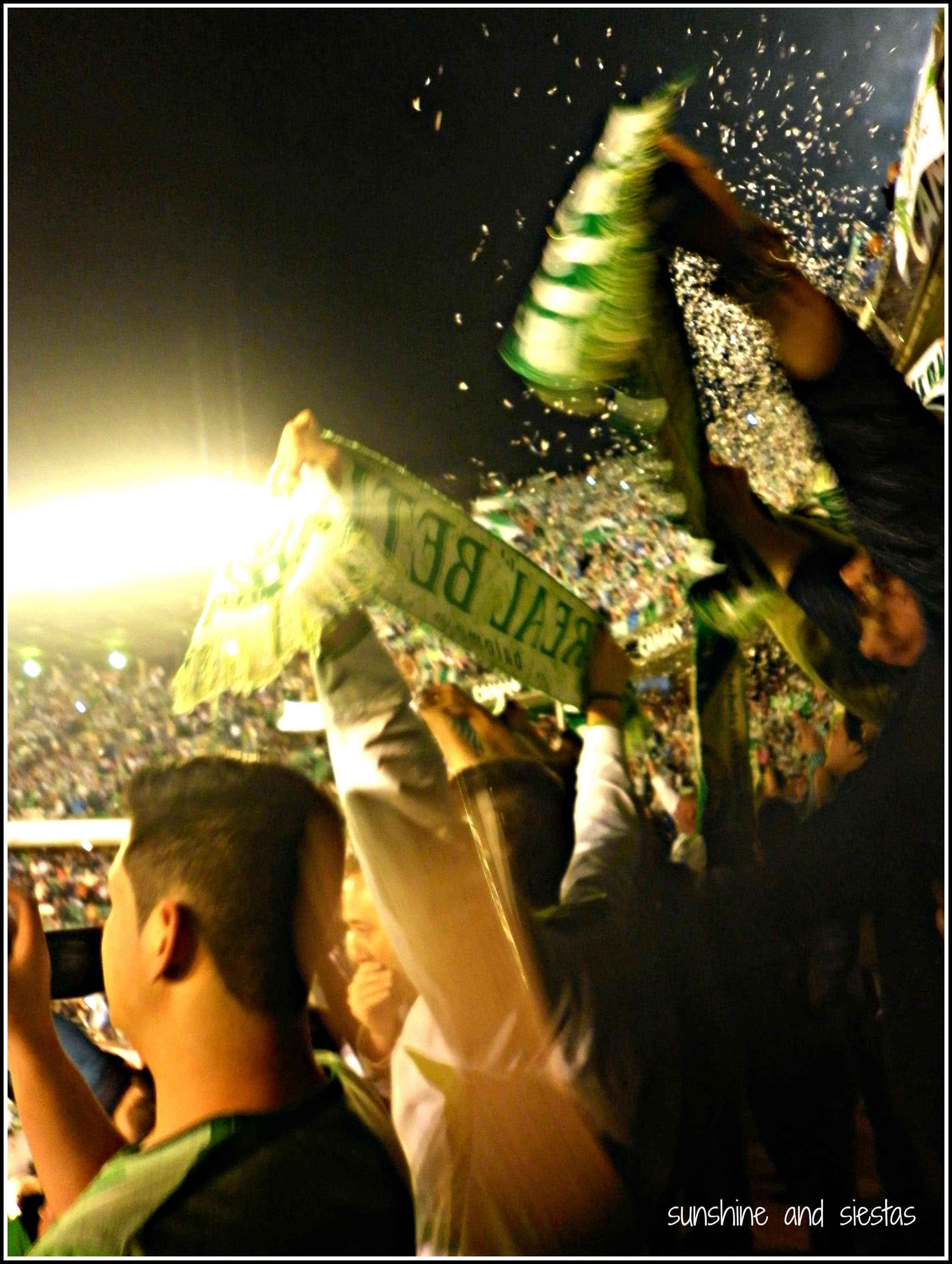
As the Himno del Betis rings throughout Estadio Benito Villamarín, los béticos tend to release millions of paper stars, toilet paper rolls and even paper airplanes fashioned out of the lineup towards the field. Since the Novio and I sit in the first amphitheater, we get everything from the second and third, plus splashes of wine from the guy who sits directly behind us. Rare is the day where I shake my head and only a few sunflower seed shells don’t fall out.

But don’t worry, it’s all in good fun, and it sure beats the time where some Florida Gator fans poured a beer on my head at the Outback Bowl.

Who’s your afición? Have you ever been to a Spanish soccer match?


My Travel Round Up from the First Six Months of 2013

My parents, upon my high school graduation (10 years ago…thank you, Atlantic Ocean, for existing and putting distance between me and my fellow Tigers just this once!) gave me a heartfelt speech about how I was always the child who never learned how to walk. I went from spitting up on myself to running, just like I went from college to globetrotter four years later.

There was no better way to start my year than ringing in 2013 with my familia and cousin Christyn in Puerta del Sol. The first six months of the year have been busy (but the good kind), fruitful and happy. I’ve been able to sneak in some travel, my 30th country and finish a master’s in the process.

January

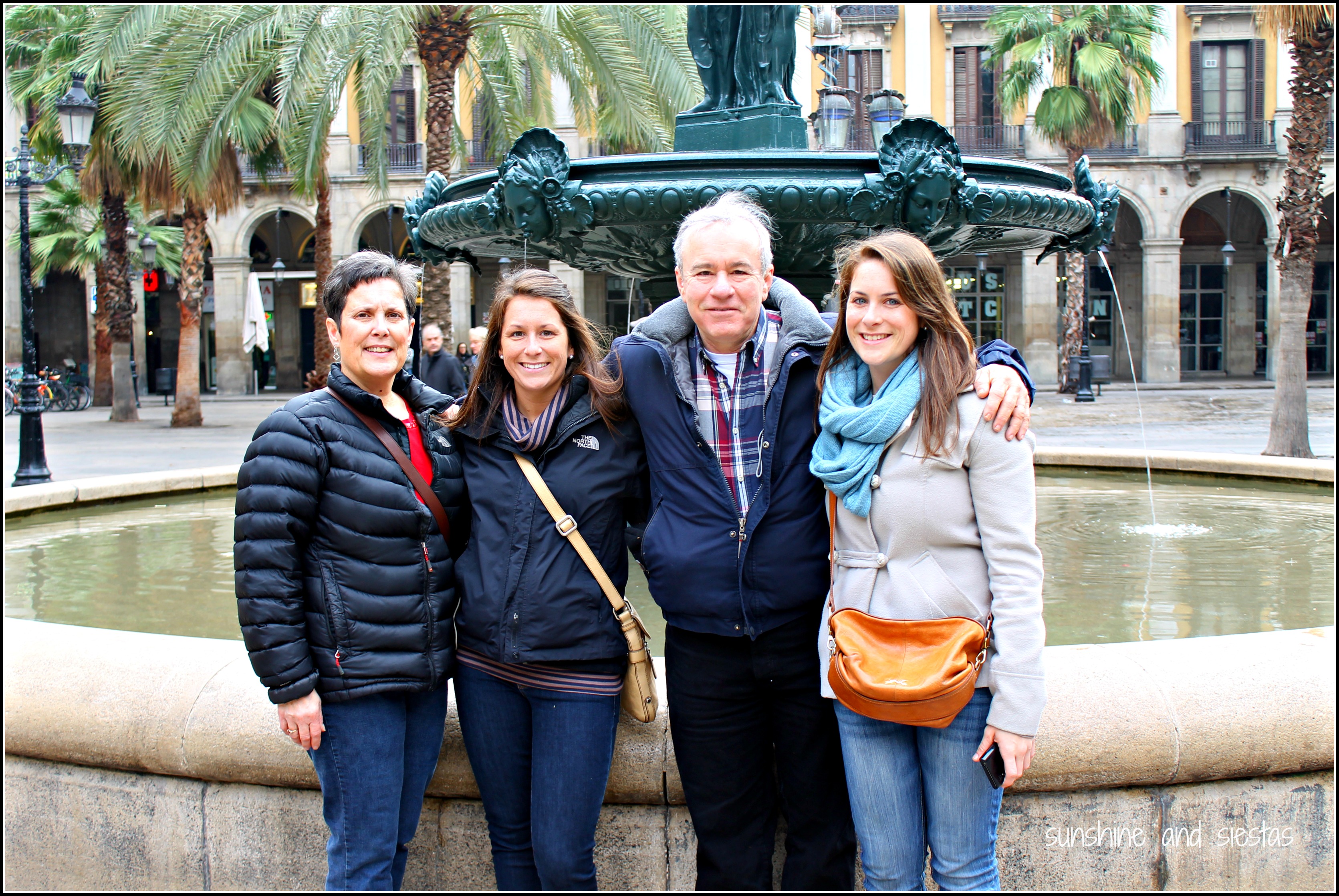
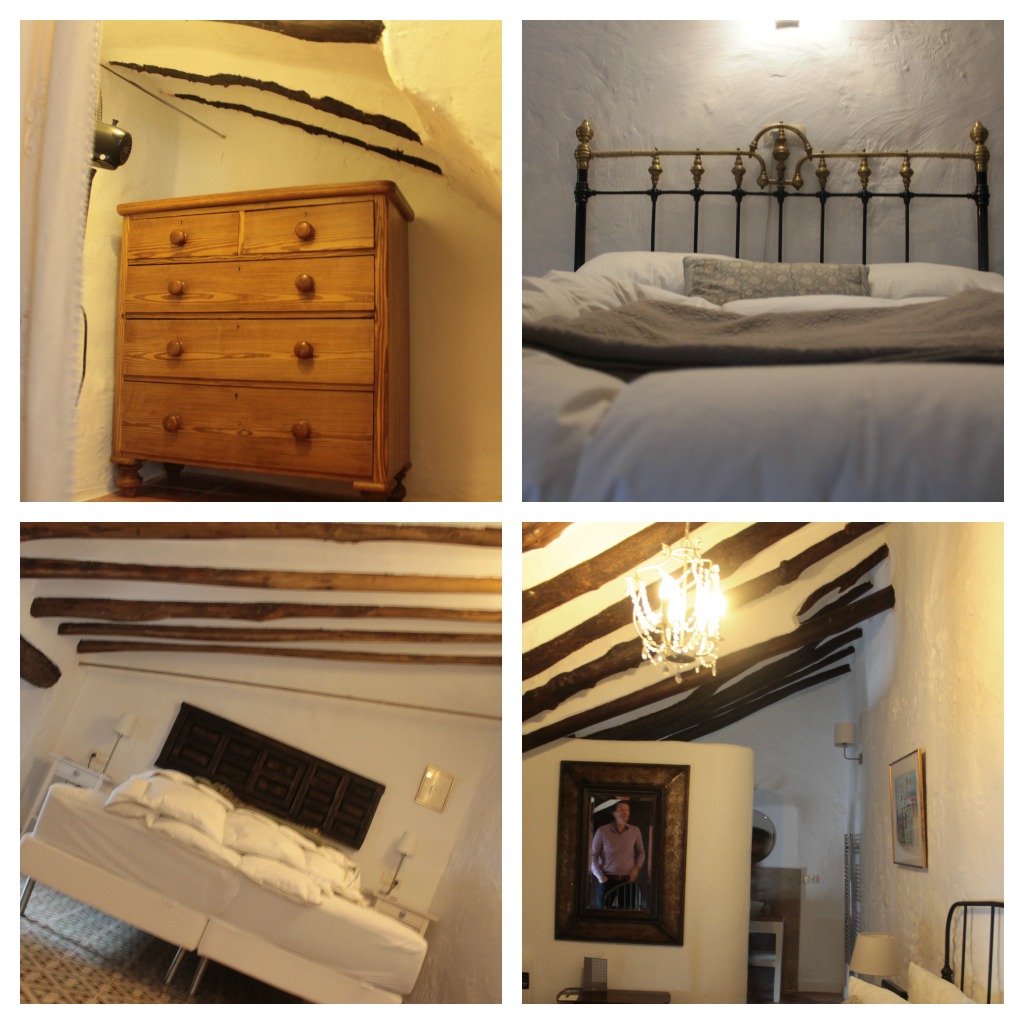
After a trip to Barcelona with my parents and taking various day trips around Catalonia, I returned to work absolutely pooped and with zero ganas to move forward. The chilly weather and the extra responsibility of becoming a training Director of Studies was a lot of work, but the great people at Almohalla 51, Myles and David, allowed Hayley and I to come stay with them at their newly-opened boutique hotel in Archidona.

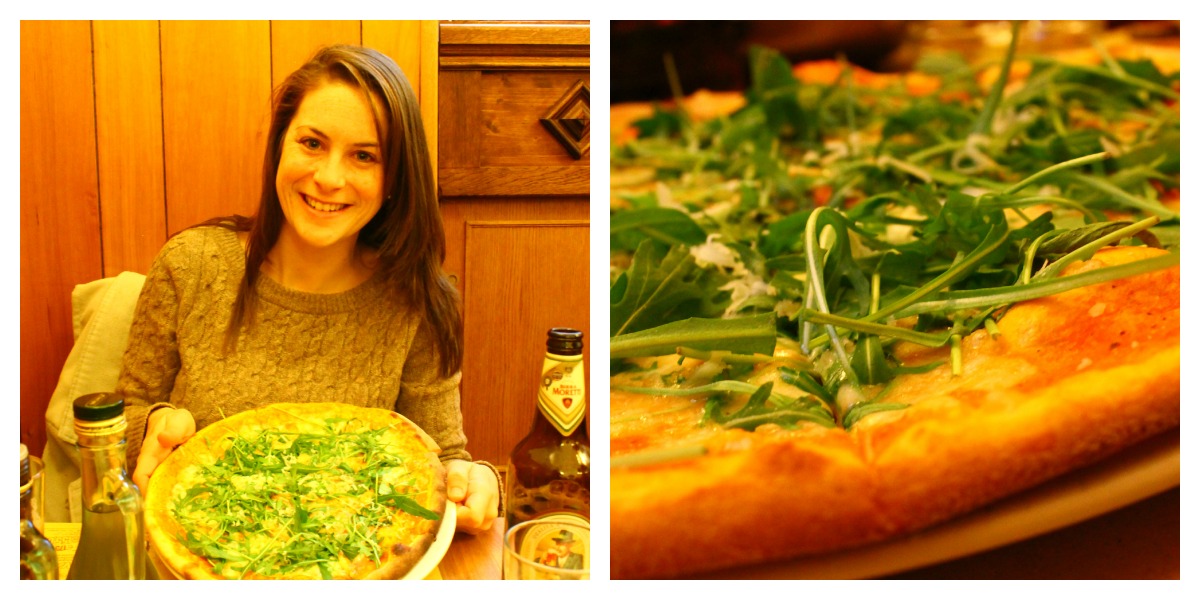
I also looked forward to having the Novio home from his duty abroad. As a late anniversary present, I took him to eat our way through Florence and Bologna. In between bites, we checked out the sites along the Arno, drank copious amounts of espresso and Moretti beer and befriended a Venetian named Peppino. Buona manggia, sí señor!

February

February was quiet, though Angela and Ryan of Jets Like Taxis joined me on a colorful trip to Cordoba. I chalk it up to being a short month.

March

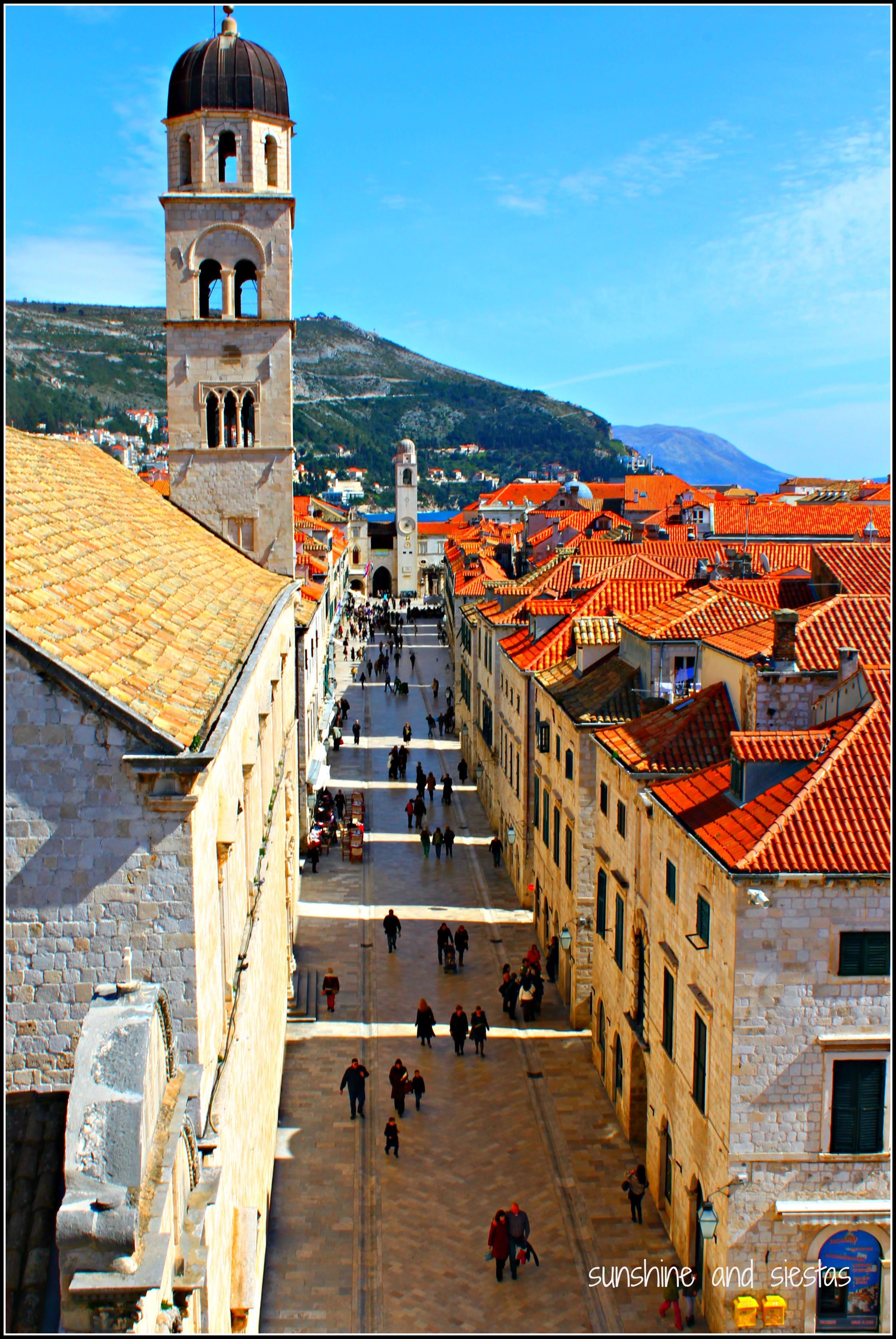
As the trimester wound down, I began to get geared up for my Semana Santa trip to Dubrovnik and Montenegro. Hayley, my Spanish media naranja, and I walked the impressive city walls in Dubrovnik while refueling on cevapi, a spiced sausage sandwich and drinking in the views and local beers at Buza Bar (despite its obnoxious advertising).

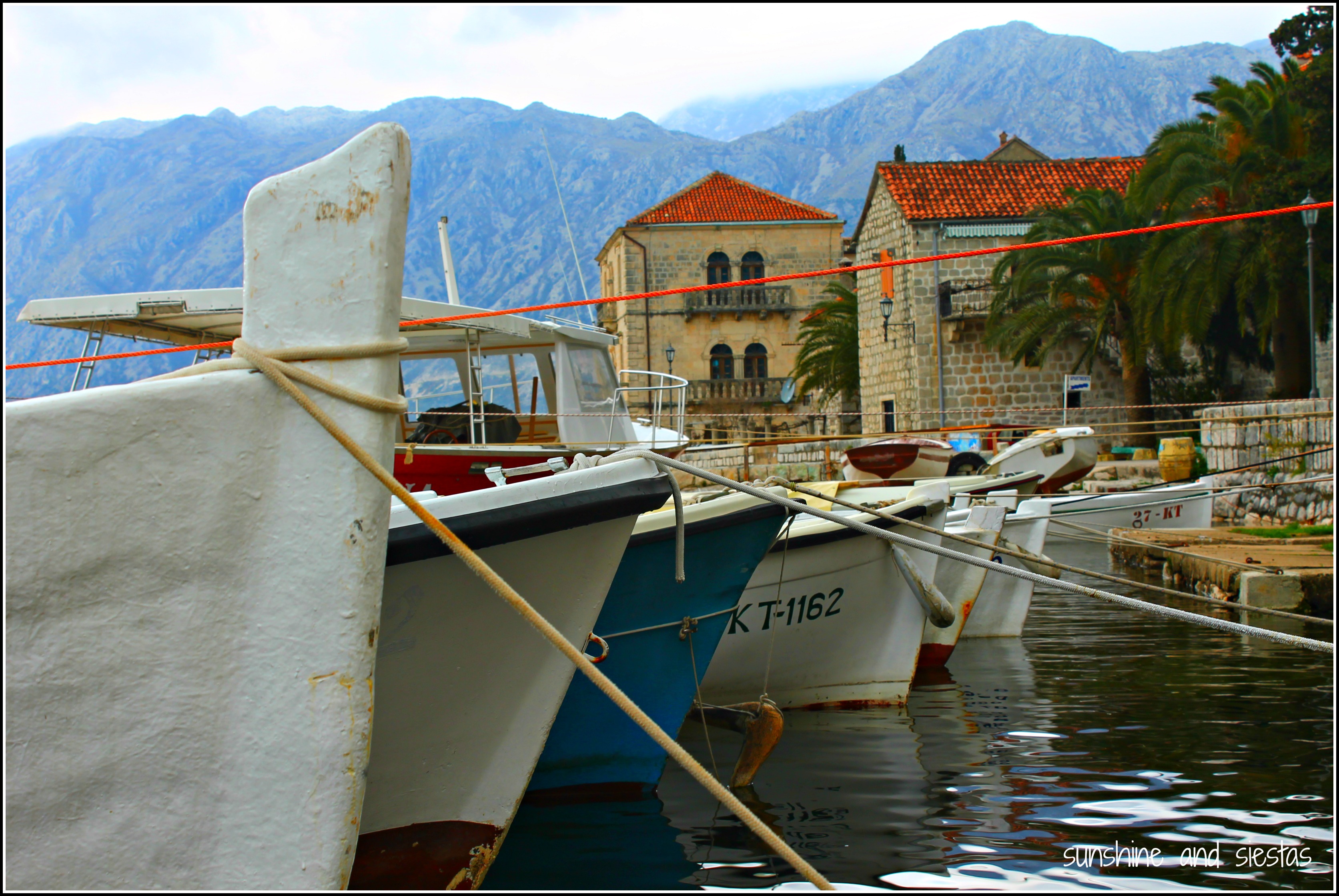
After a few days in the Pearl of the Adriatic, we took a bus across the border to Montenegro, which was my 30th country. While  the weather wasn’t stellar, we were charmed by Europe’s youngest country. The friendly people, the free wi-fi and the views of our roadtrip around the Bay of Kotor made for a rejuvenating week.

April

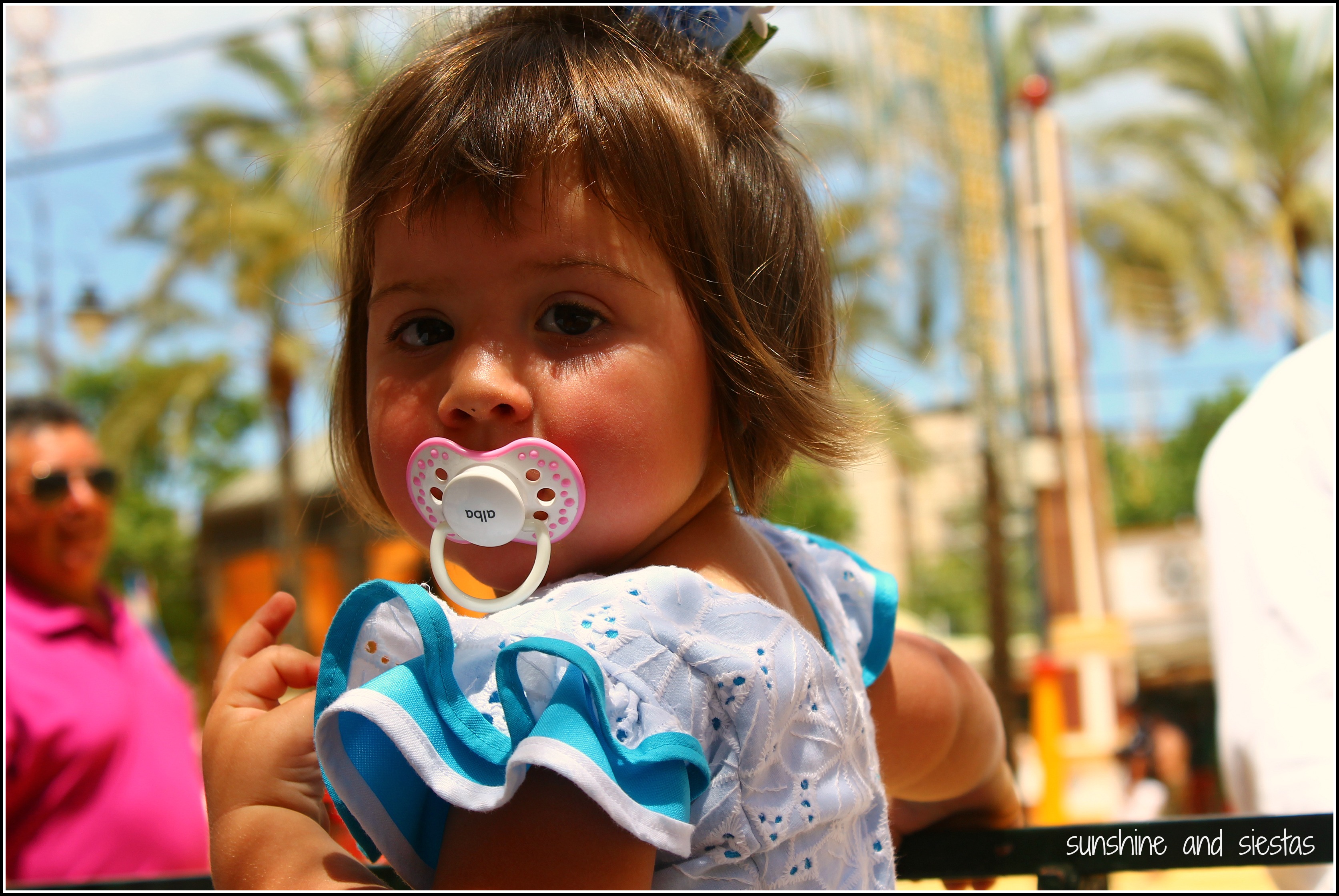
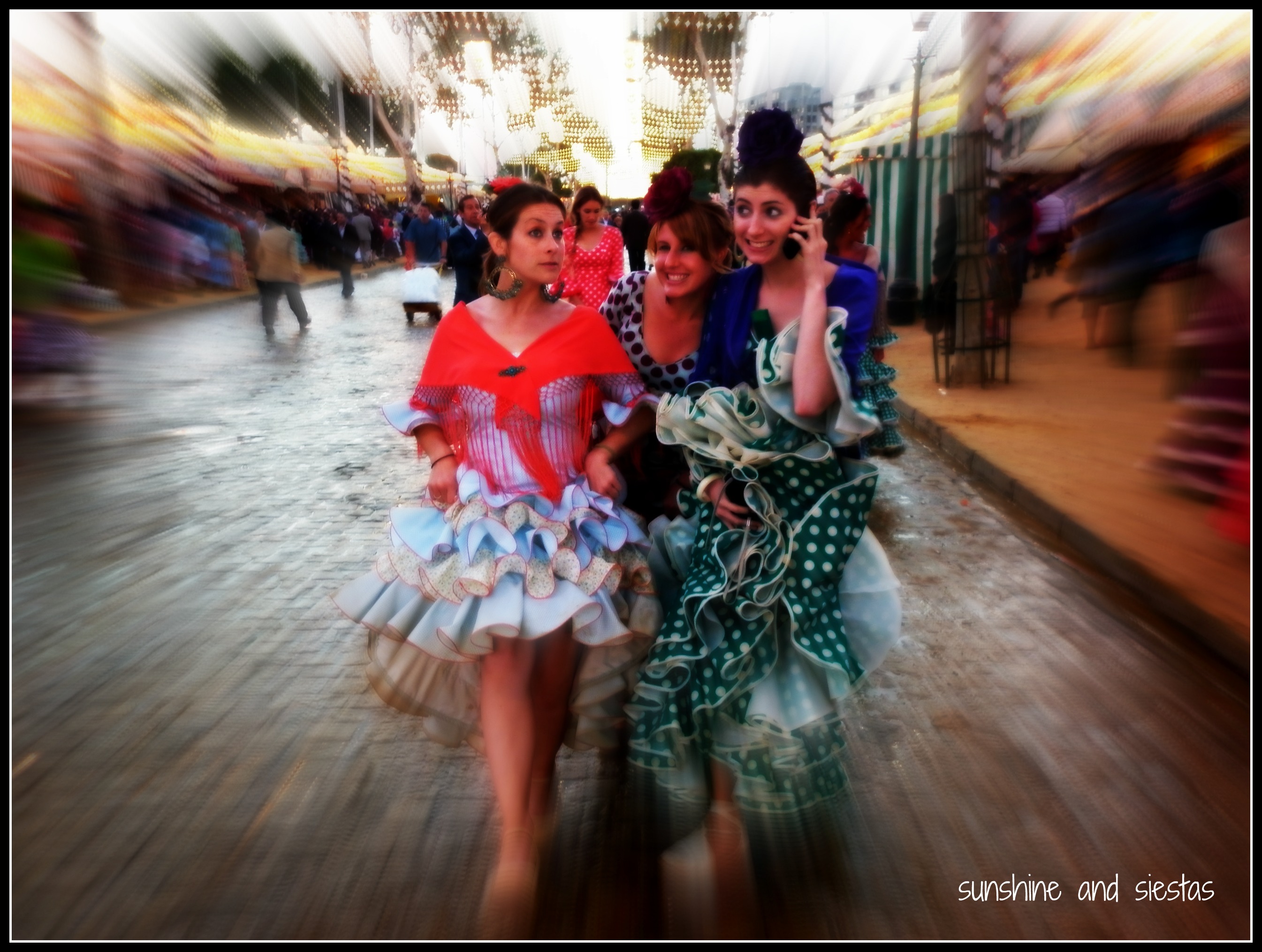
April showers seemed to have brought Feria heat – we sweated right through our flamenco dresses, and I think my right bicep is now twice as large as its twin from all of that fan flicking. I even broke some of my own rules when it came to stalking around the Real!

Just the week before, I had gone up to Madrid (if only I had a euro for every maldito trip I’ve made to la Capital…) to visit my sister-in-law, Nathàlia, and pick up my new car, Pequeño Monty. Nath is Brasilian but did her degree in Alcalá de Henares, city of Miguel de Cervantes fame, so she showed me around her town known for its university and free tapas.

May

Luckily for this guiri, the usual May weather was nowhere to be found, so we got some respite from the heat. Meg and I drank rebujito at the Feria de Jerez, a lite version of Sevile’s famous fête where you don’t get trampled by horses, and we bounced between a Mexican-themed caseta and a biker bar. Toto, We’re not in Sevilla anymore. The following day, I continued the fiesta in the Novio’s village at their Romeria de San Diego, a booze-soaked picnic in the middle of the dehesa.

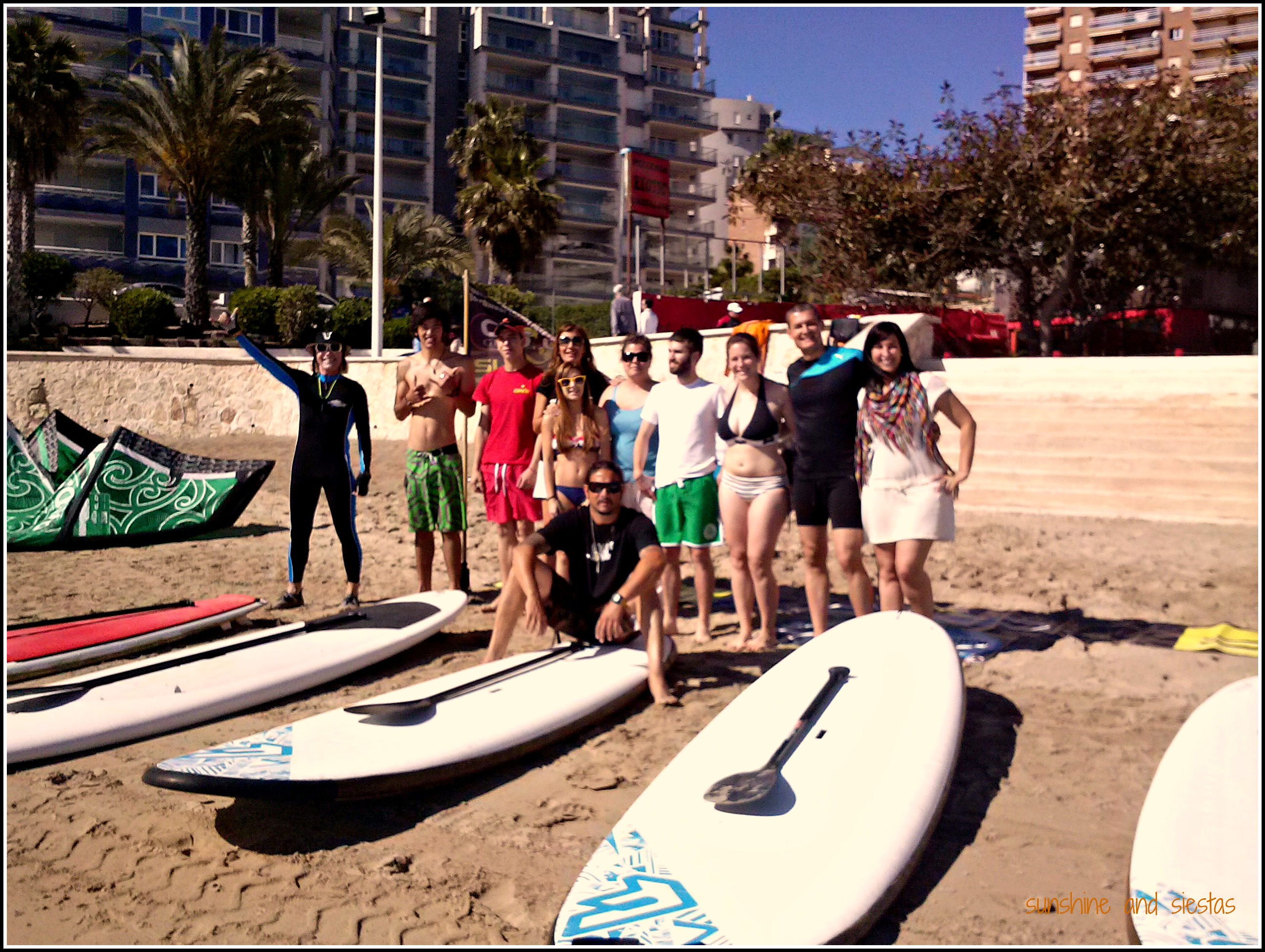
A week later, I attended my first blog trip to Calpe, a small fishing village that has capitalized on the tourism boom from nearby Benidorm. Despite the hotels popping up along the beach, Calpe is laid-back yet bursting with energy. We were treated to tons of water-related activities, including paddle surfing and betting on our lunch at the Lonja de Pescado.

June

During the first weekend of June, I had to make a trip to Madrid for mandatory camp meetings and Camino dealings. I met with Pablo, Fernando and Alex of Caser Expat Insurance, who are helping me make my Camino For the Kids a reality. I even got my feet checked out by the team at Podoactiva, the same people who outfit professional athletes with their shoes.

The Novio and I snuck in a day at the beach, and my mom came to stay for a week in the last sweltering week of June. I was extremely busy with my master’s and preparing for summer camp. Apart from showing her my favorite restaurants and rincones of Seville, we also made it to Jerez to see the horse show, to Doñana for a horse ride through Mazagón, and San Nicolás del Puerto, where she got to meet the Novio’s mother and ride their prized mare, Orgiva.

I am happy to say that I have very few travel plans at the moment for the second half of the year, save slinging tomatoes at the Tomatina with Kelly in August and Oktoberfest with my cousins in late September – I need a break after a year of turning my blog into a business, completing a master’s in a second language and starting a new job. Sunshine? Yes. Siesta? POR FAVOR. 

Don’t forget that I’ll be back at camp in July, and then walking close to 320km to raise money and awareness for pediatric cancer patients back home on the Camino de Santiago. Please follow #CaminoFTK on twitter or instagram for more information. Sunshine and Siestas is also accepting guest posts during this time, so please send your stories and photos from Spain!

What were your travel highlights of the first six months of the year?

Seville Snapshots: Calle Pureza, the heart of Triana

Soy Ana, de la Calle Pureza

Kelly never fails to let people believe she’s trianera, a resident of the Triana neighborhood of Seville. When I called this barrio home for three years, we’d often wax poetic about just how special it felt, that it was more a feeling than monuments or a glossy exterior. Triana is the old fisherman’s barrio, where squat houses crumble next to soaring church spires, where a tapa is bigger and cheaper than in the center. I had all of my people here – the man around the corner who made my coffee, the woman at the laundromat who would re-wash a garment – for free – if she wasn’t satisfied.

Even the natives – those who have grown up and attended school in the neighborhood – swell with pride when describing a neighborhood where gypsies sing flamenco on the streets every now and again and azulejo tiles line the hole-in-the-wall bars.

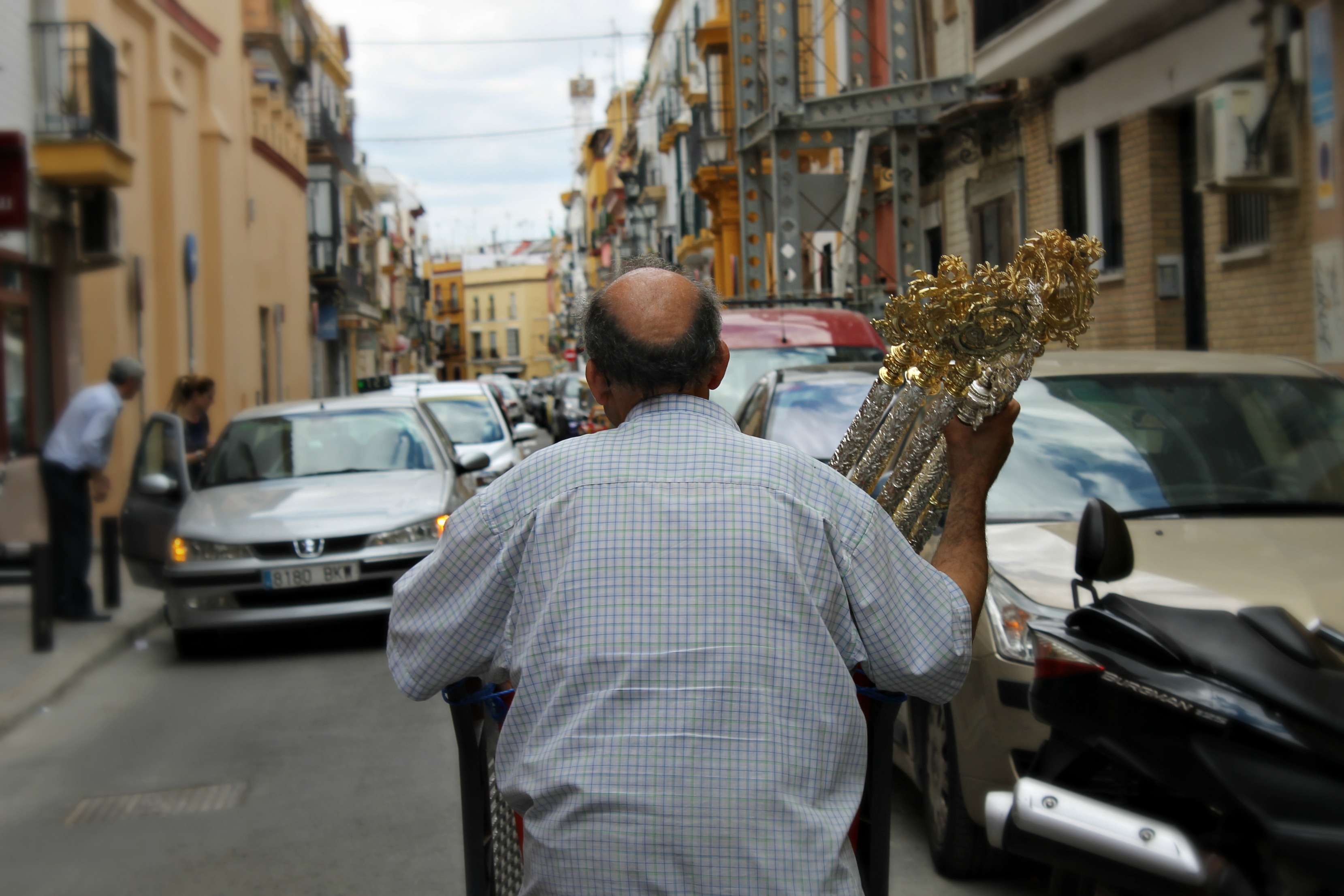
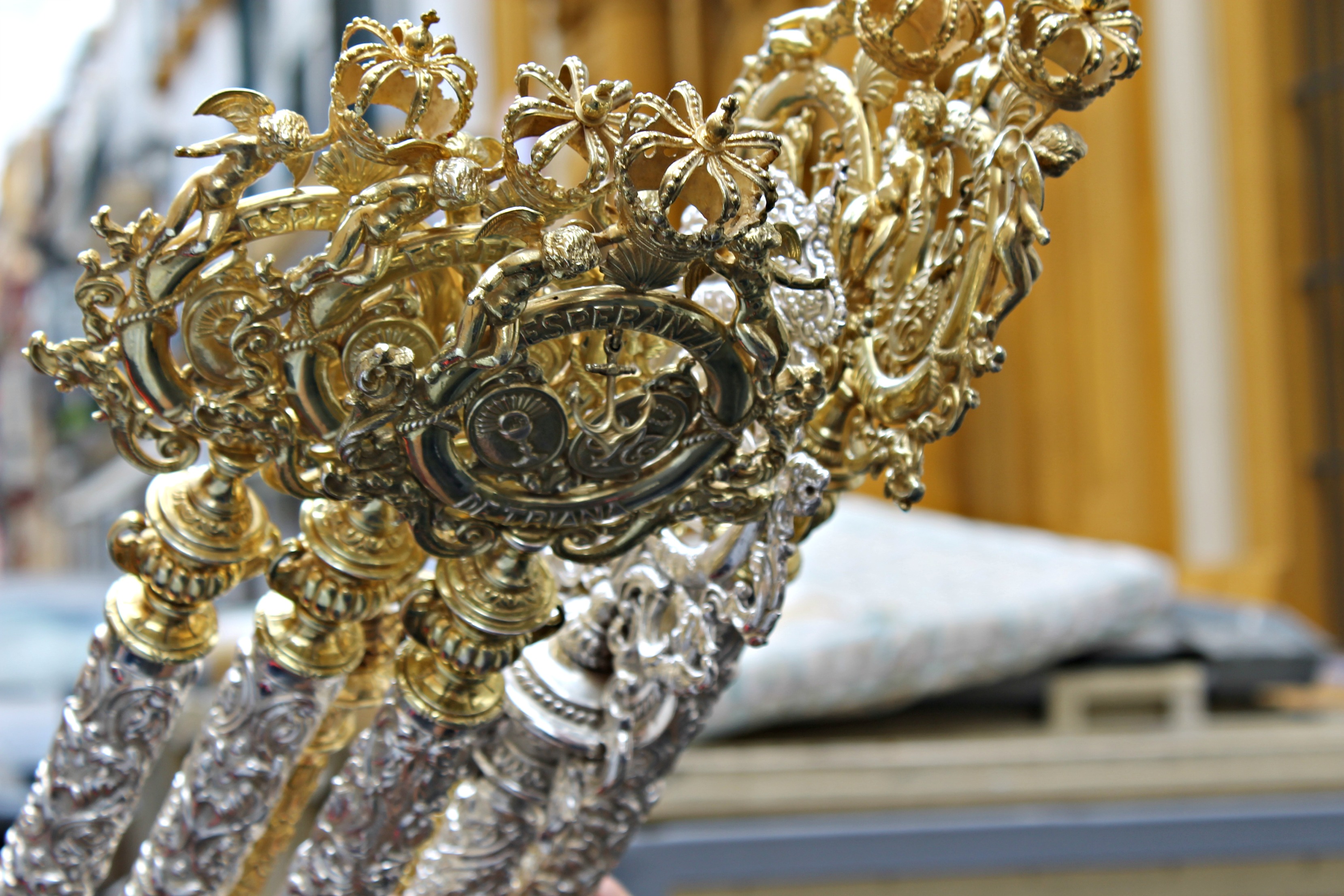
While walking down Calle Pureza, a street that snakes through the heart of Triana, I heard a hoarse “cuidaaaaaao” as I was fumbling with Camarón’s settings. I was on the way to shoot the wedding of a guiri friend and her sevillano boyfriend, nervously changing between auto and manual. An abuelo weidling a shopping cart wizzed by me, dodging oncoming traffic as he carried nearly a dozen long septres towards the pristine basilica. I raised Camarón to my face and shot.

 Olé mi Triana.

I had a great time shooting Andrea and Carlos’s wedding in early June, and I’m as happy as they are with the results. If you’re looking for someone to shoot an event, engagement pictures, etc. in Seville, get in touch! Alternately, I’m looking for guest bloggers for the upcoming months. Send your stories and photos to sunshineandsiestas [at] gmail [dot] com.

The Do’s and Dont’s of the Feria de Abril of Seville

Recently, Shawn of Azahar Sevilla and the mastermind behind Seville Tapas tweeted that I have a reputation of being feriante, a lover of Seville’s famous festival, the Feria de Abril. We may have only met briefly, but mujer gets me. What’s not to love about a week dedicated to revelry, horses, wine and curve-hugging dresses?

Two weeks after sevillanos have dried their tears after another washed out Holy Week, a makeshift city of temporary tents is erected at the southwest end of the city. Known as the Real de la Feria, this pueblecito comes alive during six days of the year, from 9pm on the Monday two weeks after Resurrection Sunday to the following Sunday’s fireworks show.

The dizzying, vibrant week can be characterized by a whirl of polka dotted dresses, the jingle of horse bells and the sound of sevillanas, a type of flamenco music, and it’s one of Spain’s most well known festivals. But as a city deep-rooted in tradition, even the April Fair has its set of unofficial rules. I consider myself a fairly well-weathered feriante after eight years of teaching class after late nights, of using my enchufe to my advantage and of lasting through six days of partying.

DO bring your wallet

One of the biggest pitfalls to Feria is that it falls two weeks after Holy Week (my perfect excuse for traveling during 10 days). Feria is a wallet drain.

First is the costly flamenco dress and everything that goes with it – the flower, shawl, earrings and shoes. I got my most recent dress during the July sale season for a mere 125€ and the accessories, called complementos, cost me another 60€. Styles change de feria en feria, so some wealthy women get a new dress each year!

My caseta membership costs Kike and I 150€ a year (we alternate who pays, this year me toca, while he’ll pay the cheaper gym membership), and then there’s the food, the drinks and the need to buy a new pair of shoes when I dance the others right into the trash. Tapas are not served in casetas, but rather raciones that can be 6 – 12€, while a jarra of rebujito can cost up to 10€! What’s more, hotels and taxis operate on a holiday price, so rates will be sky-high like during Holy Week. City buses have a 2€ day pass, and they’ll extend working hours – look for the “Especial Feria” bus.

To keep costs down, I usually eat lunch at home and walk to the fairgrounds and always ignore my dwindling bank account for the sake of un buen rato. Feria only comes once a year!

DON’T only see Feria by night

The fairgrounds open daily around 1p.m. and most casetas stay open until the wee hours, meaning the Feria de Abril is an exercise in stamina, and not just for your wallet. My first few years in Seville, I worked outside the city and therefore had to run home, change into my traje de gitana, eat and get to Calle Gitanillo de Triana. I’d alternate dancing sevillanas with sips of rebujito and riding the carnival attractions in Calle del Infierno, arriving home in the early morning hours and collapsing in my bed hoping to get a few hours of sleep.

I may have inadvertently taught my high schoolers the word “hangover” in English my second year in Olivares.

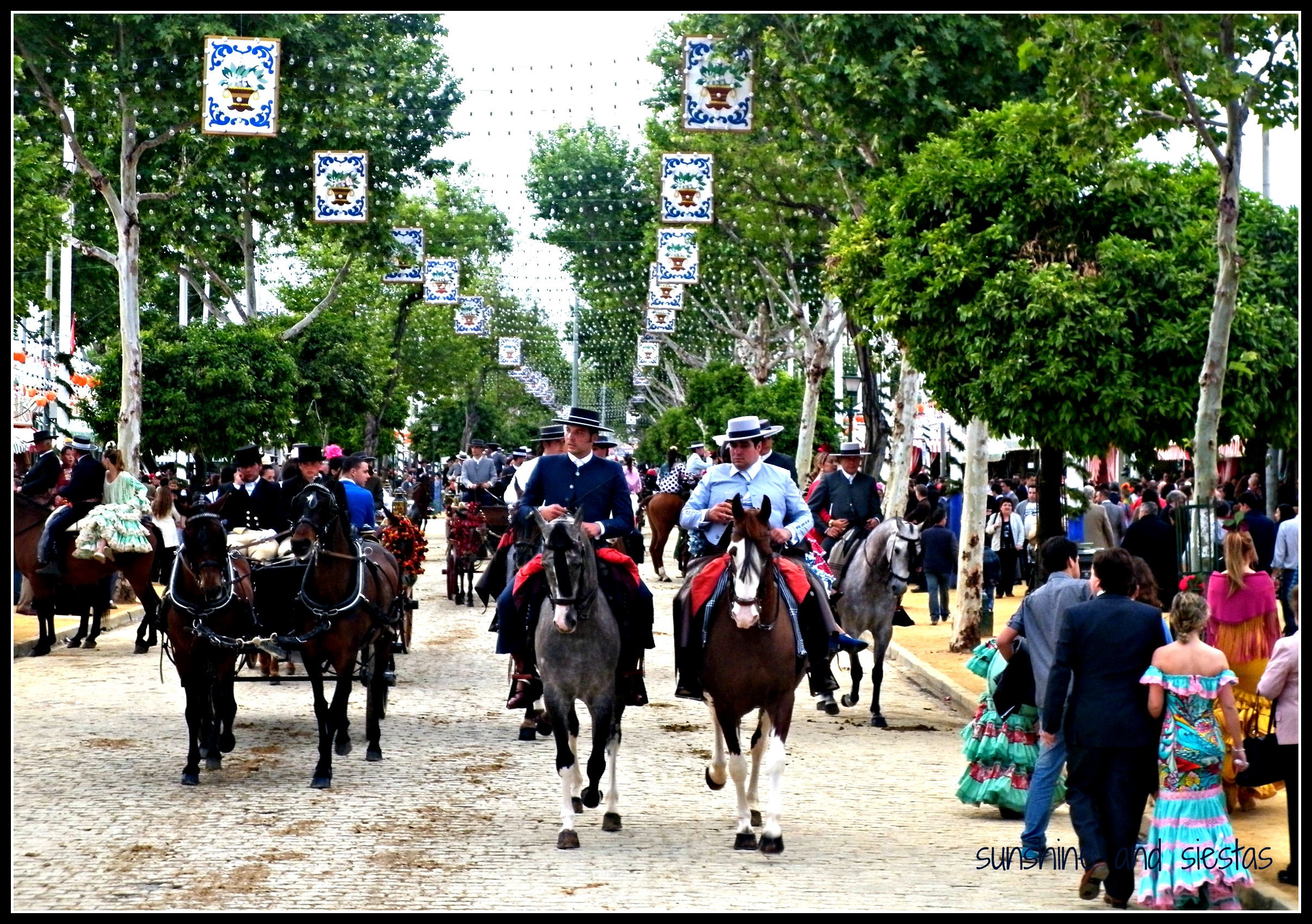
There are two different sides to the fair – during the day, horse carriages and riders crowd the streets, even parking their horse next to their caseta and drinking sherry by the glass atop the stallion. Music spills out of the tents at all hours, and kids roam the streets with plastic toys and cotton candy the size of their torsos. The ambience is festive and cultural.

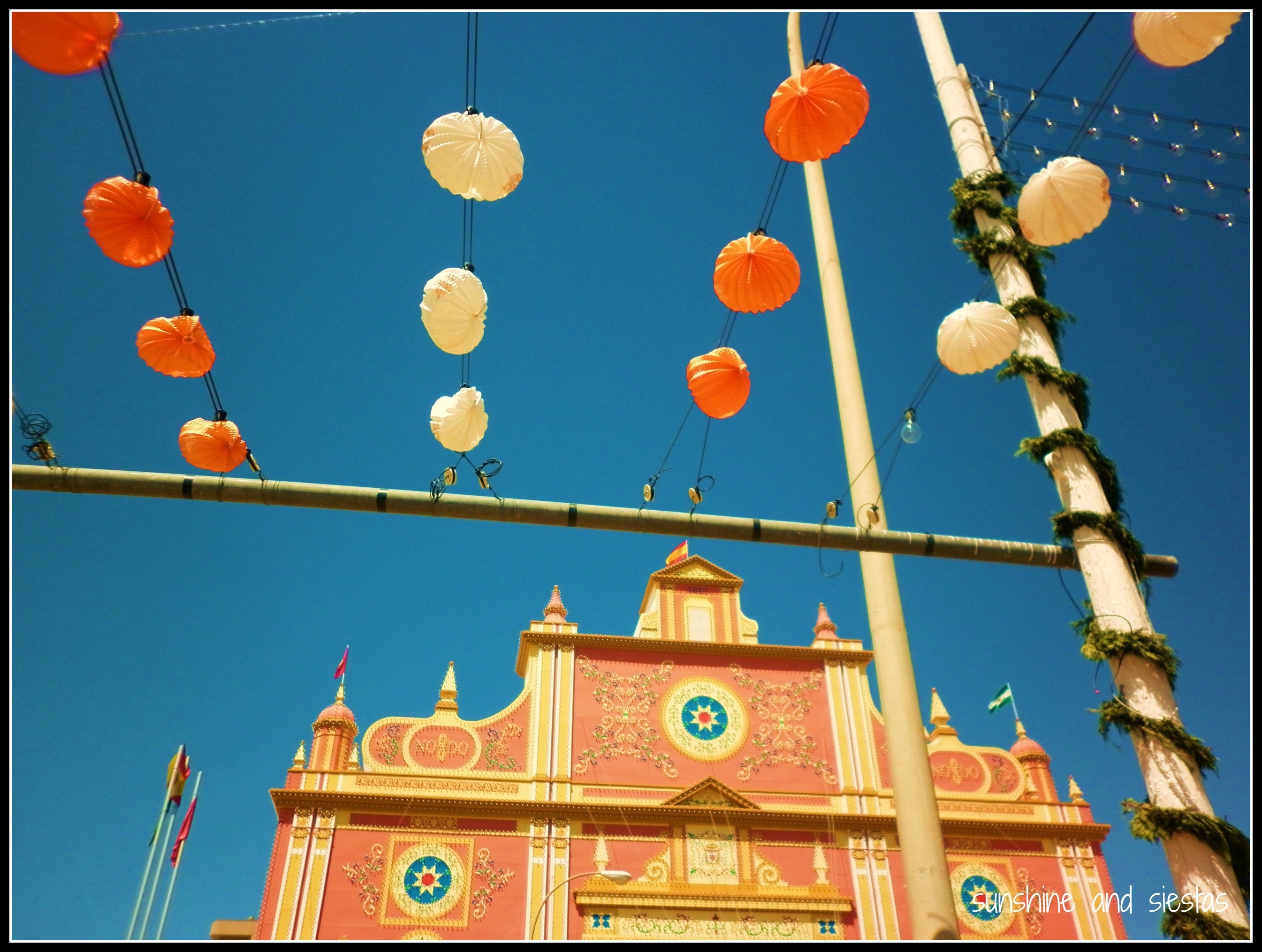
As night falls, the carnival rides at the Calle del Infierno begin to light up, and the round paper lanterns, called farolillos, come on. While you’d be pressed to find a caseta that isn’t playing a rumba or sevillana, everyone switches from rebujito and beer to mixed drinks, and casetas are often open all night long. I’ve had mornings where I’ve ended the long day of partying with chocolate con churros!

I’m also partial to weekday visits. During Friday and Saturday, other villages in the area get a day off to enjoy the fair, which means that it’s difficult to walk and navigate around the streets, all named for bullfighters.

DO dress up

Feria is the pinnacle of pijo culture – women will don the traditional traje de gitana, a tight, ruffled dress that cost upwards of 500€. If you’re not keen on dressing like a wealthy gypsy, be sure to look nice. I went to the alumbrado, the lighting of the main gate and the official start to the festivities, wearing ratty jeans and sneakers, not fully aware of how the event worked. I’ve since wizened up and now make it a priority to have a few nice dresses on hand in case there’s a chance of rain or I can’t bear wearing my traje.

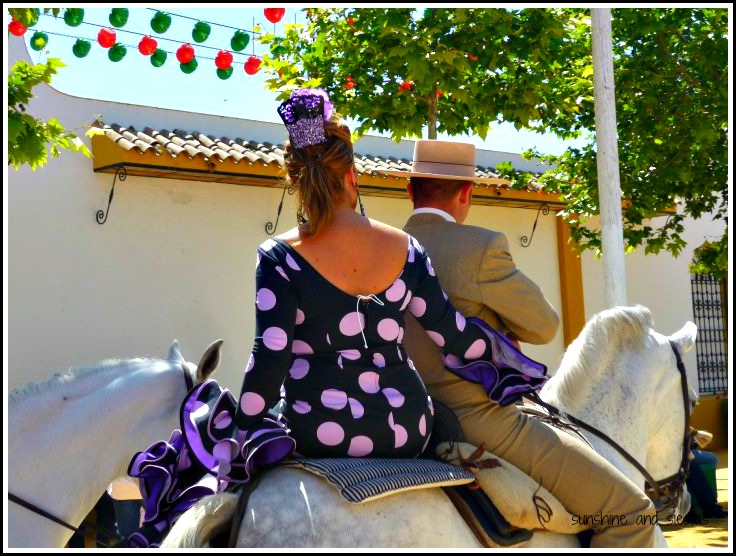
If you’re a chico, wear a suit and tie. Caseta etiquette is very important, and you’ll be expected to follow suit (literally!). If you’re planning on riding a horse, a traje corto, a short jacket and riding pants with a wide-brimmed hat called a cordobés. I’ve ridden in horse carriages, but never on the back of a jerezano stallion, kind of my dream!

DON’T forget the caseta etiquette

Casetas are the temporary tents that act as houses, kitchens, concert halls and lounges during the Feria. Since the private spaces come at a commodity (there’s even a waiting list for when a family or organization decides not to continue paying), a certain type of behavior is expected – you can’t be overly drunk, improperly dressed or smoking within the walls.

One year, a friend of a friend was visiting, and I took them to the Novio’s friend’s caseta. This girl, K, was not sipping the lethal rebujito, but instead treating it like a shot. She bumbled around like an idiot and starting making out with the Novio’s youngest brother, causing quite an escándolo and getting us banned from the caseta.

There’s also an unspoken rule that you can’t bring your twelve friends with you. The Novio’s best friend’s wife, Susana, often encourages me to invite some pals, but I try and keep it limited to two, maybe three. Even my own caseta has a one-buddy-per-socio rule!

DO set limits on consumption

If Feria is a marathon for your wallet and feet, it’s no stroll through the Real for your liver, either. The drink of choice is rebujito, a refreshing mix of half a litre of dry sherry and 7-Up, and it is potent. The sugary drink is usually served in enormous jars and drunk out of plastic shot glasses or sherry glasses between friends. Drinking water and curbing the intake often helps, as well as getting some fresh air every so often. During my first year, the only kind of connection I had was in Los Sanotes, and Kelly and I made sure to be there every day. Susana’s uncle finally reminded me that there was more to Feria than one caseta out of over 1000, and a break in the dancing and drinking will allow you to take in the ambience.

Be sure to eat during the day, too. I usually don’t want to stop dancing for a montadito or fried fish, but spacing out your drinks and punctuating them with some heavy food like carrillada or tortilla will help you last longer.

DON’T be pesada with your contacts, and try and make them early.

Feria is a time when enchufe, the age-old connections game that lives and thrives in Seville – nearly all of the casetas are private and protected by a doorman. I usually have to say the name of the person who I’m meeting or offer to drag that person back to the door after I’ve found them to prove that I’ve been invited. Phone lines collapse and batteries run dead, or someone is too drunk to get to their phone. Make your plans with friends ahead of time to avoid the letdown of arriving to the fairgrounds and having to wander around while you wait for an invitation.

I’ve have several invitations to casetas where I’m brought food and drink outside, though I’ve never actually psychically been inside of them. But that’s alright with me…as long as there’s rebujito and a plate of ham waiting, that is!

While I’m busy with pouring over relaciones institucionales or dancing my brains out on Calle Gitanillo de Triana, here are a few of the articles I’ve written in the past about la semana más bonita:

How to dress up a flamenco dress

A vivir! Que son dos días!

The Feria during the economic crisis

My first Feria experience 

Paulina’s article on How to Enjoy Feria as a Guiri

Any other tips and tricks for enjoying the fair?

Related Posts Plugin for WordPress, Blogger...