Things to Do in Madrid with Kids: the best activites for all ages

Updated November 2025 – with kids in tow.

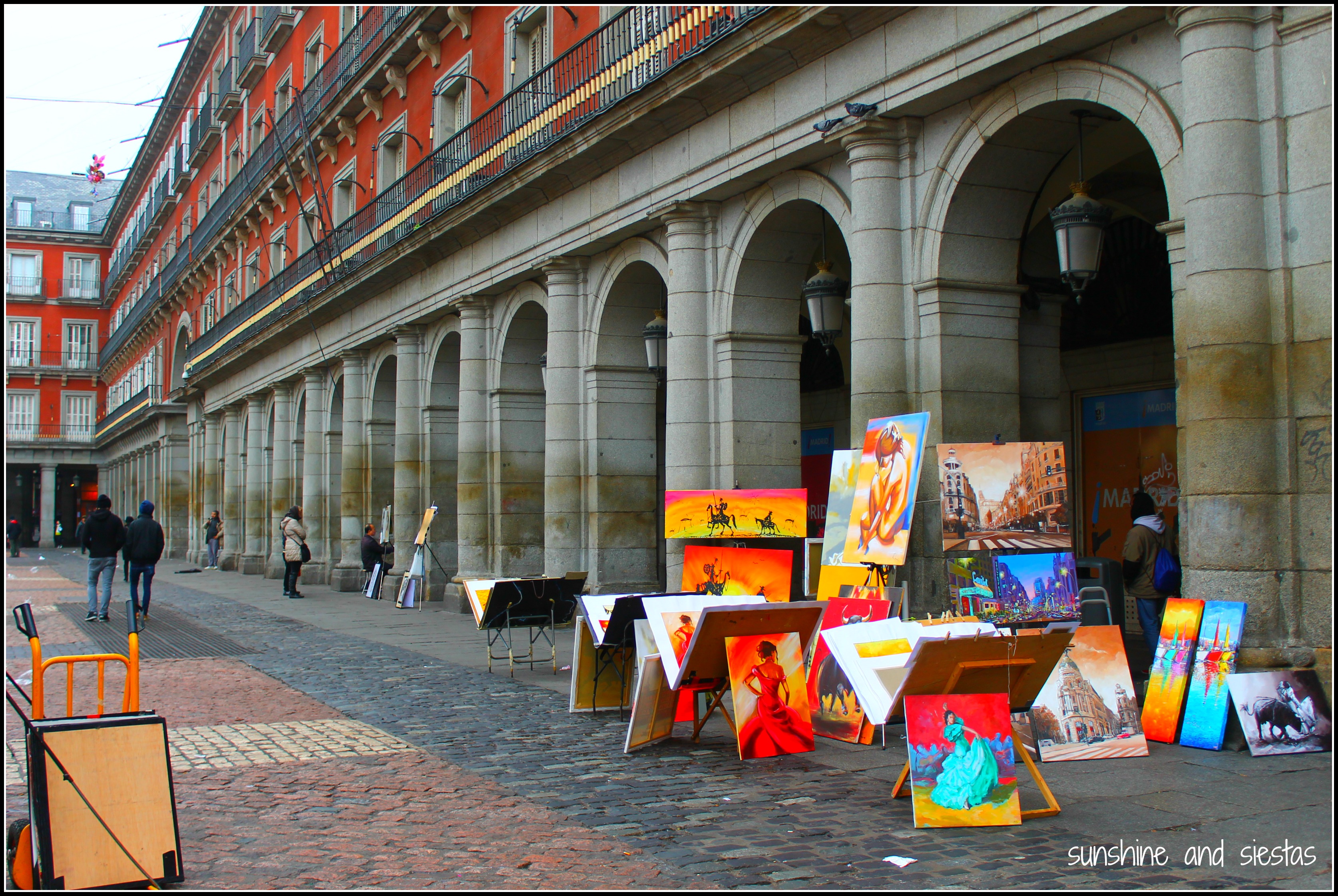
It’s no secret that Madrid is one of my favorite cities to visit – I love the energy, the options and the closest a Spanish city can come to my native Chicago. But it can get overwhelming as a capital city (and one of the largest in Europe!), and even more so for children. We chose to leave Madrid to head back to Seville in 2019, coinciding with the birth of our second son, but I truly love bringing my elementary school aged children to the Spanish capital often.Madrid Plaza Mayor
We love to check out what’s on during our frequent trips to Madrid, from new parks to temporary museum exhibits. And thanks to Spain’s attention to families, there is literally no shortage of things to do with kids in Madrid.

Where can I find ideas of what to do in Madrid with kids?

Start with Madrid’s official tourism page. You’ll find curated lists for family-friendly activities, ideas of what’s on and links to buy tickets. You can also drop by the tourism office in Plaza Mayor, a great place to visit in its own right.


Top things to do in Madrid for children up to 5 years old

Admire animals at the Madrid Zoo Aquarium (Casa del Campo. M: Casa del Campo, L5, L10)

This is not your ordinary zoo or aquarium, and your children will love to see animals roaming about without any chains or wiring. Conentiently located in Casa de Campo – a wonderful green lung not too far from the Royal Palace – the Zoo Aquarium is located within the city limits and on public transportation lines. The animals are mostly kept separate from the public by moats filled with water (and some that are not). There are more than 500 different species of animals who call the zoo home, including many animals native to the Iberian peninsula. The Zoo is making efforts at conservation to build populations of animals like the Iberian Lynx and Iberian Hawk.

  • Hours of operation: Weekdays 11:00 a.m. to 5:00 p.m., weeeknds until 7:00 p.m. Longer hours may apply seasonally and on local holidays.
  • Ticketing: At the ticket office, but far cheaper online and prices vary by day; Adults and children 8+ are 19,90€, kids 3-7 are 16,95€ children under 3 are free. Check online for promotions and discount days.

If you’re willing to go a bit further afield, you can also check out Faunia (Avenida de las Comunidades, 28, M: Valdebernardo, L9) in the Vicálvaro neighborhood to the south. This could be an option if your kids are various ages, and kids will pay by height but are comparable to the Zoo Aquarium.

Eat chocolate con churros at Chocolatería San Ginés (Pasadizo de San Ginés, 5. M: Sol (L!, L2, L3) or Ópera (L2)

best churros in Seville

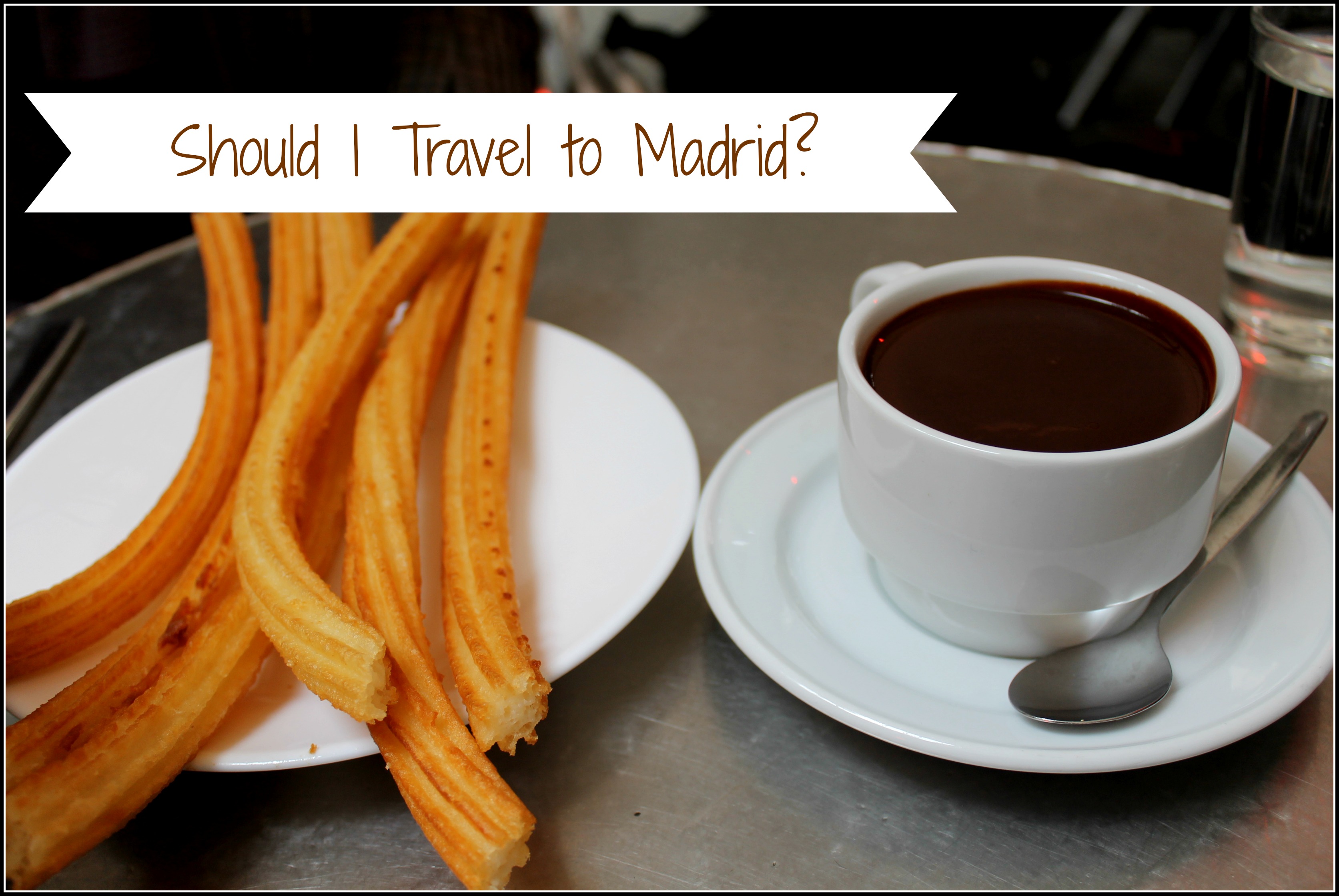
What kid can say no to fried dough? San Ginés is a Madrid institution that is open around the clock and serves up golden,crispy churros to be dunked in warm, liquid chocolate. This is one of the few places to get both porras or churros, and the former is typical breakfast fare for a madrileño.

If you’re staying outside of the Gran Vía area, simply follow the smell to your nearest churrería to take away. You typically order by the number of units that you want, so it’s a good way to practice your números. You can also get San Ginés on food delivery apps, but where’s the fun in that?

  • Hours of operation: Open 24 hours
  • Cost: A ración (6 churros or 2 porras) will run you 5,20€.

Visit Ratoncito Perez’s house (Calle del Arenal, 8. M: Sol (L1, L2, L3 and Cercanías trains)

Book online and book early! The spots fill up fast – even on weekdays.

  • Hours of operation: Weekdays from 10:30 a.m. to 2:30 p.m. and 4:30 p.m. to 8:30 p.m. Weekends and holidays 10:30 a.m. to 8:30 p.m.
  • Cost: 7€ per person. Book via whatsapp.
  • Note: ages 3+

Explore Madrid’s sozens of parks and gardens


You’ll surely know El Retiro, Madrid’s mythical green lung in the neighborhood of the same name. Check out the hidden playgrounds and shaded spots for picnics, or grab a bench near the arifical lake for people-watching. But don’t stop there – small pockets of green can be found everywhere, and you’re sure to find a spot to sit and have a coffee or glass of wine while your kids run themselves ragged. (M:

My kids always make a stop a the recently renovated Plaza de España (M: Plaza de España, L3). Think rope swings, towers to climb and places to hide for an epic game of Hide and Seek. Another great space for families is Madrid Río, home to biking trails, a splash pad for summer visits and 17 playgrounds scattered along the 7km park and a weekend puppet show near the obelisque (M: Marqués de Vadillo, L5, or Puerta del Ángel, L6).


Top things to do in Madrid for kids ages 5-10

My kids (6 and 8 year old boys) are at the perfect age to enjoy Madrid: still small enough to enjoy parks and playgrounds but now mature enough for cultural exhibits and workshops at museums and cultural centers. We make it a point to visit something new every time we go to Madrid – and we still have endless ideas!

Visit the Natural Science Museum (Calle José Abascal, 2. M: Gregorio Marañón, L7 and L10)
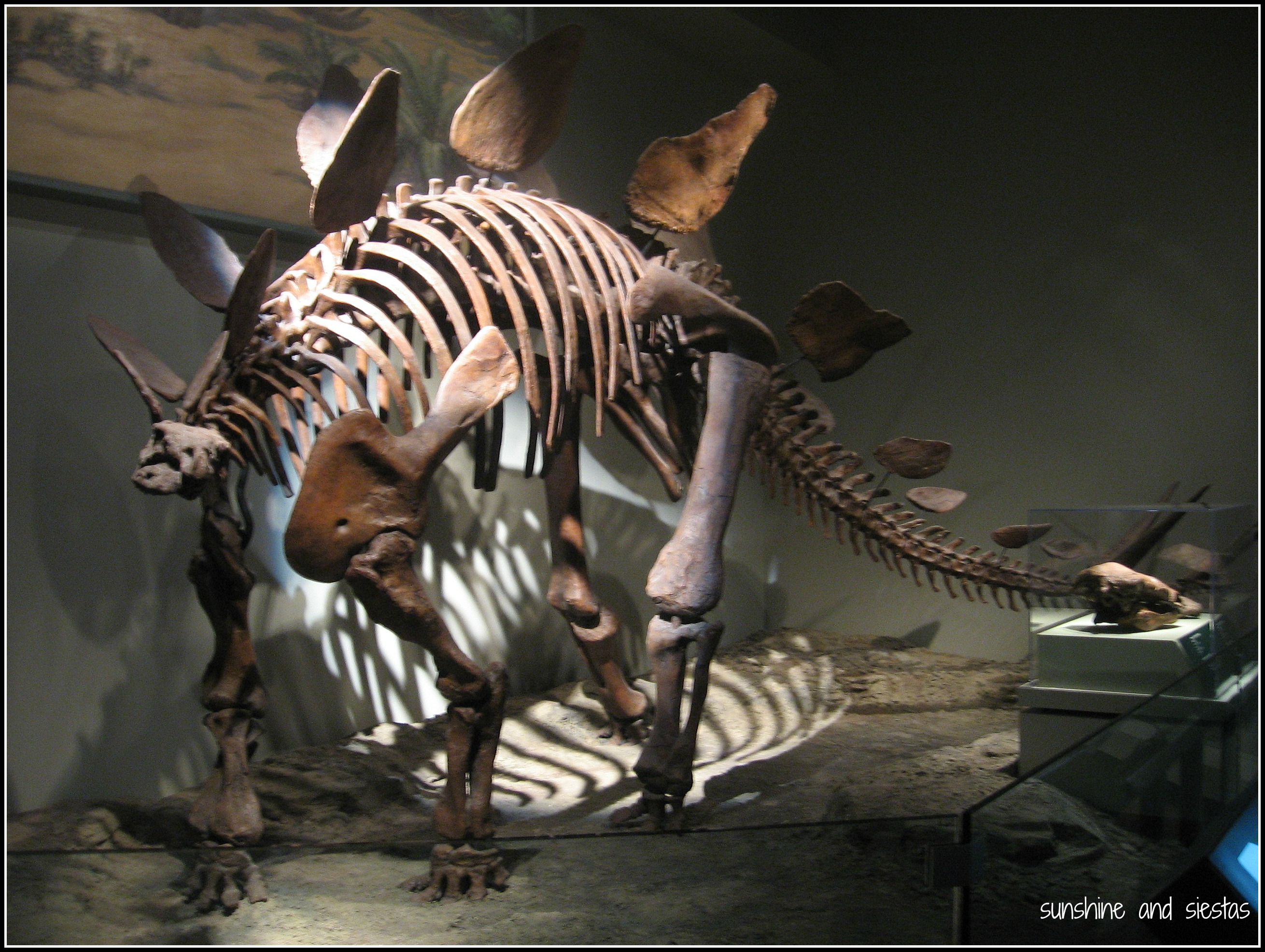
Natural History Museum

A great destination for children and adults alike, given Spain’s long history. Kids are bound to enjoy all of the dinosaur fossils, while parents tend to take in the extinct animal specimens – there are 6,000! There are three separate zones to choose from and a plethora of activities that are geared specifically toward children. Parents can bring their little ones to educational workshops and have some free time to enjoy the remainder of the museum – we lived nearby when my eldest child was a toddler, and the museum was one of our favorite rainy day activities.

  • Hours of operation: Monday to Friday 10:00 a.m. to 5:00 p.m. Weekends and holidays, 10:00 a.m. to 8:00 p.m.
  • Cost: General admission is 7€, kids 4-16 are half price.
  • Note: Museum is closed Mondays. If you need another rainy day activity, the Museo Geominero is a 10-minute walk up Calle Rios Rosas.

Museo del Ferrocaril and Metro de Madrid museums

Anyone else’s kids obsessed with anything that moves? Exactly.
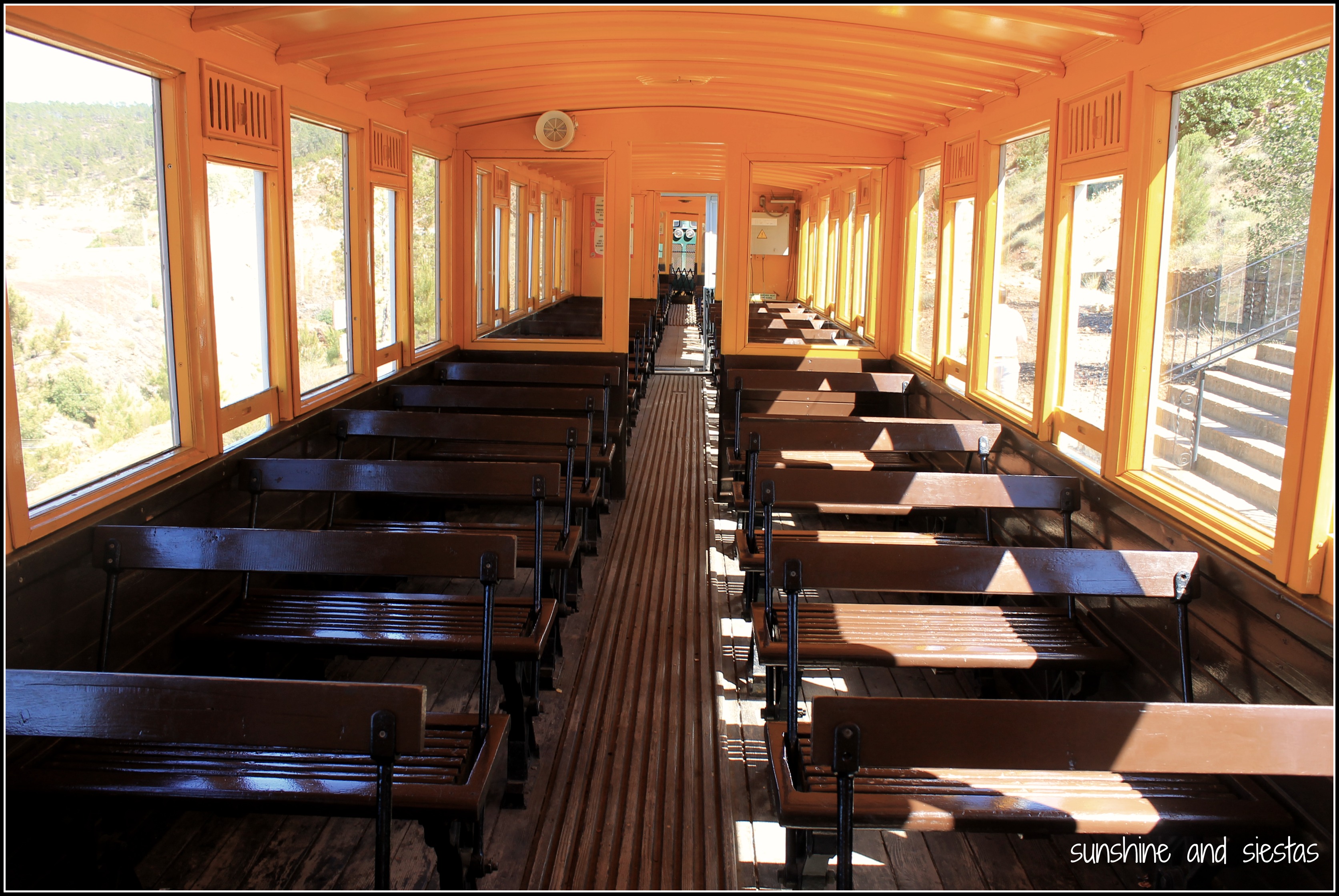
Touristic Train of Riotinto Huelva

Kids from 3+ will love the various museums sprinkled around the city that speak of Madrid’s railway prowess and its incredible subway system. Start at the Museo del Ferrocaril (Paseo de las Delicias, 61. M: Delicias, L3,  or Palos de la Frontera, L3). There’s a small museum, but the true highlight is the covered Delicias station, home to half a dozen locomotives that speak to Spain’s rail history. Kids can climb aboard a few of them!

  • Hours of operation: Times vary by season. From October to May, the museum is open weekdays from 9:30 a.m. to 3:00 p.m., Saturdays from 10:00 a.m. to 7:00 p.m, and Sundays from 10:00 a.m. to 3:00 p.m. In the summer, daily from 10:00 a.m. to 3:00 p.m.
  • Cost: In situ or online. 7€ adults, 4€ for kids; under 3 are free.
  • Pro tip: If you visit the Mercado de Motores artisan market on the second Sunday of the month, you can enter the train pavillion at the Ferrocarril Museum for free!

The Metro de Madrid also hosts a few small museums, and they’re a treat – and free! Check out the Pácifico (L1) engine shed to see old trains or marvel at its modernist lobby, take a guided tour of the “ghost” station of Chamberí (must reserve in advance; My: Iglessia, L1) or check out the Metro’s history museum in the Chamartín station (L1, L10). Kids can grab a Metro passport in any of the aforementioned stations and mark off the sites as they go before getting a reward, redeemable at the Ópera, Sol or Plaza de Castilla Metro Stores.

Museo Nacional de Arqueología (Calle de Serrano, 13. M: Colón, L4, Retiro, L2 or Serrano, L4)

Trace the history of humanity and civilization over three floors at Spain’s recently renovated National Archaeology Museum. My 3rd grade spent three hours exploring the expansive museum, home to some of Spain’s most treasured artifacts. My six year old enjoyed the hominids, mummies and a bag of potato chips at the museum café.

  • Hours of operation: Open Monday-Wednesday from 9:00 a.m. to 2:00 p.m. and 5:30 p.m. to 8:30 p.m. Thursday, Friday and Saturday from 9:00 a.m. to 8:00 p.m.
  • Cost: 3€ adults, free for children. You can buy right on site upon arrival or online.
  • Pro tip: check out the museum bookstore for historically-focused books and games for kids!

Mercado de la Cebada (Plaza de la Cebada, s/n. Metro: La Latina, L5).
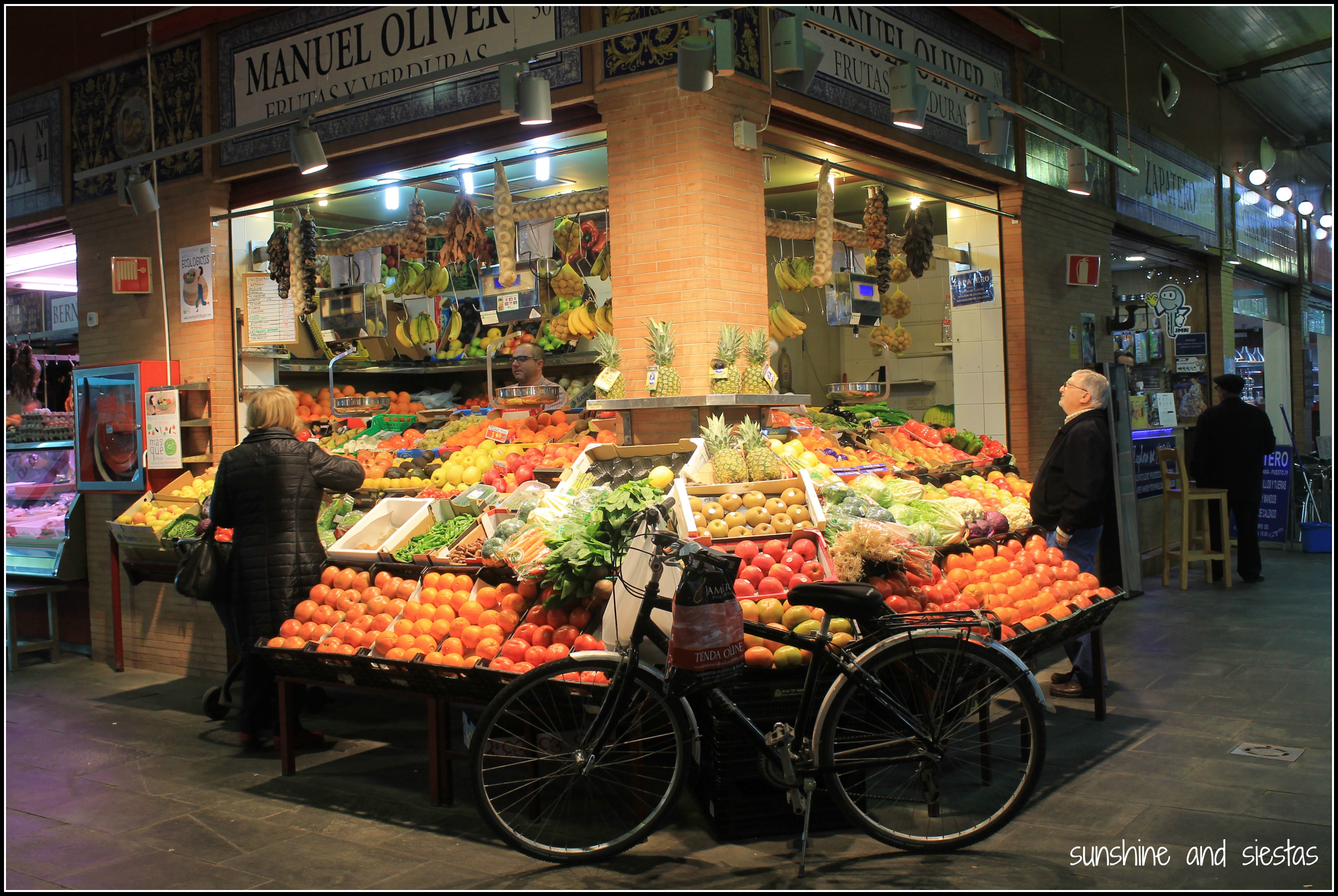
Fruit stands at the Mercado de Triana food market

A staple of the La Latina area, this market is a delight for kids. Stalls hocking products from mundane to wacky as well as indoor eating areas make it a great stop for nibbles. There are always local kids running around the market or the playground right in front, and it’s one of my preferred alternatives to the touristy Mercado de San Miguel.

  • Hours of operation: Open Monday-Wednesday from 9:00 a.m. to 2:00 p.m. and 5:30 p.m. to 8:30 p.m. Thursday, Friday and Saturday from 9:00 a.m. to 8:00 p.m.
  • Cost: only what you consume.

Circo Price (Ronda de Atocha, 35. M: Embajadores, L3, or Atocha, L1 and all Cercanías lines)

Forget the animal circuses: Circo Price is the long-runnign favorite of madrileños, bringing acrobatics to a small, intimate theatre experience. You can also catch classes and workshops here – perfect for literally everyone in your family.

For shows, prices and more, check their website.

Check out the programming at Cuarta Pared, Teatro Sanpol and other children’s theaters

Madrid’s multitude of children’s theaters provide a wonderful entertainment for the child who enjoys plays and musicals – and the city is famous for theatre. The shows are typically put on during weekend mornings and tickets cost far less than most adult activities. Teatro del Arte and La Escalera de Jacob also stage their own shows for children and you’ll have a wide range of magic shows, funny stories and puppet based performances to select from! You can find shows and workshops on Teatro a Teatro‘s interactive guide.

Bonus ideas: the observation deck at the Corte Inglés Gourmet Experience or the Torre de Moncloa, rotating exhibits at CaixaForum, visiting the endless cominc book and vintage stores in Malasaña.


Top things to do in Madrid for kids ages 10 and up (including the kid at heart!)

Parque Warner (Cercanías C-3 to Pinto and bus 413 to the park)

What’s a vacation without an amusement park? Parque Warner is a wonderful destination for the child who loves cartoons, as all of their favorite Looney Tunes characters will be roaming around and signing autographs. If your kid is more of daredevil type, they will have six different roller coasters to choose from. Water rides are available too, and of course, there are a multitude of gift shops. Theaters and workshops provide visitors with a number of different shows to choose from as well. The park is located 25 kilometers south of Madrid and package deals are the best way to save money.

  • Hours of operation: vary by season.
  • Cost: Always book online, when possible, as you can save up to 50%. General admission (140cm and up) is 61.90€, Junior (100-140cm) is 32,90€ and kids under 100cm tall are free.
  • Tip: check local discount sites as well as PW’s web for deals and discounts. If you’re coming from out of town, there are stellar deals on accommodations and food if you book.

Check out the entertainment options at Xanadu Mall (Autovía A-5, salida 22, Arroyomolinos)

If you’ve got a car or are willing to go a bit out of your way, the Xanadu mall boasts tons of things to keep older kids busy. Think a small skill hill, endless Spanish fashion brands, food court, a bowling alley and even a small aquarium. Xanadu is about 25 minutes south of Madrid on the A5 highway.

  • Hours of operation:
  • Cost: varies depending on your activities.

OXO Videogame Museum (Plaza del Callao, Postigo de San Martín, 8. M: Callao, L3 and L5)

My kids moved from moving things (and their bodies) to being video game crazed really quickly. I’m excited to take them to OXO, a video game museum/arcade right off Gran Vía. From old school machines that we played in pizza parlors back in the 90s to endless Legos and temporary exhibits and workshops, I’m sure I won’t be able to get them out.

  • Hours of operation: Open daily from  11:00 a.m. to 10:00 p.m.
  • Cost: General admission is 21€, kids 5-13 are 16€, and family packs (2 adults + 2 kids) are 17.50€ a person. Prior reservation recommended.

Alternately, you could consider board game cafés like La Manuela in Malasaña (C/ San Vicente Ferrer, 29) or Replay Boardgame Café (C/ de la Ribera de Curtidores, 26, Local 3).

Walk in the footsteps of Real Madrid giants at the Santiago Bernabeu Tour (entrance is at Calle Concha Espina, s/n, M: Santiago Bernabeu, L10)
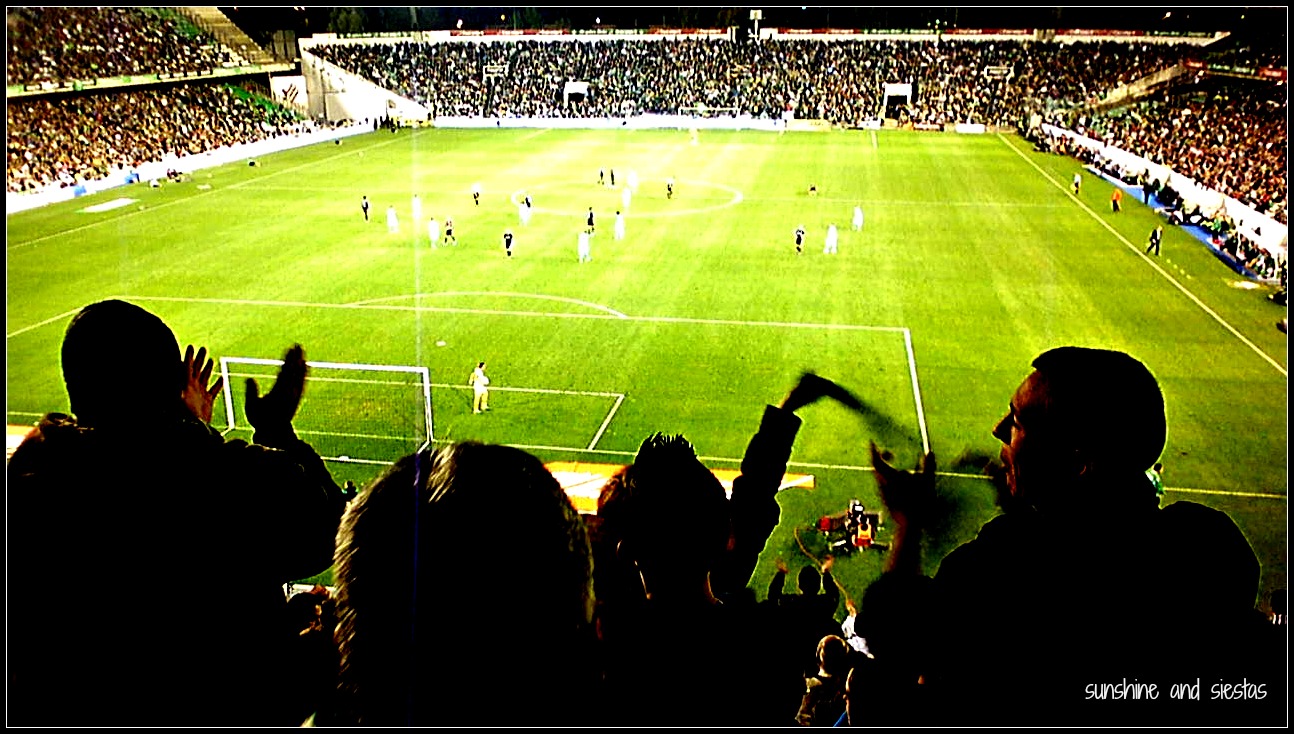
attending a spanish soccer match real betis

Football fans – madrista or not – will enjoy the recently renovated Santiago Bernabeu stadium tour, home to Madrid Fútbol Club. You’ll see spaces where Spanish soccer legends have trained, learn about the history of one of Spain’s most successful clubs and view the endless accolades. It can’t be missed for fans!

  • Hours of operation:
  • Cost: From 35€ online. You can also bundle experiences, like a guided tour or a game.
  • Tip: Do check online for game days, as some areas of the tour may be off-limits to visitors.

I, personally, enjoyed seeing Taylor Swift at Bernabeu but will stick to my hometown arena in Seville!

Take selfies at IKONO space (Calle de Sánchez Bustillo, 7. M: Estación del Arte, L1) or Sweet Space (Calle de Serrano, 61. M: Núñez de Balboa, L5, L9 or Rubén Darío, L5)

Your selfie-loving teen will have a blast at these spaces, designed for photos and goofing off.

IKONO:

  • Hours of Operation: Daily from 10:00 a.m. to 10:00 p.m.
  • Cost: from 15€ and more expensive on the weekend. Get your tickets online.

Sweet Space

  • Hours of Operation: Daily from 11:00 a.m. to 1:30 p.m. and 3:30 p.m. to 8:00 p.m.
  • Cost: from 15€ and up for adults, 12€ for kids 4-12. Free for children up to 3. Get tickets here.
 

Where to eat with kids in Madrid: some of our favorite places
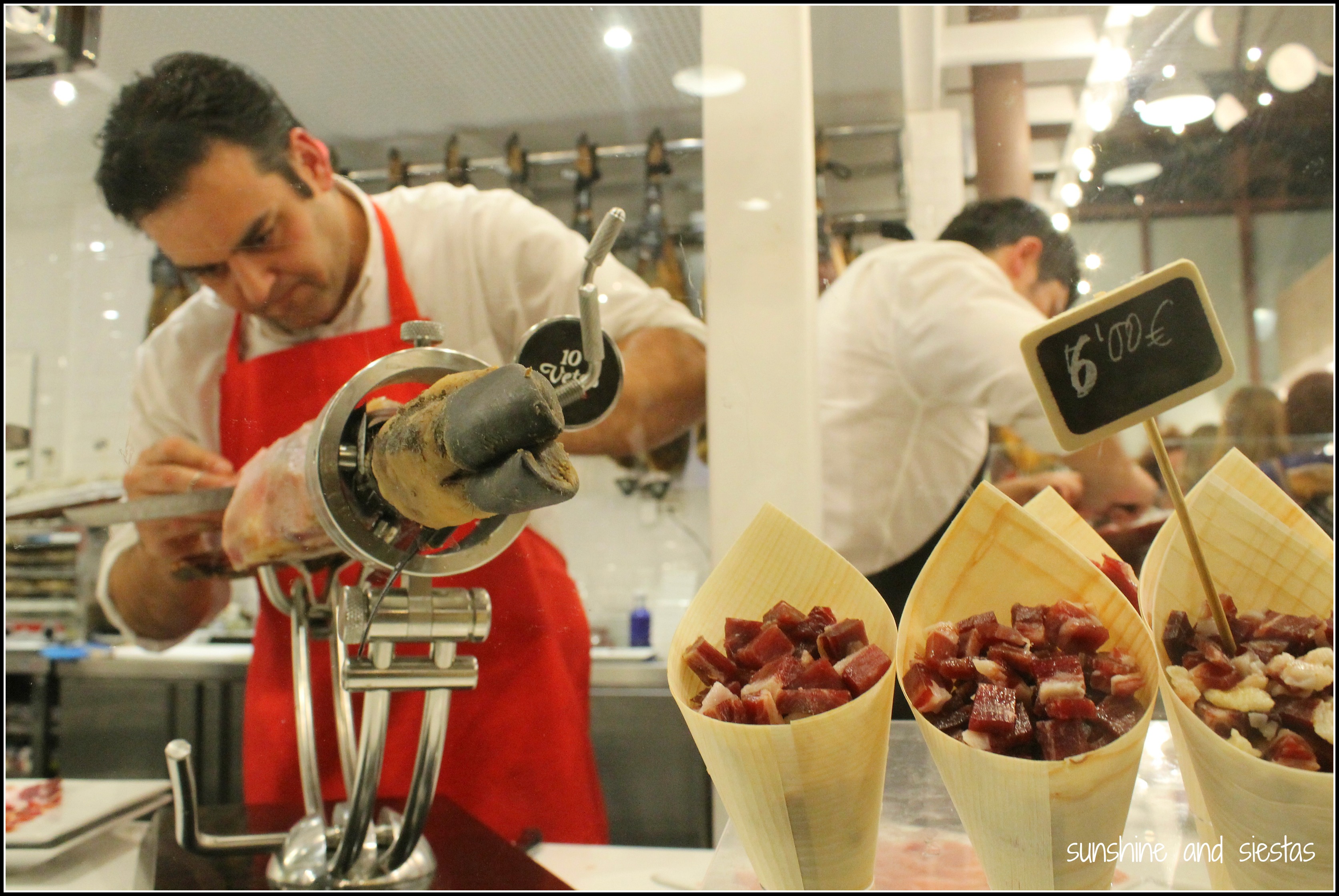
food offerings at mercado lonja del barranco sevilla

My kids know that going to Madrid to visit family means plenty of eating out, and they often get to choose where. Madrid has every cuisine you can imagine, plus plenty fo fast food options. If your kids are adventurous, you can really go nuts here: grilled pig ear, squid sandwiches or sheep brain. Or, stick to tortilla, croquetas and montaditos de lomo, because hangry kids are grumpy travelers.

  • VIPS is always a big hit because their menu is extensive and rotates – it almost feels like a sleeker American diner. Apart from standard fare like burgers and sandwiches, you can usually get a half slab of ribs before a stack of pancakes or milkshake. Some VIPS also have a small kid’s corner with some games, and they pass out crayons and some coloring papers with the kids menu. Service can be slow and I find most VIPS to be dead zones for cell signal, so don’t expect to park the kids in front of a screen here. Closet to the center is at Puerta del Sol 3, or Calle Alcalá, 23, but you can find them around the city.
  • Bar Loreto (Calle Hartzenbush, M: San Bernardo, L2, or Quevedo, L1, L4) is a frequent stop, too, as it’s within walking distance of our home base in Malasaña. While it’s not extremely kid friendly, it’s on a quiet street off of Fuencarral, and each drink comes with a montruous plate of food. They serve a lot of kid-friendly bites, and their menú del día is heaping and cheap.
  • My kids are big croquetas fans, and Bodegas Rosell (Atocha / Estación del Arte, L1, or Palos de La Frontera, L3) is right around the corner from Uncle Alvarito’s house and the Puerta de Atocha train station. They’re famous for their croquetas, so don’t skip it if you’ve got a train right around lunch or dinner time!

Don’t skip plaza life, either! One of Spain’s national treasures is the park-bar combo. Local families snag a table at an outdoor eatery near a playground so that kids are entertained and parents can actually eat their food warm. We pop down to Plaza Dos de Mayo (M: Fuencarral, L1 and L10) and camp out at Madriz for some apertivos, but there are two pizza places anchoring the expansive square, as well as a few other places to nip in for a bite. Come early – these are prime real estate! Other ideas are Plaza de Olavide (M: Iglesia, L1), where restaurants ring a spacious plaza with fountains and playgrounds, or Plaza de Santa Ana (M: Sol, L1, L2, L3 and Cercanías trains) near Puerta del Sol.
Five Things to do in

What do you do with kids in Madrid?

If you liked this post, you can consider purchasing it on GPSMyCity, a GPS-enabled tour guide that’s available offline. Your euros go right back to helping this site stay up and running! I’ve also got a post on what to do with kids in Seville.

Is a Madrid Holiday Right for You?

You’re destined for Madrid – a city that’s vibrant but demure, traditional but avant-garde, a big city with a small-town feel.

Should I travel to Madrid

Ok, not that small, but per tradition, many madrileños stick to their neighborhood, making Europe’s third largest city feel like an overgrown village.

Madrid is a city that’s got one foot firmly planted in the past and the other, striding forward in the future. From its humble beginnings as a farming town to a bustling capital, this city of more than three million is Spain’s financial and cultural hub, boasting world-class museums, stellar nightlife and plenty of Spanish charm.

Madrid Plaza Mayor

Madrid truly is a haven for just about anyone – if you flipar for art, Madrid has three of Spain’s most celebrated museums. The Reina Sofia is an enormous contemporary arts collection, including Picassos’s celebrate “Guernica.” The Museo Nacional del Prado boasts fine art from Velázquez, Murillo, el Greco and Goya – and those are just the Spanish painters. The private collection at the Thyssen is also noteworthy, and the three make up the Triángulo del Arte perched on the east side of the center. Then add the dozens of playhouses, a world-class symphony and flamenco shows, and you’ll have an art hangover.

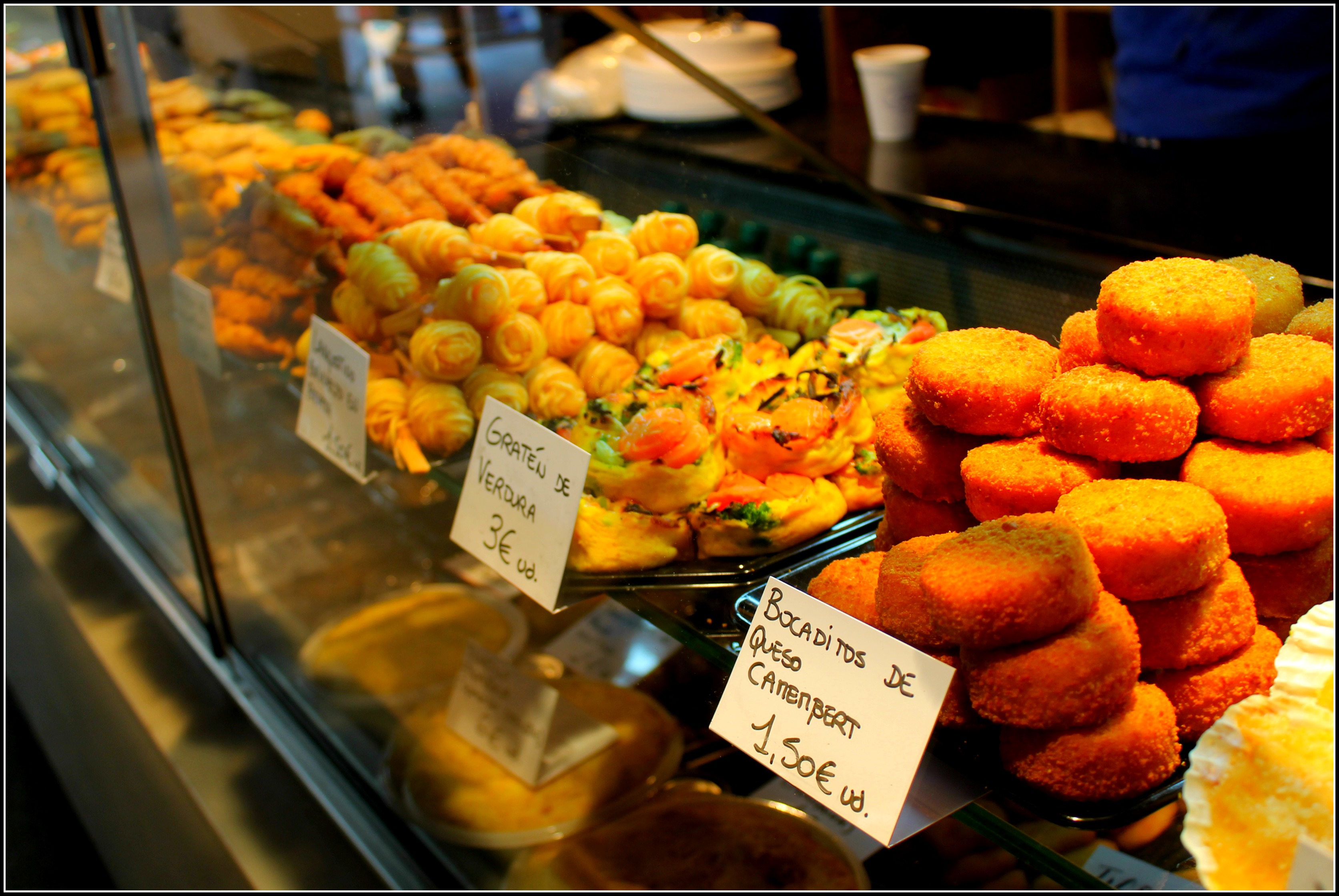
If gastronomy is more your flavor, La Capital has plenty of them to choose from. Visitors absolutely must make a stop to the Mercado de San Miguel for an introduction to the art of tapas, washed down with a glass of wine. The city has several fine dining establishments, as well as hole-in-the-wall favorites. The unofficial snack? A fried calamari sandwich from El Brillante, situated just in front of the Atocha train station.

tapas at mercado de san miguel

Shopping lovers should head to Gran Vía or Calle Fuencarral for specialty shops, or catch the el Rastro flea market on Sunday mornings in the La Latina neighborhood. History buffs will love Madrid’s traces of the Hapsburg and Borbón dynasties, its Egyptian temple and the sprawling palace.

Madrid is also a great landing point for visiting other points of Spain and other parts of Europe – all of Spain’s major highways begin and are measured from Puerta del Sol, which also hosts an enormous party on New Year’s.

Madrid Typical Bars

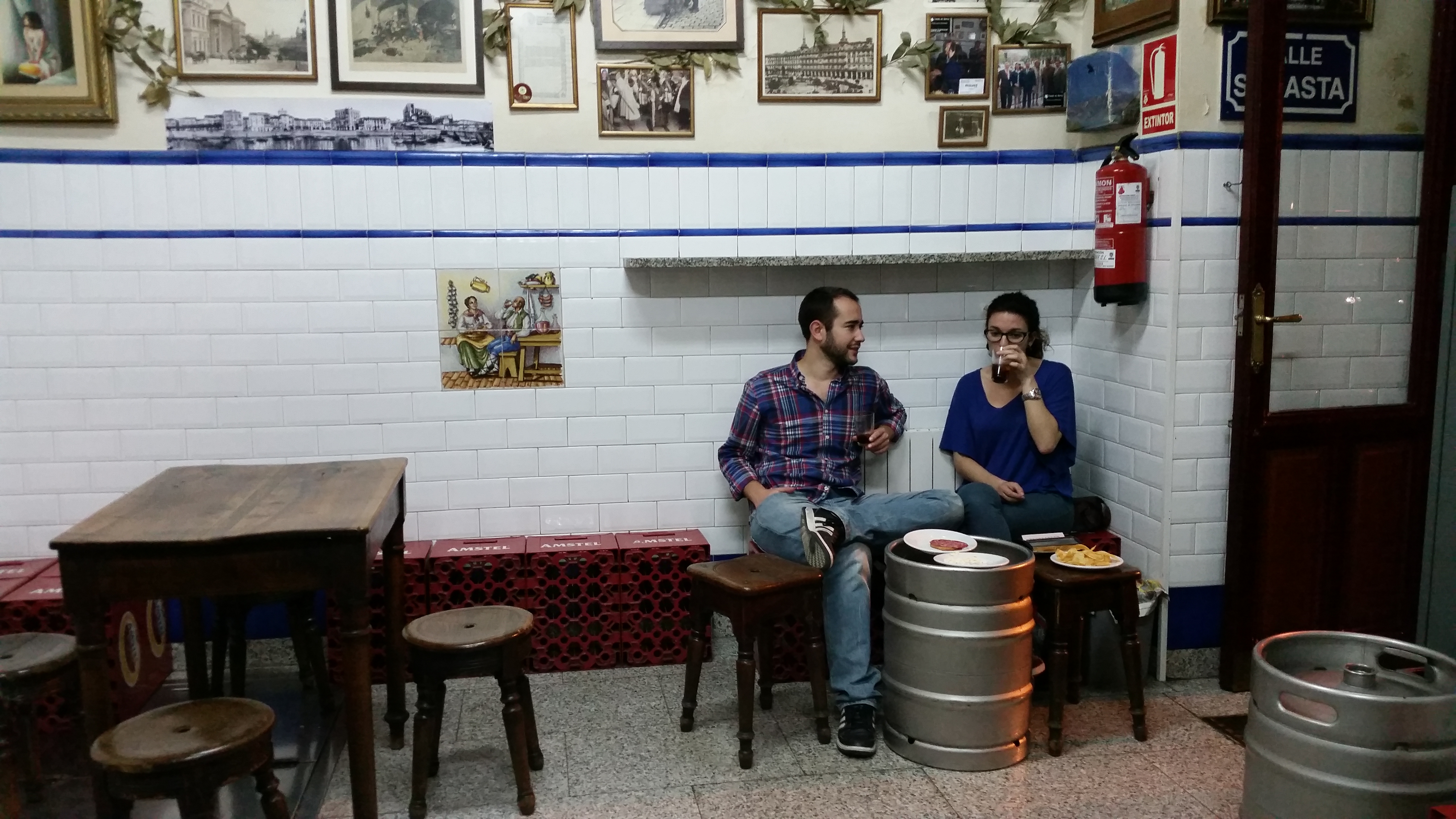
My advice? Ditch your map and choose a neighborhood. Stop into wood-paneled bars for a caña, or small draft beer, a slice of fluffy potato omelet and a taste of Old Madrid. Café Comercial, despite rubbing elbows with some of the city’s hippest bars and boutiques in Malasaña, is a great spot for jazz, great service and a sweet vermouth, a gato’s drink of choice. Or, head to trendy Alonso Martínez and window shop. Take a stroll in the Buen Retiro park and admire Gran Vía when dusk falls before dancing in a disco until six in the morning and ending the night with churros and chocolate at the city’s most loved churros place, Chocolatería San Gines.

I have to admit that Madrid and I got off to a rocky start – I found it a bit too sprawling, too presumptuous and too full of itself. Local gatos, as they’re called, steered clear of tourist-packed Sol and the streets spiraling out from it, and it was a sticky hot day.

metro of Madrid

But once I’d moved to Spain, Madrid became a frequent stopover on flights back home to Chicago. I take the train up for conferences and concerts, to visit friends and new babies. Slowly, the madrileño vibe oozed into my heart, and it’s now one of my favorite weekend destinations in Spain. 

Should you travel to Madrid? Sin duda – it’s one of Europe’s most complete destinations.

Please check out this quiz to see if going to Madrid is right for you. Wyndham Resorts that are in Spain could be great for your next holiday vacation to get away from the normal and visit the extraordinary.

This post was brought to you by Wyndham Resorts, but my MAD love for Madrid is all my own.

I’ll be spending quite a few weekends in Madrid as the Novio works there for a few months. I’m looking for hidden gems to add to my list of favorites, so leave me comments below por fi!

Love and the Art of Flamenco Guitar Making: A Visit to the Guitarrería Mariano Conde

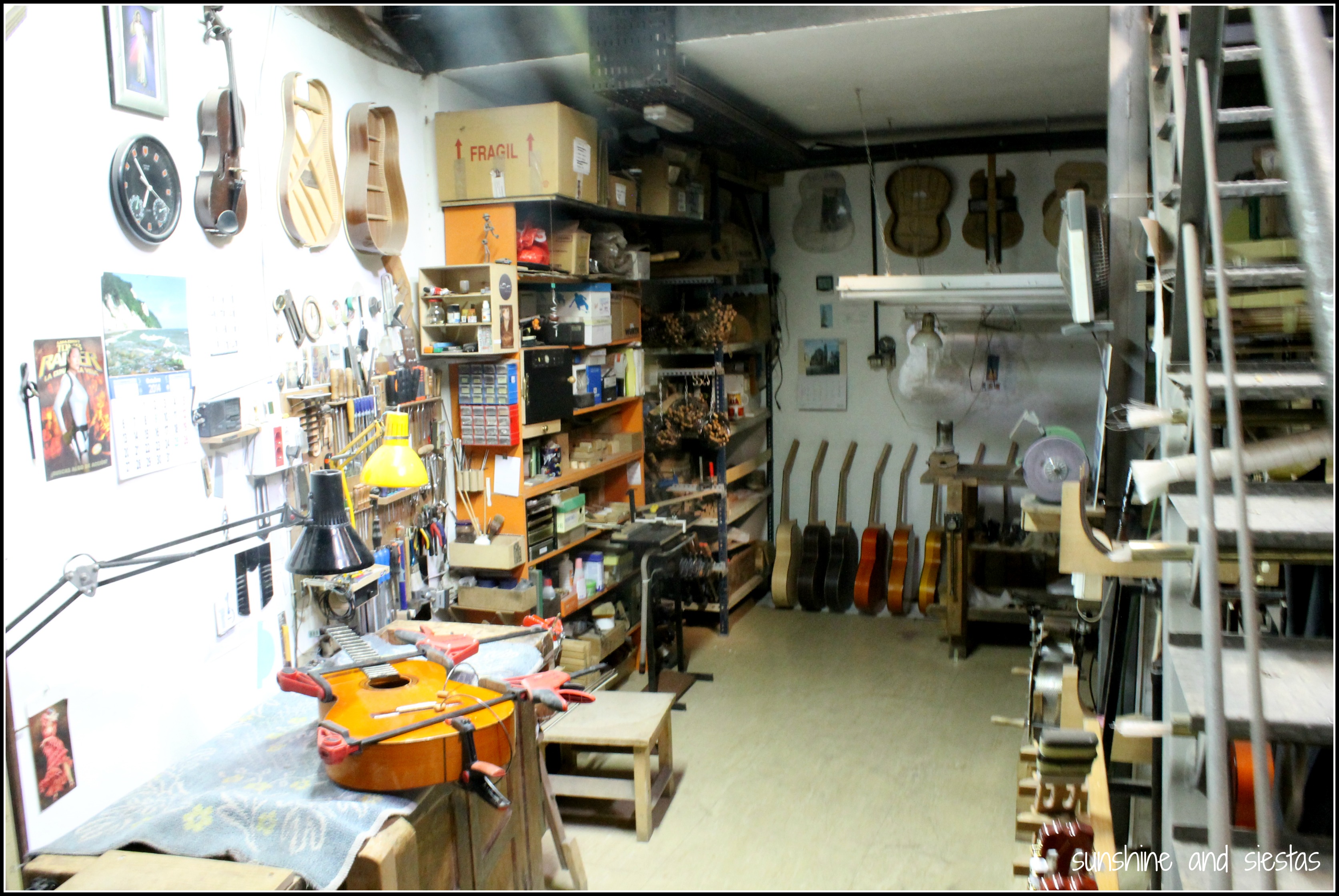
The sawdust on the floor gave it away: this was actually a living, breathing sort of workshop, not one where the workers are tucked away, out of sight for appearances. My ears perked with each twang of the six strings of a flamenco guitar. There was a few hollow knocks, followed by a bit of sanding.

That’s where the sawdust came from. 

Growing up, I played the clarinet and learned music theory while perfecting trills, scales and my embouchure. Upon taking a flamenco course in Seville, I discovered that I shared the innate rhythm bailaores possess, the internal metronome that allows them to recognize palos and styles, then spiral into dance. My ears picked up the 2/4 and 3/4 counts and set my feet into motion with a firm golpe using my whole foot.

There are three big parts to flamenco – el cante, or the song; el baile, or dance;  el toque, or the guitar. The guitar is what accompanies  the cante, and sets rhythm to the bailaor. 

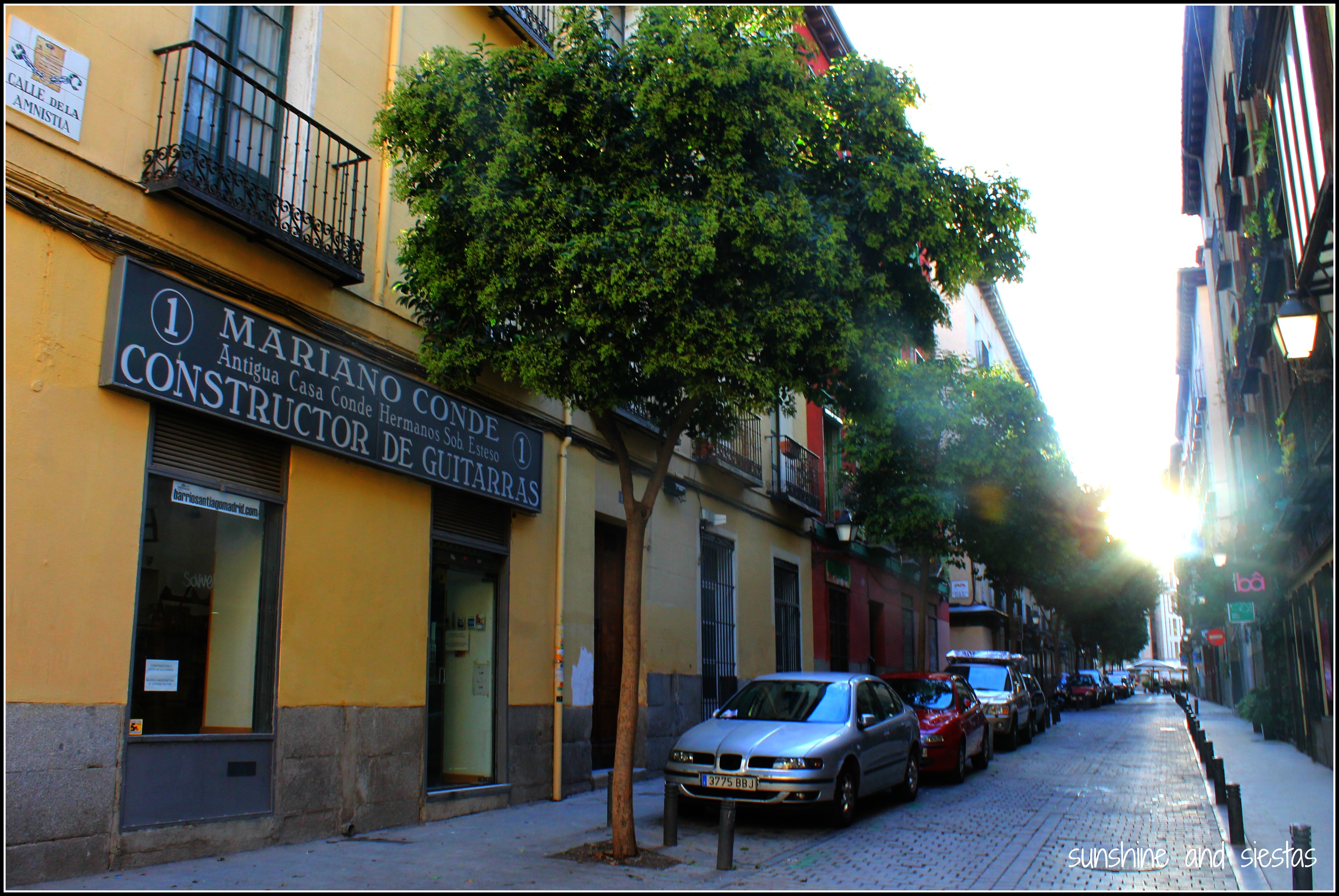
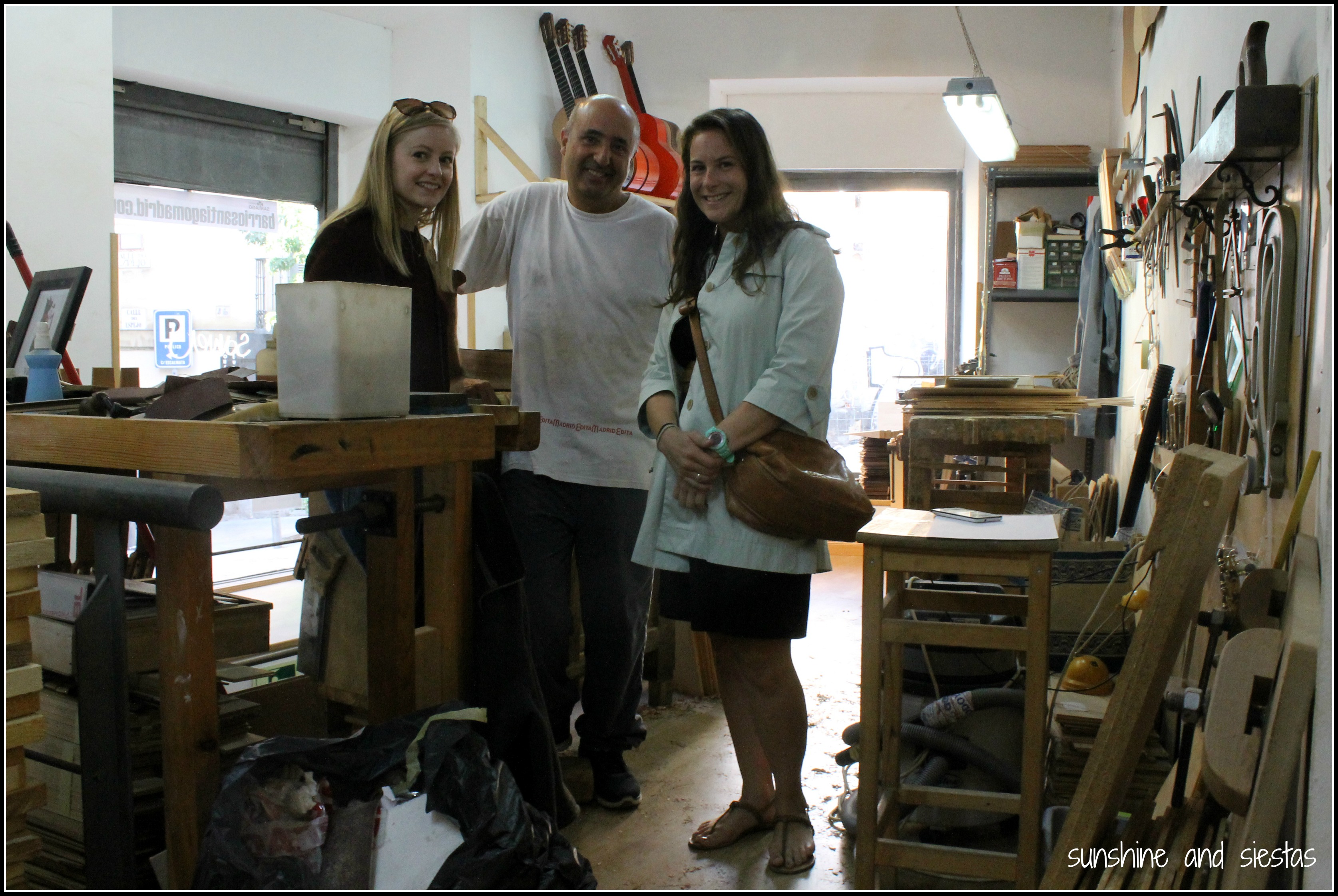
To learn about how flamenco guitars are crafted, Tatiana took us to the Mecca of guitarras flamencasGuitarrería Mariano Conde. Tucked away from the Ópera area on Calle de la Amnistía, this workshop has existed since 1915 and is operated by a third-generation craftsman and his son. 

Mariano hardly looked up from his work as he welcomed us into the bi-lever taller. He was sanding down the intoxicating curves of a flamenco guitar, crafted from cyprus and a century-old design. There was a muttered holaaaaa bienvenidas and a quick dos besos for Tatiana as she led us downstairs into the dimly lit belly of the shop. 

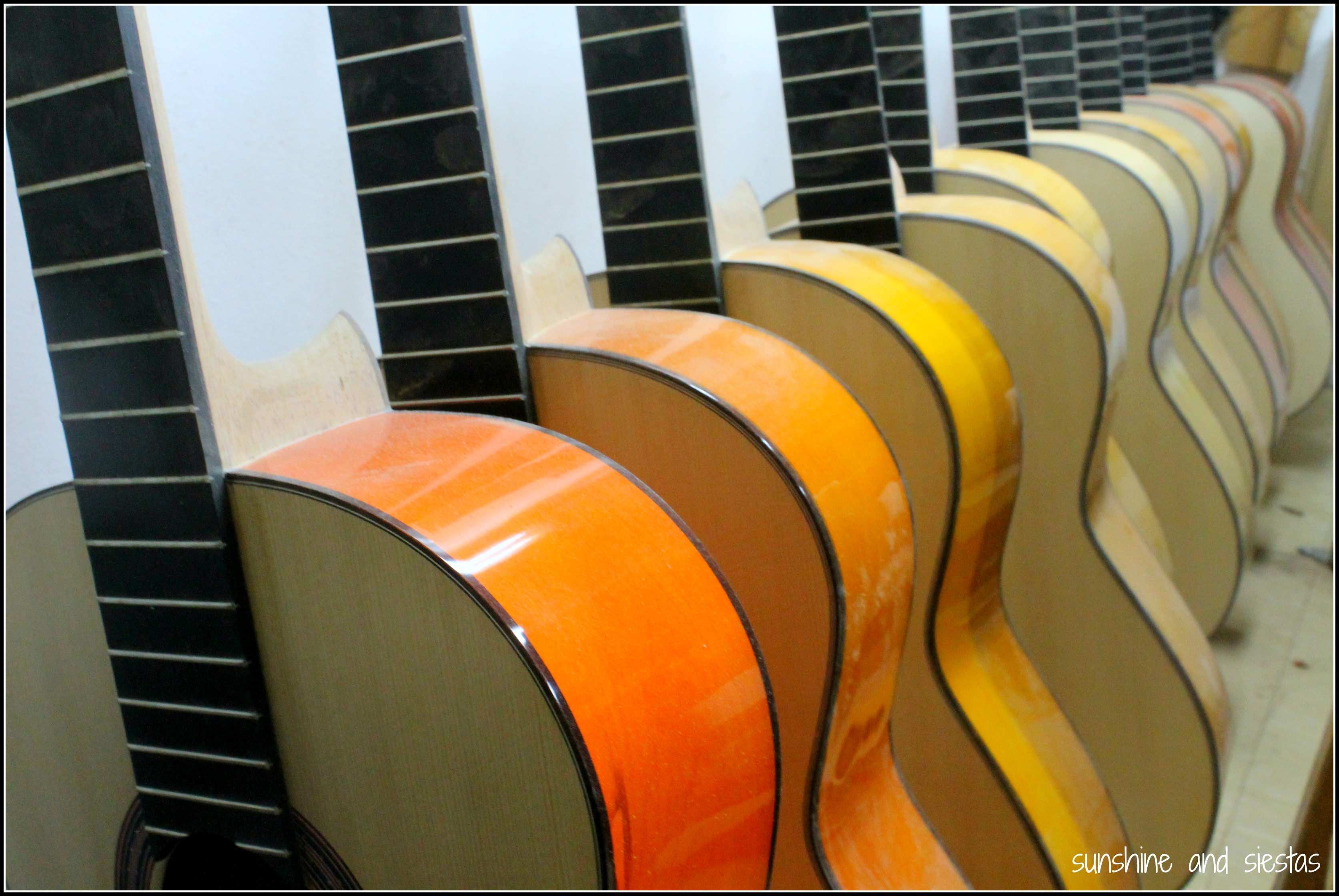
The tools of the trade stood against the wall – picks, sanders, measuring sticks, protractors. Nearly two dozen guitars in various stages of development, each showing just a fraction of the work that goes into crafting a lightweight flamenco guitar. In all, about 300 hours of labor go into producing a single instrument.

Mariano descended the stairs, carrying a soundboard over his shoulder. Made of thin strips of cypress or spruce, this part of the guitar provides for the reverberation and the sound that is transmitted when strings get plucked. Once this part of the guitar has been crafted, the sideboards are affixed, followed by the fretboard, or neck.

Just as a painter signs the bottom of a masterpiece, Mariano’s signature comes by way of the carving on the top of each fretboard – his is a minute, gently sloping “M.”

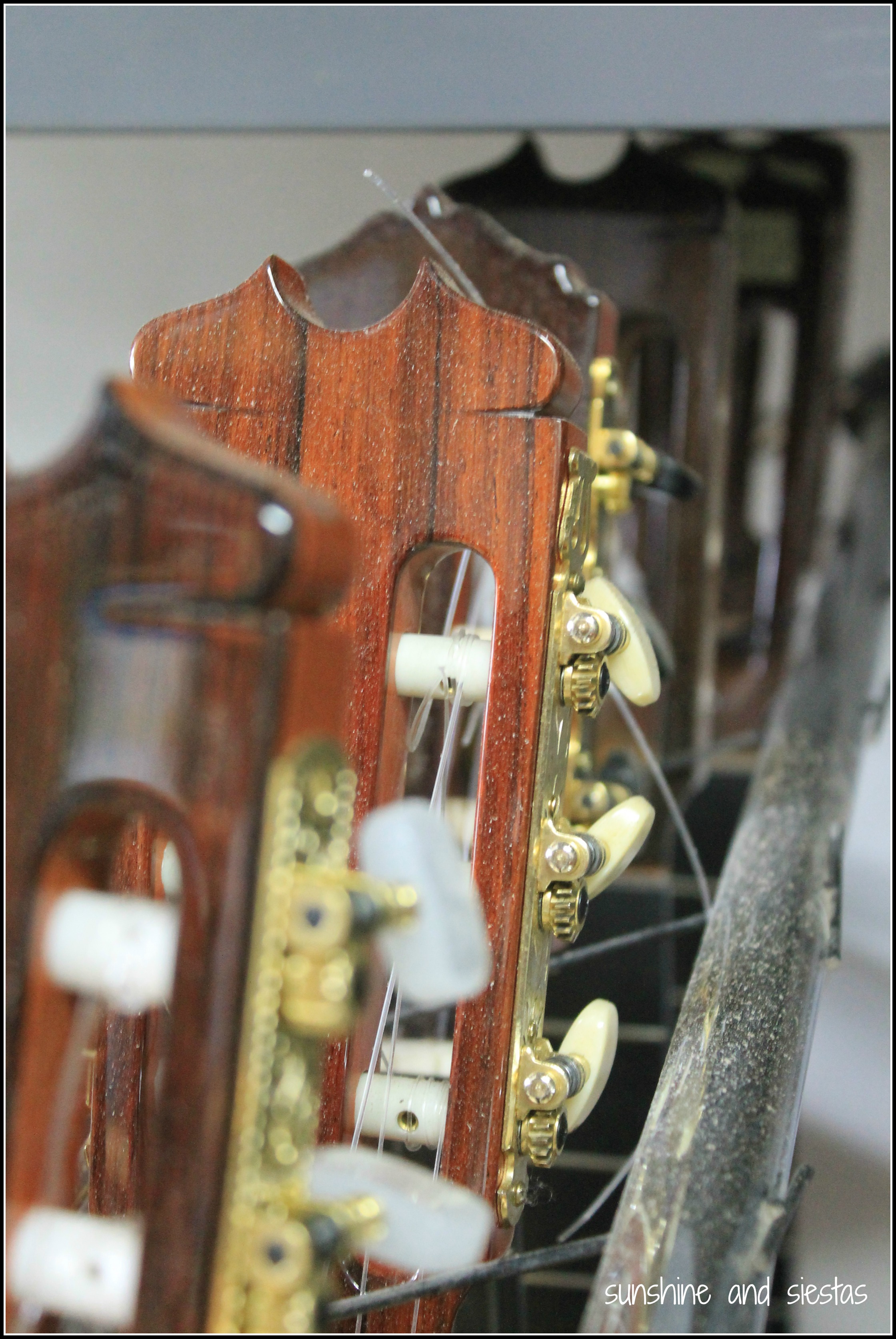
Many of the guitars we saw were in their final stages of production – applying coat after coat of French shellac, drying, or ready for the strings and bridge to be attached. Around the sound hole, Mariano adds another signature of his workshop, one which is solely dedicated to flamenco guitars: the rosette.

Made from carved and dyed pieces of wood, the color and pattern of rosettes changes regularly, and his current design pays homage to the first generation of flamenco guitar craftsmen in his family. The costs begin at 2800€ and rise steadily from there, depending on the wood used and hours of craftsmanship.

Unless, of course, it’s a Sonata.

A list of about 30 names of guitars, named for the poems that accompany the tag, are specially crafted for famous names in flamenco (including the recently deceased flamenco great, Paco de Lucía) and specialty buyers, including musicians who do not perform in the flamenco style. The Sonata guitars are pricey, but done solely by el maestro himself.

Mariano himself was hospitable, answering my questions between teens looking to replace nylon strings and other curious buyers who walked into the shop.

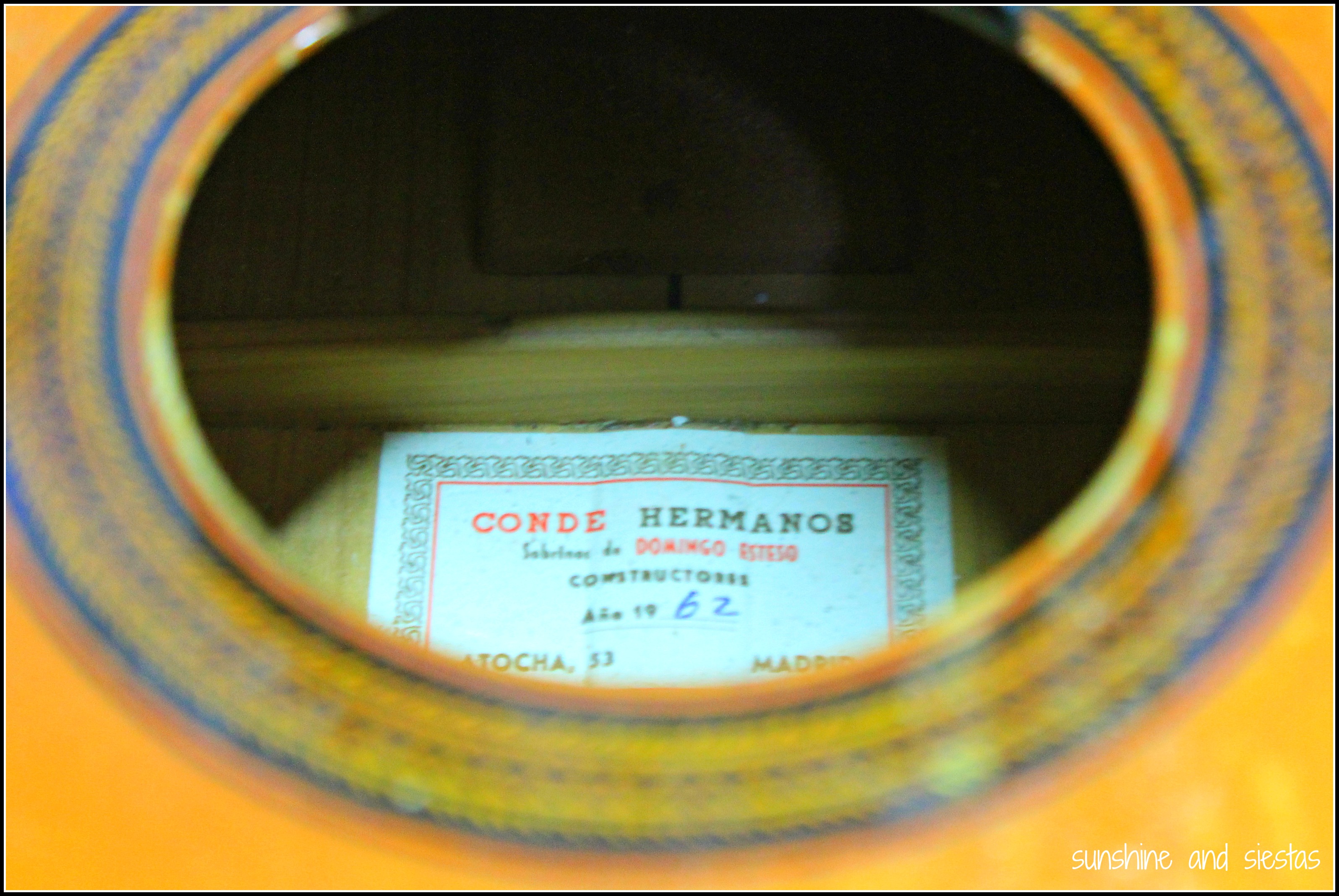
To say the Conde Hermanos, sobrinos de Domingo Esteso, are household names when it comes to flamenco guitars, would be an understatement. I’m not a flamenco aficionado, but can appreciate the discipline and attention it take to perfect an art, be it el cante or el baile or el toque.

The Art of Making, Alma Flamenca from Deep Green Sea on Vimeo.

I visited Guitarrería Mariano Conde as part of the ‘Origins of Flamenco’ tour with OGO Tours. Check out their website for loads more, from food to walking tours to excursions. Javier and Tatiana graciously invited my friend and I free of charge, but all opinions are my own.

If you’re interested in more Madrid and flamenco: My Perfect Madrileño Day | Mercado San Miguel | Where to see flamenco in Seville

Do you like Flamenco?

Tapa Thursdays: Yakitoro, a Chicote-run Dining Concept in Madrid

Faced with a lunchtime dilemma in Madrid, I was thrilled to get a message at the very moment my stomach rumbled from my friend Lauren, a self- and media-professed foodie and an insider in the Spanish capital chow scene (jo, she’s one of the co-founders of Madrid Food tour. When I say expert, I mean it!).

Though we were trying to find a time for a drink, I had to ask: We’re in Chueca. Where do we eat?

Lauren offered up a few choices, but we were closest to Yakitoro, Alberto Chicote’s newest restaurant. Much like Anthony Bourdain or Gordon Ramsey, this madrileño chef is riding a wave of immense popularity after appearances on Spain’s version of Top Chef and Nightmare in the Kitchen, called Pesadilla en la Cocina.

Welp, our minds were made up on that rainy Saturday afternoon – we’d be wannabe foodies and celebrity stalkers. I came into Yakitoro with high expectations and left slightly let down, to be honest.

Let me start with the good stuff:

Concept

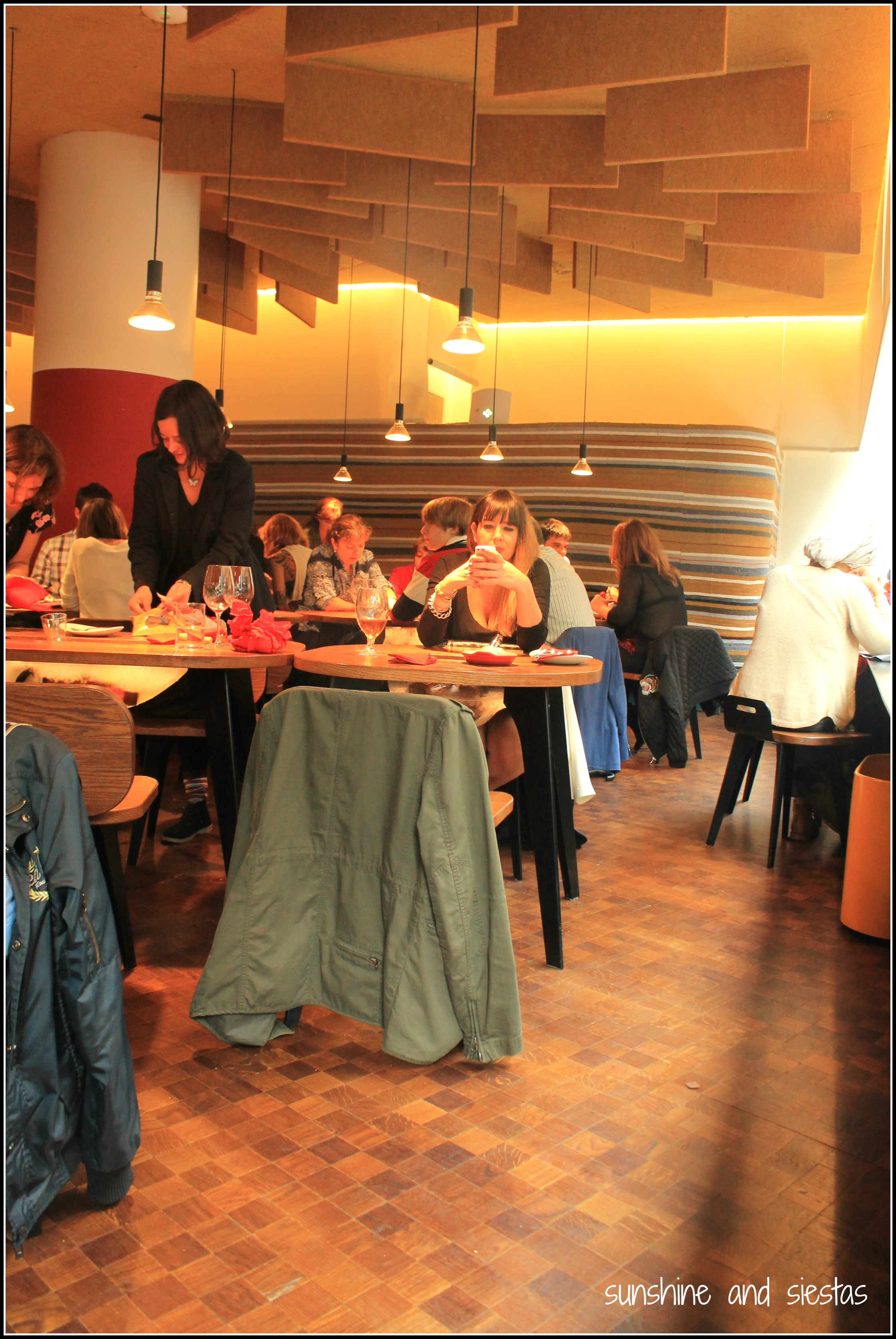
Yakitoro is a Japanese-Spanish fusion restaurant (with food reminiscent of Nazca in Seville). The kitchen prep area is behind a large glass wall, and you can imagine my surprise when I saw Chicote himself making the food. The first question we were asked upon sitting down was Chopsticks or a fork?

I’ve been mildly obsessed with concept restaurants since a sixth grade project where we were asked to plan a restaurant, from decor to menu to price to sustainability. Ours? OJ’s Cyber Cafe, where the 1995 trial took center stage in our menu and chalk outlines were the hallmarks. Morbid.

The tapas – an eclectic mix of vegetarian, fish and meat dishes – are then cooked over a fogón, or a large stove, in the middle of the restaurant in plain view. Polished wooden tables spiral out from the central stove, meaning patrons are grouped together, sharing a cooler in the middle with bottles of beer and chilled wine.

We were sat at a low, steel bar next to the window and filled with succulent plants. The servers wear flight suits that reminded me of the Communist theatre I went to in Harbin, China.

Food

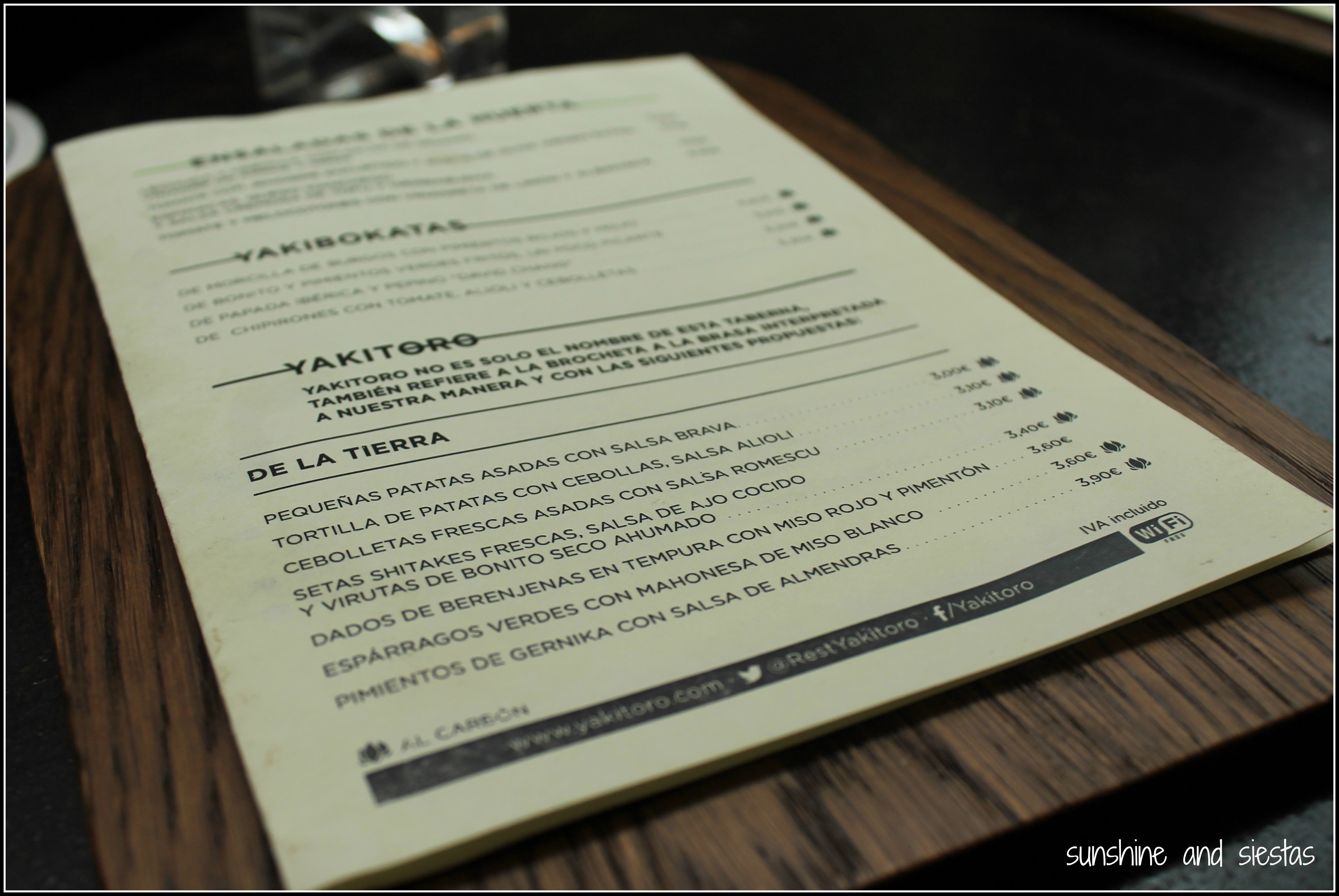
There were easily 50 dishes on the menu, glued to wooden boards, and a small but thoughtful wine list. We chose an entire bottle of rosé to detox from copious amounts of tinto during the week and I ordered for Laura.

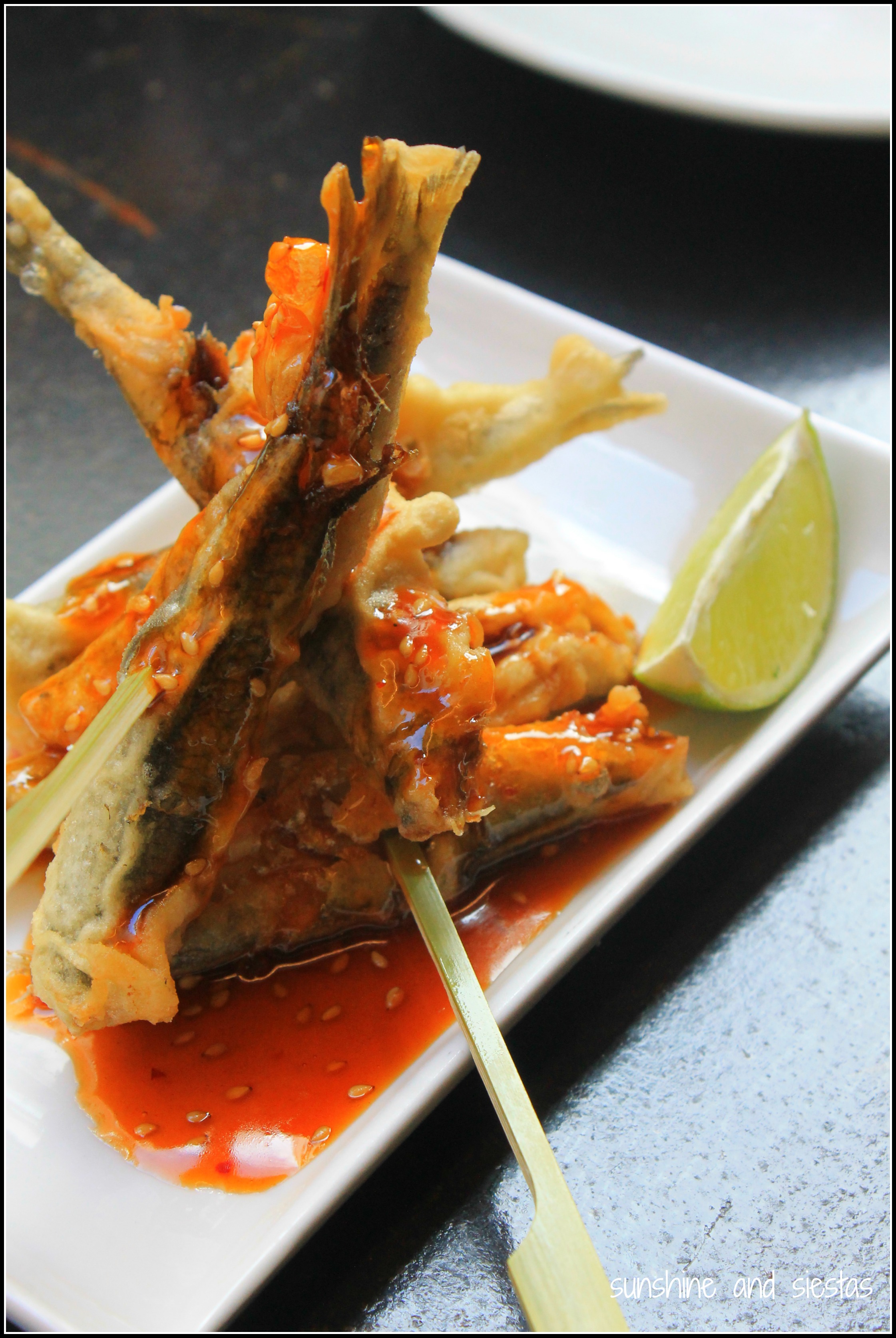
The sardines in tempura with a sweet chile sauce were up first. Laura was put off by having to peel them, so I dug in. Those that were cooked were exquisite, and the sweet ñora sauce was an excellent touch, though a few of the fish came undercooked.

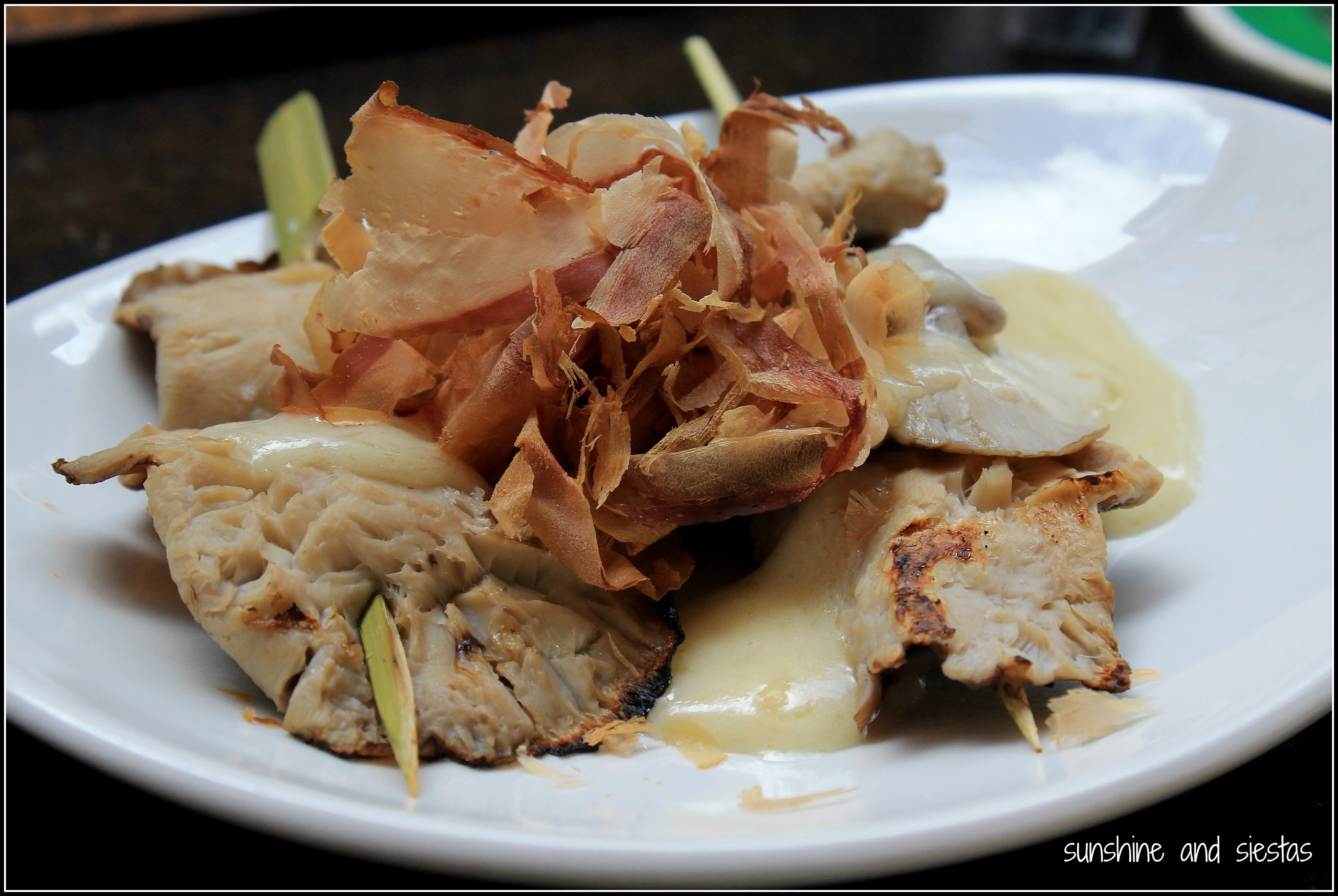
I’m not a mushroom fan, though Laura raved about the cooked-to-perfection shiitake mushrooms with dried mackerel shavings and a garlic sauce. The smoky taste of the dried mackerel added depth and distracted me from the texture of the mushroom. The portion was rather generous, as well.

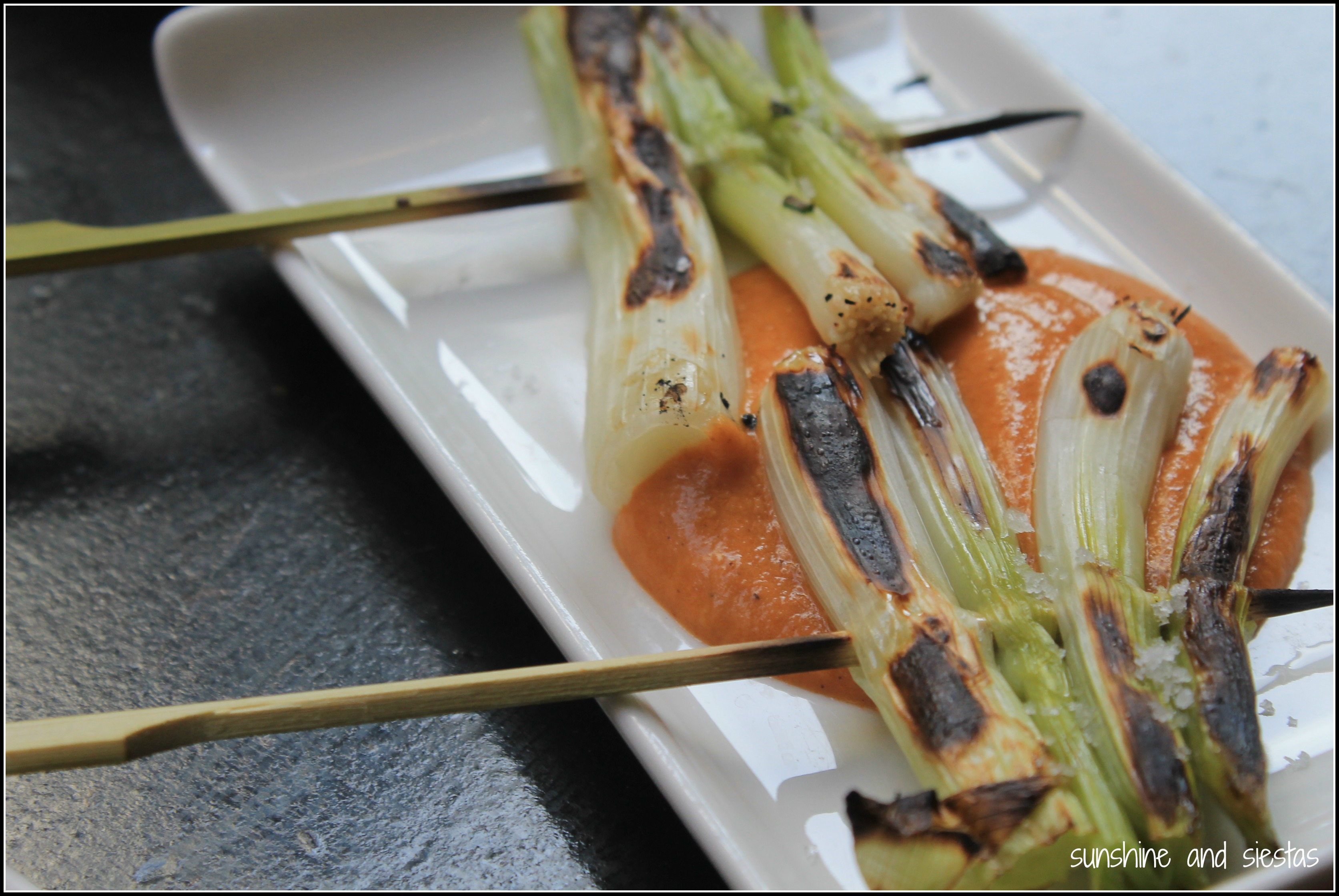
The grilled shallots – a signature dish in Catalonia – were browned on the fogón and crowned with tangy romescu sauce, were a nice break between our heavier dishes. They came speared on a brochette, thus the basis of Yakitoro’s menu.

We chose two meat dishes to finish off. The chicken in tempura was delicious, particularly with the thick and sweet Pedro Ximinez reduction for dipping.

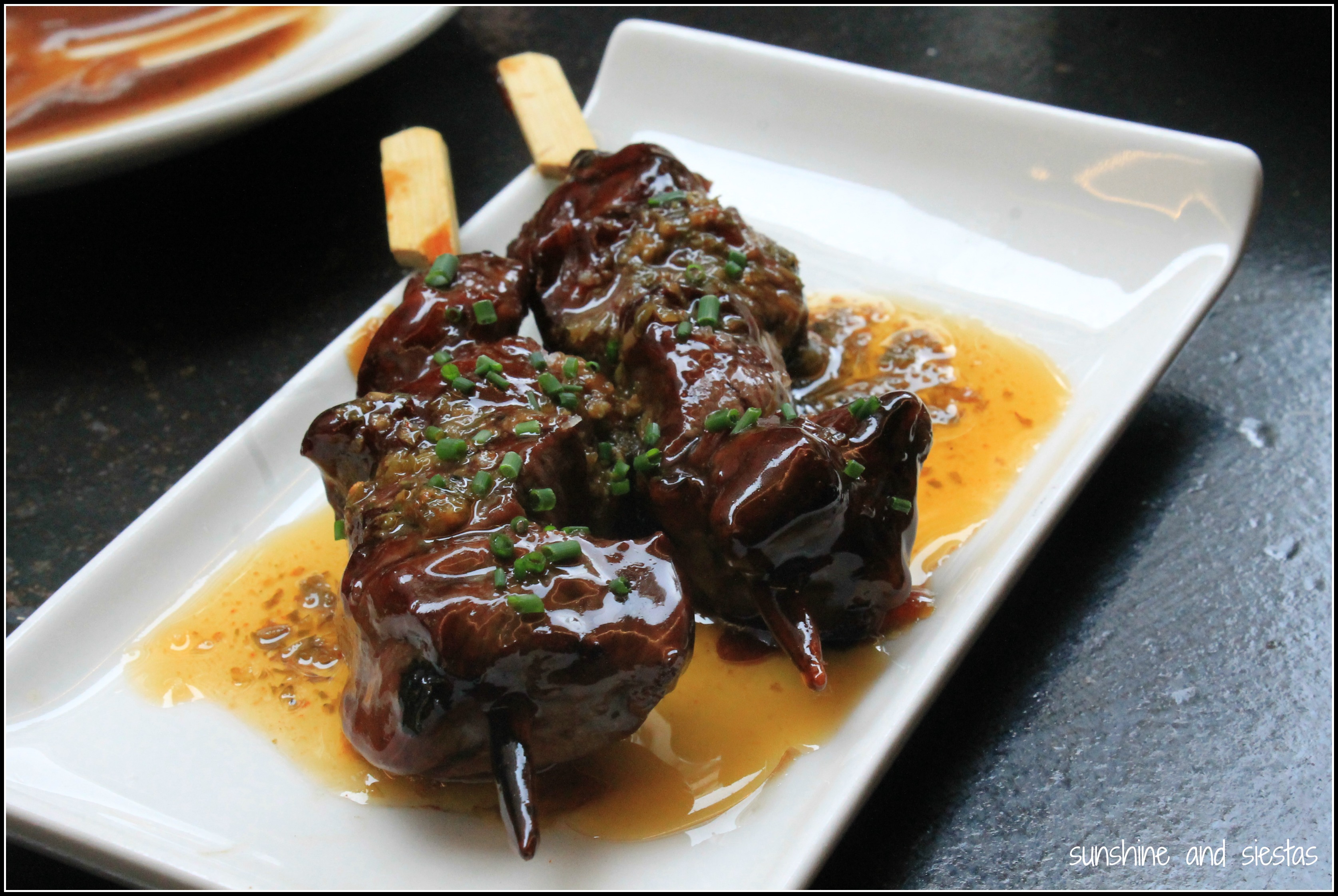
The braised short ribs were cooked to order, glazed with a sweet sauce and a perfect ending to the meal. 

The tapas, while small, were an excellent price – from 2,50€ and up – and we ordered an entire bottle of wine and five tapas for well under 40€.

Service

I mistakenly thought that the less-than-desirable service at Yakitoro was due to it being a brand-new venue – pues no, Yakitoro has been open for business since June. When we arrived just after 3pm, the place was packed, so we got our names on a list for an hour later. 

The kitchen didn’t close midday, which is more common in Madrid than in Seville, but the restaurant wasn’t nearly as buzzing when we arrived at 4:30. We were sat right away, though it took nearly ten minutes to get a menu and another ten for our bottle of wine to be opened. Thankfully, we weren’t in a hurry and enjoyed the sobremesa on Laura’s last day in Spain.

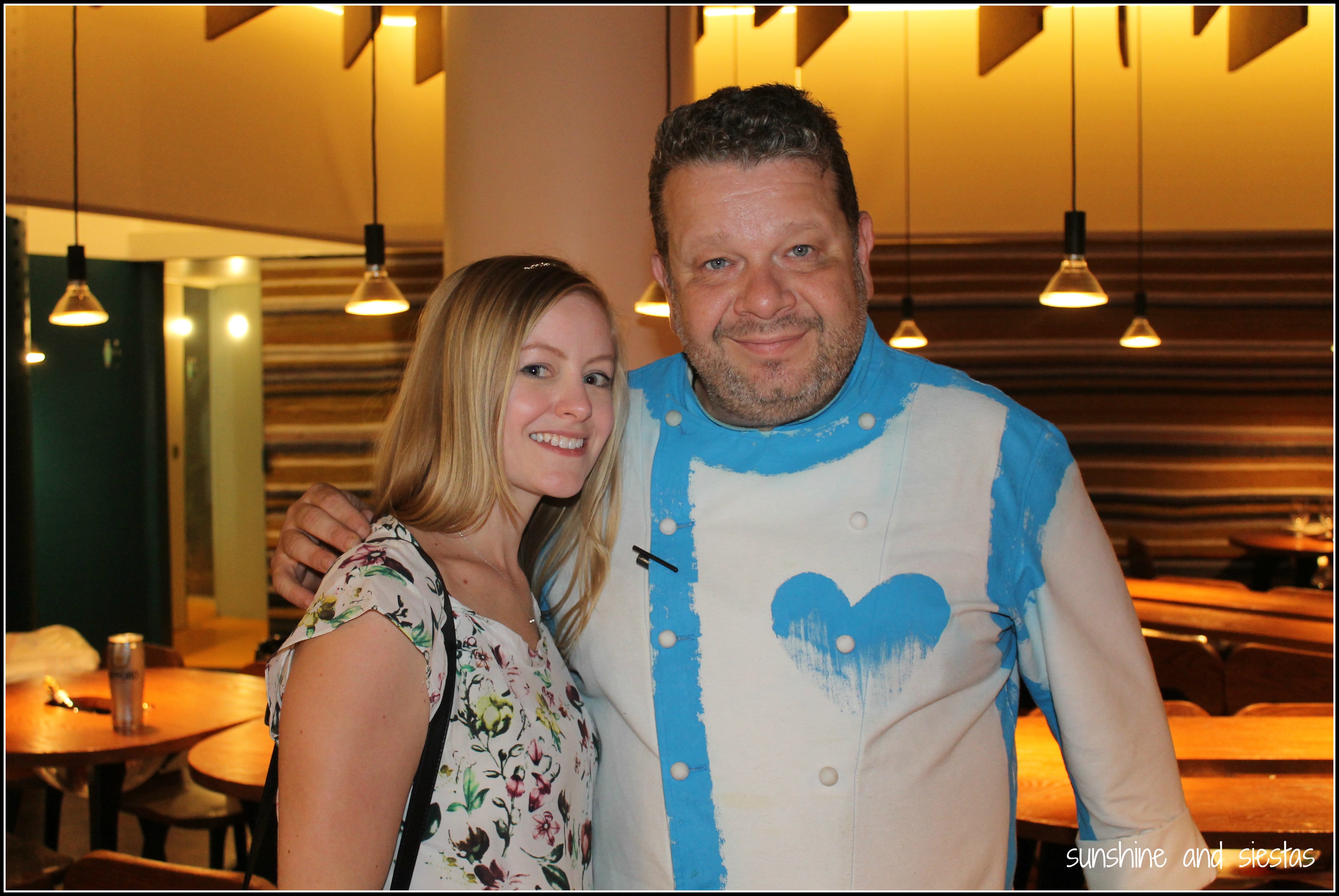
As we left nearly 90 minutes later after a long lunch, Chicote was standing at the door and said goodbye. I fibbed a little and told him the sardines were exquisite – they would have been, had they been cooked for a minute longer. Every restaurant has its kinks to work out (haven’t you seen his show?!), so I’d be willing to try Yakitoro in the future.

Yakitoro is located on Calle Reina, 41, just steps off of Gran Vía in the Chueca neighborhood. The kitchen is open daily from 1pm until midnight, and reservation are accepted. You can check out their website for more.

Behind Every Plate: A Day with Insiders Madrid

The more immersed I become in the Spanish gastronomic world, the more interest I have in where food comes from, who makes it (or butchers it or cures it or raises it) and the stories behind everything I consume.

I recently spent the day with Joanna, the founders of Insiders Madrid. I was jet lagged, emotionally fraught from my grandfather’s death and not really sure what day it actually was.

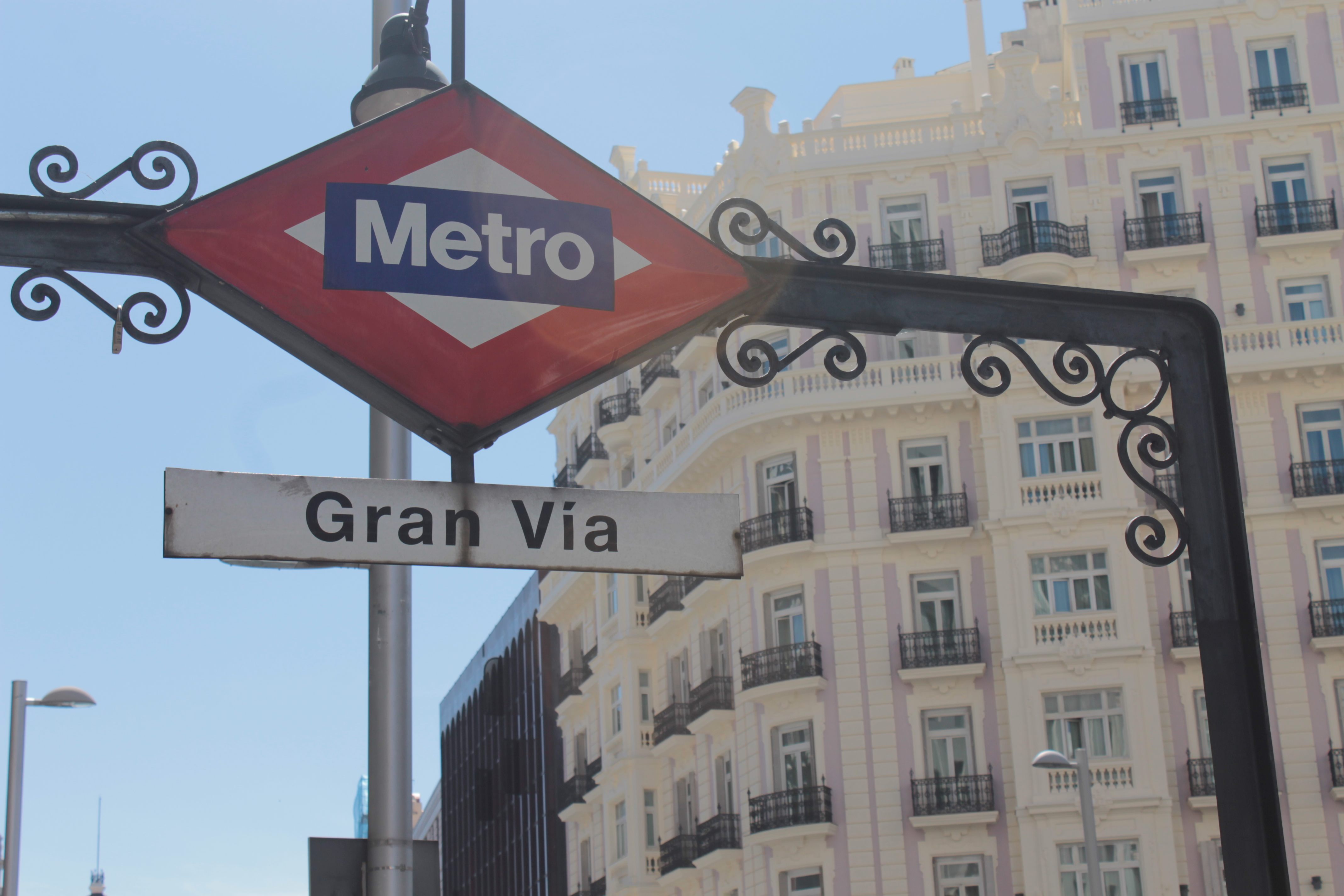
Given the choice between many different types of tours, I chose the follow my nose and stomach on the Gourmet Food Shop Tour on a bright June morning. We met right on Gran Vía, the juxtaposition of old Madrid and shiny new Madrid. Apart from snacking at four stops along the way, I was able to meet the owners and operators of some of the most renowned food shops in Spain’s capital. 

Joanna has traveled extensively and worked in television for years before deciding to follow her passion: to provide luxury and off-beat tours to people from around the world. Between samples of Spanish foods like ham and olive oil, we shared stories about dining and drinking in Spain. 

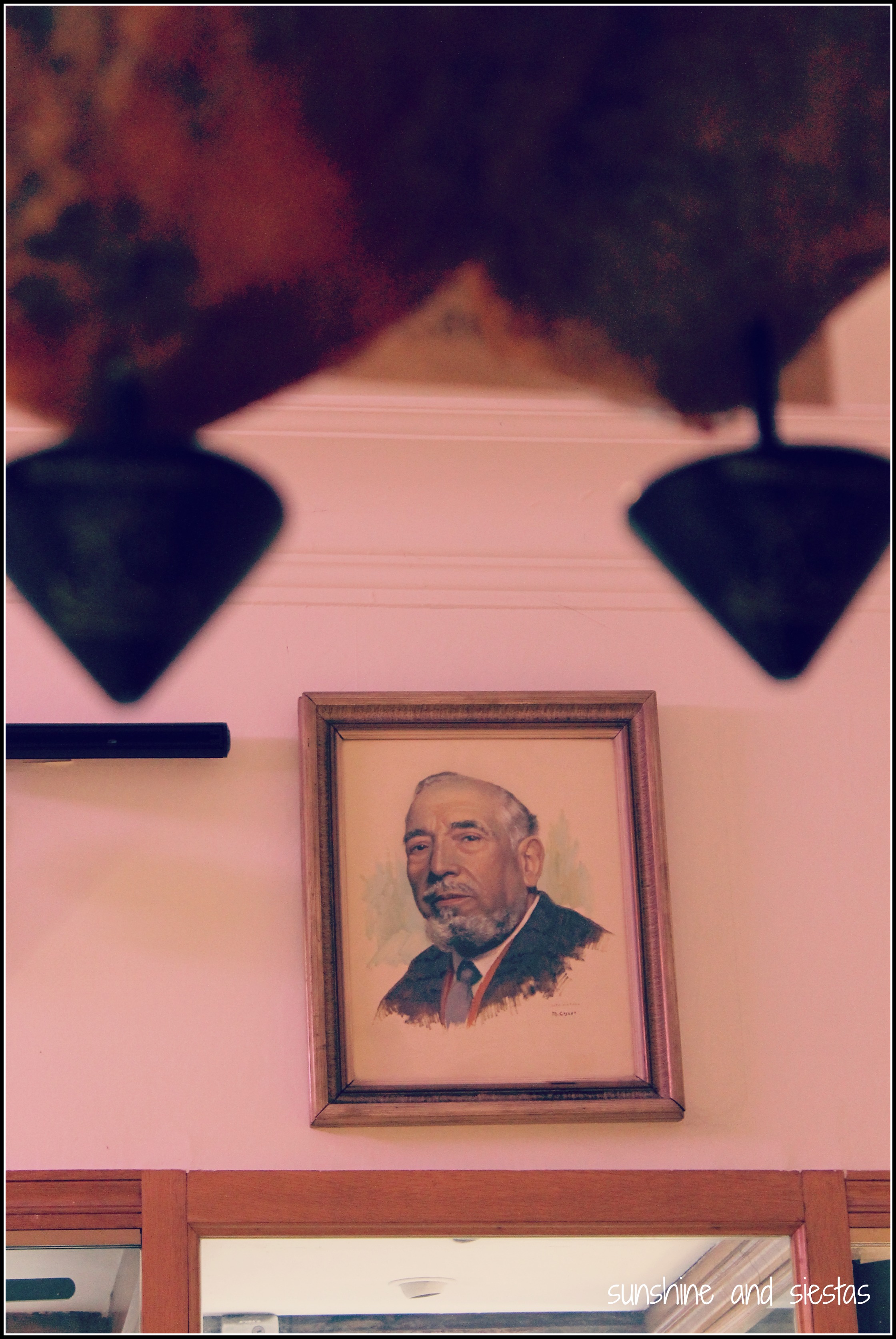
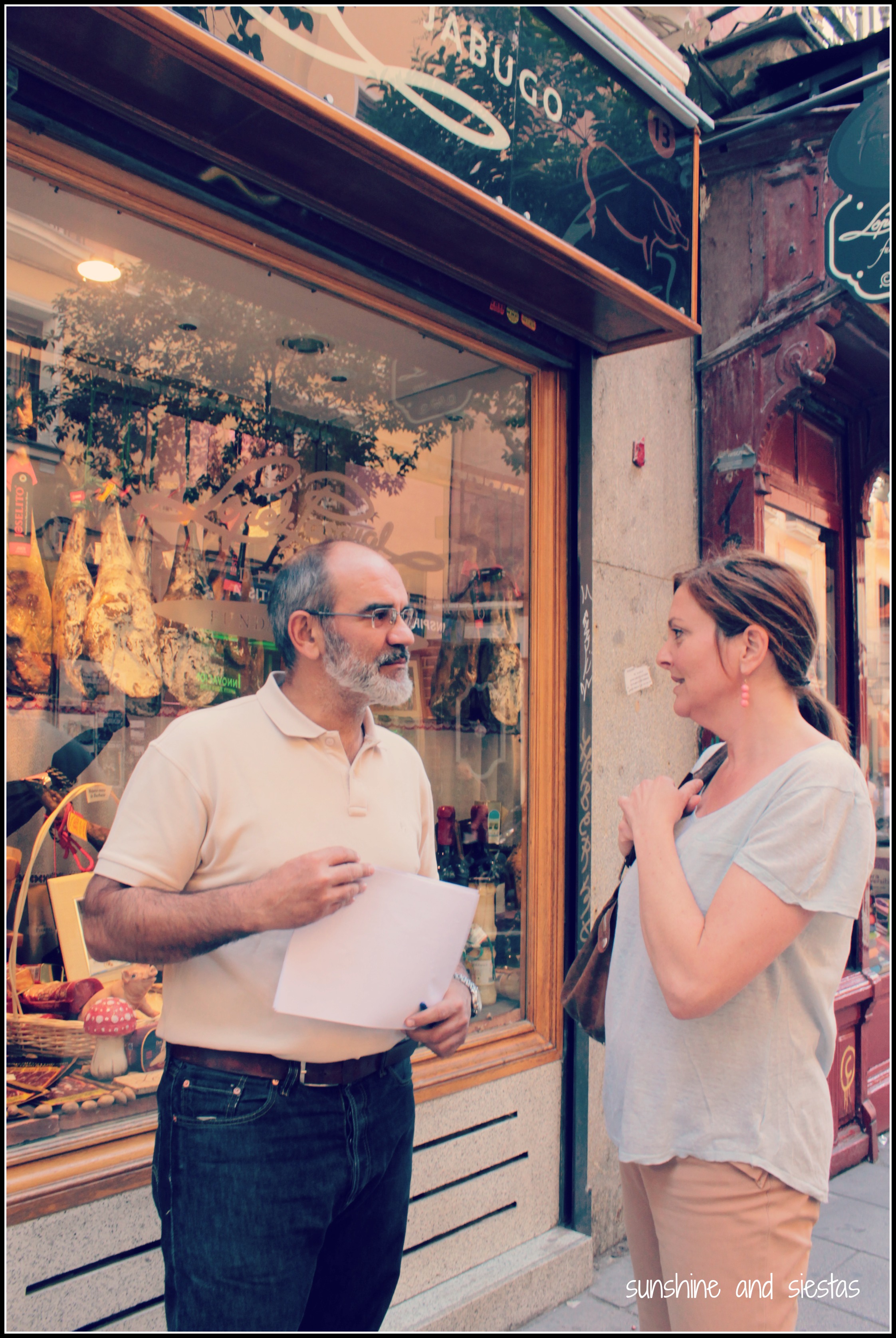
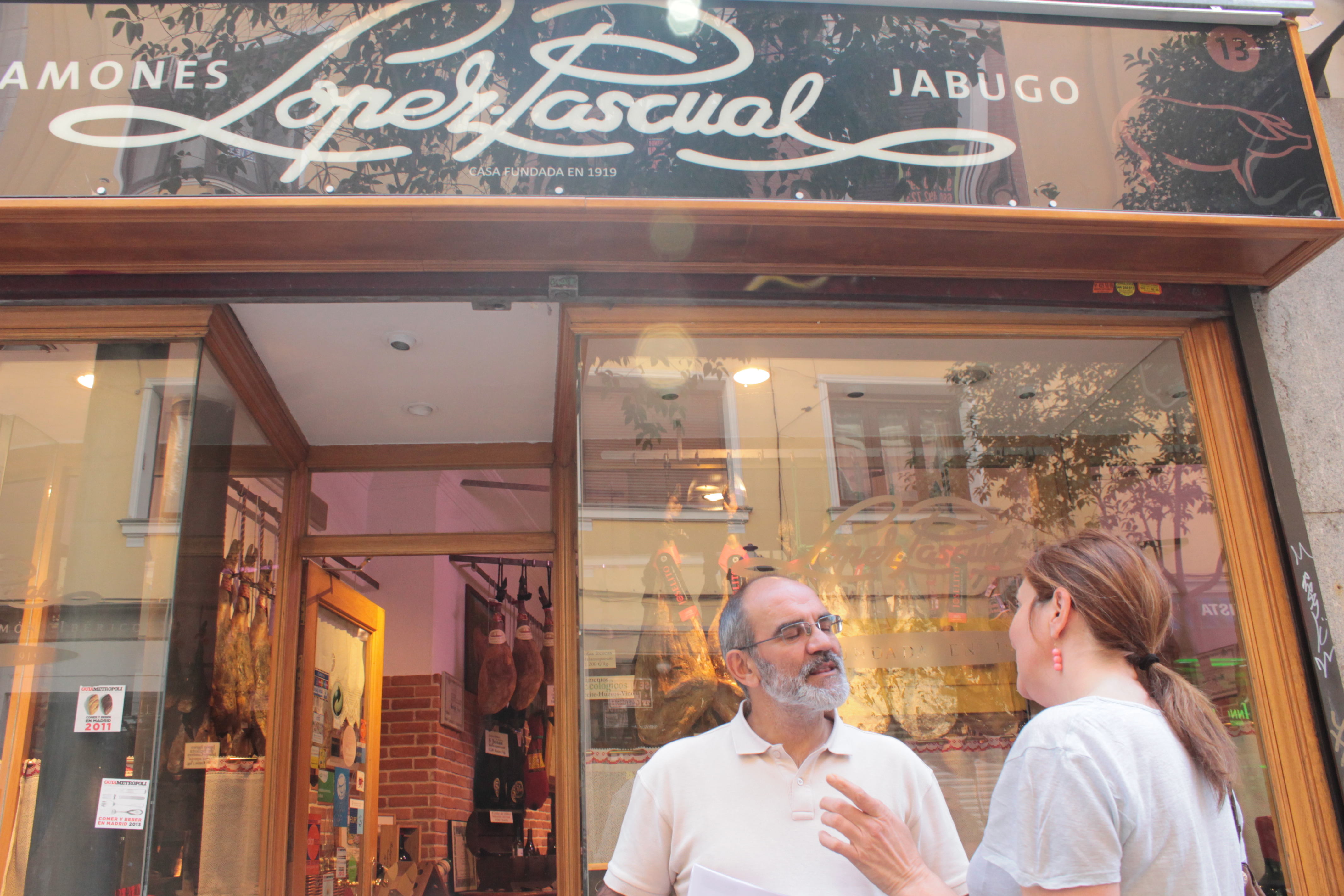
Our first stop in Malasaña was at Madrid’s oldest charcuterie. A photo of owner Antonio’s grandfather – the shop’s founder – hung above the door.

I had mentioned to Joanna that the Novio’s family raises livestock and produces ham, and she quipped, “What could I possibly tell you about ham that I don’t already know?”

The truth is, plenty.

Antonio explained the way that feed and climate can affect the taste of the ham, mixing in family anecdotes from nearly a century of holding down the shop in an area of town that has seen major gentrification in the last few years. Antonio’s shop sidles up to hip boutiques and art galleries that double as watering holes.

We snacked on freshly cut ham and picos and artisanal beers brewed just around the corner.

At the nearby church of San Antonio de los Alemanes, a priest gave us permission to look around in the oval-shaped chapel that has been dubbed Spain’s very own Sistene Chapel. He excused himself to tend to business down a spiral staircase as Joanna paid a small donation. After the financial crisis hit Spain, the priests at San Antonio opened a soup kitchen, called a comedor social, downstairs to serve those affected by unemployment and wage freezes. The money we paid for an entrance went right to feeding the needy.

My jet lag must have been noticeable, as Joanna suggested we go for a coffee at one of Madrid’s most prolific cafeterías, Café Comercial. The age-old, mirrored cafe was calm in the break between breakfast and lunch, but I chose a vermouth over a coffee, convinced I’d crash after so many coffees.

The establishment is run by Fernando, a young restaurateur who has been in the food service industry for two decades, and who invited me to breakfast the next morning. Joanna says the café doubles as her office – she meets clients and food providers here over a coffee or vermouth.

As we chatted over fresh orange juice and enormous toasts, Fernando pointed out the bar staff. Most had been working for Comercial for well over ten years and could speak of the evolution of a well-known establishment whose clientele de toda la vida had come and gone. Fernando told me about clients who had been around forever, eating the same dish and sitting in the same chair for ages.

Fernando is working to breathe new life into an old place by adding vermouth tastings, language exchanges and theatre performances.

Racing the clock, we sampled olive oils from beyond Andalucía before ending on a sweet note: a chocolate tasting at a renowned chocolate bar. Joanna chose six or eight different flavors, each of which had been blended with cocoa beans to form outages flavors with hints of spice, cheese and fruit. 

As we closed the tour with a quick caña after the sugar rush, we got to talking like old friends about our shared passions: food, drink and Spain.

Joanna and Seth of Insider’s Madrid graciously invited me on their Gourmet Food Shop tour, but all opinions are my own. The tour lasts approximately three hours at the cost of 65€ per head, which includes all tastings. Purchases at the stop are at your own cost.

Love Spanish food? Check out my biweekly food feature, Tapa Thursdays!

Spain Snapshots: My Perfect Madrileño Day

Danny and I were on our third glass of vermouth in Malasaña when it dawned on me: Madrid had finally won me over.

Between the barrio life, the collision of old and traditional with new and different and the balmy late spring nights, La Capital is quickly becoming one of my favorite escapes in Spain.

Madrid isn’t as outright beautiful as Seville or as wildly gorgeous as the calas on Menorca. It’s not old and cobblestoned or dripping in Gaudí’s whimsical architecture. It’s a bit grandiose on one block, and a bit gritty on the next.

 Simply put, it’s a Spanish city that encompasses it all and is the epicenter for nearly everything in Iberia.

My most recent trip to Madrid was two-fold: I was coming back from an emergency trip to the US, and I’d be brainstorming and hamming in front of the camera for a project I’m working on with other social media darlings. But as soon as I’d touched down in Barajas, my jet lag dissipated, and I spent the day retracing my favorite madrileño haunts and finding new spots to love.

My perfect Madrid day, unfiltered: Strolling, snacking, meeting lifelong madrileños and other adoptive gatos who have decided to call Madrid home.

Like Madrid? Check out these posts: Mercado de San Miguel // The Saturday City // Casa Hernanz // Visiting Alcalá de Henares

Related Posts Plugin for WordPress, Blogger...